
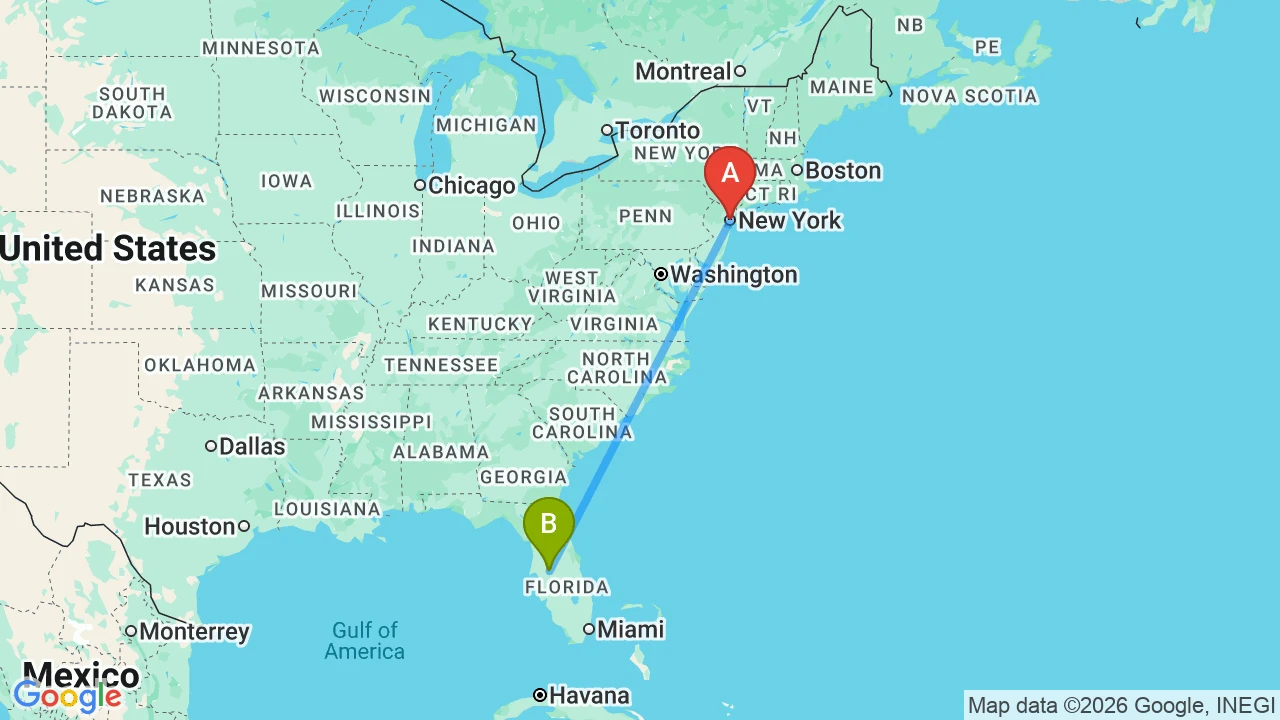
Moving from New York, NY to Lakeland, FL represents one of the sharper lifestyle and cost structure shifts available within the U.S. relocation landscape. This isn’t a lateral move between similar metros—it’s a transition from the nation’s densest, most transit-rich urban core to a car-dependent retirement hub in Central Florida’s interior. The appeal is clear for many: dramatically lower housing entry costs, no state income tax, and escape from the intensity of New York’s pace. But the tradeoffs are equally significant, and they show up in unexpected places—commute patterns, climate exposure, daily errands, and the invisible costs of car dependence.
This guide explains how cost pressure, daily rhythms, and household logistics shift when you make this move. It does not calculate total savings or declare a financial winner. Instead, it clarifies where costs concentrate in each city, who feels them most, and what changes in how you move through your day. Whether this move improves your financial position depends entirely on your household type, income sources, and how you value time, access, and autonomy.
Cost Pressure Shifts: Where Money Moves
The most visible cost difference between New York and Lakeland is housing. In New York, the median home value is $732,100, and median gross rent is $1,714 per month. In Lakeland, the median home value is $207,800, and median gross rent is $1,217 per month. For buyers, this represents a dramatic reduction in entry barrier—down payments, mortgage principal, and monthly obligations all shrink substantially. For renters, the monthly savings are real but more modest, and they come with a different set of tradeoffs around lease flexibility and neighborhood access.
But housing savings don’t translate directly into lower overall cost of living, because other expenses rise or become newly necessary. The most significant shift is transportation. In New York, 26.5% of workers work from home, and the city’s transit infrastructure allows many households to avoid car ownership entirely. In Lakeland, only 7.0% work from home, and the city is structured around automobile access. The average commute in New York is 41 minutes, but much of that time is spent on trains or buses. In Lakeland, the average commute is 23 minutes, but it’s almost entirely by car, and 27.8% of workers still face long commutes despite the shorter average.
This means most Lakeland households need at least one vehicle, often two. You’ll face car payments or depreciation, insurance (Florida’s rates are among the nation’s highest), maintenance, registration, and fuel. Gas currently costs $2.87/gal in Lakeland versus $2.99/gal in New York, but the volume consumed is far higher. For a household moving from car-free life in New York to two-car dependence in Lakeland, the transportation cost structure doesn’t just shift—it inverts.
Utilities also behave differently. Lakeland’s electricity rate is 15.78¢/kWh, compared to New York’s 26.49¢/kWh. But Lakeland’s long, hot, humid summers drive air conditioning usage far higher than New York’s cooling season, and many homes lack the passive cooling advantages of dense urban buildings. Natural gas is more expensive in Lakeland ($32.82/MCF vs. $23.93/MCF in New York), though heating demand is minimal. The result: summer utility bills in Lakeland can rival or exceed New York’s winter heating costs, despite the lower per-unit rate.
Groceries and everyday goods cost slightly less in Lakeland, reflecting the region’s lower overall price level (regional price parity index of 103 vs. 112 in New York). But the savings are incremental, not transformative, and they’re often offset by the need to drive farther and more often to access the same variety of stores and services.
Housing & Neighborhood Patterns
In New York, housing cost is the dominant financial pressure, but it buys access—to transit, to walkable errands, to density that reduces the need for a car. Renters face high monthly obligations but can often avoid the secondary costs of car ownership, parking, and long commutes by car. Owners face enormous entry barriers and mortgage payments, but they gain stability in a market where rental lease renewals can be unpredictable.
In Lakeland, housing is far more accessible upfront, but it comes with a different set of ongoing obligations. Homeowners often face HOA fees, higher homeowner’s insurance (Florida’s climate risk drives premiums up), and property taxes that, while lower in absolute dollars than New York, represent a larger share of home value. Renters pay less per month but gain less in return—most rental housing is in low-density complexes that require a car for every errand, and walkable urban neighborhoods are rare.
Neighborhood form also shapes daily costs in ways that aren’t visible in rent or mortgage figures. In New York, even expensive neighborhoods often allow you to walk to a pharmacy, grocery store, or subway stop. In Lakeland, even affordable neighborhoods typically require a car to access the same services. This means that housing affordability in Lakeland is tightly coupled to transportation costs in a way it isn’t in New York. A cheaper apartment in Lakeland may cost more to live in overall if it adds 20 minutes to your commute or requires a second car for household errands.
Lifestyle & Daily Rhythms
Daily life in New York is shaped by density, verticality, and the rhythm of public transit. Errands are often walkable or accessible by subway. Commutes are long in time but not necessarily in distance, and they don’t require car ownership. The city’s pace is fast, but much of the friction comes from crowding and competition for space, not from logistics.
Lakeland operates on an entirely different logic. The city is low-density and car-oriented, with commercial corridors separated from residential neighborhoods. Errands require planning and driving. There is no meaningful public transit network, and walking or biking for transportation is rare outside of a few pockets near downtown. The pace is slower in terms of social rhythm and intensity, but daily logistics require more active management—every trip must be planned, every errand requires a car, and households with multiple members often need multiple vehicles to avoid coordination friction.
Climate exposure also shifts significantly. New York experiences cold winters and moderate summers, with heating costs concentrated in a few months. Lakeland’s climate is defined by long, hot, humid summers with frequent afternoon thunderstorms. Air conditioning runs from April through October, and outdoor activity is often uncomfortable during midday hours in summer. For households accustomed to New York’s seasonal rhythm, Lakeland’s extended heat and humidity can feel relentless, and it shapes everything from utility bills to daily routines.
The tradeoff many movers appreciate is space and quiet. Lakeland offers larger homes, private yards, and far less crowding than New York. For families with children, retirees, or remote workers who no longer need proximity to Manhattan, this can feel like a dramatic improvement in quality of life. But for those who value spontaneity, walkability, or access to cultural density, Lakeland can feel isolating.
Relocation Logistics & Practical Friction
The logistics of moving from New York to Lakeland are straightforward in theory but require significant adjustment in practice. The distance is roughly 1,200 miles, and most movers either hire long-distance movers or drive a rental truck themselves. Timing the move to avoid New York’s winter or Lakeland’s summer heat can reduce stress, though Lakeland’s rental market doesn’t have the same seasonal peaks as New York’s.
What surprises many movers is the adjustment to car dependence. If you’re moving from a car-free life in New York, you’ll need to buy or lease a vehicle before or immediately after arrival, secure Florida auto insurance (which is more expensive than most states), and register your vehicle with the Florida DMV. If you’re moving with a family, you may need a second car sooner than expected, as Lakeland’s lack of transit makes single-car households logistically difficult.
Another common friction point is the loss of walkable access. In New York, even mundane errands—picking up prescriptions, grabbing groceries, meeting a friend for coffee—can happen on foot or via a short subway ride. In Lakeland, nearly every errand requires getting in a car, and the cumulative time spent driving can feel like a hidden tax on daily life, even though individual trips are shorter than New York commutes.
For retirees, the adjustment is often smoother, especially those who already own a car and are accustomed to suburban or rural living. Lakeland’s slower pace, lower housing costs, and lack of state income tax make it a popular destination for retirees leaving high-cost Northeastern cities. But for younger professionals, especially those in industries concentrated in major metros, the move can feel isolating unless remote work is secure and long-term.
Frequently Asked Questions
- Does Lakeland, FL feel more or less expensive than New York, NY?
- Lakeland feels dramatically less expensive upfront, especially for housing, but the cost structure shifts rather than disappears. Housing entry costs drop sharply, but transportation costs rise significantly due to car dependence, and utilities can surprise newcomers during Lakeland’s long cooling season. Whether you feel financial relief depends on whether you were a renter or owner in New York, whether you owned a car, and how much you value proximity and walkability. For car-free renters in New York, the move may feel less affordable than the housing numbers suggest once transportation and convenience costs are included.
- How do housing markets differ between New York and Lakeland?
- New York’s housing market is defined by scarcity, high entry costs, and intense competition, but it delivers access and eliminates the need for a car. Lakeland’s market is far more accessible for buyers and renters, but homes are spread out, neighborhoods are car-dependent, and ongoing costs like insurance and HOA fees are common. Renters in Lakeland pay less per month but gain less walkable access. Buyers face lower mortgages but must budget for vehicles, insurance, and the hidden costs of low-density living.
- What feels different about daily life after moving from New York to Lakeland?
- The most immediate difference is the shift from transit and walking to driving everywhere. Errands that took five minutes on foot in New York require a car trip in Lakeland. The pace is slower, the crowding is gone, and personal space increases, but spontaneity decreases. Social life requires more planning, and cultural amenities are far less dense. For some, this feels like relief; for others, it feels like isolation.
- When does the move from New York to Lakeland tend to feel easiest?
- The move tends to feel smoothest for retirees, remote workers, and families with school-age children who prioritize space and lower housing costs over urban amenities. It’s often easier in spring or fall, avoiding both New York’s winter moving challenges and Lakeland’s peak summer heat. Those who struggle most are younger professionals in non-remote roles, households accustomed to car-free living, and anyone who relies on the density and spontaneity of urban life.
- What are the most common adjustment pressures after this move?
- Car dependence is the most universal adjustment. Many movers underestimate how much time they’ll spend driving and how quickly a second vehicle becomes necessary. Climate adjustment is also common—Lakeland’s heat and humidity last far longer than New York’s summer, and outdoor routines shift accordingly. Social isolation can be an issue for those used to New York’s density, and the loss of walkable errands and transit access requires a mindset shift around daily logistics.
- Who does this move work best for, and who might struggle?
- This move works best for retirees seeking lower costs and a slower pace, remote workers who no longer need proximity to New York’s job market, and families who value space, yards, and lower housing entry costs over walkability. It’s challenging for younger professionals in location-dependent careers, households who prefer car-free or car-light living, and anyone who thrives on urban density, cultural access, and spontaneous social interaction. If your identity and routine are built around New York’s transit and walkability, Lakeland will feel like a fundamentally different way of life, not just a cheaper version of the same one.
Conclusion
Moving from New York to Lakeland is not a simple cost arbitrage—it’s a structural shift in how you live, move, and spend. Housing costs drop sharply, but transportation costs rise, and the logic of daily life inverts from transit and density to cars and sprawl. For retirees, remote workers, and families prioritizing space and affordability, the tradeoff often makes sense. For those whose careers, routines, or identities are built around New York’s urban fabric, the move can feel disorienting, even if the numbers look appealing on paper.
The key is to understand that cost pressure doesn’t disappear—it relocates. What you save on rent or mortgage, you may spend on cars, insurance, and driving time. What you gain in space and quiet, you may lose in access and spontaneity. This move works best when it aligns with a deliberate lifestyle shift, not just a financial calculation.
For deeper exploration of Lakeland’s cost structure, neighborhood patterns, and household budgets, visit the Lakeland, FL city hub on IndexYard. For New York comparisons and metro-level context, explore the New York, NY hub.
How this article was built: In addition to public economic data, this article incorporates location-based experiential signals derived from anonymized geographic patterns—such as access density, walkability, and land-use mix—to reflect how day-to-day living actually feels in Lakeland, FL.