
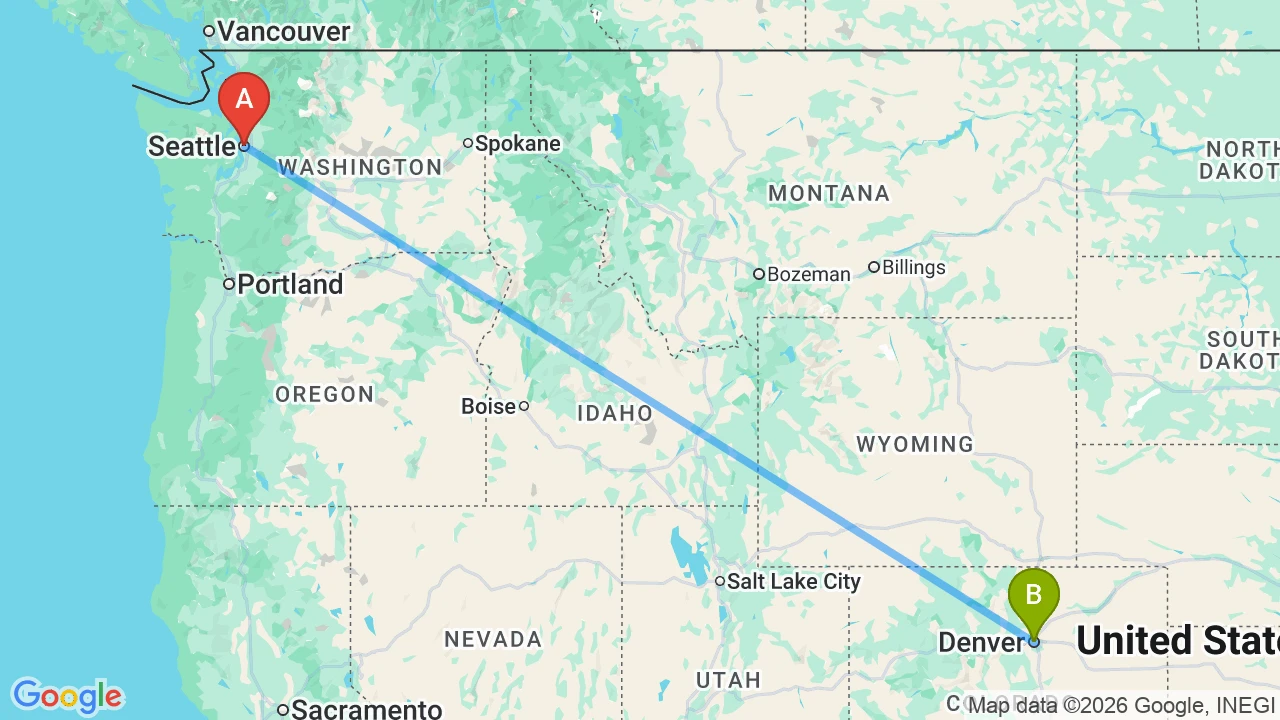
Moving from Seattle to Denver means trading the Pacific Northwest’s maritime climate and tech-hub intensity for Colorado’s high-altitude sunshine and a different kind of urban energy. But beyond the scenery and culture, this move reshapes where your money goes each month—not necessarily how much you spend in total, but where the pressure concentrates.
This guide explains how cost drivers shift between these two cities in 2026, focusing on housing entry barriers, ongoing expenses, daily logistics, and the household types that tend to feel the change most. It’s not about declaring a winner or computing savings—it’s about understanding which tradeoffs you’re making and what surprises movers most often.
Cost Pressure Shifts: Where Money Flows Differently
Seattle’s median home value sits at $879,900, while Denver’s is $540,400—a substantial gap that reshapes the housing entry barrier for buyers. Renters see a similar pattern: Seattle’s median gross rent is $1,945 per month compared to Denver’s $1,665 per month. The difference isn’t just nominal—it changes how much capital you need upfront, how much income lenders expect, and how much flexibility you retain after securing housing.
But lower housing costs don’t mean lower overall pressure. Denver’s regional price parity index of 105 (compared to Seattle’s 113) suggests that while goods and services cost modestly less overall, the gap isn’t dramatic once you’re past the housing threshold. Median household income in Denver is $85,853 per year, compared to Seattle’s $116,068—meaning the income cushion that absorbs unexpected costs tends to be thinner in Denver, even if baseline expenses feel lighter.
Where Seattle movers feel immediate relief is in transportation fuel costs: Denver’s gas price averages $2.59 per gallon, compared to Seattle’s $3.85 per gallon. For households that drive frequently—especially those commuting from suburban neighborhoods—this difference compounds quickly. Denver’s average commute time is 25 minutes, slightly shorter than Seattle’s 27 minutes, but the share of workers with long commutes (over 45 minutes one-way) is lower in Denver at 37.8% compared to Seattle’s 43.2%. The combination of cheaper fuel and slightly shorter commutes shifts transportation from a high-friction cost in Seattle to a more predictable one in Denver.
Utilities tell a more complex story. Denver’s electricity rate is 16.26¢ per kWh, higher than Seattle’s 14.06¢ per kWh, but natural gas—critical for heating in Denver’s colder winters—is dramatically cheaper at $12.26 per MCF compared to Seattle’s $24.71 per MCF. Denver’s climate demands more heating (cold, dry winters with frequent subfreezing temperatures) and less cooling than Seattle’s mild, marine-influenced weather. The net effect depends heavily on your housing type, insulation quality, and thermostat habits, but many movers find that winter heating bills feel more manageable in Denver despite the colder temperatures, simply because natural gas is so much cheaper.
Housing & Neighborhood Patterns
The housing entry barrier drops significantly in Denver, but the ongoing obligations don’t disappear—they just shift form. Seattle’s high home prices mean larger mortgages, higher property taxes in absolute terms, and steeper insurance premiums. Denver’s lower entry point makes ownership accessible to more households, but property taxes, HOA fees, and maintenance costs still accumulate, and the income cushion to absorb surprises is often smaller.
Both cities feature walkable pockets with substantial pedestrian infrastructure, rail transit systems, and notable cycling infrastructure. Denver’s urban form shows a mixed building height character—less vertical than Seattle’s more vertical profile—which often translates to neighborhoods that feel more spread out, with lower-density residential blocks interspersed with commercial corridors. Seattle’s denser core and taller buildings concentrate amenities more tightly, which can reduce the need for frequent car trips in central neighborhoods.
Both cities show broadly accessible food and grocery options, with high densities of supermarkets, specialty stores, and restaurants. Errands in either city can often be handled on foot or by transit if you’re in the right neighborhood, but Denver’s slightly lower density means that car-free living requires more intentional neighborhood selection. Suburban Denver neighborhoods, like suburban Seattle, tend to assume car ownership for daily logistics.
Green space is integrated in both cities, with park densities exceeding high thresholds and water features present. Denver’s proximity to mountain recreation and year-round sunshine shifts outdoor culture toward hiking, skiing, and high-altitude activities, while Seattle’s maritime parks and temperate forests support a different rhythm of outdoor life. Both cities reward households that prioritize outdoor access, but the type of access differs meaningfully.
Lifestyle & Daily Rhythms
Seattle’s climate is defined by mild, wet winters and dry, temperate summers—rarely extreme in either direction. Denver’s climate swings harder: cold, snowy winters with frequent temperature inversions, and hot, dry summers with intense sun exposure at 5,280 feet elevation. The altitude itself affects daily life—some movers feel it immediately in the form of fatigue, dehydration, or breathlessness during exertion, while others adapt within weeks.
Commute patterns shift subtly but meaningfully. Seattle’s 6.3% work-from-home rate (as of the most recent data) is lower than Denver’s 5.2%, but both cities still see the majority of workers commuting by car or transit. Denver’s road network and sprawl make car ownership nearly essential outside the urban core, while Seattle’s transit infrastructure (Link light rail, extensive bus network) offers more car-free viability in central neighborhoods. Movers who relied on transit in Seattle may find themselves driving more in Denver, especially if they settle in suburbs like Aurora, Lakewood, or Thornton.
Both cities support strong family infrastructure, with school and playground densities in the medium band. Families with school-age children will find public and private school options in both cities, though the quality, funding, and neighborhood variability differ. Denver’s public school system operates under a school-choice model, which gives families more flexibility but also requires more research and planning. Seattle’s system is more neighborhood-based, with some schools significantly oversubscribed.
Healthcare access is robust in both cities, with hospitals present and pharmacy networks well-distributed. Denver’s healthcare market includes major regional systems like UCHealth and Denver Health, while Seattle is anchored by institutions like UW Medicine and Swedish. Routine care is accessible in both cities, but specialist availability and wait times vary by insurance network and neighborhood.
Relocation Logistics & Practical Friction
The physical move from Seattle to Denver covers roughly 1,300 miles, typically requiring a two-day drive or a direct flight. Moving costs depend heavily on volume, timing, and whether you hire full-service movers or rent a truck. Summer months (June through August) see the highest demand and highest prices, while late fall and winter offer more flexibility and lower rates—though winter driving through mountain passes adds weather risk.
Once you arrive, the adjustment period varies by household. Movers who prioritized walkability in Seattle may need to recalibrate expectations if they settle in Denver’s car-dependent suburbs. Those who struggled with Seattle’s high housing costs often feel immediate relief in Denver, but the thinner income cushion means less room for error if unexpected expenses arise. The altitude, dry air, and intense sun exposure surprise many newcomers—hydration becomes non-negotiable, and skin, sinuses, and sleep patterns often take weeks to adjust.
Utility setup in Denver typically involves separate accounts for electricity (Xcel Energy serves most of the metro), natural gas, water, and trash. Some apartment complexes bundle utilities into rent, but single-family homes almost always require separate billing. Seattle movers accustomed to Seattle City Light’s public utility model may find Denver’s investor-owned utility structure less transparent, with different rate schedules and fewer conservation incentives.
Vehicle registration and driver’s license transfers must happen within 30 days of establishing residency in Colorado. Colorado requires emissions testing for most vehicles in the Denver metro area, and registration fees are based on vehicle age and value. Movers keeping Seattle-plated cars risk fines and insurance complications if they delay the switch.
Grocery and Daily Staples: How Costs Compare
Grocery costs in both cities reflect their regional price parities, with Seattle’s higher index pushing everyday staples slightly above Denver’s baseline. For example, derived estimates suggest that in Seattle, a pound of bread runs around $2.07, a pound of chicken breast about $2.28, and a dozen eggs near $3.06. In Denver, those same items come in at roughly $1.92, $2.12, and $2.85 respectively. (Derived estimate based on national baseline adjusted by regional price parity; not an observed local price.)
The differences are modest on a per-item basis, but they accumulate over time—especially for larger households or those cooking most meals at home. Both cities offer a mix of budget chains, mid-tier supermarkets, and specialty stores (Whole Foods, Trader Joe’s, Sprouts, Natural Grocers), so household grocery bills depend more on shopping habits and dietary preferences than on city-level price floors.
Dining out follows a similar pattern: Seattle’s restaurant scene skews slightly more expensive, but Denver’s food culture is robust and competitive, with strong representation in casual dining, breweries, and farm-to-table concepts. Households that rely heavily on takeout or meal delivery will notice the difference more than those who cook at home.
Who This Move Tends to Favor—and Who Feels the Squeeze
This relocation corridor tends to work best for households that felt locked out of Seattle’s housing market and can tolerate a smaller income cushion in exchange for lower entry barriers. First-time homebuyers, families looking to upgrade from apartments to single-family homes, and remote workers who no longer need proximity to Seattle’s tech core often find Denver’s housing market more accessible, even if ongoing costs don’t drop proportionally.
Households that drive frequently—especially those with long commutes or multiple vehicles—benefit from Denver’s lower gas prices and slightly shorter average commute times. The transportation savings can be meaningful over the course of a year, particularly for families juggling school drop-offs, errands, and weekend trips.
Movers who prioritize outdoor recreation and sunshine often feel the lifestyle upgrade immediately. Denver’s 300+ days of sunshine per year, proximity to skiing and hiking, and high-altitude outdoor culture attract households willing to trade Seattle’s maritime mildness for more seasonal extremes.
On the other hand, households that relied heavily on Seattle’s transit infrastructure may struggle with Denver’s greater car dependence outside the urban core. While Denver’s rail system (RTD light rail) serves key corridors, the network is less extensive than Seattle’s, and bus frequency can feel sparse in suburban areas. Movers who lived car-free in Seattle may find themselves needing a vehicle in Denver, which reintroduces insurance, maintenance, and parking costs.
Households with tight budgets and limited emergency savings may find Denver’s lower median income challenging. While baseline costs are lower, the income cushion that absorbs unexpected medical bills, car repairs, or job transitions is thinner. Seattle’s higher income levels provided more room for error; Denver’s affordability advantage can evaporate quickly if financial surprises arise.
Families with school-age children need to research Denver’s school-choice system carefully. The flexibility is appealing, but it requires active engagement, lottery participation, and sometimes transportation planning if your assigned neighborhood school isn’t your first choice. Seattle’s neighborhood-based system, while less flexible, involves less upfront logistical work.
Frequently Asked Questions
- Does Denver feel more or less expensive than Seattle?
- Denver’s housing entry barrier is significantly lower—median home values and rents are both cheaper—but the income cushion is smaller, and ongoing costs don’t drop proportionally. Where you feel the difference most depends on whether you’re buying, renting, driving frequently, or relying on transit. Households that struggled with Seattle’s housing costs often feel immediate relief, but those who benefited from Seattle’s higher wages may find Denver’s thinner financial margin less forgiving when surprises arise.
- How do the housing markets differ between Seattle and Denver?
- Seattle’s market is defined by high entry barriers and strong income requirements, with a denser urban core and more vertical development. Denver’s market is more accessible upfront, with lower home prices and rents, but the metro area sprawls more, and car dependence increases outside central neighborhoods. Both cities have competitive markets, but Denver’s lower baseline makes ownership feasible for more households, even if the income cushion to absorb surprises is smaller.
- What feels different about daily life after moving from Seattle to Denver?
- The most immediate changes are climate (colder winters, hotter summers, intense sun, dry air, altitude adjustment), transportation (more driving, less transit reliance outside the core), and outdoor culture (mountain recreation vs. maritime parks). Grocery and dining costs drop modestly, but not dramatically. Households that prioritized walkability in Seattle may need to recalibrate expectations if they settle in Denver’s suburbs, where car ownership becomes nearly essential for daily logistics.
- When does this move tend to feel easiest or hardest?
- Summer moves (June through August) offer the best weather and school-year alignment for families, but moving costs peak and housing competition intensifies. Late fall and winter offer lower moving costs and less market pressure, but mountain weather adds risk to the drive, and altitude adjustment can feel harder in cold, dry conditions. Spring (April through May) often strikes the best balance—moderate weather, reasonable moving costs, and time to settle before summer heat or winter cold.
- What adjustment pressures surprise movers most?
- Altitude effects (fatigue, dehydration, breathlessness) catch many newcomers off guard, especially during the first few weeks. The dry air affects skin, sinuses, and sleep quality, requiring more intentional hydration and moisturizing. Car dependence outside Denver’s core surprises households that lived car-free in Seattle, reintroducing insurance, maintenance, and parking costs. And the thinner income cushion—despite lower baseline costs—means less room for financial surprises, which can feel stressful for households accustomed to Seattle’s higher wage floor.
- Who tends to benefit from this move—and who may struggle?
- This move works best for households locked out of Seattle’s housing market, frequent drivers who benefit from cheaper gas and shorter commutes, and outdoor enthusiasts who prioritize sunshine and mountain access. It’s harder for households that relied on Seattle’s transit infrastructure, those with tight budgets and limited emergency savings (where Denver’s smaller income cushion becomes a liability), and families who need predictable, neighborhood-based school assignments without navigating a choice system.
Making the Decision
Moving from Seattle to Denver isn’t about escaping high costs—it’s about shifting where those costs concentrate and accepting a different set of tradeoffs. Housing becomes more accessible, transportation costs drop for drivers, and outdoor recreation takes on a new character. But income levels are lower, car dependence increases outside the core, and the altitude and climate demand real adjustment.
The households that thrive in this move are those who understand which pressures they’re trading and which they’re keeping. If you’re moving primarily to access homeownership or reduce housing pressure, Denver delivers—but only if you’re prepared for a smaller financial cushion and more driving. If you’re moving for lifestyle and outdoor access, the shift can feel transformative, but the climate extremes and altitude aren’t trivial.
Before committing, spend time in Denver across multiple seasons if possible. Drive the commutes you’d actually take. Walk the neighborhoods you’re considering. Talk to recent movers about what surprised them. The data tells you where costs concentrate; your own priorities determine whether those tradeoffs align with how you want to live.
For more detailed breakdowns of housing, utilities, and daily costs in both cities, explore the Seattle cost of living hub and the Denver cost of living hub on IndexYard.
How this article was built: In addition to public economic data, this article incorporates location-based experiential signals derived from anonymized geographic patterns—such as access density, walkability, and land-use mix—to reflect how day-to-day living actually feels in Denver, CO.