
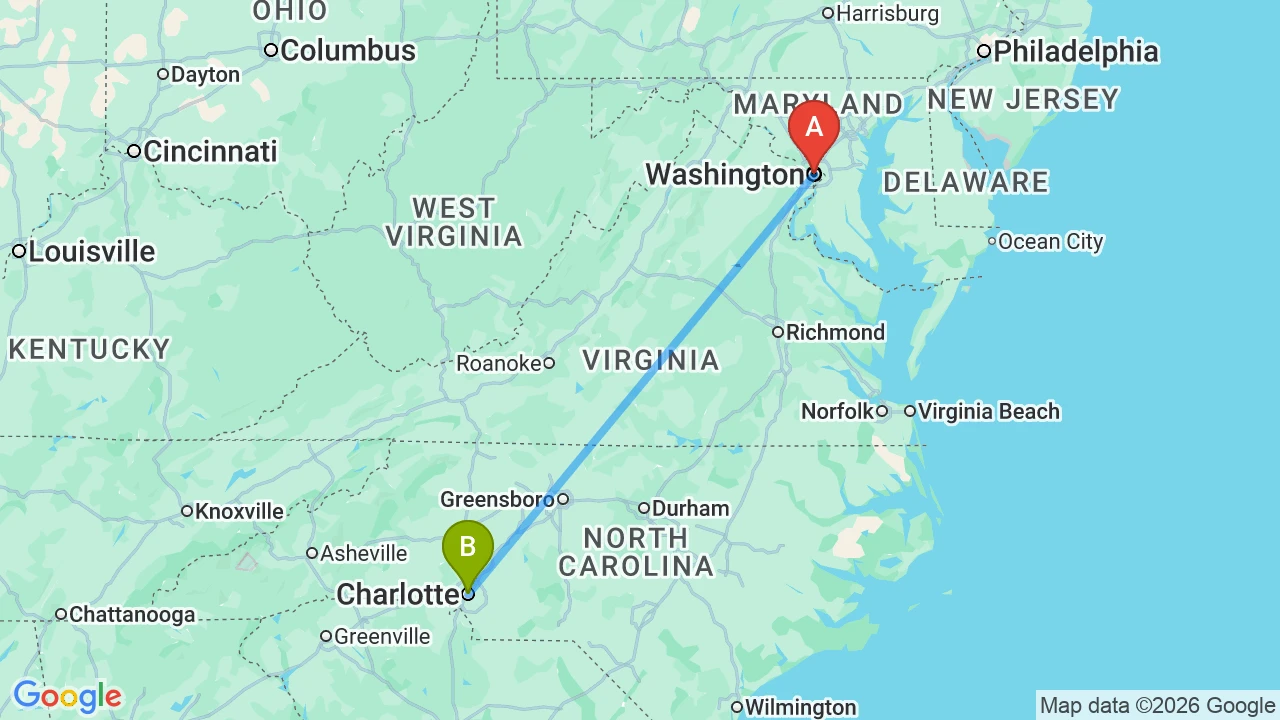
The move from Washington, DC to Charlotte represents one of the more common relocation corridors along the East Coast—driven by a mix of job opportunities, housing costs/”>affordability shifts, and lifestyle recalibration. People leave DC for many reasons: some chase lower housing entry barriers, others seek a slower pace or more space, and many are drawn by Charlotte’s growing finance and tech sectors. But this isn’t a simple “expensive to cheap” transition. It’s a shift in where costs concentrate, how daily routines are structured, and what households must manage day-to-day.
This guide explains how cost pressure, lifestyle patterns, and daily logistics typically change when relocating from Washington, DC to Charlotte. It does not declare a winner or estimate total savings—it clarifies where budgets tighten, where they loosen, and which household types tend to feel the shift most acutely.
Cost Pressure Shifts: Where Money Moves
Washington, DC operates with a regional price parity index of 111, meaning the overall cost structure runs about 11% above the national baseline. Charlotte’s index sits at 97—slightly below the national average. That gap suggests a meaningful difference in how far a dollar stretches, but the story is more textured than a single number.
Housing is the primary driver of cost relief for most movers. Charlotte’s median home value is $312,800, and median gross rent is $1,399 per month. Washington’s housing data wasn’t available in this analysis, but the capital’s reputation for high entry costs—especially close to Metro lines and within the District itself—is well-documented. For renters and buyers alike, Charlotte typically offers more square footage, more inventory, and less bidding pressure. That said, the savings aren’t uniform: desirable neighborhoods near Uptown or South End have seen rapid price growth, and competition has intensified in walkable pockets.
Utilities tell a different story. Charlotte’s electricity rate is 15.05¢/kWh, compared to Washington’s 23.92¢/kWh. That’s a substantial gap—nearly 37% lower per kilowatt-hour—and it compounds over time, especially during Charlotte’s long, humid summers when air conditioning dominates household energy use. Natural gas pricing is slightly higher in Charlotte ($25.54/MCF vs. $23.27/MCF in DC), but gas usage tends to be lighter in a milder winter climate, so the net effect on heating bills is often negligible or favorable.
Transportation costs shift in both direction and structure. Gasoline is cheaper in Charlotte—$2.70/gallon vs. $3.12/gallon in DC—but car dependence is higher. Washington’s Metro system, extensive bus network, and walkable neighborhoods allow many households to avoid car ownership entirely or limit driving to weekends. Charlotte has rail transit (the LYNX Blue Line), but coverage is narrow, and most residents rely on cars for daily errands, work commutes, and social life. The average commute in Charlotte is 25 minutes, and 34.6% of workers face long commutes. Only 5.2% work from home. For households accustomed to Metro commuting or walking to groceries, the shift to car-centric logistics can feel like a hidden cost—not just in gas, but in time, maintenance, insurance, and mental load.
Groceries and daily goods cost less in Charlotte across the board. Derived estimates based on regional price parity show bread at $1.78/lb (vs. $2.03/lb in DC), eggs at $2.63/dozen (vs. $3.01/dozen), and ground beef at $6.49/lb (vs. $7.42/lb). These differences accumulate over weeks and months, especially for larger households or families with kids. Derived estimate based on national baseline adjusted by regional price parity; not an observed local price.
Housing & Neighborhood Patterns
Charlotte’s housing market rewards flexibility and willingness to drive. The most affordable inventory sits in suburbs and outer neighborhoods—places like University City, Concord, or Huntersville—where single-family homes dominate and walkability is limited. Closer-in neighborhoods like Plaza Midwood, NoDa, and Dilworth offer more walkable, mixed-use environments, but prices in these areas have climbed sharply as demand for urban-style living has grown.
Renters moving from DC will notice two things: lower headline rent, but fewer transit-accessible options. In Washington, proximity to a Metro stop often justifies higher rent because it eliminates car costs and reduces commute friction. In Charlotte, rent savings are real, but they often come with the assumption that you’ll drive everywhere. That tradeoff—lower rent, higher transportation dependence—defines much of Charlotte’s cost structure.
For buyers, Charlotte offers more accessible entry points. Median home values are lower, and inventory is broader, though competition has intensified in sought-after school districts and walkable pockets. Property taxes and HOA fees vary widely by neighborhood and development type, and these ongoing costs can surprise buyers accustomed to DC’s different ownership obligations. Homeownership in Charlotte often means more space, but also more maintenance, more lawn care, and more distance from daily destinations.
Lifestyle & Daily Rhythms
Washington, DC is built around density, transit, and walkability. Many residents live in neighborhoods where groceries, restaurants, gyms, and social life are within walking distance or a short Metro ride. Errands can be stacked; car ownership is optional. Charlotte operates differently. Both cities show high pedestrian-to-road ratios and notable cycling infrastructure in their urban cores, and both have rail transit. But Charlotte’s urban fabric is more fragmented. Walkable pockets exist—Uptown, South End, parts of Plaza Midwood—but they’re separated by car-oriented corridors and low-density residential zones.
Food and grocery access is broadly distributed in both cities, with high densities of establishments exceeding regional thresholds. Parks and green space are integrated into both urban landscapes, with Charlotte offering extensive park access alongside water features. Family infrastructure differs slightly: Washington shows strong school and playground density, while Charlotte’s school density is moderate and playground availability is lower. Both cities have hospital and pharmacy access.
The practical implication: daily life in Charlotte requires more planning and more driving, even in walkable neighborhoods. A 15-minute Metro commute in DC might become a 25-minute drive in Charlotte, with traffic variability and parking logistics layered on top. Households that thrived on DC’s transit-oriented convenience may feel the shift as a loss of spontaneity and an increase in logistical overhead.
Climate also reshapes daily costs and routines. Washington experiences hot, humid summers and cold winters with occasional snow. Charlotte’s summers are longer, hotter, and more humid, with extended cooling seasons that drive up electricity use despite lower per-kilowatt rates. Winters are milder—freezing nights are rare—so heating costs tend to be lower and less volatile. The net effect depends on household behavior: families who run AC aggressively will see higher summer bills, while those who tolerate heat or use fans strategically can keep costs manageable.
Relocation Logistics & Practical Friction
The move itself is straightforward in distance—about 400 miles, roughly six to seven hours of driving—but the adjustment period can be longer than expected. Washington’s walkable, transit-rich environment creates habits that don’t translate directly to Charlotte. Grocery runs that once took 10 minutes on foot may now require a car, a parking search, and a longer round trip. Social plans that relied on Metro spontaneity now require coordination around driving and parking.
For families, school districts and extracurricular access become more important. Charlotte’s suburban neighborhoods often cluster around highly rated schools, and proximity to those schools can drive both home prices and traffic patterns. Parents accustomed to DC’s dense, transit-accessible options may find Charlotte’s school logistics more car-dependent and time-intensive.
Professional networks also shift. Washington’s economy is anchored by federal government, policy, and adjacent sectors. Charlotte’s economy centers on finance (it’s the second-largest banking hub in the U.S.), healthcare, and a growing tech scene. Job seekers moving for work often find strong opportunities, but the professional culture and networking rhythms differ. The unemployment rate in Charlotte is 3.7%, compared to 5.2% in DC, suggesting a tighter labor market with more competition for talent.
One surprise many movers report: the pace feels slower, but the logistical load feels heavier. Fewer things are within walking distance, so even simple errands require more time and coordination. That tradeoff—less urban intensity, more household management—defines much of the adjustment period.
Frequently Asked Questions
- Does Charlotte feel more or less expensive than Washington, DC?
- Charlotte typically feels less expensive in headline costs—lower rent, cheaper groceries, lower electricity rates—but the savings concentrate in housing and utilities. Transportation costs shift: gas is cheaper, but car dependence is higher, so households that avoided car ownership in DC will face new expenses. The overall cost structure is lower, but the tradeoff is more driving, more planning, and less spontaneous access.
- How do housing markets differ between Washington, DC and Charlotte?
- Washington’s housing market is constrained by geography, federal employment concentration, and intense competition near Metro lines. Charlotte offers lower entry costs, more inventory, and more space, but walkable, transit-accessible neighborhoods command premiums and have seen rapid price growth. Renters save on headline costs but often trade transit access for car dependence. Buyers gain space and affordability but take on more maintenance and longer commutes.
- What feels different about daily life after moving from DC to Charlotte?
- Daily routines become more car-dependent, even in walkable neighborhoods. Errands that once stacked easily—groceries, gym, social plans—now require more driving and coordination. The pace feels slower and less intense, but the logistical overhead increases. Families often gain more space and outdoor access, but school and activity logistics require more planning and driving time.
- When does the move from Washington, DC to Charlotte tend to feel easiest?
- The move tends to feel smoothest for households already accustomed to driving, those seeking more space and lower housing costs, and families prioritizing school quality and outdoor access over walkability. The adjustment is harder for households that relied heavily on Metro, walked to daily errands, or valued spontaneous urban access. Summer moves can be logistically easier but introduce immediate exposure to Charlotte’s long cooling season and higher AC costs.
- What are the most common adjustment pressures when moving to Charlotte?
- Car dependence is the most frequent surprise—households that avoided car ownership in DC will face new costs and logistics. Commute times may feel longer due to traffic variability and lack of transit alternatives. Social routines that relied on walkability or Metro access require rethinking. Families often underestimate the time required for school drop-offs, extracurriculars, and weekend activities when everything requires driving.
- Who does this move work best for—and who might struggle?
- This move tends to work well for families seeking more space, lower housing costs, and strong school options; professionals in finance, healthcare, or tech; and households comfortable with car-centric living. It’s harder for those who value walkability, transit access, and urban spontaneity; single professionals who rely on dense social networks and nightlife; and households trying to avoid car ownership. The shift rewards flexibility and planning but challenges those who thrive on density and transit convenience.
Making the Decision
The move from Washington, DC to Charlotte is not a simple cost-cutting exercise. It’s a recalibration of where money goes, how time is spent, and what daily life feels like. Housing costs drop, utilities cost less per unit, and groceries are cheaper—but car dependence rises, commutes require more active management, and walkable access becomes scarcer outside a few neighborhoods.
Households that prioritize space, lower housing entry costs, and a slower pace tend to find Charlotte rewarding. Those who value transit access, walkability, and urban density may feel the tradeoff more acutely. The key is understanding not just what costs less, but what you’ll manage more—and whether that tradeoff aligns with how you want to live.
For deeper exploration of how costs behave in each city, visit the Washington, DC and Charlotte hubs on IndexYard.
How this article was built: In addition to public economic data, this article incorporates location-based experiential signals derived from anonymized geographic patterns—such as access density, walkability, and land-use mix—to reflect how day-to-day living actually feels in Charlotte, NC.