
Introduction: Why Washington, DC Residents Consider Austin
The move from Washington, DC to Austin, TX represents one of the most distinctive relocation corridors in the United States. People considering this shift are typically drawn by Austin’s reputation for a different pace of life, a growing tech economy, and a cultural scene that contrasts sharply with the federal government-centered rhythm of the nation’s capital. By 2026, this corridor continues to attract professionals seeking career flexibility, families looking for different housing options, and individuals ready to trade the Mid-Atlantic climate and political intensity for Texas sunshine and a more informal social atmosphere.
This guide examines how cost pressure, daily routines, and logistical patterns shift when you relocate from Washington, DC to Austin. It does not calculate whether the move will save you money or declare one city superior to the other. Instead, it explains where costs concentrate differently, how housing markets behave, and what lifestyle adjustments tend to surprise people most. Understanding these shifts helps you assess whether this relocation aligns with your household priorities, work situation, and tolerance for change.
Washington, DC operates as a high-density urban center with extensive public transit, walkable neighborhoods, and a cost structure heavily weighted toward housing. Austin functions as a sprawling Sun Belt metro where car dependence is the norm, housing stock is newer and more varied, and the absence of state income tax reshapes how take-home pay translates into purchasing power. The transition involves more than geography—it requires adapting to different infrastructure, climate exposure, and social norms.
Cost Pressure Shifts: Where Money Flows Differently
Cost pressure in Washington, DC concentrates overwhelmingly in housing, particularly in neighborhoods close to Metro stations or within the District itself. Renters and buyers in DC face some of the highest shelter costs in the country, and that pressure extends across the metro into Arlington, Bethesda, and Silver Spring. Utilities in DC are moderate, public transit is robust and relatively affordable, and the walkability of many neighborhoods reduces the need for multiple vehicles. Groceries and dining reflect urban pricing, but the availability of diverse markets and competitive options provides some flexibility.
Austin’s cost structure distributes pressure differently. Housing costs remain significant but tend to be lower at entry compared to Washington, DC, especially for single-family homes and larger apartments. However, Austin’s car-dependent layout means transportation costs rise sharply—most households need at least one vehicle, and many require two. Parking, fuel, insurance, and maintenance become ongoing obligations that replace or supplement transit expenses. Texas has no state income tax, which increases take-home pay, but property taxes are notably higher than in many other states, and this affects both homeowners and renters (who indirectly pay through rent). Utilities in Austin, particularly electricity during the summer months, can spike due to air conditioning demand driven by the hot climate.
The shift in cost pressure is not simply about one city being cheaper or more expensive overall. Instead, it’s about reallocation: housing pressure may ease somewhat, but transportation and climate-related utility costs rise. For households accustomed to DC’s Metro and walkable neighborhoods, the transition to Austin’s car-centric infrastructure represents a fundamental change in how monthly budgets are structured. Conversely, those who already own vehicles and prioritize larger living spaces may find Austin’s housing market more accommodating at entry, even as they absorb higher property tax burdens over time.
Food costs in both cities reflect their respective market dynamics. Washington, DC offers a wide range of grocery options, from budget chains to specialty markets, and its density supports competitive pricing in many categories. Austin’s grocery landscape is similarly varied, with H-E-B serving as a regional anchor and Whole Foods (headquartered in Austin) providing premium options. Dining out in Austin tends to feel less formal and slightly less expensive than in DC, particularly for casual and mid-range restaurants, though high-end dining in both cities commands similar pricing.
Housing and Neighborhood Patterns: Entry, Ownership, and Form
Washington, DC’s housing market is characterized by high entry barriers, limited inventory, and intense competition for well-located units. The District’s rowhouse stock, mid-rise apartment buildings, and proximity to federal employment create a market where renters often face steep prices for modest square footage. Buying in DC or its close-in suburbs requires substantial down payments and tolerance for older housing stock, though the trade-off is walkability, transit access, and proximity to cultural amenities. Property taxes in DC are moderate compared to income levels, and HOA fees vary widely depending on building age and amenities.
Austin’s housing market offers a different set of trade-offs. The metro has expanded rapidly, and much of its housing stock is newer, with single-family homes, townhomes, and apartment complexes spread across a wide geographic area. Entry costs for purchasing a home are generally lower than in Washington, DC, particularly in suburbs like Pflugerville, Round Rock, and Cedar Park. However, Texas property taxes are high—often exceeding 2% of assessed value annually—and this ongoing cost affects long-term affordability for homeowners. Renters also feel this pressure indirectly, as landlords pass property tax obligations into monthly rent.
Neighborhood form differs dramatically. Washington, DC’s density supports walkable errands, corner stores, and transit-oriented living. Many DC residents can manage daily life without a car, or with one vehicle shared among multiple adults. Austin’s neighborhoods, by contrast, are designed around automobile access. Even in central areas like East Austin or South Congress, most errands require driving, and the city’s public transit system—while improving—does not offer the coverage or frequency that DC’s Metro provides. This shift affects not only transportation costs but also daily rhythms, errand patterns, and the time required to navigate the city.
For renters, Austin offers more variety in unit types and sizes at comparable or lower monthly costs than DC, but the need for parking, the likelihood of higher utility bills, and the requirement to own a vehicle reshape the overall cost picture. For buyers, Austin’s lower entry prices are appealing, but the high property tax rate and the expectation of ongoing vehicle expenses must be factored into long-term budgets. Households accustomed to DC’s older, denser housing stock may appreciate Austin’s newer construction and larger floor plans, while those who value walkability and transit access may find Austin’s sprawl frustrating.
Lifestyle and Daily Rhythms: Pace, Climate, and Social Patterns
Washington, DC operates at a pace shaped by federal government cycles, policy debates, and a professional culture that often blurs work and social life. The city’s density, walkability, and transit access support a lifestyle where many activities—work, dining, entertainment, errands—occur within a compact geographic area. Winters are cold but manageable, summers are hot and humid, and the four-season climate requires a varied wardrobe and seasonal adjustments to routines. DC’s cultural scene is anchored by world-class museums, theaters, and political events, and the city’s international population contributes to diverse dining and social options.
Austin’s lifestyle is more informal, outdoor-oriented, and car-dependent. The city’s identity revolves around live music, food trucks, outdoor recreation, and a tech-influenced professional culture that emphasizes flexibility and entrepreneurship. Summers in Austin are long, hot, and often exceed 100°F, which drives residents indoors during peak afternoon hours and makes air conditioning a necessity rather than a luxury. Winters are mild, and the lack of snow or prolonged cold allows for year-round outdoor activities. However, the heat and humidity from May through September shape daily routines, outdoor plans, and utility costs in ways that DC residents may not anticipate.
Commuting in Austin is almost universally car-based. Traffic congestion has worsened as the metro has grown, and rush-hour delays on I-35, MoPac, and other major corridors are common. Unlike DC, where Metro stations anchor neighborhoods and provide predictable commute times, Austin’s commute experience depends heavily on where you live relative to where you work, and traffic patterns can vary significantly day to day. This car dependence also affects social life—meeting friends, attending events, or running errands all require driving, and parking availability becomes a frequent consideration.
Socially, Austin feels less formal and more laid-back than Washington, DC. The city’s music scene, food culture, and outdoor recreation options create a lifestyle that prioritizes leisure and community over professional networking and political engagement. For those who thrive in DC’s policy-driven environment and dense urban fabric, Austin’s sprawl and car-centric layout may feel isolating or inefficient. For those who find DC’s intensity exhausting and crave more space, sunshine, and a slower pace, Austin’s lifestyle may feel liberating.
Relocation Logistics and Practical Friction
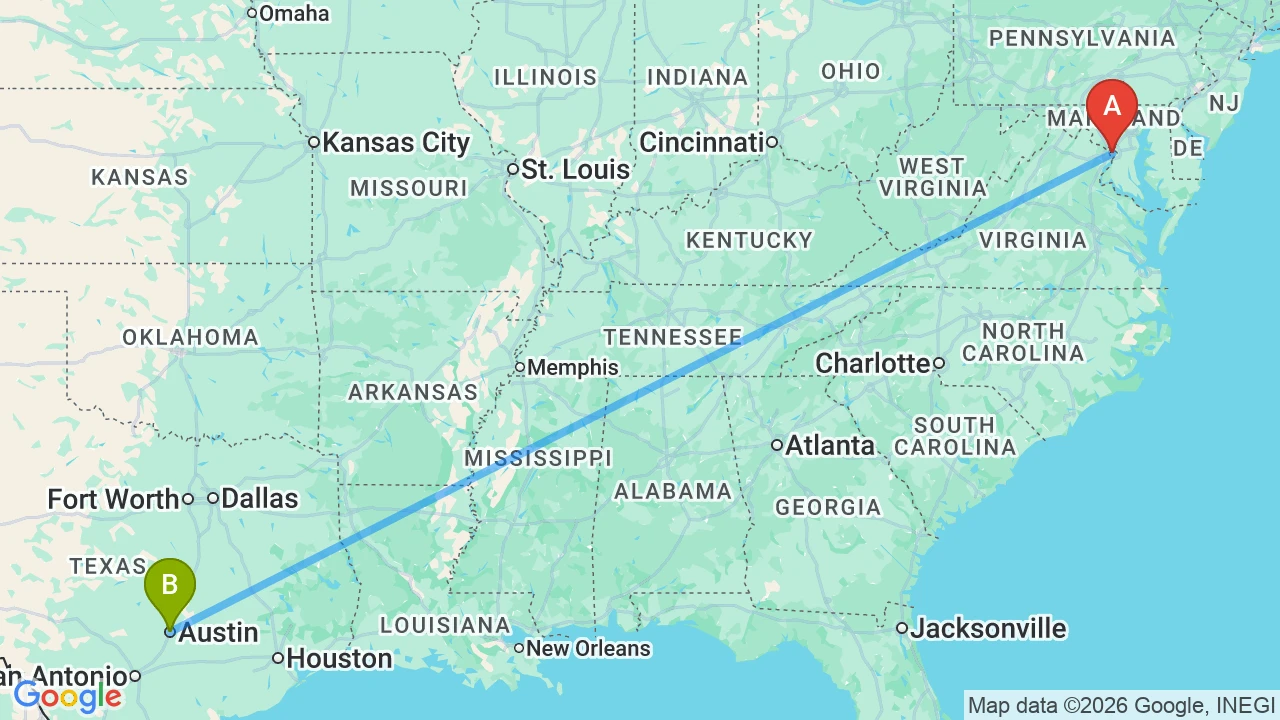
Relocating from Washington, DC to Austin involves a distance of approximately 1,400 miles, which typically translates to a multi-day drive or a direct flight of about three to four hours. Most movers hire professional moving companies for this distance, and costs vary based on household size, timing, and service level. Summer months are peak moving season in both cities, which can increase costs and reduce availability. Spring and fall offer more moderate weather in both locations and may provide more flexibility in scheduling.
One of the most immediate logistical adjustments is vehicle acquisition. If you’ve lived car-free or car-light in Washington, DC, you’ll almost certainly need to purchase or lease a vehicle before or shortly after arriving in Austin. This requires budgeting for a down payment, monthly payments, insurance (which can be higher in Texas due to uninsured driver rates and weather risks), registration, and ongoing maintenance. Parking is generally abundant and often free in Austin, unlike in DC where street parking is competitive and garage fees are common, but the need for a vehicle represents a significant upfront and ongoing cost.
Utility setup in Austin requires attention to electricity providers. Texas has a deregulated electricity market, meaning residents choose from multiple retail electric providers with varying rates, contract terms, and renewable energy options. This flexibility can yield savings but requires research and active management. Summer electricity bills in Austin can be substantially higher than winter bills due to air conditioning demand, and understanding your usage patterns and rate structure is essential to avoiding bill shock.
Healthcare access shifts as well. Washington, DC benefits from proximity to major academic medical centers and a high concentration of specialists. Austin has strong healthcare infrastructure, including Dell Medical School and Seton Healthcare, but the metro’s rapid growth has strained some services, and wait times for certain specialists can be longer than in DC. Employer-sponsored health insurance remains the norm in both cities, but understanding your new provider network and finding new doctors should be prioritized early in the transition.
Social integration in Austin often revolves around neighborhoods, outdoor activities, and music venues rather than professional associations or policy groups. Newcomers frequently find community through recreational sports leagues, neighborhood associations, or Austin’s active food and music scenes. The city’s growth means many residents are also transplants, which can make it easier to build new social networks, though the car-dependent layout means socializing requires more intentional planning than in DC’s walkable neighborhoods.
Frequently Asked Questions
- Is Austin, TX cheaper or more expensive than Washington, DC?
- Cost pressure shifts rather than simply decreasing or increasing. Housing entry costs in Austin are generally lower than in Washington, DC, but transportation expenses rise sharply due to car dependence, and property taxes in Texas are notably higher. Utility costs, particularly for air conditioning in summer, also increase. The absence of state income tax in Texas increases take-home pay, but this benefit is partially offset by higher property and sales taxes. Where you feel cost pressure most depends on your housing choices, vehicle needs, and tolerance for climate-driven utility swings.
- How do housing markets differ between Washington, DC and Austin, TX?
- Washington, DC’s housing market features high entry costs, older housing stock, and intense competition, particularly in walkable, transit-accessible neighborhoods. Austin’s market offers newer construction, more single-family home options, and generally lower purchase prices, but property taxes are significantly higher and ongoing vehicle expenses add to the total cost of living. Renters in Austin often find more space for comparable or lower monthly rent than in DC, but the need for parking and higher utilities reshape the overall budget.
- What lifestyle differences do people notice when moving from Washington, DC to Austin, TX?
- Daily life becomes more car-dependent, less walkable, and more spread out geographically. The social and professional culture shifts from policy-driven and formal to more casual, entrepreneurial, and outdoor-oriented. Austin’s long, hot summers require significant air conditioning use and reshape daily routines, while mild winters allow year-round outdoor activities. The absence of DC’s Metro system and the need to drive for most errands represent the most immediate adjustment for many newcomers.
- When is the best time of year to move to Austin, TX?
- Spring (March through May) and fall (October through November) offer the most moderate weather and avoid both the peak summer heat and the busy summer moving season. Moving during these windows can reduce costs, increase moving company availability, and make the initial adjustment more comfortable. Summer moves mean arriving during the hottest months, which can be challenging for those unaccustomed to sustained temperatures above 95°F, while winter moves are logistically easier but offer less opportunity to explore Austin’s outdoor amenities immediately.
- What are common challenges when relocating from Washington, DC to Austin, TX?
- Adjusting to car dependence and longer commute times surprises many DC transplants, as does the intensity and duration of Austin’s summer heat. The shift from DC’s dense, walkable neighborhoods to Austin’s sprawling layout requires changes in daily routines, errand patterns, and social planning. Understanding Texas property taxes, navigating the deregulated electricity market, and finding new healthcare providers also require attention early in the transition.
- Who tends to benefit most when moving from Washington, DC to Austin, TX, and who may struggle?
- This move tends to work well for professionals in tech or entrepreneurial fields seeking a less formal culture, families wanting more space and newer housing, and individuals who prioritize outdoor recreation and a milder winter climate. It can be challenging for those who rely on public transit, value walkability and urban density, thrive in policy-driven professional environments, or have low tolerance for prolonged heat. Households without vehicles or those accustomed to car-free living will face the steepest adjustment curve.
Conclusion: Understanding the Tradeoffs
Moving from Washington, DC to Austin, TX involves more than a change in geography—it requires adapting to a fundamentally different urban form, cost structure, and lifestyle rhythm. Housing pressure may ease at entry, but transportation costs rise, property taxes claim a larger share of budgets, and climate-driven utility expenses become a recurring reality. The walkable, transit-rich environment of DC gives way to Austin’s car-dependent sprawl, and the formal, policy-centered culture of the capital is replaced by a more casual, entrepreneurial, and outdoor-focused social scene.
This relocation works best for those who value space, sunshine, and a less intense professional environment, and who are prepared to embrace car ownership and the logistical adjustments it requires. It can be challenging for those who depend on public transit, prioritize walkability, or thrive in DC’s dense urban fabric and policy-driven culture. Understanding where cost pressure shifts, how daily routines change, and what logistical friction to expect allows you to make a more informed decision about whether this move aligns with your priorities and household needs.
For deeper exploration of housing costs, neighborhood comparisons, and budgeting tools for both cities, consider consulting detailed city-specific guides and cost breakdowns available through IndexYard’s metro and city hubs.