
Moving from Seattle to Austin: How Cost Pressure and Daily Life Shift
The Seattle-to-Austin corridor has become one of the most traveled relocation paths in the U.S., driven by housing cost differences, remote work flexibility, and lifestyle curiosity. But this move isn’t a simple cost swap—it’s a fundamental shift in where expenses concentrate, how daily logistics work, and what kind of household rhythm becomes default.
This guide explains how cost behavior, housing dynamics, and everyday patterns change when you relocate from Seattle, WA to Austin, TX in 2026. It won’t tell you whether the move “saves money” or “improves your life”—those outcomes depend entirely on your household structure, work situation, and what you prioritize. Instead, it clarifies where pressure moves, so you can decide whether the tradeoffs align with your circumstances.
The Core Relocation Drivers: Why This Move Happens
People move from Seattle to Austin for a mix of reasons that rarely boil down to a single factor. Housing affordability is often the headline—Seattle’s median home value of $879,900 versus Austin’s $461,500 represents a dramatic entry barrier difference. But the move also reflects lifestyle curiosity: Austin’s reputation for live music, outdoor access, and a more relaxed social pace attracts households looking for a different daily rhythm.
Remote work has made this corridor viable for knowledge workers who previously needed to stay near Seattle’s tech hubs. The unemployment rate in Austin (3.5%) is slightly lower than Seattle’s (4.1%), and the city’s growing tech and creative sectors offer job mobility for those who need or want to change employers post-move.
Climate plays a quiet but persistent role. Seattle’s cool, overcast weather gives way to Austin’s hot, sunny intensity—a shift that affects not just comfort but also utility exposure, outdoor routines, and seasonal planning. Some households embrace the change; others underestimate how much triple-digit summer heat reshapes daily life.
What often surprises movers is that Austin isn’t simply “cheaper Seattle.” It’s a different cost structure entirely, with lower housing entry costs but higher ongoing exposure in areas like electricity, transportation, and summer cooling. The move works best for households who understand these tradeoffs in advance and can adapt their routines accordingly.
Cost Pressure Shifts: Where Expenses Concentrate Differently
The Housing Entry Barrier Drop
The most immediate financial shift is housing accessibility. Seattle’s median home value of $879,900 creates a formidable barrier for buyers, especially when combined with the region’s competitive bidding environment and limited inventory. Austin’s median home value of $461,500—roughly half—opens ownership pathways that felt out of reach in Seattle.
For renters, the gap is meaningful but less dramatic. Seattle’s median gross rent of $1,945 per month versus Austin’s $1,549 per month represents about $400 monthly in baseline rent pressure. However, Austin’s rental market has experienced rapid appreciation in recent years, and lease renewals can bring sharp increases, particularly in high-demand neighborhoods near downtown or the University of Texas.
The ownership equation shifts in other ways too. Texas has no state income tax, which affects take-home pay for higher earners, but property taxes tend to run higher than Washington’s structure. Homeowners in Austin should expect property tax bills that feel more prominent than they did in Seattle, even on a lower-priced home. Homeowners insurance also tends to cost more in Texas due to weather exposure, particularly hail and storm risk.
Utilities: From Mild Stability to Seasonal Volatility
Seattle’s temperate climate keeps utility costs relatively predictable. Heating needs are modest, cooling is often optional, and electricity rates of 14.06¢/kWh support stable monthly bills. Austin’s electricity rate of 16.11¢/kWh is higher, but the real shift comes from usage intensity. Extended summer heat drives air conditioning loads that can double or triple electricity bills during peak months, creating seasonal expense spikes that require different budgeting strategies.
Natural gas pricing also shifts: Seattle’s rate of $24.71/MCF versus Austin’s $30.71/MCF reflects higher costs, though heating demand in Austin is minimal compared to cooling. Households moving from Seattle often underestimate how much summer cooling dominates the utility picture in Austin, where managing indoor comfort becomes a daily cost consideration rather than an occasional one.
Transportation: Driving Becomes More Central
Seattle’s pedestrian infrastructure and rail transit presence support a range of mobility options, particularly in denser neighborhoods. Austin also has rail service and notable cycling infrastructure, but the city’s sprawl and car-oriented development patterns make driving the default for most households. The average commute in Austin is 24 minutes versus Seattle’s 27 minutes, but the percentage of workers with long commutes is lower in Austin (33.1% versus 43.2%), suggesting that while driving is more necessary, distances are often more manageable.
Gas prices shift dramatically: $3.84/gallon in Seattle versus $2.46/gallon in Austin. For households that drive frequently, this difference compounds quickly. A typical commuter covering 25 miles round trip in a vehicle averaging 25 MPG would use about 20 gallons per month, translating to roughly $28 monthly savings on fuel alone—not transformative, but noticeable over time.
However, car dependency itself becomes a hidden cost. Households that managed with one vehicle in Seattle may find that Austin’s layout and transit limitations make a second car feel necessary, adding insurance, maintenance, registration, and depreciation to the household expense structure.
Groceries and Daily Errands
Seattle’s regional price parity index of 113 versus Austin’s 98 suggests that general consumer prices run lower in Austin. Both cities show high food and grocery establishment density, but the cost texture differs. Derived estimates based on regional price parity suggest that staples like bread, eggs, and milk cost moderately less in Austin, though these figures reflect adjusted baselines rather than observed local prices and should be verified with local shopping patterns.
What changes more than price is access friction. Seattle’s walkable pockets and integrated green space support errand routines that blend walking, transit, and driving. Austin’s similar urban form—both cities show high pedestrian-to-road ratios and notable bike infrastructure—means that central neighborhoods offer comparable access, but suburban areas often require more intentional trip planning and longer drives to reach grocery stores, pharmacies, and services.
Housing and Neighborhood Patterns: How Place Structure Shapes Costs
Ownership vs. Rental Dynamics
Seattle’s housing market pressures both renters and buyers, but the ownership barrier is especially severe. Austin’s lower entry costs make ownership accessible to households who were priced out in Seattle, but the tradeoff comes in the form of higher property taxes and insurance premiums. Renters in Austin face a market that has tightened considerably, with lease renewals sometimes bringing double-digit percentage increases in high-demand areas.
Both cities show strong family infrastructure—schools and playgrounds meet density thresholds—and hospital presence, making them viable for households with children or aging parents who need routine healthcare access. However, neighborhood selection becomes more consequential in Austin, where choosing a location far from work or daily services can lock in long-term driving costs that erode the housing savings.
Urban Form and Daily Logistics
Both Seattle and Austin exhibit more vertical building profiles and mixed land use, with substantial pedestrian infrastructure in parts of each city. This means that movers who prioritize walkability can find it in both places, but the geography of those pockets differs. Seattle’s density concentrates around downtown, Capitol Hill, and transit corridors. Austin’s walkable areas cluster around downtown, the University of Texas, and South Congress, but much of the metro sprawls in car-oriented patterns.
Green space access is integrated in both cities, with park density exceeding high thresholds and water features present. For households that value outdoor routines, both cities deliver—but the seasonal usability shifts. Seattle’s parks remain accessible year-round in mild, damp conditions. Austin’s parks face intense summer heat that pushes outdoor activity to early mornings and evenings, changing how and when green space gets used.
Lifestyle and Daily Rhythms: How the Move Feels
Pace and Social Texture
Seattle’s culture tends toward reserved, introverted social norms, with a strong emphasis on coffee culture, tech networking, and outdoor recreation. Austin’s social scene feels more extroverted and spontaneous, with live music, food trucks, and neighborhood bars serving as default gathering spaces. For some movers, this shift feels liberating; for others, it requires adjustment, especially if they prefer quieter, more private routines.
The work-from-home percentage is higher in Seattle (6.3%) than Austin (4.8%), though both figures reflect pre-pandemic baseline patterns and may not capture the full remote work shift. Households moving to Austin with remote roles often find that the city’s lower cost of living and lifestyle appeal make it easier to justify staying remote long-term, even if local job opportunities require in-person presence.
Climate Exposure and Seasonal Adaptation
Seattle’s cool, overcast climate keeps indoor temperatures comfortable for much of the year, with heating needs concentrated in winter and cooling rarely necessary. Austin’s extended cooling season and triple-digit summer heat create a fundamentally different relationship with weather. Air conditioning becomes non-negotiable, outdoor plans require heat management, and summer months bring a slower, more indoor-focused rhythm.
For households with children, the shift affects school routines, sports schedules, and playground usability. For retirees, the heat can limit outdoor activity and increase reliance on climate-controlled spaces. For active adults, early morning and evening become the primary windows for running, cycling, or hiking, requiring schedule adjustments that feel minor at first but compound over time.
Commute Behavior and Mobility Patterns
Seattle’s longer average commute (27 minutes versus 24 minutes) and higher percentage of long commutes (43.2% versus 33.1%) reflect the region’s traffic congestion and geographic constraints. Austin’s commute times are slightly shorter on average, but the city’s rapid growth has strained road capacity, and traffic congestion during peak hours can feel intense, particularly on I-35 and MoPac.
Both cities have rail transit and notable bike infrastructure, but the practical viability of non-car commutes depends heavily on neighborhood selection. Movers who prioritize transit access should focus on areas near Austin’s MetroRail line or high-frequency bus corridors, but even then, most households find that driving remains the most reliable option for daily errands and work trips.
Relocation Logistics and Practical Friction
What the Move Itself Involves
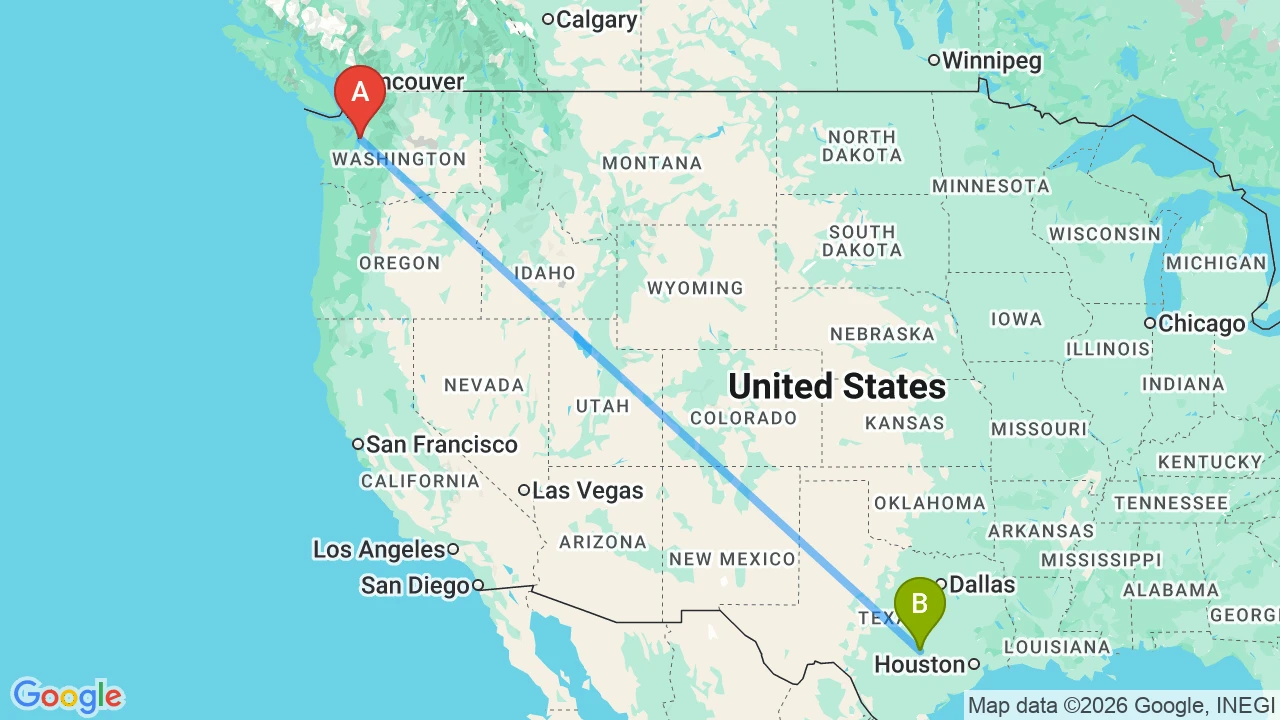
The Seattle-to-Austin move covers roughly 2,100 miles, making it a multi-day drive or a single-flight relocation. For households moving with furniture and belongings, professional moving services typically quote based on weight and distance, with cross-country moves often running several thousand dollars. DIY moves using rental trucks reduce cost but add time, physical labor, and logistical complexity.
Timing the move matters. Summer months bring peak moving demand and extreme heat in Austin, making the physical process more uncomfortable. Fall and spring offer milder weather and sometimes lower moving rates, though Austin’s rental market can tighten during University of Texas enrollment periods, making lease availability more constrained.
Administrative and Transition Friction
Texas residency requires updating driver’s licenses, vehicle registration, and voter registration within 30 days of establishing residency. Vehicle registration in Texas involves a title transfer and inspection, which can take time if the vehicle doesn’t meet Texas emissions or safety standards. Washington has no state income tax, so the move doesn’t create new tax filing obligations, but Texas property taxes and sales taxes (which vary by locality) require adjustment in household budgeting.
Healthcare transitions can create gaps. Households with established providers in Seattle need to find new doctors, dentists, and specialists in Austin, which can take weeks or months depending on availability and insurance networks. Both cities have hospital presence, but continuity of care requires proactive planning, especially for households managing chronic conditions or ongoing treatment.
Social and Routine Rebuilding
The less tangible friction comes from rebuilding social networks and daily routines. Seattle’s social culture, while reserved, often centers on shared outdoor activities, coffee meetups, and tech industry networking. Austin’s social scene is more bar- and music-focused, which works well for extroverted households but can feel overwhelming or misaligned for those who prefer quieter, more structured socializing.
Finding new grocery stores, gyms, parks, and service providers takes time, and the trial-and-error process can feel exhausting in the first few months. Households with children face school transitions, which can be smoother or harder depending on district quality, enrollment timing, and how well the child adapts to new peer groups.
Who This Move Tends to Fit—and Who It Challenges
Households Likely to Benefit
First-time homebuyers priced out of Seattle’s market often find that Austin’s lower home values make ownership achievable, even with higher property taxes factored in. The ability to build equity rather than pay rent can reshape long-term financial stability, especially for younger households early in their careers.
Remote workers with stable income who no longer need proximity to Seattle’s job hubs can leverage Austin’s lower cost of living without sacrificing career momentum. The combination of lower housing costs, no state income tax, and a growing tech scene creates flexibility that feels rare in other major metros.
Households seeking lifestyle change—particularly those who value live music, food culture, and a more extroverted social scene—often find that Austin delivers on its reputation. The city’s outdoor access, despite the heat, supports active lifestyles for those willing to adapt their schedules.
Households Likely to Face Pressure
Single-income families may find that Austin’s lower median household income ($86,556 per year versus Seattle’s $116,068 per year) reflects a job market that doesn’t always match Seattle’s wage levels, particularly outside the tech sector. If the move involves a job change, the income drop can offset housing savings.
Households sensitive to heat—particularly retirees, young children, or individuals with health conditions aggravated by extreme temperatures—may struggle with Austin’s summer intensity. The extended cooling season increases utility costs and limits outdoor routines in ways that feel more restrictive than Seattle’s mild, damp climate.
Renters without ownership plans may find that Austin’s rental market, while cheaper than Seattle’s, still consumes a significant share of income, and lease renewal increases can erode the initial savings. Without the equity-building benefit of ownership, the move’s financial advantage becomes less clear over time.
Households reliant on public transit will find Austin’s system less comprehensive than Seattle’s, making car ownership more necessary. The shift from a transit-viable lifestyle to a car-dependent one adds insurance, maintenance, and fuel costs that can surprise households accustomed to getting by with minimal driving.
How Day-to-Day Living Actually Feels: Experiential Patterns
Both Seattle and Austin exhibit substantial pedestrian infrastructure in parts of each city, with high pedestrian-to-road ratios and notable bike infrastructure. This means that movers who prioritize walkability can find it in both places, but the practical experience differs. In Seattle, walkable neighborhoods often cluster around transit corridors and waterfront areas, with errands and services accessible on foot or by bus. In Austin, walkable pockets concentrate around downtown, the University of Texas, and South Congress, but much of the metro sprawls in car-oriented patterns that make driving the default.
Grocery and food establishment density exceeds high thresholds in both cities, meaning that access to daily errands is broadly available. However, the friction of reaching those services shifts. In Seattle, integrated green space and water features support routines that blend walking, transit, and outdoor activity. In Austin, similar park density and water features exist, but the extended cooling season pushes outdoor routines to early mornings and evenings, changing when and how green space gets used.
The presence of rail transit in both cities creates the impression of transit viability, but the practical reliance on cars differs. Seattle’s system supports commutes and errands for households in denser neighborhoods, while Austin’s rail serves a narrower corridor, leaving most households dependent on driving for daily logistics. The shift from a transit-supported lifestyle to a car-dependent one isn’t just about cost—it’s about time, routine, and the mental load of trip planning.
Family infrastructure is strong in both cities, with schools and playgrounds meeting density thresholds, and hospital presence ensures access to routine and emergency care. For households with children or aging parents, both cities offer the amenities needed for daily life, but neighborhood selection becomes more consequential in Austin, where choosing a location far from services can lock in long-term driving and time costs.
Frequently Asked Questions
- Does Austin feel more or less expensive than Seattle?
- Austin’s lower housing entry costs and lack of state income tax create immediate financial relief for many movers, but the cost structure shifts rather than disappears. Utilities, particularly summer cooling, run higher due to extended heat exposure. Transportation costs can increase if car dependency replaces transit use. The move tends to feel cheaper for homebuyers and higher earners, but renters and single-income households may find that ongoing expenses consume a similar share of income, just distributed differently.
- How do the housing markets differ between Seattle and Austin?
- Seattle’s median home value of $879,900 versus Austin’s $461,500 represents a dramatic entry barrier difference, making ownership accessible in Austin for households priced out of Seattle. However, Austin’s property taxes run higher, and the rental market has tightened considerably, with lease renewals sometimes bringing sharp increases. Seattle’s market pressures both renters and buyers, while Austin’s market favors buyers but challenges renters in high-demand neighborhoods.
- What feels different about daily life after moving from Seattle to Austin?
- The social pace shifts from reserved and introverted to more extroverted and spontaneous, with live music and food culture playing a larger role in daily routines. Climate exposure changes fundamentally—Seattle’s mild, damp weather gives way to Austin’s intense summer heat, which reshapes outdoor activity, utility budgeting, and seasonal planning. Driving becomes more central to daily logistics, even in walkable neighborhoods, and the extended cooling season creates a different rhythm around when and how outdoor space gets used.
- When does the move tend to feel easiest or hardest?
- Fall and spring offer milder weather and sometimes lower moving costs, making the physical relocation more comfortable. Summer brings peak moving demand and extreme heat in Austin, which can make the transition more exhausting. The first few months involve rebuilding routines, finding new providers, and adjusting to the climate, with the hardest period typically occurring during the first Austin summer, when cooling costs and heat exposure feel most intense.
- What are the most common adjustment pressures after the move?
- Households often underestimate how much car dependency increases, even in walkable neighborhoods, adding insurance, maintenance, and fuel costs. Summer cooling bills surprise movers accustomed to Seattle’s mild climate, creating seasonal budget spikes that require different planning. Social network rebuilding takes time, and the shift from Seattle’s reserved culture to Austin’s more extroverted scene can feel disorienting. For families, school transitions and finding new healthcare providers add logistical friction that compounds in the first six months.
- Who tends to benefit from this move—and who may struggle?
- First-time homebuyers, remote workers with stable income, and households seeking lifestyle change tend to benefit most, leveraging Austin’s lower housing costs and no state income tax. Single-income families, households sensitive to heat, renters without ownership plans, and those reliant on public transit often face more pressure, as the move’s financial advantage depends heavily on job stability, vehicle ownership, and tolerance for Austin’s summer intensity.
How this article was built: In addition to public economic data, this article incorporates location-based experiential signals derived from anonymized geographic patterns—such as access density, walkability, and land-use mix—to reflect how day-to-day living actually feels in Seattle, WA and Austin, TX.
Making the Decision: What to Prioritize
The Seattle-to-Austin move isn’t a simple cost arbitrage—it’s a lifestyle recalibration that affects housing accessibility, daily logistics, climate exposure, and social rhythms. The move works best for households who understand these tradeoffs in advance and can adapt their routines accordingly. It challenges households who assume that lower housing costs automatically translate to lower overall pressure, without accounting for increased utility volatility, car dependency, and the hidden costs of rebuilding routines in a new city.
If you’re considering this move, focus on the factors that matter most to your household: Is ownership a priority? Can you tolerate or embrace intense summer heat? Will your income hold steady or increase post-move? Do you need transit access, or are you comfortable driving daily? The answers to these questions will determine whether Austin’s cost structure and lifestyle feel like relief or just a different kind of pressure.
For deeper exploration of how costs behave in each city, visit the Seattle living guide and Austin living guide on IndexYard.