
74 out of 100 residents say they’re happy in Mount Laurel—a figure that captures the town’s steady suburban appeal but also hints at the quiet tradeoffs woven into daily life here. This isn’t a place that dazzles with spontaneity or urban energy. Instead, Mount Laurel offers predictable comfort: good schools, accessible shopping corridors, and the kind of space that lets families spread out. But for those who crave walkable neighborhoods, vibrant street life, or easy transit access, the town’s car-oriented rhythms and corridor-clustered conveniences can feel limiting. Understanding whether Mount Laurel feels like home depends less on what the town has and more on what you need from your surroundings.
The Emotional Landscape of Mount Laurel
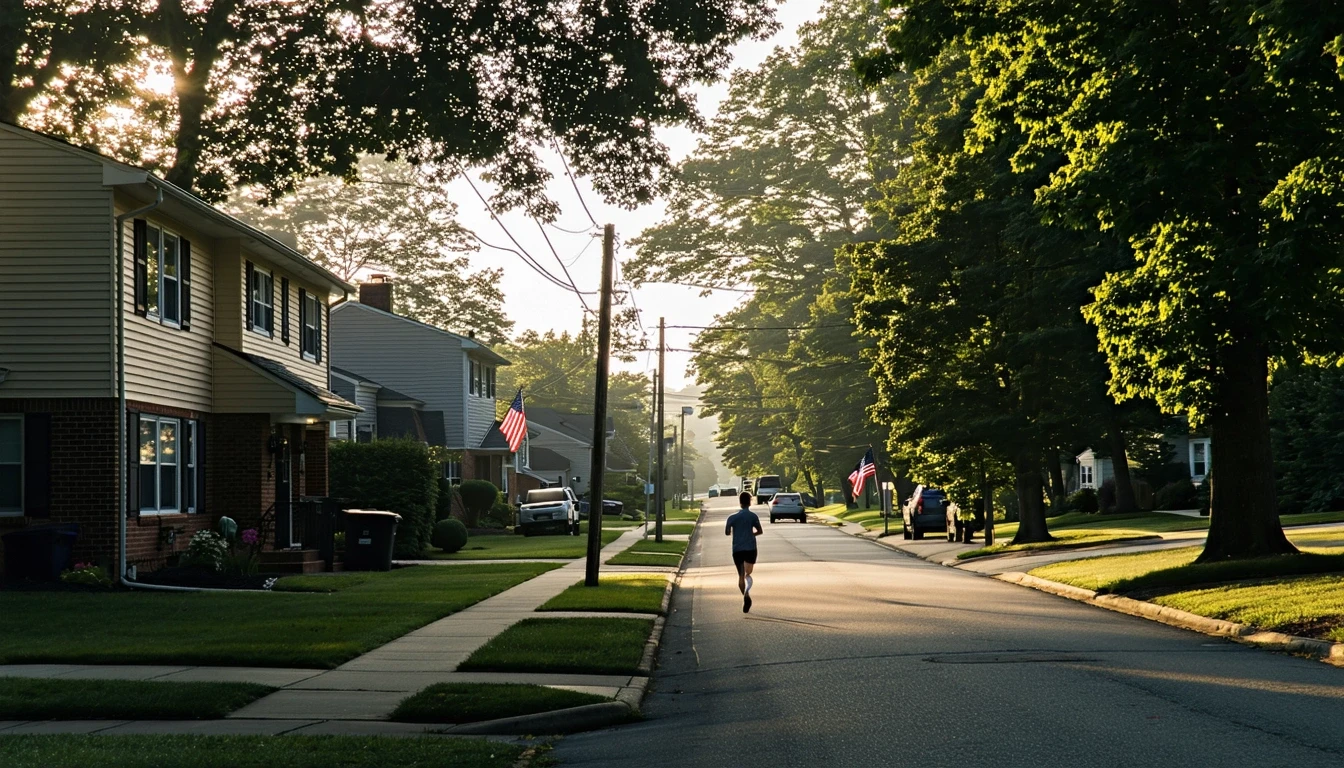
Mount Laurel’s vibe is rooted in pragmatic contentment. People here tend to appreciate what the town does well—safe neighborhoods, reliable schools, proximity to Philadelphia—without expecting it to be something it’s not. The town sits comfortably in the Philadelphia metro orbit, offering suburban breathing room without the density or walkability of urban cores. For families and commuters, this balance often feels just right: you get space, relative affordability compared to closer-in suburbs, and access to jobs and amenities within a reasonable drive.
But that same structure creates friction for others. The town’s layout favors driving, with grocery stores, restaurants, and services clustered along commercial corridors rather than woven into neighborhood fabric. Sidewalks exist in pockets, and while parks and schools are present, getting to them on foot isn’t always intuitive or pleasant. For households that value spontaneous errands, evening strolls to dinner, or the ability to live without a car, Mount Laurel can feel like a place that requires constant planning. The infrastructure supports a comfortable suburban life—but only if you’re willing to drive for most of it.
Economically, the town reflects stability. With a median household income of $111,272 per year and an unemployment rate of 4.2%, Mount Laurel attracts working families and professionals who prioritize financial predictability and space over urban texture. Homes here—median value $314,800—offer more square footage than you’d find closer to Philadelphia, and renters pay a median of $1,872 per month for similar suburban access. That economic foundation shapes the town’s emotional tone: people here tend to feel secure, but not particularly adventurous.
Social Media Buzz in Mount Laurel
In cities like Mount Laurel, locals often describe the vibe as a mix of pride and mild restlessness. On platforms like Facebook and Reddit, recurring themes center on convenience, traffic, and the tension between growth and suburban character. People praise the town’s proximity to shopping, its family-friendly reputation, and the sense that it’s a “safe bet” for raising kids. But there’s also frequent commentary about sameness—the feeling that every corridor looks like the next, and that spontaneity requires a drive.
“It’s a great place to raise a family, but you have to be okay with the fact that everything requires a car. There’s no walking to grab coffee or dinner—you’re always planning your trips.”
“I love that we’re close to Philly without the chaos, but I do miss being able to just step outside and feel like I’m in the middle of things. Here, you have to go find the things.”
“Mount Laurel is exactly what it looks like: clean, safe, predictable. If that’s what you want, you’ll be happy. If you’re looking for character or surprise, you’ll probably get bored.”
The tone is rarely negative, but it’s often qualified. People acknowledge the tradeoffs openly, and the discussion tends to focus less on what’s broken and more on what’s missing—texture, walkability, spontaneity. For those who value suburban stability, that’s a small price. For those who don’t, it’s a daily reminder.
Local News Tone
Local coverage in Mount Laurel tends to frame the town through the lens of steady growth and infrastructure management. Headlines and story themes reflect a community navigating the balance between expansion and preservation, convenience and congestion. The tone is rarely celebratory or alarmist—it’s managerial, focused on how the town adapts to change without losing its suburban identity.
- “Community Debates What Growth Should Look Like”
- “New Retail Corridors Bring Convenience—and Traffic Questions”
- “Schools Remain a Draw as Families Continue to Arrive”
- “Residents Weigh Suburban Comfort Against Walkability Wishes”
- “Town Balances Development with Neighborhood Preservation”
These themes reflect a town that’s neither stagnant nor rapidly transforming. Mount Laurel is growing, but incrementally. Services are expanding, but along familiar suburban patterns. The emotional undertone is one of cautious pragmatism: people want the town to improve without changing too much, and the tension between those goals surfaces regularly in public conversation.
Review-Based Public Perception
On platforms like Google, Yelp, and Nextdoor, Mount Laurel’s public perception splits predictably along expectation lines. Those who wanted suburban comfort tend to praise the town warmly. Those who hoped for more urban texture or walkable spontaneity express mild disappointment, though rarely outright dissatisfaction.
Positive reviews emphasize safety, school quality, and convenience. Families appreciate the parks, the variety of shopping options along major corridors, and the sense that the town is well-maintained. Newer planned areas tend to receive higher marks for cleanliness and amenities, while older pockets are described as quieter and more established, though sometimes less polished.
Critical reviews focus on car dependency, lack of neighborhood walkability, and the feeling that the town lacks a “center.” People note that errands require driving, that sidewalks are inconsistent, and that there’s little sense of a downtown or gathering place. For those who value spontaneity—grabbing dinner on a whim, walking to a coffee shop, or exploring on foot—Mount Laurel can feel like a place that requires too much logistical effort.
The town’s healthcare access is described as adequate for routine needs—clinics and pharmacies are present—but those seeking hospital-level care note that it requires a short drive to nearby facilities. This fits the broader pattern: Mount Laurel provides the essentials, but rarely exceeds them.
Comparison to Nearby Cities
| Aspect | Mount Laurel | Cherry Hill | Voorhees |
|---|---|---|---|
| Overall Vibe | Pragmatic suburban comfort | Established suburban hub with more retail density | Quieter, more residential, less commercial bustle |
| Walkability | Corridor-based, car-dependent | Slightly more walkable pockets near retail centers | Very car-dependent, minimal pedestrian infrastructure |
| Family Appeal | Strong school reputation, family-friendly | Similar family focus, more established neighborhoods | Family-oriented, quieter, fewer amenities |
| Dining and Nightlife | Chain-heavy, limited spontaneity | More variety, slightly more urban feel | Minimal, very suburban |
Mount Laurel sits in the middle of this spectrum. Cherry Hill offers a bit more density and variety, with more established retail corridors and slightly better walkability in certain pockets. It feels busier, more commercial, and a bit more connected. Voorhees, by contrast, leans even further into quiet suburban life—less traffic, fewer amenities, and a slower pace. If you want more action without leaving the suburbs, Cherry Hill might feel more alive. If you want even more space and quiet, Voorhees might suit you better. Mount Laurel splits the difference: it’s comfortable, accessible, and predictable, but it won’t surprise you.
What Locals Are Saying
“We moved here from Philly for the schools and the space, and we got exactly what we wanted. The tradeoff is that we drive everywhere now, but that’s fine—we knew that coming in.”
“I work remotely, and Mount Laurel is perfect for that. Quiet, affordable, and I don’t need to commute. But if I had to rely on public transit or wanted to walk to things, I’d go crazy.”
“It’s a great town if you have kids. Parks, schools, safety—all the boxes are checked. But if you’re single or don’t have kids, it can feel pretty boring. There’s not much to do unless you drive somewhere else.”
“I appreciate that it’s not chaotic, but I do miss having a downtown or a main street where you can just walk around. Everything here is spread out, and it all looks the same after a while.”
“We’ve been here for 15 years, and it’s been solid. The town has grown, but it hasn’t changed too much. It’s still quiet, still safe, still predictable. That’s what we wanted.”
“If you’re okay with suburban life and driving everywhere, Mount Laurel is great. If you’re hoping for walkability or urban energy, you’ll be disappointed. It’s really that simple.”
“The cost of living here is reasonable compared to closer-in suburbs, and you get more space for your money. But you pay for that in time—everything takes a little longer because you have to drive.”
Does Mount Laurel Feel Like a Good Fit?
Mount Laurel works best for people who value suburban predictability, family-friendly infrastructure, and proximity to Philadelphia without urban density. If you’re comfortable with car dependency, appreciate space over spontaneity, and prioritize schools and safety, the town delivers consistently. The housing tradeoffs here favor square footage and relative affordability, and the town’s economic stability supports a secure, middle-class lifestyle.
But if you’re hoping for walkable neighborhoods, vibrant street life, or the ability to live without a car, Mount Laurel will feel limiting. The town’s structure requires planning—errands aren’t spontaneous, and getting around means driving. For urban lifestyle seekers or transit-dependent households, that friction compounds quickly. Understanding your own tolerance for car dependency and corridor-based convenience is the best predictor of whether Mount Laurel will feel like home or like a compromise.
For a clearer picture of how these patterns translate into day-to-day costs or what drives quality of life in Mount Laurel, exploring those dimensions can help sharpen your decision.
How this article was built: In addition to public economic data, this article incorporates location-based experiential signals derived from anonymized geographic patterns—such as access density, walkability, and land-use mix—to reflect how day-to-day living actually feels in Mount Laurel, NJ.
The perspectives shown reflect commonly expressed local sentiment and recurring themes in public discussion, rather than individual accounts.