
| Transit Type | Coverage Area | Typical Use Case |
|---|---|---|
| Bus service | Main corridors | Regional commutes to Philadelphia/Camden |
| Pedestrian paths | Moderate density | Short trips in mixed-use pockets |
| Personal vehicle | Citywide | Daily errands, local trips, flexible schedules |
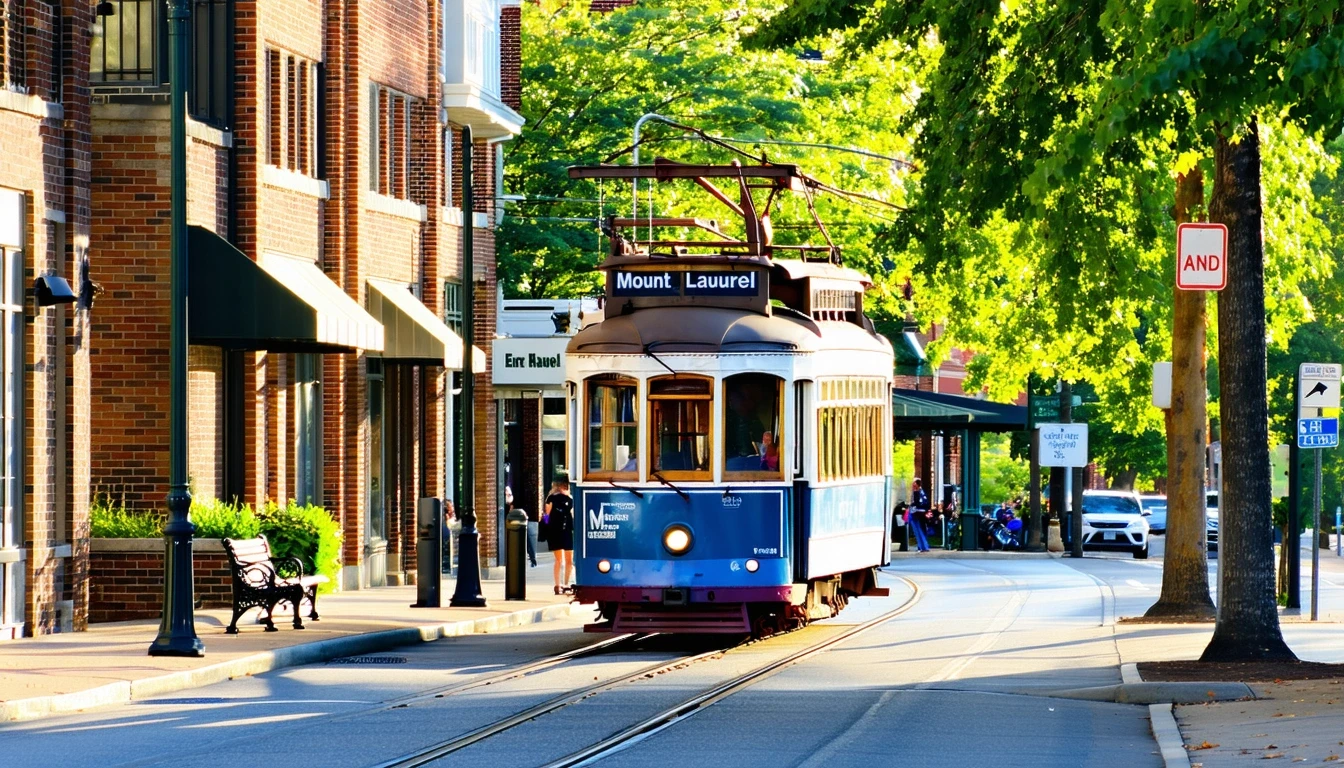
How People Get Around Mount Laurel
Understanding transportation options in Mount Laurel starts with recognizing the city’s suburban structure. Most residents depend on personal vehicles for daily life, but bus service along key corridors offers a practical alternative for commuters heading to regional employment centers. The layout reflects a pattern common to many Philadelphia-area suburbs: residential neighborhoods spread across a relatively large footprint, with commercial activity and transit access concentrated along main roads.
Newcomers often assume Mount Laurel functions like a dense urban core where transit can replace car ownership. In practice, the city’s development pattern favors driving. Pedestrian infrastructure exists and supports walking in certain areas, but the ratio of sidewalks to roads sits in a middle band—enough to make some trips on foot possible, yet not enough to eliminate the need for a car. Grocery stores, schools, and healthcare facilities cluster along corridors rather than distributing evenly across neighborhoods, which means most households face a choice: live near these corridors and gain some walkability, or accept that nearly every errand will require driving.
This isn’t a failure of planning; it’s the result of decades of suburban growth designed around automobile access. For families who value yard space, quiet streets, and single-family homes, Mount Laurel delivers. But that same layout creates friction for anyone hoping to rely primarily on transit or walking. The city works well for people who already own a car and plan to keep it. It works less well for those testing whether they can live car-free or car-light.
Public Transit Availability in Mount Laurel
Public transit in Mount Laurel centers around bus service, which operates along major corridors connecting residential areas to commercial districts and regional destinations. Systems such as NJ Transit provide routes that link Mount Laurel to Philadelphia, Camden, and other nearby employment hubs. This service plays a meaningful role for commuters with predictable schedules and destinations aligned with existing routes, but it does not offer the comprehensive coverage that would make transit viable for all trip types.
Bus stops appear throughout the city, concentrated where density and foot traffic justify them. Riders who live or work near these corridors benefit from direct access to regional transit networks. Those in residential subdivisions farther from main roads face a different reality: reaching a bus stop may require a car, which undermines the purpose of using transit in the first place. Late-hour service and weekend frequency tend to thin out, which limits transit’s usefulness for shift workers, evening social trips, or errands outside traditional commute windows.
Transit works best in Mount Laurel when it serves as a commute tool rather than a replacement for car ownership. A resident who drives to a park-and-ride lot, then takes a bus into Philadelphia, experiences transit as a time-saver and parking-cost avoider. A resident who needs to pick up groceries, drop off dry cleaning, and attend a doctor’s appointment in the same afternoon will find transit coverage insufficient for that level of logistical complexity.
Driving & Car Dependence Reality
Driving dominates daily life in Mount Laurel because the city’s geography and infrastructure assume it. Parking is abundant and free in most contexts—shopping centers, medical offices, schools, and residential streets all provide space without the scarcity or cost pressures common in denser cities. Roads are wide, traffic flows relatively smoothly outside of peak hours, and the layout prioritizes access by car over other modes.
This car-oriented structure offers flexibility. Residents can live in one part of Mount Laurel, work in another, shop in a third, and manage all of it without consulting a transit schedule or worrying about service gaps. Families with multiple drivers can split errands efficiently. Parents can drop kids at school, commute to work, and return for evening activities without coordinating rides or transfers.
But car dependence also creates exposure. Households must budget for vehicle ownership, fuel, insurance, and maintenance as non-negotiable costs. A family that could theoretically live on one income in a transit-rich city may find that a second car becomes necessary in Mount Laurel simply to manage daily logistics. The flexibility that driving provides comes with a baseline cost that doesn’t disappear during months when the car sits idle or when gas prices spike.
The tradeoff is control versus cost. Driving gives residents control over their time, routes, and schedules. Transit, where it exists, reduces some costs but requires accepting less control and more planning. For most Mount Laurel households, the balance tips toward driving because the alternative doesn’t cover enough of their needs.
Commuting Patterns & Daily Mobility
Commuting in Mount Laurel typically involves either a drive to a local job within the broader Philadelphia metro area or a combination of driving and transit for longer trips into the city. The structure of the workday matters here. Employees with fixed office hours and destinations near transit hubs can build a routine around bus schedules. Those with variable hours, multiple job sites, or roles that require a vehicle during the day will default to driving the entire route.
Daily mobility extends beyond commuting. Parents manage school drop-offs and pickups, often across multiple locations. Errands—groceries, banking, pharmacy runs—cluster along commercial corridors but rarely within walking distance of home. Social and recreational trips add another layer, with gyms, restaurants, and parks scattered across the city and surrounding towns. Each of these trips reinforces the need for a car because the alternative—stitching together a route using bus service and walking—takes significantly more time and limits spontaneity.
Proximity matters, but not in the way it does in a walkable urban core. Living near a grocery store in Mount Laurel might mean a five-minute drive instead of a fifteen-minute drive, but it rarely means a ten-minute walk. The city’s layout includes pockets of mixed-use development where residential and commercial land uses sit closer together, yet even in these areas, the distances and road designs assume car access.
Who Transit Works For — and Who It Doesn’t
Transit in Mount Laurel works best for a specific profile: commuters who live near bus corridors, work in Philadelphia or Camden, and maintain a relatively fixed schedule. These residents can use bus service as a reliable commute tool while still owning a car for everything else. The arrangement reduces parking costs in the city, avoids some of the stress of highway driving, and creates a predictable routine.
Transit works less well for families managing complex household logistics. A parent coordinating school, work, and after-school activities will struggle to make bus schedules align with all of those commitments. Shift workers, especially those with evening or weekend hours, face limited service options. Residents who work locally rather than commuting to regional hubs may find that no direct bus route serves their job site, making transit irrelevant regardless of proximity to a stop.
Renters near main corridors sometimes benefit more than homeowners in residential subdivisions, simply because rental housing in Mount Laurel tends to cluster closer to commercial areas where bus service is more frequent. But even renters will likely need a car for non-commute trips. The distinction isn’t renter versus owner; it’s corridor versus subdivision, and whether your daily destinations align with where buses actually go.
Single adults without children, especially those with flexible or remote work arrangements, may find Mount Laurel’s transit adequate for occasional trips while relying on rideshare or a personal vehicle for everything else. Families with school-age children, especially those juggling multiple schedules, will almost certainly need at least one car, and often two.
Transportation Tradeoffs in Mount Laurel
Choosing between transit and driving in Mount Laurel isn’t a pure either-or decision for most households. It’s a question of how much flexibility and control you need versus how much cost exposure you’re willing to accept. Driving offers near-total flexibility—you go where you want, when you want, without waiting or transferring. That flexibility comes with the cost of vehicle ownership, fuel, and the time spent behind the wheel.
Transit, where it serves your route, reduces some of those costs and can make commuting less stressful by eliminating the need to navigate traffic or find parking. But it also requires planning, limits spontaneity, and works only for trips that align with existing routes and schedules. For someone commuting to a fixed office job in Philadelphia, that tradeoff may feel worthwhile. For someone managing a household with multiple moving parts, it often doesn’t.
Predictability matters more than raw cost in many cases. A household that knows it will spend a certain amount each month on car payments and fuel can plan around that. A household trying to minimize transportation costs by relying on transit may find that the lack of coverage forces them into expensive rideshare trips or limits their access to jobs, services, and opportunities. The lower baseline cost of transit doesn’t always translate into lower total cost or better quality of life.
The real tradeoff in Mount Laurel is between living in a place designed for cars and trying to make a non-car lifestyle work. The city’s infrastructure, layout, and services all assume you’ll drive. Fighting that assumption is possible in limited contexts, but it requires compromises that most households aren’t willing or able to make.
FAQs About Transportation in Mount Laurel (2026)
Is public transit usable for daily commuting in Mount Laurel?
Public transit works for daily commuting if your job is in Philadelphia or Camden and you live near a bus corridor. Commuters with fixed schedules and destinations aligned with existing routes can build a reliable routine. For local jobs within Mount Laurel or trips that require multiple transfers, transit becomes much less practical.
Do most people in Mount Laurel rely on a car?
Yes. The city’s layout, infrastructure, and service distribution all assume car ownership. While bus service exists and serves a meaningful role for some commuters, the majority of households depend on personal vehicles for daily errands, school runs, and local trips.
Which areas of Mount Laurel are easiest to live in without a car?
Areas near main corridors with bus service and higher concentrations of commercial activity offer the best chance of reducing car dependence, though even in these areas, most residents still own a vehicle. Residential subdivisions farther from these corridors make car-free living significantly more difficult.
How does commuting in Mount Laurel compare to nearby cities?
Mount Laurel’s commuting experience is typical of Philadelphia-area suburbs: car-oriented with bus service available for regional trips. Compared to denser cities with more comprehensive transit networks, Mount Laurel requires more driving. Compared to more rural areas, it offers better access to regional transit options.
Can you get by with one car in Mount Laurel?
Some households manage with one car, especially if one adult works from home or has a schedule that allows for shared vehicle use. Families with two working adults, school-age children, or complex schedules often find that a second car eliminates significant logistical friction.
How Transportation Fits Into the Cost of Living in Mount Laurel
Transportation in Mount Laurel functions as a structural cost rather than a discretionary one. The city’s layout and infrastructure make car ownership a baseline assumption for most households, which means transportation costs don’t fluctuate much based on lifestyle choices—they’re baked into the cost of living here. Whether you drive a paid-off sedan or a financed SUV changes the amount, but the need for a vehicle remains constant.
This affects housing decisions in subtle ways. A family might choose a home farther from their workplace because the commute is manageable by car and the housing itself is more affordable. In a transit-rich city, that same distance might feel prohibitive. In Mount Laurel, driving smooths over geographic distance, which expands housing options but also locks in transportation costs as a permanent budget line.
For a fuller picture of how transportation costs interact with housing, utilities, and other expenses, see A Month of Expenses in Mount Laurel: What It Feels Like. That breakdown shows where money actually goes and how different household types experience the overall cost structure.
Understanding where money goes each month helps clarify whether Mount Laurel’s transportation reality fits your situation. If you already own a car and plan to keep it, the city’s car-oriented layout won’t feel like a burden—it will feel like infrastructure that works in your favor. If you’re hoping to minimize transportation costs or avoid car ownership, Mount Laurel will present challenges that require either significant compromise or a shift in expectations.
How this article was built: In addition to public economic data, this article incorporates location-based experiential signals derived from anonymized geographic patterns—such as access density, walkability, and land-use mix—to reflect how day-to-day living actually feels in Mount Laurel, NJ.