
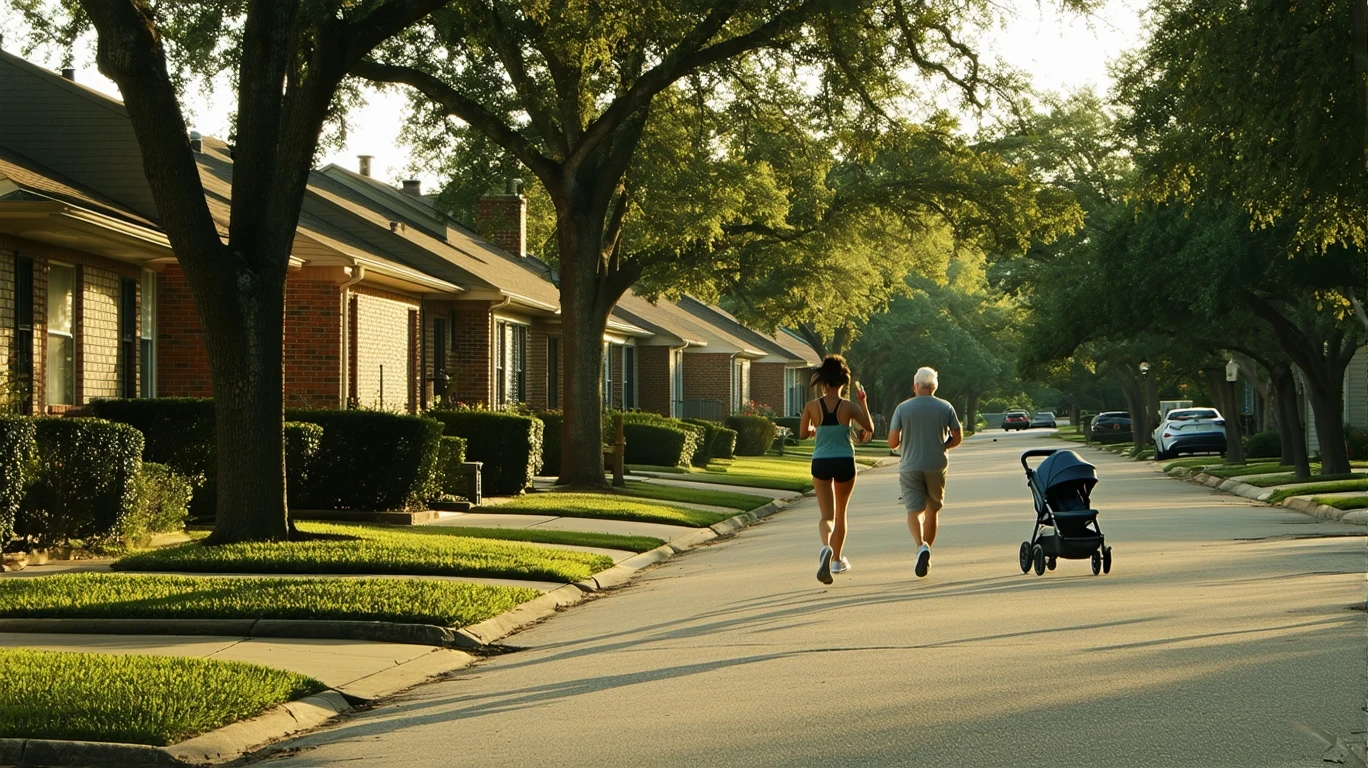
Missouri City and Sugar Land sit just miles apart in the Houston metro, share the same regional economy, and face identical utility rates and gas prices. Yet the cost experience between them diverges sharply—not because one is universally cheaper, but because housing entry barriers, pedestrian infrastructure, healthcare access, and green space availability create fundamentally different pressure points for different households in 2026.
Both cities attract families and professionals seeking suburban space within commuting distance of Houston’s job centers. But Missouri City’s median home value of $268,200 and median rent of $1,781 per month position it as a more accessible entry point, while Sugar Land’s median home value of $387,900 and median rent of $1,868 per month reflect a market structured around higher incomes and more established neighborhoods. The difference isn’t just price—it’s where costs concentrate, how predictably they behave, and which households feel the tradeoffs most acutely.
This comparison explains how the same household income can feel stable in one city and stretched in the other, not by calculating totals, but by showing where cost pressure shows up and why it matters. For some households, Missouri City’s lower housing baseline offsets its transit limitations and clinic-only healthcare access. For others, Sugar Land’s walkable pockets, integrated park density, and hospital presence justify the higher entry cost. The right choice depends on which costs dominate your household’s daily reality.
Housing Costs
Housing is where Missouri City and Sugar Land diverge most visibly. Missouri City’s median home value of $268,200 creates a lower entry barrier for buyers, while Sugar Land’s $387,900 median reflects a market where established neighborhoods, newer construction, and proximity to premium amenities drive prices upward. The gap isn’t just about sticker price—it shapes who can enter the market, what type of housing stock dominates, and how much flexibility households retain after covering shelter costs.
Renters face a smaller but still meaningful gap: Missouri City’s median gross rent of $1,781 per month compared to Sugar Land’s $1,868. Both cities see rental inventory concentrated in apartment complexes and townhome communities, but Sugar Land’s rental market skews toward newer builds with more amenities, while Missouri City offers a broader mix of older and mid-range units. For single adults or couples prioritizing lower baseline housing costs, Missouri City’s rental market provides more breathing room. For households willing to pay modestly more for newer finishes or access to walkable pockets, Sugar Land’s rental stock aligns better.
Ownership costs extend beyond the mortgage. Property taxes, homeowners insurance, and maintenance expectations all rise with home value, meaning Sugar Land buyers face not just a higher purchase price but also higher ongoing obligations. Missouri City homeowners benefit from lower property tax bills and insurance premiums tied to lower assessed values, though older housing stock may introduce more frequent repair needs. First-time buyers often find Missouri City’s entry point more manageable, while move-up buyers or households prioritizing long-term asset appreciation may accept Sugar Land’s higher baseline in exchange for access to more established neighborhoods and integrated park systems.
| Housing Type | Missouri City | Sugar Land |
|---|---|---|
| Median Home Value | $268,200 | $387,900 |
| Median Gross Rent | $1,781/month | $1,868/month |
| Typical Rental Stock | Mixed-age apartments, townhomes | Newer apartments, townhomes with amenities |
| Ownership Ongoing Costs | Lower property taxes, older home maintenance | Higher property taxes, newer home lower maintenance |
Housing takeaway: Missouri City fits households where housing entry cost is the dominant constraint—first-time buyers, single-income families, or renters prioritizing baseline affordability. Sugar Land fits households where housing quality, walkable neighborhood pockets, and long-term asset positioning justify higher upfront and ongoing costs. The difference isn’t about one city being cheaper overall; it’s about whether your household is more exposed to entry barriers or ongoing obligations, and whether you value access to pedestrian infrastructure and integrated green space enough to absorb the higher baseline.
Utilities and Energy Costs
Missouri City and Sugar Land share identical utility rate structures: electricity costs 15.69¢ per kilowatt-hour, and natural gas runs $16.51 per thousand cubic feet. Because both cities sit in the same climate zone with long, hot summers and mild winters, cooling dominates energy spending for most of the year, while heating needs remain modest and infrequent. The cost experience diverges not because of rates, but because of housing stock age, home size, and how predictably usage patterns align with household routines.
Missouri City’s housing stock includes a broader mix of older single-family homes, which often feature less efficient insulation, older HVAC systems, and larger floor plans that require more energy to cool during Houston’s extended summer heat. Households in older homes may see higher baseline usage and more volatility during peak cooling months, especially if systems haven’t been upgraded. Sugar Land’s housing stock skews newer on average, with better insulation, more efficient HVAC systems, and construction standards that reduce cooling loads. For households sensitive to utility volatility, newer construction in Sugar Land offers more predictable bills, though the tradeoff is higher housing entry costs.
Apartment renters in both cities experience lower utility exposure than single-family homeowners, simply because smaller square footage and shared walls reduce cooling needs. Families in larger homes—common in both cities—face higher baseline usage regardless of location, but the age and efficiency of the home determines whether that usage translates into predictable or volatile monthly bills. Households planning to stay long-term may find that investing in efficiency upgrades (programmable thermostats, attic insulation, HVAC maintenance) reduces exposure more effectively than choosing one city over the other, since the underlying rate structure is identical.
Utility takeaway: Utility cost pressure in Missouri City and Sugar Land is driven by housing stock age and home size, not by rate differences. Missouri City households in older homes face higher volatility and baseline usage during cooling season. Sugar Land households in newer construction experience more predictable bills but pay higher housing costs upfront. For families in larger homes, utility exposure is significant in both cities, and the primary control lever is home efficiency, not location. Households prioritizing predictable utility bills should focus on housing age and insulation quality rather than assuming one city offers inherent savings.
Groceries and Daily Expenses
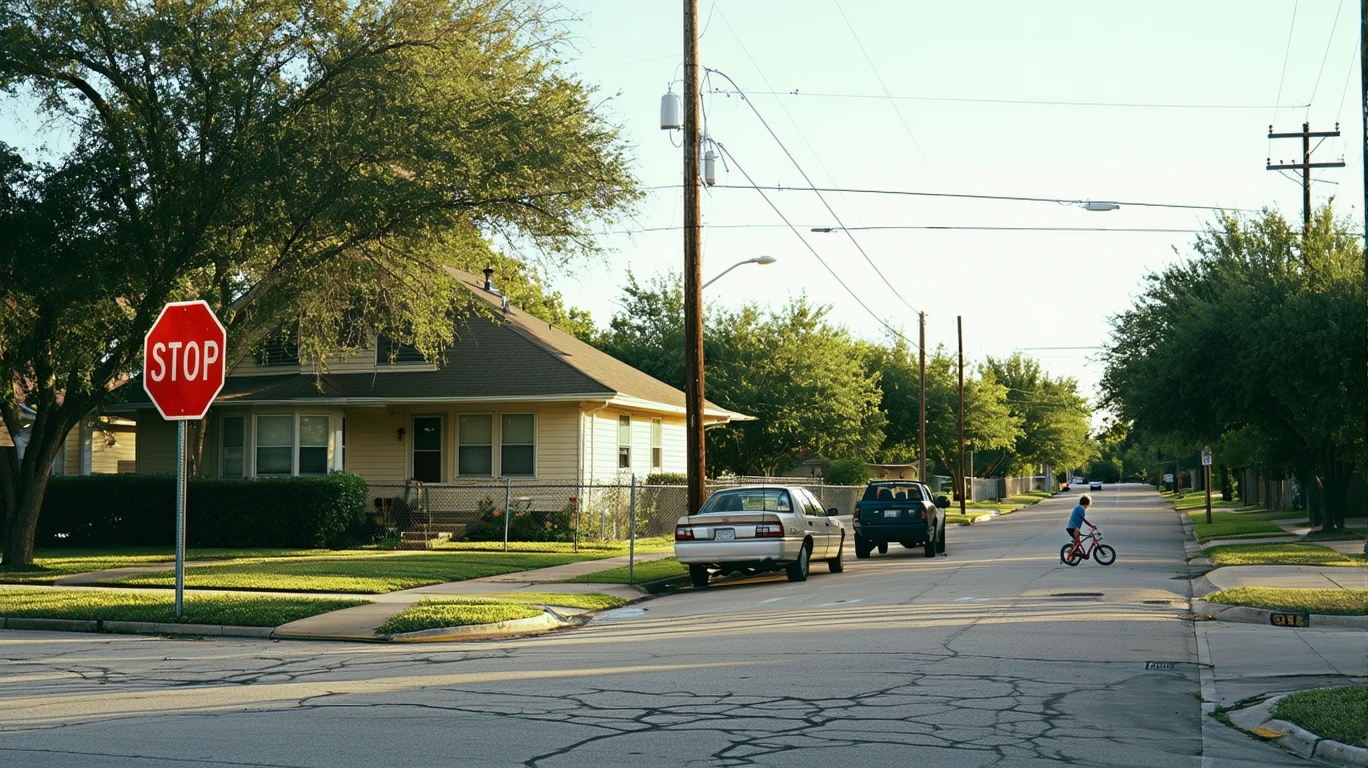
Missouri City and Sugar Land share the same regional price parity index (105), meaning grocery staples, household goods, and everyday purchases reflect identical baseline pricing across the Houston metro. The cost experience diverges not because of price differences, but because of how grocery access is structured, how far households travel for routine errands, and how convenience spending accumulates based on daily routines and neighborhood layout.
Both cities show food and grocery density concentrated along commercial corridors rather than distributed evenly across residential neighborhoods. This means most households rely on short car trips to reach supermarkets, big-box stores, and dining options, rather than walking to nearby shops. Sugar Land’s walkable pockets and higher pedestrian-to-road ratio create limited opportunities for car-free errands in certain neighborhoods, but the majority of grocery trips still require driving. Missouri City’s mixed pedestrian infrastructure offers less flexibility, meaning nearly all grocery and errand trips are car-dependent. For households managing frequent shopping runs or juggling multiple errands per week, the time cost and friction of driving add up, even if the groceries themselves cost the same.
Families with kids face higher grocery volumes and more frequent trips, making access structure more consequential. In both cities, proximity to a preferred supermarket or the presence of multiple grocery options within a short drive reduces friction. Single adults and couples have more flexibility to batch errands or choose smaller, more frequent trips, but car dependence remains the norm in both locations. Dining out and convenience spending (coffee shops, takeout, prepared foods) are available in both cities, but Sugar Land’s slightly higher median income and newer commercial development create more premium dining options, which can subtly increase spending for households that default to convenience over cooking.
Grocery takeaway: Grocery and daily expense pressure in Missouri City and Sugar Land is shaped by access structure and car dependence, not by price differences. Both cities require driving for most errands, but Sugar Land’s walkable pockets offer limited car-free flexibility in certain neighborhoods. Families managing high grocery volumes feel the friction of car-dependent errands more acutely, regardless of location. Households sensitive to convenience spending creep should focus on proximity to preferred stores and discipline around dining out, since both cities offer similar pricing but different levels of access friction.
Taxes and Fees
Property taxes dominate the tax and fee landscape in both Missouri City and Sugar Land, as is typical across Texas, which relies on property taxes to fund schools, infrastructure, and local services in the absence of a state income tax. The effective property tax burden rises with home value, meaning Sugar Land homeowners face higher annual property tax bills tied to the city’s $387,900 median home value, while Missouri City homeowners benefit from lower bills tied to the $268,200 median. The difference compounds over time: higher-value homes not only pay more in absolute dollars but also absorb more volatility when assessed values rise during strong real estate markets.
Both cities see property taxes structured as a percentage of assessed value, with rates set by a combination of city, county, school district, and special district levies. Homeowners in both locations should expect property taxes to represent a significant share of total housing costs—often rivaling or exceeding mortgage interest in the early years of ownership. For renters, property taxes are indirect but still present, as landlords pass through tax costs in the form of higher rent. Missouri City’s lower home values translate to lower embedded tax costs for renters, while Sugar Land’s higher values mean renters absorb higher pass-through costs even if they don’t see the bill directly.
Homeowners associations (HOAs) are common in both cities, particularly in newer subdivisions and townhome communities. HOA fees vary widely depending on amenities (pools, landscaping, security), but they introduce a recurring cost that doesn’t fluctuate with home value. In some neighborhoods, HOA fees bundle services like trash collection, water, or exterior maintenance, which can simplify budgeting but also reduce flexibility. Households comparing Missouri City and Sugar Land should account for HOA fees separately from property taxes, as they represent a fixed obligation regardless of home value. In both cities, older neighborhoods without HOAs offer lower recurring fees but may require more self-managed maintenance and higher variability in neighborhood upkeep.
Taxes and fees takeaway: Property taxes in Sugar Land are higher in absolute terms due to higher home values, creating more exposure for homeowners and higher pass-through costs for renters. Missouri City’s lower home values reduce property tax obligations, offering more predictability for households sensitive to ongoing costs. HOA fees add a layer of recurring expense in both cities, with newer neighborhoods bundling services at the cost of flexibility. Homeowners planning to stay long-term should account for property tax exposure as a percentage of home value, while renters should recognize that higher home values in Sugar Land translate to higher embedded costs even without direct tax bills.
Transportation & Commute Reality
Missouri City and Sugar Land share identical gas prices at $3.84 per gallon, and both cities sit within the Houston metro’s car-dependent commuting network. The transportation cost experience diverges not because of fuel prices, but because of how pedestrian infrastructure, transit options, and daily errand patterns shape car reliance and time costs. Both cities require driving for most daily activities, but the intensity of that dependence and the availability of alternatives differ in ways that affect household logistics and schedule flexibility.
Missouri City offers bus service with moderate pedestrian infrastructure, meaning some neighborhoods support walking for short trips, but the majority of errands, commutes, and social activities require a car. The city’s mixed pedestrian-to-road ratio creates pockets where sidewalks and crossings exist, but connectivity remains inconsistent, and transit coverage is limited to bus routes that serve specific corridors. For households with one car or single adults trying to minimize driving, Missouri City’s transit and walkability options provide minimal flexibility. Families with multiple drivers face fewer constraints, but the lack of rail transit and limited bus frequency means most households default to driving for nearly all trips.
Sugar Land’s walkable pockets and higher pedestrian-to-road ratio create more opportunities for car-free errands in certain neighborhoods, particularly near commercial corridors with mixed-use development. Cycling infrastructure exists in limited areas, offering an alternative for short trips in favorable weather. However, Sugar Land lacks rail transit, and bus service is not present in the experiential data, meaning car ownership remains essential for most households. The difference is that Sugar Land’s pedestrian infrastructure allows some households to reduce car dependence for specific errands—grocery runs, coffee shops, short social trips—while Missouri City’s infrastructure offers less flexibility. For households juggling multiple schedules or managing logistics without multiple cars, Sugar Land’s walkable pockets reduce friction, though the benefit is concentrated in specific neighborhoods rather than citywide.
Transportation takeaway: Both Missouri City and Sugar Land require car ownership for most households, but Sugar Land’s walkable pockets and pedestrian infrastructure offer limited car-free flexibility in certain neighborhoods, while Missouri City’s mixed infrastructure provides less relief from car dependence. Households with one car or those prioritizing schedule flexibility may find Sugar Land’s pedestrian-friendly areas reduce daily friction, though the benefit is localized. Families with multiple drivers experience similar car reliance in both cities, with transportation costs driven more by commute distance and errand frequency than by location. Time cost and logistics complexity matter as much as fuel expense, and neither city offers robust transit alternatives to driving.
Cost Structure Comparison
Housing dominates the cost experience in both Missouri City and Sugar Land, but the nature of that dominance differs. Missouri City’s lower median home value and rent create a more accessible entry point, concentrating cost pressure on ongoing obligations like utilities, transportation, and property taxes tied to older housing stock. Sugar Land’s higher home values and rents front-load cost pressure into the housing decision itself, but newer construction, better pedestrian infrastructure in pockets, and integrated green space reduce some ongoing friction for households that clear the entry barrier.
Utilities introduce similar exposure in both cities due to identical rate structures and shared climate, but housing stock age determines predictability. Missouri City households in older homes face more volatile cooling costs during Houston’s extended summer heat, while Sugar Land households in newer construction experience more stable bills. For families in larger single-family homes, utility exposure is significant in both locations, and the primary control lever is home efficiency rather than city choice. Transportation costs are shaped more by car dependence and errand logistics than by fuel prices, which are identical. Sugar Land’s walkable pockets offer limited relief for households in specific neighborhoods, while Missouri City’s mixed pedestrian infrastructure provides less flexibility, meaning most households in both cities default to driving for nearly all trips.
Groceries and daily expenses reflect the same regional pricing, but access structure and convenience spending patterns differ. Both cities concentrate food and grocery options along commercial corridors, requiring car trips for most errands. Sugar Land’s slightly higher median income and newer commercial development create more premium dining and convenience options, which can subtly increase spending for households that default to takeout or prepared foods. Missouri City’s lower baseline housing costs leave more room in household budgets for discretionary spending, but the lack of walkable errand options means time costs and logistics friction accumulate for households managing frequent shopping trips.
Taxes and fees are higher in Sugar Land due to higher home values, creating more exposure for homeowners and higher pass-through costs for renters. Missouri City’s lower property tax bills tied to lower assessed values offer more predictability for households sensitive to ongoing obligations. HOA fees add recurring costs in both cities, with newer neighborhoods bundling services at the expense of flexibility. The decision between Missouri City and Sugar Land is less about which city is cheaper overall and more about which cost structure aligns with your household’s income, priorities, and tolerance for front-loaded versus ongoing expenses.
Households sensitive to housing entry barriers may prefer Missouri City’s lower baseline, accepting higher car dependence and clinic-only healthcare access in exchange for more accessible homeownership or rent. Households prioritizing walkable neighborhood pockets, integrated park systems, and hospital presence may accept Sugar Land’s higher entry cost in exchange for better pedestrian infrastructure and more predictable utility bills tied to newer construction. For families with kids, both cities show limited school and playground density, meaning family infrastructure is not a differentiator. The choice hinges on whether your household is more exposed to entry costs or ongoing obligations, and whether you value access to walkable pockets and green space enough to absorb the higher baseline in Sugar Land.
How the Same Income Feels in Missouri City vs Sugar Land
Single Adult
For a single adult, housing becomes the first non-negotiable cost, and Missouri City’s lower rent baseline leaves more room for transportation, dining out, and discretionary spending. Flexibility exists in grocery strategy and convenience spending, but car dependence is near-total, meaning transportation costs are fixed rather than optional. Sugar Land’s higher rent reduces flexibility but offers walkable pockets in certain neighborhoods, allowing some single adults to reduce car trips for errands or social activities. The tradeoff is between lower baseline housing costs with more car reliance in Missouri City, or higher rent with limited car-free flexibility in Sugar Land’s pedestrian-friendly areas.
Dual-Income Couple
For a dual-income couple, housing entry costs determine whether homeownership is feasible or whether renting remains the default. Missouri City’s lower home values and rent create more breathing room for saving, travel, or dining out, but car dependence means both partners likely need vehicles if work schedules don’t align. Sugar Land’s higher housing costs absorb more of the household budget upfront, but walkable pockets and integrated park density offer lifestyle amenities that reduce friction for couples prioritizing outdoor access and neighborhood walkability. Flexibility disappears first in Sugar Land if one income is lost or reduced, while Missouri City’s lower baseline provides more cushion against income volatility.
Family with Kids
For families with kids, housing size and school access become non-negotiable, and both cities show limited family infrastructure density, meaning the choice is driven by housing costs rather than by playground or school availability. Missouri City’s lower home values allow families to afford more space or save for childcare and activities, but older housing stock increases utility volatility and maintenance needs. Sugar Land’s higher home values front-load costs into the mortgage and property taxes, but newer construction reduces utility unpredictability and integrated green space offers more outdoor options for kids. Car dependence is near-total in both cities, meaning transportation costs scale with the number of drivers and the complexity of juggling school, work, and activity schedules. Flexibility exists in grocery strategy and convenience spending, but the logistics burden of managing a household with kids is similar in both locations, with the primary difference being whether housing entry costs or ongoing obligations dominate the budget.
Decision Matrix: Which City Fits Which Household?
| Decision Factor | If You’re Sensitive to This… | Missouri City Tends to Fit When… | Sugar Land Tends to Fit When… |
|---|---|---|---|
| Housing entry + space needs | Down payment size, monthly mortgage or rent baseline, flexibility after housing costs | You prioritize lower entry barriers and more budget flexibility after covering shelter costs | You can absorb higher upfront costs in exchange for newer construction and established neighborhoods |
| Transportation dependence + commute friction | Car ownership requirements, time spent driving errands, schedule coordination | You accept near-total car dependence and prioritize lower housing costs over walkability | You value walkable pockets for some errands and can absorb higher housing costs for reduced car reliance in specific neighborhoods |
| Utility variability + home size exposure | Seasonal bill spikes, cooling costs during Houston summers, predictability of monthly obligations | You can manage utility volatility in older homes and prioritize lower housing entry costs | You prefer predictable utility bills tied to newer, more efficient construction and can absorb higher housing costs |
| Grocery strategy + convenience spending creep | Frequency of errand trips, reliance on takeout or dining out, proximity to preferred stores | You can manage car-dependent errands and prioritize lower baseline housing costs over walkable access | You value limited car-free errand flexibility in certain neighborhoods and can absorb higher housing costs |
| Fees + friction costs (HOA, services, upkeep) | Property taxes, HOA fees, maintenance unpredictability, pass-through costs for renters | You prioritize lower property tax bills and more predictable ongoing obligations tied to lower home values | You can absorb higher property taxes and HOA fees in exchange for newer construction and bundled services |
| Time budget (schedule flexibility, errands, logistics) | Juggling multiple schedules, managing household logistics with one car, reducing daily friction | You have multiple drivers and can manage car-dependent logistics without schedule conflicts | You value walkable pockets and integrated green space to reduce daily friction and can absorb higher housing costs |
Lifestyle Fit
Missouri City and Sugar Land offer suburban living within the Houston metro, but the daily experience diverges in ways that affect household logistics, outdoor access, and healthcare convenience. Missouri City’s mixed pedestrian infrastructure and bus-only transit mean most daily activities require driving, while neighborhood character varies widely depending on housing age and proximity to commercial corridors. Sugar Land’s walkable pockets, integrated park density, and hospital presence create more opportunities for car-free errands and outdoor recreation in certain neighborhoods, though car ownership remains essential for most households. Both cities feature mixed-height building profiles and mixed residential-commercial land use, meaning neither feels exclusively suburban or urban—instead, they blend single-family neighborhoods with apartment complexes and commercial corridors.
For families, both cities show limited school and playground density, meaning family infrastructure is not a differentiator. Missouri City offers moderate park density and water features, providing outdoor options but requiring short drives to reach most parks. Sugar Land’s park density exceeds higher thresholds, with water features present and more integrated green space accessible from residential neighborhoods. Households prioritizing outdoor recreation and walkable access to parks may find Sugar Land’s green space structure reduces friction, while Missouri City’s lower housing costs leave more budget flexibility for travel or activities outside the immediate area. Healthcare access differs meaningfully: Missouri City offers clinics and pharmacies for routine care, but hospital services require travel to nearby cities. Sugar Land’s hospital presence provides more comprehensive care locally, reducing friction for families managing chronic conditions or seeking specialized services.
Cultural and recreational amenities in both cities reflect their roles as suburban commuter hubs within the Houston metro. Dining, shopping, and entertainment options are concentrated along commercial corridors, with Sugar Land offering slightly more premium options tied to its higher median income. Missouri City’s lower baseline costs allow households to allocate more discretionary spending toward Houston’s broader cultural and recreational offerings, while Sugar Land’s walkable pockets and integrated parks provide more localized lifestyle amenities. For households prioritizing convenience and reduced driving for daily errands, Sugar Land’s pedestrian infrastructure offers limited relief in specific neighborhoods. For households prioritizing budget flexibility and accepting near-total car dependence, Missouri City’s lower entry costs provide more breathing room. Missouri City’s median household income of $97,211 per year reflects a middle-income suburban market, while Sugar Land’s $132,247 per year reflects a more affluent resident base. Both cities share a 4.1% unemployment rate, indicating similar labor market stability within the Houston metro.
Frequently Asked Questions
Is Missouri City or Sugar Land cheaper for renters in 2026?
Missouri City’s median gross rent of $1,781 per month is lower than Sugar Land’s $1,868, creating a more accessible baseline for renters. The difference is modest, but Missouri City’s rental market includes a broader mix of older and mid-range units, while Sugar Land’s inventory skews toward newer builds with more amenities. Renters prioritizing lower baseline costs may find Missouri City offers more breathing room, while those willing to pay modestly more for walkable pockets and integrated green space may prefer Sugar Land’s rental stock.
Which city has lower housing entry costs for first-time buyers in 2026?
Missouri City’s median home value of $268,200 creates a significantly lower entry barrier compared to Sugar Land’s $387,900. The difference affects not just the down payment and mortgage, but also ongoing property taxes, homeowners insurance, and maintenance expectations. First-time buyers often find Missouri City’s entry point more manageable, while move-up buyers or households prioritizing long-term asset appreciation may accept Sugar Land’s higher baseline in exchange for newer construction and established neighborhoods.
How do utility costs compare between Missouri City and Sugar Land in 2026?
Missouri City and Sugar Land share identical utility rates—15.69¢ per kilowatt-hour for electricity and $16.51 per thousand cubic feet for natural gas. The cost experience diverges based on housing stock age and home size, not rates. Missouri City’s older housing stock often features less efficient insulation and HVAC systems, leading to higher baseline usage and more volatility during cooling season. Sugar Land’s newer construction reduces cooling loads and creates more predictable bills, though the tradeoff is higher housing entry costs.
Does Sugar Land or Missouri City require more car dependence in 2026?
Both cities require car ownership for most households, but Sugar Land’s walkable pockets and higher pedestrian-to-road ratio create limited opportunities for car-free errands in certain neighborhoods. Missouri City’s mixed pedestrian infrastructure and bus-only transit offer less flexibility, meaning nearly all errands, commutes, and social activities require driving. Households with one car or those prioritizing schedule flexibility may find Sugar Land’s pedestrian-friendly areas reduce daily friction, though the benefit is localized rather than citywide.
Which city is better for families with kids in Missouri City vs Sugar Land in 2026?
Both cities show limited school and playground density, meaning family infrastructure is not a differentiator. The choice is driven by housing costs, green space access, and healthcare availability. Missouri City’s lower home values allow families to afford more space or save for childcare and activities, but healthcare is limited to clinics. Sugar Land’s higher home values front-load costs into the mortgage, but integrated park density and hospital presence offer more outdoor options and comprehensive care locally. Families managing chronic conditions or prioritizing walkable green space may prefer Sugar Land, while those prioritizing lower housing entry costs may prefer Missouri City.
Conclusion
Missouri City and Sugar Land sit within the same regional economy, share identical utility rates and gas prices, and face similar climate-driven cost pressures. Yet the cost experience between them diverges sharply because housing entry barriers, pedestrian infrastructure, healthcare access, and green space availability create fundamentally different pressure points. Missouri City fits households where housing entry cost is the dominant constraint—first-time buyers, single-income families, or renters prioritizing baseline affordability and accepting near-total car dependence and clinic-only healthcare access. Sugar Land fits households where housing quality, walkable neighborhood pockets, integrated park systems, and hospital presence justify higher upfront and ongoing costs, offering more predictable utility bills tied to newer construction and limited car-free flexibility in specific neighborhoods.
The right choice depends on which costs dominate your household’s daily reality. For single adults and couples, Missouri City’s lower rent and home values leave more budget flexibility for discretionary spending, while Sugar Land’s walkable pockets and green space offer lifestyle amenities that reduce friction for those who can absorb the higher baseline. For families with kids, both cities show limited family infrastructure density, meaning the decision hinges on whether housing entry costs or ongoing obligations matter more, and whether access to a hospital and integrated parks justifies the higher cost structure in Sugar Land. Neither city is universally cheaper—they simply concentrate cost pressure differently, and the better fit depends on your household’s income, priorities, and tolerance for front-loaded versus ongoing expenses.
How this article was built: In addition to public economic data, this article incorporates location-based experiential signals derived from anonymized geographic patterns—such as access density, walkability, and land-use mix—to reflect how day-to-day living actually feels in Missouri City, TX.
—