
Is a car necessary to live in Marietta? For most residents, the honest answer is yes—but the degree of dependence varies more than newcomers expect. Marietta’s layout, transit infrastructure, and neighborhood structure create pockets where walking handles some daily needs, while other areas demand a vehicle for nearly every errand. Understanding transportation options in Marietta means recognizing that mobility here isn’t one-size-fits-all: your experience depends heavily on where you live, where you work, and how your household runs.
How People Get Around Marietta
Marietta operates primarily as a car-oriented suburb within the broader Atlanta metro, but its internal structure is more varied than that label suggests. The city’s pedestrian-to-road ratio exceeds typical suburban thresholds in certain areas, creating neighborhoods where sidewalks, crosswalks, and mixed-use corridors support foot traffic alongside vehicle flow. These walkable pockets—often concentrated near the historic square and along commercial corridors—allow some residents to handle errands, dining, and recreational trips without starting the engine every time.
Outside these zones, however, the car remains the default. Residential subdivisions, office parks, and shopping centers are spaced in ways that make walking impractical for most trips. Even households living in walkable areas typically own at least one vehicle, because while you might walk to a coffee shop or park, getting to work, running a full grocery trip, or reaching medical appointments usually requires driving. The city’s structure doesn’t eliminate car dependency—it just reduces the intensity for some.
Public Transit Availability in Marietta
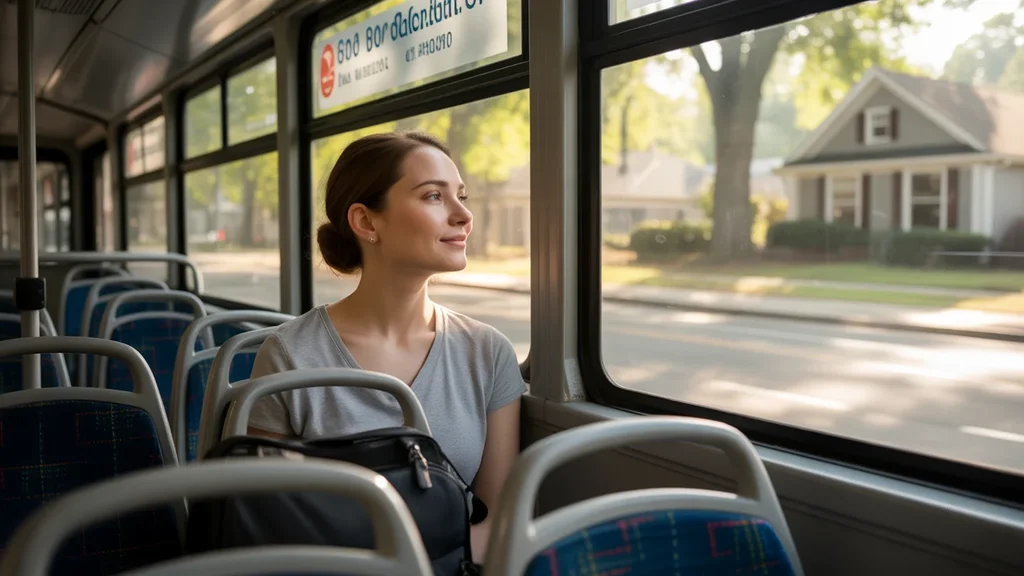
Public transit in Marietta often centers around systems such as CobbLinc, the regional bus service that connects parts of the city to employment centers, transit hubs, and neighboring communities. Bus stops are present throughout Marietta, and for riders whose origins and destinations align with established routes, transit can serve as a viable commuting tool. The service works best for people traveling along major corridors during standard commute windows, particularly those heading toward Atlanta or other regional job centers.
That said, transit coverage is not comprehensive. Routes prioritize high-traffic corridors, leaving many residential neighborhoods without direct access. Frequency and span of service mean that transit works well for structured, predictable schedules but less so for spontaneous trips, late-night needs, or multi-stop errands. Families managing school pickups, weekend activities, or irregular work hours often find that bus service doesn’t align with their logistics, even if a stop exists nearby.
Transit in Marietta functions as a supplementary option rather than a primary mobility system. It’s a real resource for specific commuters and cost-conscious households, but it doesn’t replace the flexibility and coverage that car ownership provides for most residents.
Driving & Car Dependence Reality
For the majority of Marietta households, driving isn’t optional—it’s structural. The city’s development pattern, with residential areas separated from commercial and employment zones, means that even short trips often require a car. Parking is generally abundant and free or low-cost, which removes one of the friction points that discourages driving in denser urban cores. This makes car ownership more practical but also more necessary.
Commuters benefit from the flexibility that driving provides: direct routes, no transfer penalties, and the ability to chain trips (dropping kids off, stopping for groceries, picking up dry cleaning) without the time cost of waiting for the next bus. For households with multiple working adults or children in activities, a second vehicle often becomes essential rather than a luxury.
The tradeoff is exposure to fuel prices, maintenance, insurance, and the time cost of traffic. While Marietta avoids the worst of Atlanta’s gridlock, commuters heading into the city or navigating I-75 during peak hours face real delays. Driving offers control and convenience, but it also locks households into a cost structure that doesn’t flex downward easily when budgets tighten.
Commuting Patterns & Daily Mobility
Commuting in Marietta reflects the city’s role as both a residential suburb and a regional employment node. Some residents work locally, benefiting from shorter, more predictable trips. Others commute into Atlanta or surrounding metro areas, where travel time and route complexity increase significantly. The presence of both residential and commercial land use within Marietta creates opportunities for proximity-based commutes, but these are not evenly distributed across the city.
Daily mobility often involves more than a single round trip. Parents coordinate school runs, errands cluster around work schedules, and evening activities require additional vehicle time. For households managing multiple obligations, the ability to drive directly from point A to point B to point C without waiting or transferring is a significant quality-of-life factor. Transit can handle the work commute for some, but it rarely handles the full complexity of a household’s daily movement.
Flexibility matters. Households with variable schedules, shift work, or frequent off-hours obligations find that transit’s fixed routes and limited evening service don’t accommodate their reality. Driving absorbs that variability, but it also means that transportation becomes a constant, non-negotiable expense.
Who Transit Works For — and Who It Doesn’t
Transit in Marietta works best for single commuters traveling along established routes during peak hours, particularly those without complex errand chains or time-sensitive pickups. Renters living near bus corridors and working in areas well-served by CobbLinc can reduce or eliminate car dependency for work trips, lowering their transportation footprint significantly. For cost-conscious individuals willing to plan around schedules and accept longer trip times, transit is a functional tool.
Transit works less well for families, particularly those with school-age children or multiple activity schedules. The lack of comprehensive coverage means that even if one adult can bus to work, the household still needs a car for everything else. Homeowners in peripheral neighborhoods, where bus service is sparse or nonexistent, have little practical access to transit regardless of their willingness to use it.
The fit question isn’t about preference—it’s about alignment. If your home, workplace, and daily obligations fall along transit corridors, and your schedule is predictable, transit can work. If any of those variables shift, car dependency returns quickly.
Transportation Tradeoffs in Marietta
Choosing between transit and driving in Marietta isn’t a pure cost comparison—it’s a tradeoff between predictability, control, and exposure. Transit offers lower direct costs and removes fuel price volatility, but it imposes time costs, schedule constraints, and geographic limitations. Driving offers flexibility, speed, and comprehensive access, but it locks households into ongoing expenses that don’t pause when income drops.
For households living in walkable pockets with access to food, parks, and some services on foot, the intensity of car dependence decreases. Errands that would require a vehicle elsewhere can be handled on foot, reducing weekly mileage and the frequency of refueling. But even in these areas, car ownership remains the norm because the city’s overall structure—employment locations, healthcare facilities, major retail—still requires driving for most comprehensive needs.
The real tradeoff is between time and money. Transit saves on direct transportation costs but adds time and reduces spontaneity. Driving costs more but returns control and flexibility. Most Marietta households, after weighing these factors against their actual logistics, choose the car.
FAQs About Transportation in Marietta (2026)
Is public transit usable for daily commuting in Marietta?
Yes, for commuters whose routes align with established bus corridors and whose schedules fit within service hours. CobbLinc provides connections to regional employment centers, and riders along major routes can use transit reliably for work trips. However, coverage is not citywide, and off-peak or multi-stop trips often require a car.
Do most people in Marietta rely on a car?
Yes. The majority of Marietta households own at least one vehicle, and many own two. The city’s layout, employment distribution, and errand patterns make driving the dominant mode of transportation, even in neighborhoods with some walkable infrastructure.
Which areas of Marietta are easiest to live in without a car?
Neighborhoods near the historic square and along commercial corridors with mixed-use development offer the most walkable access to food, parks, and some services. Residents in these areas can reduce car trips for daily errands, though most still own a vehicle for commuting and comprehensive needs.
How does commuting in Marietta compare to nearby cities?
Marietta offers shorter, less congested commutes than central Atlanta but longer trips than smaller, more isolated suburbs. Proximity to I-75 and regional highways provides access to metro employment centers, but peak-hour traffic still affects travel time. Transit options are more limited than in Atlanta proper but comparable to other suburban Cobb County communities.
Can you get by without a car if you work from home in Marietta?
Possibly, depending on your neighborhood and household needs. Remote workers eliminate the daily commute, which is where transit limitations hit hardest. If you live in a walkable area with nearby groceries and services, and you’re comfortable using rideshare or occasional car rentals for less frequent trips, car-free living becomes more feasible—but it’s still the exception, not the norm.
How Transportation Fits Into the Cost of Living in Marietta
Transportation in Marietta isn’t just a line item—it’s a structural factor that shapes what a budget has to handle in Marietta. Whether you’re paying for a car, insurance, fuel, and maintenance, or adapting your housing choice to access transit, mobility decisions ripple through your financial life. Households that can reduce car dependency by choosing walkable neighborhoods or aligning with transit routes gain flexibility in other budget categories, but those tradeoffs often come with higher rent or home prices in more accessible areas.
For most residents, the question isn’t whether to own a car, but how to manage the costs that come with it. Fuel prices, maintenance schedules, and insurance premiums don’t pause, and they don’t scale down easily when income fluctuates. Understanding how transportation works in Marietta—where it’s flexible, where it’s fixed, and where you have control—helps you build a budget that reflects your actual day-to-day reality, not an idealized version of it.
If you’re planning a move or evaluating whether Marietta fits your financial picture, start by mapping your daily trips: where you’ll work, where your kids will go to school, where you’ll buy groceries, and how you’ll get there. The answers to those questions will tell you more about your real transportation costs than any average ever could.
How this article was built: In addition to public economic data, this article incorporates location-based experiential signals derived from anonymized geographic patterns—such as access density, walkability, and land-use mix—to reflect how day-to-day living actually feels in Marietta, GA.