

Marietta and Roswell sit just miles apart in metro Atlanta, sharing school districts, commute corridors, and weekend destinations—yet the cost structure of daily life diverges sharply between them. Both cities attract families, professionals, and retirees seeking suburban space with reasonable access to Atlanta’s job centers, but the financial pressure points show up in different categories and hit different household types with varying intensity. In 2026, choosing between these two isn’t about finding the “cheaper” option; it’s about understanding where your household’s specific cost sensitivities align with each city’s structural realities.
Roswell’s housing market reflects its established reputation and higher median household income, creating a steeper entry barrier for buyers and renters alike. Marietta offers more accessible housing entry costs but introduces different tradeoffs in energy rates and transit dependence. The decision hinges on whether your household prioritizes lower upfront housing costs and walkable infrastructure, or whether you value low-rise residential character and are prepared to meet higher income thresholds to access it.
This comparison explains how housing, utilities, transportation, groceries, and taxes behave differently in each city—and which households feel those differences most acutely. Neither city is universally more affordable; each concentrates cost pressure in distinct categories, making the better choice dependent on your income structure, household size, and daily logistics.
Housing Costs
Housing dominates the cost experience in both cities, but the entry barrier and ongoing obligations differ meaningfully. Roswell’s median home value of $479,400 and median gross rent of $1,619 per month position it as a higher-threshold market, reflecting demand from households with substantial dual incomes and established equity. Marietta’s median home value of $376,400 and median gross rent of $1,372 per month create a more accessible entry point, particularly for first-time buyers, single-income families, and renters managing tighter monthly budgets.
The difference isn’t just about the dollar figures—it’s about what those figures unlock. Roswell’s housing stock skews toward low-rise, single-family homes on larger lots, offering space and privacy but requiring higher down payments and monthly mortgage obligations. Marietta’s mixed building height character and walkable pockets mean renters and buyers can access neighborhoods with pedestrian infrastructure and proximity to daily errands without stretching to Roswell’s price tier. For households prioritizing walkability and lower car dependence, Marietta’s housing market aligns better with that lifestyle without forcing a tradeoff between location and affordability.
Renters feel the gap differently depending on household size. A single adult renting in Marietta faces lower baseline rent and can access bus service and walkable corridors, reducing transportation costs that would otherwise offset rent savings. In Roswell, higher rent buys access to quieter, low-rise neighborhoods and bike infrastructure, but the car remains essential for most errands. Families seeking three-bedroom homes encounter steeper competition and higher monthly obligations in Roswell, where the housing stock caters to established homeowners. Marietta’s rental market offers more flexibility for families managing school-age logistics alongside housing costs.
Housing takeaway: Households with moderate incomes or those prioritizing walkable infrastructure and lower entry costs will find Marietta’s housing market more accessible. Roswell fits higher-earning households willing to meet steeper upfront and ongoing costs in exchange for low-rise character, larger lots, and established neighborhoods. The primary difference is entry barrier and housing form, not just price level.
Utilities and Energy Costs
Utility cost exposure in both cities reflects Georgia’s hot, humid summers and mild winters, but the interaction between rates, housing stock, and household size creates different volatility patterns. Marietta’s electricity rate of 14.46¢/kWh runs higher than Roswell’s 13.67¢/kWh, a difference that compounds over extended cooling seasons in larger or older homes. Roswell’s natural gas price of $16.56/MCF edges above Marietta’s $15.63/MCF, though heating demand remains modest in both cities given the regional climate.
The real divergence comes from housing form and age. Roswell’s low-rise, single-family housing stock—often newer construction with better insulation and modern HVAC systems—tends to moderate cooling costs despite larger square footage. Marietta’s mixed building character includes older homes and apartments where cooling efficiency varies widely, meaning households in older housing stock face higher exposure to summer rate swings. For renters in Marietta, apartments with shared walls and smaller footprints can reduce cooling loads, but those in standalone older homes may see utility bills spike during July and August heat.
Household size amplifies these differences. A family of four in a 2,000-square-foot home in Roswell benefits from newer construction and slightly lower electricity rates, creating more predictable monthly bills. The same family in an older Marietta home faces higher per-kWh costs and potentially less efficient cooling systems, introducing more volatility. Single adults and couples in smaller Marietta apartments experience lower absolute utility costs due to reduced square footage, even if the rate itself runs higher. In Roswell, smaller households in single-family homes still cool larger spaces, reducing the rate advantage.
Utility takeaway: Roswell households in newer, low-rise homes experience more predictable utility costs despite larger square footage, benefiting from lower electricity rates and better insulation. Marietta households face higher electricity rates and more variability depending on housing age and type, with older homes introducing the most volatility. Families in newer Roswell construction gain stability; renters in smaller Marietta units gain lower absolute costs.
Groceries and Daily Expenses
Grocery and everyday spending pressure in Marietta and Roswell reflects both regional price parity differences and the structural accessibility of food options. Marietta’s regional price parity index of 111 indicates costs run above the national baseline, while Roswell’s index of 101 sits closer to national norms. This gap shows up most clearly in grocery staples, prepared foods, and convenience spending, where households managing larger volumes or tighter budgets feel the difference more acutely.
Marietta’s food establishment density exceeds high thresholds, with grocery density in the medium band, meaning options concentrate along corridors rather than distributing evenly across neighborhoods. This creates a tradeoff: households near those corridors access diverse grocery options and competitive pricing, while those farther out rely more on convenience stores or drive longer distances. Roswell’s food and grocery density both sit in the medium band, with options clustered along commercial corridors but less saturation overall. For families running weekly grocery trips, Roswell’s lower price parity can offset the need to drive slightly farther for big-box access.
Daily convenience spending—coffee, takeout, household goods—follows similar patterns. Marietta’s higher density of food establishments makes grab-and-go options more accessible, but that convenience can drive spending creep for households without strict budgets. Roswell’s lower density and car-oriented errands reduce impulse spending opportunities but require more planning and batching of trips. Single adults and couples in Marietta benefit from walkable access to cafes and quick meals, reducing reliance on full grocery trips. Families in Roswell gain from lower baseline grocery prices but must account for the time and fuel cost of reaching those options.
Grocery takeaway: Households sensitive to grocery price levels and managing larger volumes may find Roswell’s lower regional price parity advantageous, especially if they can batch trips efficiently. Marietta’s higher food establishment density suits households prioritizing convenience and walkable access, though price parity runs higher. The difference is less about total grocery spend and more about whether your household optimizes for price or proximity.
Taxes and Fees
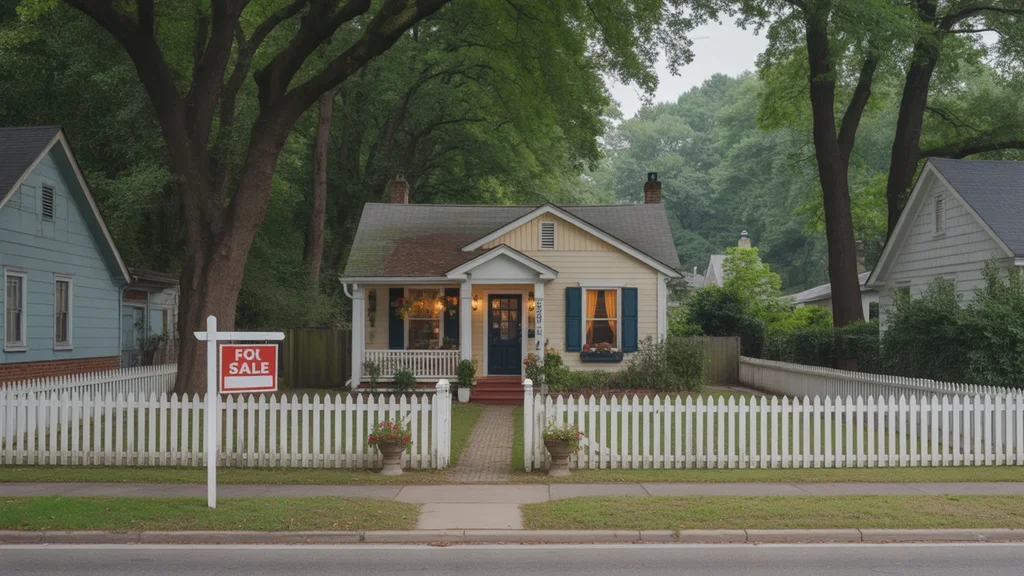
Property taxes, sales taxes, and recurring local fees shape the ongoing cost burden in both cities, though the structure and predictability differ. Both Marietta and Roswell sit within Cobb County, meaning property tax rates and assessment practices follow similar frameworks, but individual city fees, HOA prevalence, and service bundling introduce variation. Homeowners in Roswell’s established single-family neighborhoods often encounter HOA fees that bundle landscaping, amenity access, and sometimes trash service, adding predictable monthly obligations but reducing variability in upkeep costs.
Marietta’s mixed land use and higher density mean fewer neighborhoods operate under HOA structures, giving homeowners more control over maintenance spending but also more exposure to unexpected repair and service costs. Renters in both cities typically see water, trash, and sewer fees bundled into rent or billed separately depending on building type, but Marietta’s higher apartment density means more renters encounter all-inclusive rent structures. In Roswell, single-family rentals—less common but present—often pass utility and service fees directly to tenants, increasing monthly variability.
Sales taxes in Georgia apply uniformly across both cities, so the difference in tax exposure comes primarily from property tax obligations and how those scale with home values. Roswell’s higher median home value of $479,400 translates to higher absolute property tax bills for homeowners, even at identical millage rates. Marietta homeowners face lower absolute property tax obligations due to lower home values, though the effective rate structure remains similar. For long-term residents planning to stay several years, Roswell’s higher property taxes represent a larger ongoing commitment, while Marietta’s lower home values reduce that baseline exposure.
Tax and fee takeaway: Homeowners in Roswell face higher absolute property tax obligations due to higher home values, with HOA fees adding predictable but non-negotiable monthly costs. Marietta homeowners encounter lower property tax baselines and fewer mandatory HOA fees, though they gain less bundled service predictability. Renters in Marietta benefit from more all-inclusive rent structures, while Roswell renters in single-family homes face more variable fee pass-throughs.
Transportation & Commute Reality
Transportation costs and commute friction diverge sharply between Marietta and Roswell, driven by differences in pedestrian infrastructure, transit access, and fuel prices. Marietta’s walkable pockets and bus service create opportunities to reduce car dependence for households living near those corridors, while Roswell’s mixed pedestrian texture and low-rise character reinforce car reliance for nearly all errands and commutes. Gas prices reflect this: Marietta’s $3.68/gal runs higher than Roswell’s $3.45/gal, a gap that compounds for households driving daily.
Marietta’s pedestrian-to-road ratio exceeds high thresholds in parts of the city, meaning some neighborhoods support walking for errands, school drop-offs, and short trips. Bus service provides a baseline transit option, though coverage and frequency limit its utility for commuters heading into Atlanta or other metro job centers. For households able to position themselves in Marietta’s walkable pockets, car dependence drops meaningfully, reducing fuel, insurance, and maintenance exposure. Roswell’s pedestrian-to-road ratio sits in the medium band, with bike infrastructure present in limited areas, but the low-rise, spread-out character means most households rely on cars for every trip.
Commute patterns amplify these differences. Households commuting into Atlanta from either city face similar drive times depending on corridor and traffic, but Marietta’s bus service offers an alternative—albeit limited—for some routes. Roswell commuters depend almost entirely on personal vehicles, making the lower gas price a partial offset but not a full solution to fuel exposure. Families managing school runs, grocery trips, and extracurricular logistics in Roswell should expect higher vehicle usage and associated costs, even with cheaper gas. In Marietta, proximity to walkable corridors can reduce the number of car trips per week, lowering total transportation exposure.
Transportation takeaway: Marietta households in walkable pockets can reduce car dependence and offset higher gas prices through fewer trips, with bus service providing limited backup. Roswell households face near-total car reliance, benefiting from lower gas prices but incurring higher vehicle usage and associated costs. The difference is structural: Marietta offers selective walkability; Roswell assumes car ownership.
Where Cost Pressure Concentrates Differently
Housing pressure dominates in both cities, but the mechanism differs. Roswell’s higher home values and rents create a steeper entry barrier, filtering for households with higher incomes or substantial savings. Marietta’s lower housing costs open access to more households, but the tradeoff comes in higher electricity rates and regional price parity. For renters, Marietta’s lower baseline rent and walkable pockets reduce transportation costs, while Roswell’s higher rent buys low-rise character and quieter neighborhoods but assumes car ownership.
Utilities introduce more volatility in Marietta, particularly for households in older housing stock where cooling efficiency lags. Roswell’s newer construction and lower electricity rates create more predictable monthly bills, especially for families in larger homes. The difference matters most for households managing tight monthly budgets, where unexpected utility spikes can disrupt cash flow. Marietta renters in smaller apartments avoid this exposure; Roswell homeowners in newer builds gain stability.
Transportation patterns matter more in Roswell, where car dependence is near-universal and vehicle costs—fuel, insurance, maintenance—become non-negotiable. Marietta’s walkable pockets and bus service allow selective reduction in car trips, though only for households positioned to take advantage. For families running multiple daily errands, Roswell’s lower gas price helps but doesn’t eliminate the baseline vehicle cost burden. Marietta households near walkable corridors can reduce that burden meaningfully.
Groceries and daily expenses reflect regional price parity differences, with Roswell’s lower index offering modest relief for households managing large grocery volumes. Marietta’s higher food establishment density supports convenience but can drive spending creep without discipline. The difference is less about total grocery spend and more about whether your household optimizes for price or proximity.
The better choice depends on which costs dominate your household. For households sensitive to housing entry costs and seeking walkable infrastructure, Marietta offers lower barriers and selective car-independence. For households with higher incomes prioritizing low-rise character, predictable utilities, and newer construction, Roswell fits better despite steeper upfront costs. Neither city is cheaper overall; each concentrates pressure in different categories.
How the Same Income Feels in Marietta vs Roswell
Single Adult
Housing becomes the first non-negotiable cost, and Marietta’s lower rent allows a single adult to secure a one-bedroom apartment without stretching to Roswell’s higher baseline. Flexibility exists in transportation: positioning near Marietta’s walkable pockets or bus routes reduces car dependence, lowering fuel and insurance exposure. In Roswell, the same income requires a car for every errand, and higher rent claims a larger share of gross pay, leaving less room for discretionary spending or savings. Commute friction matters less for remote workers, but in-person jobs tilt the advantage toward Marietta’s transit options and lower housing entry cost.
Dual-Income Couple
Housing entry costs determine whether the couple can afford a two-bedroom apartment or small home, and Marietta’s lower baseline opens access without requiring both incomes to stretch. Flexibility disappears in Roswell unless both earners command higher salaries, as rent or mortgage obligations consume a larger share of combined gross income. The role of commute friction intensifies: if both partners work in different parts of metro Atlanta, Roswell’s car dependence doubles vehicle costs, while Marietta’s walkable corridors and bus service offer partial relief for one partner. Predictability favors Roswell if the couple secures newer construction with stable utility costs, but only if housing entry doesn’t strain monthly cash flow.
Family with Kids
Housing space becomes non-negotiable, and Roswell’s higher home values and rents require substantially higher household income to access three-bedroom options. Flexibility exists in Marietta through lower entry costs and integrated parks, but older housing stock introduces utility volatility that can disrupt budgets during peak cooling months. The role of car dependence intensifies in Roswell, where school runs, extracurriculars, and grocery trips demand reliable vehicles and higher fuel budgets, even with cheaper gas. Marietta’s hospital presence and walkable pockets reduce friction for families managing medical appointments and daily errands, while Roswell’s clinic-level healthcare and low-rise character suit families prioritizing yard space and quieter streets over proximity.
Decision Matrix: Which City Fits Which Household?
| Decision factor | If you’re sensitive to this… | Marietta tends to fit when… | Roswell tends to fit when… |
|---|---|---|---|
| Housing entry + space needs | You need lower upfront costs or prioritize walkable access over lot size | Your household income sits closer to median and you value proximity to errands and transit | Your household income exceeds median substantially and you prioritize low-rise character and larger lots |
| Transportation dependence + commute friction | You want to reduce car trips or avoid owning multiple vehicles | You can position near walkable pockets or bus routes and work schedules allow selective transit use | You accept car dependence for all trips and prioritize lower gas prices over reducing vehicle usage |
| Utility variability + home size exposure | You need predictable monthly bills or manage cooling costs in larger homes | You rent a smaller apartment or accept some volatility in exchange for lower housing entry costs | You own or rent newer construction where insulation and lower electricity rates stabilize bills |
| Grocery strategy + convenience spending creep | You manage large grocery volumes or need to minimize impulse spending | You value walkable access to food options and can manage higher regional price parity through discipline | You batch grocery trips efficiently and benefit from lower baseline prices despite car-dependent errands |
| Fees + friction costs (HOA, services, upkeep) | You want predictable service costs or prefer control over maintenance spending | You avoid mandatory HOA fees and accept more variability in upkeep and service costs | You value bundled HOA services that stabilize monthly obligations despite higher baseline fees |
| Time budget (schedule flexibility, errands, logistics) | You need to minimize drive time for daily errands or manage tight schedules | Your household benefits from walkable corridors and hospital access for medical appointments and daily tasks | Your household prioritizes yard space and quiet streets over proximity and accepts longer errand drives |
Lifestyle Fit
Marietta and Roswell offer distinct lifestyle textures shaped by urban form, green space access, and daily logistics. Marietta’s walkable pockets and mixed building character create neighborhoods where errands, coffee runs, and short trips happen on foot, reducing the friction of daily life for households positioned near those corridors. Integrated parks and water features provide accessible outdoor space for families, runners, and dog owners without requiring a drive. Hospital presence means medical appointments and urgent care happen locally, reducing time lost to healthcare logistics. For households valuing convenience and proximity, Marietta’s infrastructure supports a less car-dependent rhythm.
Roswell’s low-rise character and larger lots appeal to households seeking yard space, privacy, and quieter residential streets. Parks exist in moderate density, offering green space without the saturation Marietta provides, and bike infrastructure in limited pockets supports recreational cycling though not daily commuting. The absence of a local hospital means families rely on clinics for routine care and drive to nearby facilities for emergencies, adding time to healthcare logistics. For households prioritizing space over proximity, Roswell’s suburban form delivers on that preference, though it assumes car ownership and tolerance for longer errand drives.
Cultural and recreational differences reflect each city’s density and land use mix. Marietta’s higher food establishment density and corridor-clustered commercial zones create more spontaneous dining and entertainment options within walking or short driving distance. Roswell’s lower density and spread-out commercial corridors mean planned outings rather than impromptu stops, though the quieter character suits families seeking less stimulation and more predictable routines. Both cities benefit from proximity to Atlanta’s broader cultural and employment opportunities, but the daily texture of life—how often you drive, how far you walk, how much planning errands require—differs meaningfully.
Marietta’s walkable pockets reduce daily friction for households near those corridors, with hospital access and integrated parks supporting convenience-oriented lifestyles. Roswell’s low-rise character and larger lots suit households prioritizing space and quiet, though car dependence and longer errand drives become non-negotiable.
How this article was built: In addition to public economic data, this article incorporates location-based experiential signals derived from anonymized geographic patterns—such as access density, walkability, and land-use mix—to reflect how day-to-day living actually feels in Marietta, GA.
Common Questions About Marietta vs Roswell in 2026
Is Marietta or Roswell more affordable for renters in 2026?
Marietta offers lower median gross rent at $1,372 per month compared to Roswell’s $1,619, creating a more accessible entry point for single adults, couples, and families managing moderate incomes. The difference extends beyond baseline rent: Marietta’s walkable pockets and bus service allow some households to reduce car dependence, lowering transportation costs that would otherwise offset rent savings. Roswell’s higher rent buys access to low-rise neighborhoods and quieter streets, but assumes car ownership for all errands. For renters prioritizing lower upfront costs and selective walkability, Marietta fits better; for those willing to meet higher rent in exchange for space and newer construction, Roswell aligns with that preference.
How do utility costs compare between Marietta and Roswell in 2026?
Marietta’s electricity rate of 14.46¢/kWh runs higher than Roswell’s 13.67¢/kWh, a difference that compounds over extended cooling seasons in Georgia’s hot, humid summers. Roswell’s newer, low-rise housing stock tends to offer better insulation and modern HVAC systems, creating more predictable utility bills despite larger square footage. Marietta’s mixed building character includes older homes and apartments where cooling efficiency varies, introducing more volatility for households in aging housing stock. Families in newer Roswell construction gain stability; renters in smaller Marietta apartments reduce absolute costs through lower square footage. The difference is less about total utility spend and more about predictability versus variability depending on housing type and age.
Which city requires more car dependence, Marietta or Roswell, in 2026?
Roswell assumes near-total car reliance, with mixed pedestrian infrastructure and low-rise character reinforcing vehicle dependence for groceries, errands, and commutes. Marietta’s walkable pockets and bus service create selective opportunities to reduce car trips, though only for households positioned near those corridors. Gas prices reflect this difference: Marietta’s $3.68/gal runs higher than Roswell’s $3.45/gal, but households in Marietta’s walkable areas can offset that through fewer trips. For families managing school runs, extracurriculars, and daily logistics, Roswell’s lower gas price helps but doesn’t eliminate baseline vehicle costs. Marietta offers structural alternatives to constant driving; Roswell does not.
Do Marietta and Roswell have similar tax structures in 2026?
Both cities sit within Cobb County, meaning property tax rates and assessment practices follow similar frameworks, but individual city fees and HOA prevalence introduce variation. Roswell’s higher median home value of $479,400 translates to higher absolute property tax bills for homeowners, even at identical millage rates, and established neighborhoods often include HOA fees that bundle services but add non-negotiable monthly costs. Marietta homeowners face lower absolute property tax obligations due to lower home values and encounter fewer mandatory HOA structures, though they gain less predictability in service and upkeep costs. Sales taxes apply uniformly across both cities, so the primary tax difference comes from property obligations scaling with home values.
Which city fits families better in 2026, Marietta or Roswell?
The better fit depends on income level and lifestyle priorities. Marietta’s lower housing entry costs, integrated parks, and hospital presence support families managing moderate incomes and seeking proximity to schools, medical care, and outdoor space. Roswell’s higher home values and rents require substantially higher household income but deliver larger lots, low-rise character, and newer construction with more predictable utility costs. Families prioritizing walkable access and lower upfront costs will find Marietta more accessible; families with higher incomes seeking yard space and quieter neighborhoods will find Roswell aligns better with those preferences. Neither city is universally better for families—each fits different income structures and daily logistics.
Final Comparison
Marietta and Roswell present distinct cost structures shaped by housing form, infrastructure, and household income distribution. Marietta’s lower housing entry costs, walkable pockets, and hospital access create opportunities for moderate-income households to manage daily life with less car dependence and lower upfront financial barriers. Roswell’s higher home values, low-rise character, and newer construction suit higher-earning households willing to meet steeper entry costs in exchange for space, predictability, and quieter residential streets. The decision isn’t about finding the cheaper city—it’s about identifying where your household’s specific cost sensitivities align with each city’s structural realities.
For households managing moderate incomes, prioritizing walkability, or seeking lower housing entry costs, Marietta Affordability: What’s Easy, What’s Expensive offers accessible infrastructure and selective car-independence. For households with higher incomes prioritizing low-rise character, yard space, and predictable utilities, Roswell delivers on those preferences despite steeper upfront and ongoing costs. Both cities benefit from proximity to Atlanta’s job centers and cultural opportunities, but the daily texture of life—how often you drive, how much housing claims from your income, how predictable your monthly bills feel—differs meaningfully. Choose the city whose cost concentration matches your household’s financial structure and daily logistics, not the one that appears cheaper on paper.