
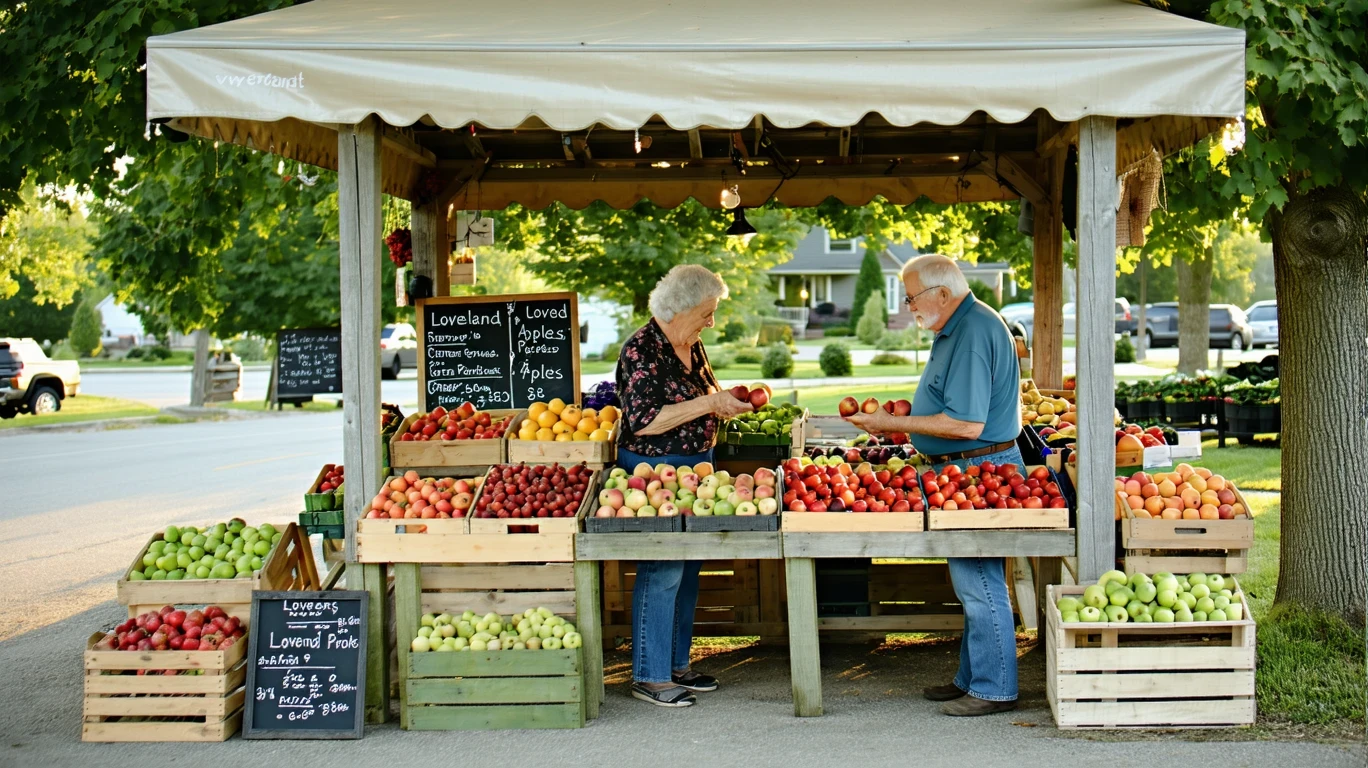
How Grocery Costs Feel in Loveland
Grocery prices in Loveland run below the national baseline, a reflection of the city’s regional price parity index of 94—meaning the overall cost structure here sits roughly 6% below the U.S. average. That discount shows up clearly in food pricing, where staples like bread, eggs, and chicken track noticeably lower than what shoppers encounter in higher-cost metros. For households earning near Loveland’s median income of $81,706 per year, the combination of below-average prices and above-median earnings creates a cushion that makes routine grocery runs feel less punishing than they do in many peer cities. The grocery aisle isn’t a source of sticker shock here—it’s one of the quieter line items in the household budget, especially compared to housing or transportation.
That said, grocery costs still matter, and they matter differently depending on household size and income position. A single professional spending $60 to $80 per week on groceries won’t feel much pressure in Loveland’s price environment, but a family of four buying for volume every week will notice the cumulative effect of every per-pound price, every dozen eggs, every gallon of milk. The difference between a $2.35 carton of eggs and a $3.50 carton compounds quickly when you’re filling a cart twice a week. Loveland’s favorable pricing gives families more room to absorb those swings without resorting to strict substitution strategies, but it doesn’t eliminate the need to pay attention. Grocery costs here are manageable, not negligible.
What shapes the day-to-day experience of buying food in Loveland isn’t just the price level—it’s how grocery options are distributed across the city. Food and grocery establishments tend to cluster along commercial corridors rather than spreading evenly through neighborhoods, which means access depends partly on where you live and how you move around. Households in the more walkable pockets of Loveland can make quick trips to nearby stores on foot, turning grocery runs into short, frequent errands rather than planned weekly expeditions. For others, especially those in car-dependent sections, grocery shopping becomes a more intentional activity—consolidating trips, planning around other errands, and relying on larger stores that justify the drive. That structural difference doesn’t change what items cost, but it does change how grocery shopping fits into the rhythm of daily life and how much friction it introduces into the weekly routine.
Grocery Price Signals (Illustrative)
These prices illustrate how staple items tend to compare locally—not a full shopping list. They’re derived estimates based on national baseline data adjusted by Loveland’s regional price parity, and they reflect typical pricing patterns rather than store-specific or week-specific snapshots. The purpose here is to show relative positioning, not to simulate a checkout total.
| Item | Price |
|---|---|
| Bread (per pound) | $1.74/lb |
| Cheese (per pound) | $4.40/lb |
| Chicken (per pound) | $1.93/lb |
| Eggs (per dozen) | $2.35/dozen |
| Ground beef (per pound) | $6.33/lb |
| Milk (per half-gallon) | $3.78/half-gallon |
| Rice (per pound) | $1.01/lb |
Derived estimate based on national baseline adjusted by regional price parity; not an observed local price.
These figures show a cost structure that favors volume buyers and routine shoppers alike. Protein staples like chicken and ground beef sit in ranges that make meal planning straightforward without forcing households into constant substitution mode. Eggs and milk—two of the most price-sensitive items for families—track low enough that weekly restocking doesn’t trigger budget anxiety. Rice and bread anchor the pantry at costs that support both convenience and flexibility. The takeaway isn’t that groceries are cheap in Loveland; it’s that the baseline pricing environment doesn’t add unnecessary friction to feeding a household.
Store Choice & Price Sensitivity
Grocery price pressure in Loveland varies more by store tier than by any single “average” experience. The city supports a mix of discount-oriented grocers, mid-tier chains, and premium-focused markets, and the gap between those tiers determines how much control households have over their food spending. Discount stores—think no-frills layouts, limited selection, and house-brand dominance—deliver the lowest per-item costs and appeal most to budget-conscious families, retirees on fixed incomes, and anyone prioritizing volume over variety. These stores don’t offer the same breadth of organic, specialty, or prepared options, but they excel at keeping staples affordable and predictable.
Mid-tier grocers occupy the middle ground, offering broader selection, better produce quality, and more brand-name options without pushing into premium territory. These stores attract the largest share of Loveland households because they balance cost control with convenience—you can find what you need without hunting, and prices stay reasonable without requiring extreme discipline. For families earning near the city’s median income, mid-tier stores represent the default choice: familiar, functional, and flexible enough to handle both routine restocking and occasional splurges.
Premium markets cater to households prioritizing organic, local, or specialty items, and they charge accordingly. The price gap between premium and discount tiers can reach 30% to 50% on comparable items, which means shopping premium consistently requires either higher income or a deliberate decision to allocate more of the budget to food quality. For some households, that tradeoff makes sense—better ingredients, less processing, more transparency about sourcing. For others, especially those managing tight budgets or feeding larger families, premium pricing introduces pressure that outweighs the benefits. The key insight here is that Loveland’s grocery landscape offers real choice, and that choice gives households meaningful control over how much they spend and where they feel pressure.
What Drives Grocery Pressure Here
Income plays the most direct role in determining how grocery costs feel in Loveland. At the city’s median household income of $81,706, food spending represents a manageable share of the budget—enough to allow for mid-tier store shopping, occasional premium purchases, and some cushion against price volatility. Households earning well above the median experience almost no grocery pressure; they can absorb price swings, shop premium when it matters, and treat food costs as a background concern rather than a planning constraint. Households earning below the median, especially those closer to $50,000 or $60,000, feel more friction. Every per-pound increase matters more, discount stores become essential rather than optional, and meal planning shifts from preference-driven to cost-driven.
Household size amplifies that pressure in predictable ways. A single person or couple can navigate Loveland’s grocery environment with minimal stress, even at below-median income, because the absolute dollar amounts stay low and flexibility remains high. A family of four or five buying for volume every week faces a different reality: more mouths to feed, more frequent restocking, and less room to absorb waste or impulse purchases. The same $1.93-per-pound chicken that feels like a deal for two people becomes a significant line item when you’re buying multiple pounds twice a week. Families don’t just spend more—they experience grocery costs as a recurring, high-frequency pressure point that demands attention and discipline.
Regional distribution patterns also shape the experience. Loveland sits within the Cincinnati metro area, which benefits from competitive grocery infrastructure and relatively efficient supply chains. That regional density keeps prices stable and prevents the kind of supply-driven spikes that hit more isolated markets. Seasonal variability exists—produce costs shift with availability, holiday demand pushes up certain categories—but the swings stay moderate compared to cities with less grocery competition or weaker regional distribution networks. The result is a cost environment that feels predictable and manageable, even if it’s not immune to national trends in food inflation.
Practical Ways People Manage Grocery Costs
Store rotation is one of the most effective levers households use to control grocery spending in Loveland. Instead of defaulting to a single store for all purchases, many shoppers split their trips: discount stores for staples and bulk items, mid-tier chains for produce and proteins, premium markets for specific specialty needs. That approach requires more planning and more stops, but it captures the price advantages of each tier without forcing households into all-or-nothing choices. The tradeoff is time and convenience, which matters more for working parents and dual-income households than for retirees or anyone with flexible schedules.
Buying in bulk reduces per-unit costs and smooths out week-to-week volatility, especially for non-perishables like rice, pasta, canned goods, and frozen proteins. Families with storage space and upfront cash flow benefit most from bulk purchasing because they can lock in lower prices and reduce shopping frequency. Singles and couples in smaller homes face more constraints—less storage, less ability to use high volumes before spoilage, and less cash flow to front-load purchases. Bulk buying works, but it’s not universally accessible, and it rewards households that already have space and income advantages.
Meal planning and waste reduction shift grocery pressure from reactive to proactive. Households that plan weekly menus, shop from lists, and cook with leftovers in mind spend less and waste less, which compounds over time into meaningful savings. The discipline required to maintain that approach varies by household type: retirees and empty-nesters often find it easier to plan and execute, while families with young children or unpredictable schedules struggle to maintain consistency. The strategy works, but it demands time, attention, and a level of routine that not every household can sustain.
Groceries vs Eating Out (Directional)
The tradeoff between cooking at home and eating out in Loveland isn’t purely financial—it’s about time, convenience, and how much friction households are willing to accept in exchange for cost control. Cooking at home consistently delivers lower per-meal costs, especially when households buy staples in volume, plan around sales, and minimize waste. A home-cooked dinner built around chicken, rice, and vegetables might cost $3 to $5 per person, while a comparable restaurant meal runs $12 to $18 before tip. That gap is significant, and it compounds quickly for families eating out multiple times per week.
But eating out isn’t just about the food—it’s about offloading labor, reducing decision fatigue, and creating flexibility on busy days. For dual-income households, the time saved by picking up takeout or dining out can justify the higher cost, especially when the alternative is late-night cooking after long commutes. Singles and couples without children often lean more heavily on dining out because the convenience premium feels smaller and the time tradeoff feels more valuable. The decision isn’t binary; most households in Loveland mix home cooking with occasional restaurant meals, adjusting the balance based on income, schedule, and how much they value time versus money.
FAQs About Grocery Costs in Loveland (2026)
Is it cheaper to shop in bulk in Loveland? Bulk purchasing reduces per-unit costs for non-perishables and frequently used staples, but it requires upfront cash flow and storage space. Families with both tend to see the most benefit, while singles and couples in smaller homes face more constraints.
Which stores in Loveland are best for low prices? Discount-tier grocers deliver the lowest baseline costs, especially for staples and house-brand items. Mid-tier chains offer broader selection at moderate prices, while premium markets charge significantly more for organic, local, and specialty products. Store choice is the primary lever for controlling grocery spending here.
How much more do organic items cost in Loveland? Organic and specialty items typically carry premiums of 30% to 50% over conventional equivalents, depending on category and store tier. Premium-focused markets offer the widest organic selection but at the highest prices, while mid-tier chains stock limited organic options at more moderate premiums.
How do grocery costs for families in Loveland compare to nearby cities? Loveland’s regional price parity of 94 suggests grocery costs run below the national average, which extends to comparisons with higher-cost metros in the region. Families here experience less baseline pressure than peers in cities with higher price indices, though store choice and shopping habits still drive most of the variation.
How do households in Loveland think about grocery spending when cooking at home? Most households treat grocery spending as a controllable cost that responds to planning, store choice, and volume purchasing. Cooking at home consistently costs less per meal than dining out, but the time and effort required make it a tradeoff rather than a pure savings strategy. Families and budget-conscious households lean more heavily on home cooking, while higher-income singles and couples mix in more restaurant meals for convenience.
Do grocery prices in Loveland fluctuate seasonally? Produce costs shift with seasonal availability, and certain categories see demand-driven increases around holidays, but the swings stay moderate compared to less competitive markets. Loveland benefits from regional grocery infrastructure that keeps supply stable and prevents sharp price spikes.
How does grocery shopping in Loveland’s walkable areas differ from car-dependent neighborhoods? In walkable pockets, households can make frequent, smaller grocery trips on foot, which reduces the need for bulk purchasing and large weekly hauls. In car-dependent areas, shopping becomes a more planned, less frequent activity, often requiring consolidation with other errands and favoring larger stores that justify the drive.
How Groceries Fit Into the Cost of Living in Loveland
Grocery costs in Loveland occupy a middle position in the household budget—less dominant than housing, less volatile than utilities, but more frequent and more controllable than either. For most households, food spending represents a recurring, high-frequency decision point that responds directly to behavior, store choice, and planning discipline. That makes groceries one of the few major cost categories where households can exert real control without relocating, refinancing, or renegotiating contracts. The pressure exists, but it’s manageable, and the tools for managing it are accessible to most income levels.
The broader cost structure in Loveland favors households that can navigate tradeoffs intelligently. Below-average grocery prices combine with above-median income to create a favorable baseline, but housing and transportation still claim the largest shares of monthly expenses. Groceries don’t determine affordability here—they modulate it. A household that controls food spending through smart store choices and disciplined planning frees up budget room for other priorities, while a household that defaults to premium stores and frequent dining out will feel more pressure across the board. The key is recognizing that grocery costs aren’t fixed—they’re a function of choice, and Loveland’s price environment rewards households that make those choices deliberately.
If you’re trying to understand how all these pieces fit together—groceries, housing, utilities, transportation—the most useful next step is to look at the full monthly picture. Grocery costs matter, but they don’t exist in isolation, and the real question isn’t what food costs in Loveland; it’s how food spending interacts with everything else you’re paying for. That’s where the complete budget breakdown becomes essential, and it’s where you’ll find the clearest answer to whether Loveland works for your household and your income level.
How this article was built: In addition to public economic data, this article incorporates location-based experiential signals derived from anonymized geographic patterns—such as access density, walkability, and land-use mix—to reflect how day-to-day living actually feels in Loveland, OH.