

Which city gives you more for your money? For people deciding between Livonia and Dearborn in 2026, the answer depends less on total cost and more on where cost pressure shows up in daily life. Both cities sit in the Detroit metro area, share similar price levels, and offer access to the same regional economy. But the way housing, transportation, and day-to-day logistics play out differs enough to matter—especially for households sensitive to entry barriers, commute friction, or ongoing predictability.
Livonia tends to attract households with higher incomes seeking low-rise residential neighborhoods, abundant park access, and space for families. Dearborn draws a broader income range, offers rail transit access, and serves as a college city with a more mixed building profile. Neither city is universally cheaper. The better fit depends on which costs dominate your household budget, how much flexibility you have around transportation, and whether you value lower entry costs or long-term predictability.
This comparison explains how cost structure differences between Livonia and Dearborn affect renters, homebuyers, single adults, couples, and families in 2026. It does not calculate total affordability or declare a winner. Instead, it shows where each city creates pressure, where it offers relief, and which households feel those differences most.
Housing Costs
Housing represents the most visible cost difference between Livonia and Dearborn. Livonia’s median home value sits at $249,000, while Dearborn’s stands at $189,400. For renters, the gap narrows: Livonia’s median gross rent is $1,235 per month, compared to Dearborn’s $1,205 per month. These numbers reflect different housing stock, different buyer profiles, and different expectations around space and location.
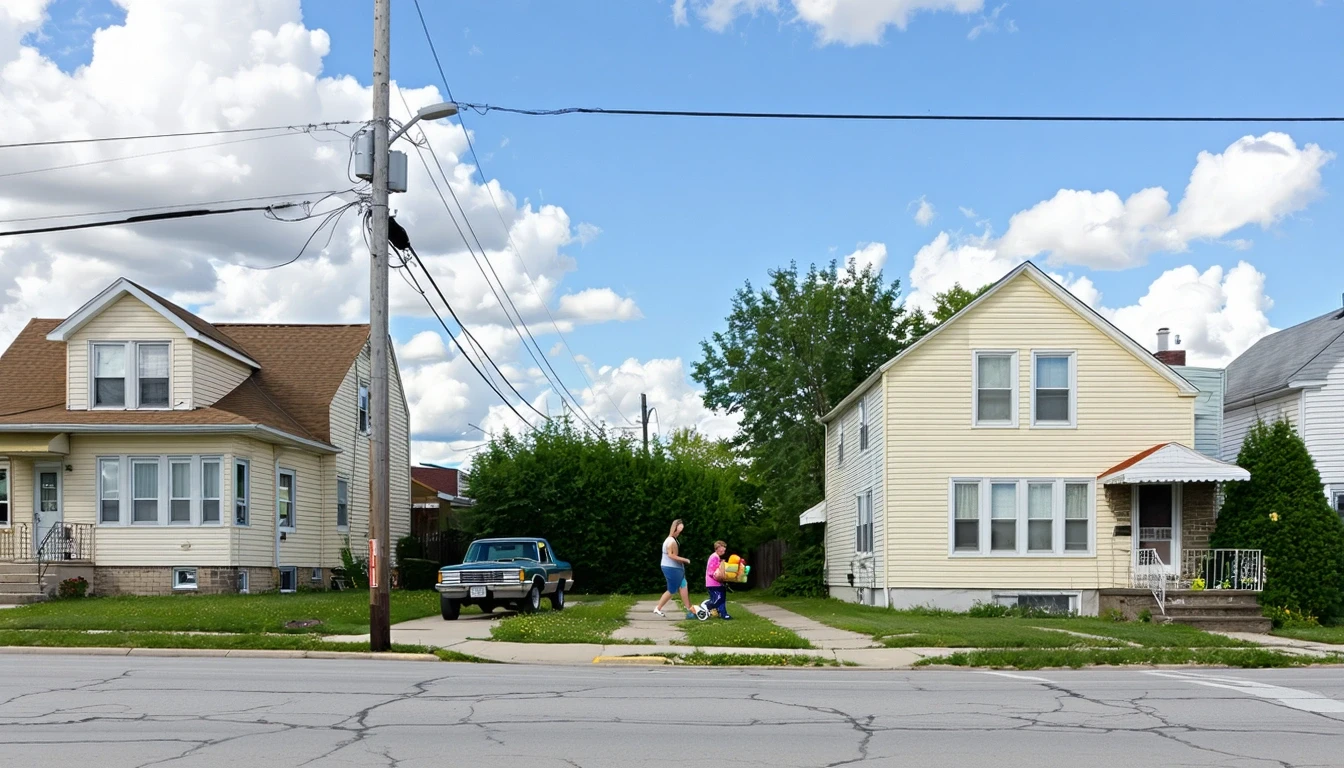
The home value difference matters most at the point of entry. Households buying in Livonia face a higher down payment requirement, higher closing costs, and higher baseline mortgage obligations. Property taxes, insurance, and maintenance costs scale with home value, creating ongoing exposure that persists long after the purchase. Livonia’s housing stock skews toward single-family homes in low-rise neighborhoods, which tend to offer more space but also more responsibility for upkeep, utilities, and seasonal maintenance.
Dearborn’s lower median home value reduces the entry barrier for first-time buyers and households with moderate incomes. The city’s mixed building height profile—ranging from low-rise to medium-density structures—creates more variety in housing form. Renters and buyers in Dearborn may find apartments, townhomes, and smaller single-family options that lower both entry costs and ongoing obligations. For households prioritizing accessibility over space, Dearborn’s housing market offers more flexibility at the lower end of the price spectrum.
Renters experience a smaller gap, but the difference still shapes decision-making. Livonia’s slightly higher rent reflects demand for low-rise residential character, park access, and neighborhood stability. Dearborn’s rent levels support a broader range of household types, including students, young professionals, and families managing tighter budgets. Both cities offer corridor-clustered access to groceries and services, meaning renters in either location can manage daily errands without relying exclusively on car trips—though the ease of doing so varies by neighborhood.
Housing takeaway: Livonia’s housing costs create higher entry barriers and ongoing obligations, fitting households with higher incomes who value space, low-rise character, and predictability. Dearborn’s lower home values and mixed housing stock reduce entry pressure, fitting first-time buyers, renters, and households prioritizing flexibility over square footage. The primary difference is not total cost but where cost pressure concentrates: front-loaded in Livonia, more distributed in Dearborn.
Utilities and Energy Costs
Utility costs in Livonia and Dearborn follow nearly identical rate structures. Livonia’s electricity rate is 19.53¢/kWh, while Dearborn’s is 19.94¢/kWh. Natural gas prices show a similar pattern: $10.24/MCF in Livonia and $10.66/MCF in Dearborn. These small rate differences do not drive meaningful cost variation on their own. What matters more is how housing stock, home size, and building age interact with Michigan’s long heating season and variable summer cooling needs.
Livonia’s low-rise, single-family housing stock tends to increase exposure to heating and cooling costs. Larger homes with more square footage, older insulation, and detached layouts require more energy to maintain comfortable temperatures during cold winters and humid summers. Households in single-family homes also manage their own thermostats, maintenance schedules, and efficiency upgrades, which creates both control and responsibility. Predictability depends on how well the home is insulated, how old the HVAC system is, and how aggressively the household manages usage during peak seasons.
Dearborn’s mixed building height profile introduces more variety in utility exposure. Apartments and townhomes in medium-density structures often share walls, which reduces heating and cooling loads. Renters in multi-unit buildings may have utilities included in rent or billed separately, but either way, the physical structure of the building moderates seasonal swings. Homeowners in Dearborn face similar exposure to those in Livonia if they occupy single-family homes, but the presence of smaller, attached, or newer construction options gives households more ways to manage energy costs.
Both cities experience Michigan’s climate extremes: cold winters that drive natural gas usage and warm, humid summers that increase air conditioning demand. Utility volatility in both cities is driven more by seasonal intensity and housing form than by rate differences. Households in older, larger homes—regardless of city—face higher and less predictable bills. Households in newer, smaller, or multi-unit housing experience more stable costs. The key difference is that Dearborn’s housing mix offers more pathways to lower-exposure options, while Livonia’s housing stock concentrates around larger, detached homes.
Utility takeaway: Rate differences between Livonia and Dearborn are negligible. Utility exposure is driven by housing type, home size, and building age. Livonia’s low-rise, single-family dominance increases baseline exposure and volatility. Dearborn’s mixed housing stock offers more options for moderating energy costs through smaller units, shared walls, and newer construction. Households sensitive to seasonal bill swings may find more predictable options in Dearborn’s multi-unit housing, while those prioritizing space and control may accept higher volatility in Livonia’s single-family stock.
Groceries and Daily Expenses
Grocery and daily spending pressure in Livonia and Dearborn reflects similar price levels—both cities share a regional price parity index of 98, meaning costs align closely with national baselines. The difference is not in what items cost, but in how access, convenience, and household habits shape spending patterns. Both cities show corridor-clustered food and grocery access, meaning stores and restaurants concentrate along main roads rather than spreading evenly across neighborhoods. This creates pockets of convenience and pockets where car trips become necessary.
Livonia’s layout and low-rise character mean most grocery trips require a car, even if the destination is only a few miles away. Walkable pockets exist, but they are limited to specific areas with higher pedestrian-to-road ratios. Households in Livonia tend to plan larger, less frequent shopping trips, which can reduce impulse purchases but also increases reliance on bulk buying and storage. The presence of big-box stores and chain grocers supports this pattern, offering lower per-unit prices for families willing to buy in volume. Convenience spending—coffee runs, takeout, quick stops for forgotten items—adds up when each trip requires driving, parking, and navigating commercial corridors.
Dearborn’s rail transit access and slightly more mixed land use create different spending dynamics. Households near transit stops or walkable commercial corridors can manage smaller, more frequent grocery trips without a car. This flexibility reduces the need for bulk storage and allows for more responsive shopping—buying fresh items as needed rather than stocking up weekly. However, smaller trips can also increase per-unit costs if households rely on convenience stores or smaller grocers instead of discount chains. The trade-off is time versus price: more frequent trips take less time per visit but may cost more per item.
Dining out and prepared food access follow similar corridor-clustered patterns in both cities. Dearborn’s identity as a college city introduces more budget-friendly dining options, food trucks, and casual spots that cater to students and young professionals. Livonia’s restaurant landscape skews toward family dining and chain options, which offer predictability but less variety at the lower price tiers. Households managing tight budgets may find more flexibility in Dearborn’s dining scene, while families prioritizing consistency and portion size may prefer Livonia’s offerings.
Grocery takeaway: Price levels are nearly identical between Livonia and Dearborn, but access patterns and household logistics differ. Livonia’s car-dependent layout encourages bulk shopping and planned trips, which can lower per-unit costs but increases reliance on storage and driving. Dearborn’s transit access and walkable pockets allow for smaller, more frequent trips, which offer flexibility but may increase per-item spending. Households sensitive to convenience creep—coffee, takeout, quick stops—may find it easier to control spending in Livonia through planned trips, while those valuing time savings and fresh-item access may prefer Dearborn’s more flexible errands structure.
Taxes and Fees
Property taxes, sales taxes, and local fees shape ongoing cost obligations in both Livonia and Dearborn, but the input data does not provide specific tax rates or fee schedules for either city. Without those numbers, the comparison must remain qualitative, focusing on how tax and fee structures typically interact with housing type, ownership status, and length of residence in Michigan suburbs.
Property taxes in Michigan are assessed based on home value and local millage rates, meaning Livonia’s higher median home value likely translates to higher annual property tax bills for homeowners. This creates a predictable but ongoing obligation that scales with the size and value of the property. Homeowners in Livonia planning to stay long-term should expect property taxes to represent a significant share of annual housing costs, especially as home values adjust over time. Renters in Livonia do not pay property taxes directly, but landlords typically pass a portion of that cost through in rent, making it an indirect but real expense.
Dearborn’s lower median home value reduces baseline property tax exposure for homeowners, though the actual millage rate determines the final bill. Homeowners in Dearborn may also encounter special assessments or fees tied to infrastructure improvements, transit access, or neighborhood services. These fees are less predictable than property taxes and can vary widely depending on location within the city. Renters in Dearborn face similar indirect exposure through rent, but the lower home values suggest a smaller embedded tax component compared to Livonia.
Sales taxes in Michigan apply statewide, so Livonia and Dearborn residents pay the same rate on taxable goods. The difference lies in how much households spend on taxable items—groceries are generally exempt, but prepared foods, household goods, and non-essential purchases are not. Households in Livonia may spend more on taxable goods if their higher median income supports discretionary purchases, while households in Dearborn may allocate a larger share of income to non-taxable essentials like groceries and rent.
Local fees—trash collection, water, sewer, parking permits, HOA dues—vary by neighborhood and housing type. Livonia’s single-family housing stock may involve HOA fees in certain subdivisions, which can bundle services like landscaping, snow removal, and shared amenities. These fees add predictability but also reduce flexibility. Dearborn’s mixed housing stock includes apartments and condos where fees are more common, but also standalone homes where households manage services individually. The key difference is whether fees are bundled and mandatory or optional and variable.
Taxes and fees takeaway: Without specific tax rates, the comparison focuses on exposure patterns. Livonia’s higher home values likely create higher property tax obligations for homeowners, while Dearborn’s lower values reduce that baseline. Both cities share the same state sales tax, so differences emerge from spending patterns rather than rates. Local fees depend more on housing type and neighborhood than on city-level policy. Homeowners in Livonia face more predictable but higher ongoing obligations, while those in Dearborn may encounter more variability depending on location and housing form.
Transportation and Commute Reality
Transportation costs and commute friction differ meaningfully between Livonia and Dearborn, driven not by distance but by infrastructure and transit access. Livonia offers bus-only transit service, while Dearborn provides rail access in addition to buses. This structural difference shapes how households manage daily travel, whether they can reduce car dependence, and how much time and money they spend getting to work, errands, and services.
Livonia’s pedestrian infrastructure shows walkable pockets—areas where the pedestrian-to-road ratio exceeds high thresholds—but these pockets are not evenly distributed. Most daily trips still require a car, especially for commuting, grocery shopping, and accessing services outside immediate neighborhoods. Gas prices in Livonia were observed at $3.59/gal, which affects households driving regularly for work and errands. Car ownership in Livonia is not optional for most households; it is the baseline assumption. Maintenance, insurance, parking, and fuel costs all become non-negotiable budget items.
Dearborn’s rail transit access changes the calculus for households willing to live near stations and plan routes around transit schedules. Rail service does not eliminate car dependence entirely, but it creates an alternative for commuters working in Detroit or other rail-connected areas. Gas prices in Dearborn were observed at $2.83/gal, lower than Livonia at the time of observation, which reduces per-mile costs for households still driving. However, the real advantage in Dearborn is not lower gas prices but the option to avoid some car trips altogether through transit use.
Both cities show similar cycling infrastructure—bike-to-road ratios in the medium band—which supports recreational biking but does not replace cars for most daily errands. Households in either city should not expect to rely on biking as a primary transportation mode, especially during Michigan winters. The difference is that Dearborn’s rail access offers a viable alternative for specific trip types, while Livonia’s bus-only service provides coverage but not the speed or frequency that changes household behavior.
Commute data—average minutes, work-from-home percentages, long commute shares—are not available for either city, so the comparison must focus on infrastructure rather than observed behavior. Livonia’s car-oriented layout means commute costs are primarily fuel, time, and vehicle wear. Dearborn’s transit access introduces the possibility of trading fuel costs for transit fares and trading driving time for rail schedules. For households already planning to own a car, the difference is modest. For households trying to avoid car ownership or reduce driving frequency, Dearborn offers more flexibility.
Transportation takeaway: Livonia’s bus-only transit and car-oriented layout make vehicle ownership a baseline requirement for most households. Dearborn’s rail access creates an alternative for commuters and reduces car dependence for households near stations. Gas prices were lower in Dearborn at observation time, but the structural difference—rail versus bus-only—matters more than per-gallon costs. Households sensitive to transportation flexibility, time costs, or car ownership burdens may find Dearborn’s transit infrastructure more accommodating, while those already planning to drive everywhere will find both cities similarly car-dependent outside transit corridors.
Cost Structure Comparison
Housing dominates the cost experience in both Livonia and Dearborn, but the pressure shows up differently. Livonia’s higher home values and rent levels create a steeper entry barrier and higher ongoing obligations, fitting households with incomes that can absorb those costs in exchange for space, low-rise character, and neighborhood stability. Dearborn’s lower home values and mixed housing stock reduce entry pressure and offer more variety in housing form, fitting households prioritizing affordability, flexibility, or proximity to transit and college amenities.
Utilities introduce similar exposure in both cities due to nearly identical rates, but Livonia’s single-family housing stock increases baseline energy usage and seasonal volatility. Households in larger, older homes face higher heating and cooling costs regardless of city, but Livonia’s housing mix concentrates around that profile. Dearborn’s mixed building heights and multi-unit options create more pathways to moderate utility costs through smaller units, shared walls, and newer construction. Households sensitive to seasonal bill swings may find more predictable options in Dearborn, while those prioritizing space and control may accept higher volatility in Livonia.
Groceries and daily expenses follow similar price levels in both cities, but access patterns differ. Livonia’s car-dependent layout encourages bulk shopping and planned trips, which can lower per-unit costs but increases reliance on storage and driving. Dearborn’s transit access and walkable pockets allow for smaller, more frequent trips, which offer flexibility but may increase per-item spending. Households managing tight budgets may find Livonia’s bulk-buying model more economical, while those valuing time savings and fresh-item access may prefer Dearborn’s more flexible errands structure.
Transportation patterns matter more in Dearborn than in Livonia because of rail access. Livonia assumes car ownership for nearly all households, making fuel, insurance, and maintenance non-negotiable costs. Dearborn offers the option to reduce car dependence for households near transit, which can lower transportation costs but requires proximity to stations and tolerance for transit schedules. For households already planning to own a car, the difference is modest. For those trying to avoid or delay car ownership, Dearborn provides more flexibility.
The better choice depends on which costs dominate the household. Households sensitive to housing entry barriers may prefer Dearborn’s lower home values and mixed stock. Households sensitive to transportation flexibility may prefer Dearborn’s rail access. Households sensitive to space, predictability, and low-rise residential character may prefer Livonia despite higher entry costs and ongoing obligations. For many households, the difference is less about price and more about where cost pressure concentrates and how much control they have over managing it.
How the Same Income Feels in Livonia vs Dearborn
Single Adult
Housing becomes the first non-negotiable cost, and Livonia’s higher rent and home values claim a larger share of income upfront. Flexibility exists in transportation if the household lives near Livonia’s walkable pockets, but most single adults will need a car, adding insurance, fuel, and maintenance to fixed costs. Dearborn’s lower rent and rail access create more breathing room for discretionary spending or savings, especially for single adults working in Detroit or along transit lines. The role of commute friction matters less if the household works remotely, but for those commuting daily, Dearborn’s rail option reduces time cost and fuel exposure.
Dual-Income Couple
Housing costs in Livonia remain higher, but two incomes make entry more feasible, especially for couples prioritizing space and long-term stability. Utility exposure increases with larger homes, and the lack of transit options means both partners likely need cars, doubling transportation costs. Dearborn’s lower housing entry barrier and rail access allow one partner to reduce car dependence, which lowers transportation costs and creates more flexibility for one-car households. Grocery and daily spending patterns depend more on household habits than city structure, but Dearborn’s walkable pockets and transit access reduce the logistical burden of managing errands without doubling car trips.
Family with Kids
Housing space becomes non-negotiable, and Livonia’s single-family stock fits that need but at a higher entry cost and ongoing obligation. Utility bills rise with home size, and the car-dependent layout means multiple vehicles for most families, increasing insurance, fuel, and maintenance exposure. Dearborn’s lower home values reduce entry pressure, but families seeking single-family homes with yards face similar utility and transportation exposure as in Livonia. The primary difference is that Dearborn’s mixed housing stock and transit access offer more options for families willing to trade space for lower entry costs or reduced car dependence, while Livonia’s layout assumes space and cars as baseline requirements.
Decision Matrix: Which City Fits Which Household?
| Decision factor | If you’re sensitive to this… | Livonia tends to fit when… | Dearborn tends to fit when… |
|---|---|---|---|
| Housing entry + space needs | Down payment size, ongoing mortgage or rent obligations, and desire for single-family layout | Higher income supports entry costs and you prioritize low-rise neighborhoods with space and stability | Lower entry barrier matters more than square footage and you value mixed housing options or proximity to transit |
| Transportation dependence + commute friction | Car ownership costs, commute time, and flexibility to avoid driving | Car ownership is already planned and you prefer driving for all trips without relying on transit schedules | Rail access reduces commute costs or you want the option to avoid or delay car ownership near transit corridors |
| Utility variability + home size exposure | Seasonal bill swings, heating and cooling costs, and predictability of energy expenses | You accept higher baseline usage in exchange for space and control over thermostat and maintenance schedules | You prefer smaller units or multi-unit housing that moderates energy costs through shared walls and newer construction |
| Grocery strategy + convenience spending creep | Per-unit prices, trip frequency, and impulse purchases from quick stops | You plan bulk shopping trips and have storage space to lower per-unit costs through volume buying | You value smaller, more frequent trips near walkable corridors or transit and accept slightly higher per-item costs for flexibility |
| Fees + friction costs (HOA, services, upkeep) | Predictability of recurring fees, bundled services, and responsibility for maintenance | You prefer single-family ownership with direct control over services even if it means higher property taxes and upkeep | You accept mixed housing with potential HOA or condo fees in exchange for lower baseline property tax exposure |
| Time budget (schedule flexibility, errands, logistics) | Commute time, errands friction, and ability to manage household logistics without multiple car trips | You have schedule flexibility and prefer driving for all errands without coordinating transit or walkability constraints | You value reduced commute time through rail or walkable errands access and can adapt to transit schedules |
Lifestyle Fit
Livonia and Dearborn offer distinct lifestyle textures shaped by infrastructure, housing form, and community character. Livonia’s low-rise residential neighborhoods, abundant park access, and walkable pockets create a suburban environment that prioritizes space, green space, and family-oriented amenities. The city’s park density exceeds high thresholds, and water features add to the outdoor environment. Schools and playgrounds meet moderate density thresholds, supporting family life without overwhelming the landscape. For households seeking quiet streets, detached homes, and recreational space, Livonia delivers a consistent residential experience.
Dearborn’s identity as a college city introduces more variety in building height, land use, and daily activity. The city’s mixed building profile—ranging from low-rise to medium-density structures—creates neighborhoods with different textures, from quiet residential blocks to more active commercial corridors. Rail transit access connects Dearborn to Detroit and other regional destinations, which matters for commuters, students, and households seeking urban access without urban density. The presence of University of Michigan-Dearborn shapes the local economy, dining options, and cultural activity, adding vibrancy that appeals to younger professionals and families comfortable with more mixed environments.
Both cities offer integrated green space access, with park density exceeding high thresholds and water features present. This shared characteristic means outdoor recreation, walking trails, and family-friendly parks are accessible in both locations. The difference is context: Livonia’s parks fit into a low-rise, car-oriented layout, while Dearborn’s parks integrate with walkable corridors and transit access, making them easier to reach without driving for some households.
Quick fact: Livonia’s pedestrian-to-road ratio exceeds high thresholds in specific pockets, meaning some neighborhoods support walking for errands and recreation even in a car-oriented city.
Quick fact: Dearborn’s rail transit service provides a structural advantage for commuters and students, reducing reliance on cars for trips to Detroit and other rail-connected areas.
Frequently Asked Questions
Is Livonia or Dearborn cheaper for renters in 2026?
Dearborn’s median gross rent of $1,205 per month is slightly lower than Livonia’s $1,235 per month, but the difference is modest. The more meaningful distinction is housing form: Dearborn offers more variety in apartment sizes and building types, which can create lower-cost options for renters willing to accept smaller units or multi-unit buildings. Livonia’s rental stock skews toward single-family homes and larger units, which increases baseline rent but also provides more space. Renters sensitive to entry costs may find more flexibility in Dearborn, while those prioritizing space and low-rise character may prefer Livonia despite slightly higher rent.
Which city has lower transportation costs, Livonia or Dearborn, in 2026?
Transportation costs depend more on household behavior than city-level prices. Dearborn’s rail transit access allows some households to reduce car dependence, which can lower fuel, insurance, and maintenance costs for those living near stations. Livonia’s bus-only transit and car-oriented layout make vehicle ownership a baseline requirement for most households. Gas prices were lower in Dearborn at observation time ($2.83/gal versus $3.59/gal in Livonia), but the structural difference—rail access versus car dependence—matters more than per-gallon costs. Households able to use transit in Dearborn may experience lower transportation costs, while those driving in both cities will find Livonia’s higher gas prices increase per-mile expenses.
How do utility bills compare between Livonia and Dearborn in 2026?
Utility rates are nearly identical: Livonia’s electricity rate is 19.53¢/kWh and Dearborn’s is 19.94¢/kWh, while natural gas prices are $10.24/MCF in Livonia and $10.66/MCF in Dearborn. These small rate differences do not drive meaningful cost variation. What matters more is housing type and size. Livonia’s low-rise, single-family housing stock increases baseline energy usage and seasonal volatility, especially in larger, older homes. Dearborn’s mixed building heights and multi-unit options create more pathways to moderate utility costs through smaller units and shared walls. Households in similar housing types will experience similar utility bills regardless of city, but Dearborn offers more variety in housing form to manage exposure.