
Can you live in Levittown without a car? For most people, the answer is no—but the reality is more textured than that. Levittown sits in a mobility middle ground: rail service connects residents to Philadelphia, but the day-to-day rhythm of errands, school runs, and local appointments still pulls most households toward car ownership. Understanding how people actually get around here—and who benefits from transit versus who absorbs driving costs—shapes both daily logistics and long-term financial exposure.
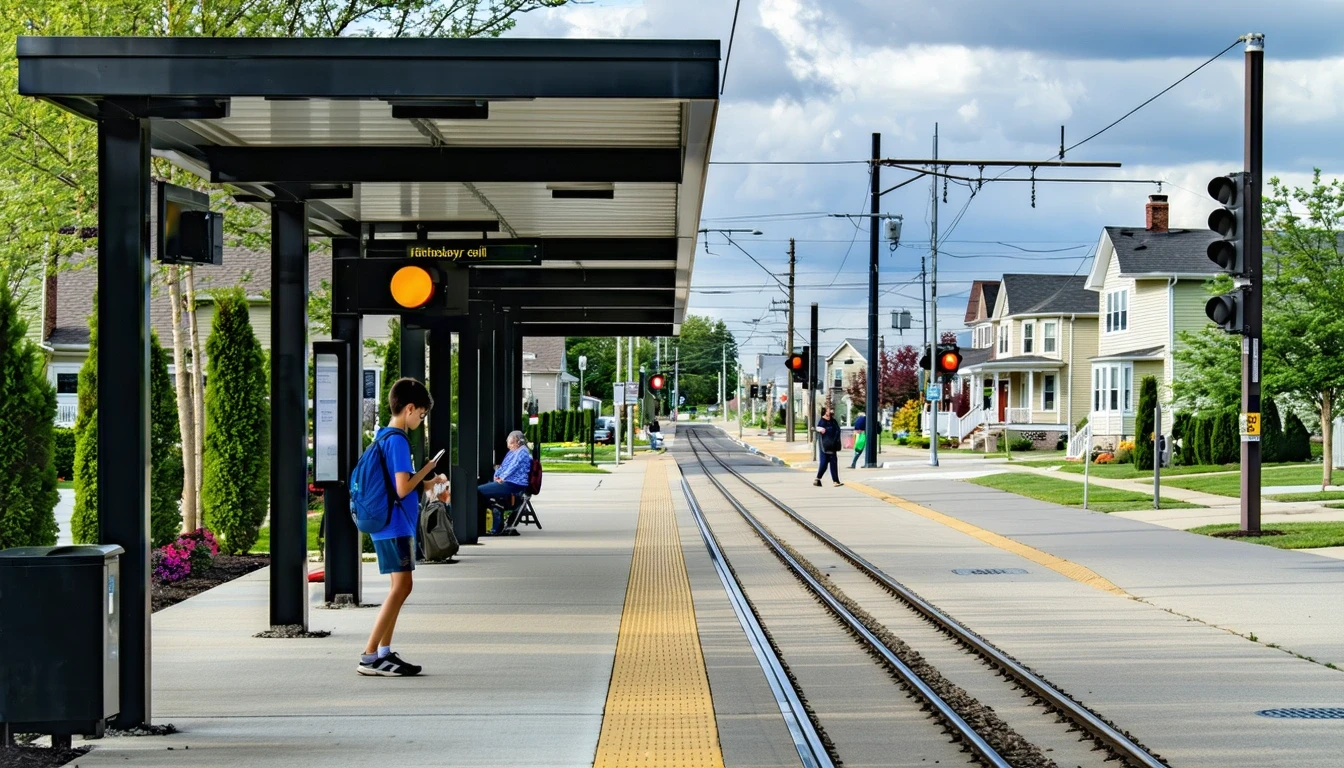
How People Get Around Levittown
Levittown operates primarily as a car-first community, built around single-family homes, shopping corridors, and dispersed services. The street network supports moderate pedestrian activity in certain pockets, but the pedestrian-to-road ratio reflects a layout designed for vehicles, not foot traffic. Most residents drive for groceries, appointments, and errands because food and retail options cluster along commercial corridors rather than distributing evenly across neighborhoods.
That said, rail transit does exist. Levittown has access to regional rail service, which creates a meaningful commute option for workers heading into Philadelphia. This bifurcates the transportation experience: people living near stations and working in the city can avoid daily driving, while those working locally or living farther from rail stops depend entirely on cars. The presence of rail doesn’t eliminate car dependence—it carves out an exception for a specific commute pattern.
Cycling infrastructure exists in limited areas, with bike-to-road ratios in the medium band. This supports recreational riding or short trips in certain neighborhoods, but it’s not a primary mode of transportation for most households. Biking works best as a supplement, not a replacement, for car ownership.
Public Transit Availability in Levittown
Public transit in Levittown often centers around systems such as SEPTA (Southeastern Pennsylvania Transportation Authority), which operates regional rail service connecting Levittown to Philadelphia and other parts of Bucks County. Rail service provides a viable commute option for residents working in Center City or University City, particularly those living within walking or short driving distance of stations.
Transit access typically includes options such as SEPTA regional rail or local bus routes, though coverage varies by area. Bus service exists but operates with less frequency and reach than rail, making it more useful for specific corridors than for comprehensive local mobility. Late-hour service and weekend coverage tend to be limited, which narrows the window of usefulness for shift workers or anyone with non-traditional schedules.
Where transit works best is for the single-destination, weekday commute into Philadelphia. Where it falls short is for multi-stop errands, evening activities, or reaching destinations outside the rail corridor. The corridor-clustered nature of grocery stores and services means that even households near transit stations often need a car to handle daily logistics efficiently.
Driving & Car Dependence Reality
For most Levittown residents, driving isn’t optional—it’s structural. The layout of the community, with residential areas separated from commercial zones and services spread across multiple corridors, makes car ownership the default mode of mobility. Parking is generally abundant and free, which removes one of the friction points that discourages driving in denser cities.
The average commute in Levittown is 28 minutes, and nearly 40% of workers face long commutes, defined as significantly above regional averages. Only 10.2% of residents work from home, meaning the vast majority are making regular trips to workplaces, many of which are not accessible by transit. This creates sustained exposure to fuel prices, vehicle maintenance, and the time cost of driving.
Car dependence also shapes housing decisions. Families often prioritize garage space, driveway access, and proximity to major roads over walkability or transit access. The tradeoff is predictability and control: driving offers flexibility for multi-stop trips, kid pickups, and spontaneous errands that transit can’t match in a suburban layout.
Commuting Patterns & Daily Mobility
Commuting in Levittown typically follows one of two patterns: the Philadelphia-bound rail commuter or the local car commuter. The rail commuter benefits from predictable schedules and avoids daily driving costs, but they’re tied to station proximity and limited to destinations along the rail line. The car commuter has flexibility but absorbs fuel costs, parking expenses (if applicable at the workplace), and the time cost of navigating traffic.
Multi-stop commutes—dropping kids at school, stopping for groceries, picking up dry cleaning—favor car ownership. Transit doesn’t support the kind of route flexibility that suburban households with children or caregiving responsibilities require. Even households that could technically use transit for the primary commute often keep a car for everything else.
Proximity to work matters more than proximity to transit for most residents. Those working in Philadelphia gain the most from rail access. Those working in Bucks County, Trenton, or other suburban job centers face car dependence regardless of where they live in Levittown.
Who Transit Works For — and Who It Doesn’t
Transit works best for single commuters with jobs in Philadelphia, especially those living within a mile of a regional rail station. This group can avoid car ownership entirely if they’re willing to use ride-sharing, delivery services, or occasional car rentals for errands. Renters in core areas near stations have the most flexibility to test this lifestyle before committing.
Transit doesn’t work well for families managing school runs, extracurriculars, and grocery trips. The corridor-clustered layout of services means that even a short errand loop—pharmacy, grocery store, post office—requires either a car or significant time spent waiting for buses. Homeowners in peripheral neighborhoods have virtually no transit access for daily life, even if they’re within driving distance of a rail station for commuting.
Remote workers avoid the commute question entirely, which removes the primary use case for transit in Levittown. For this group, the decision about car ownership hinges entirely on local errands and lifestyle preferences, not work travel.
Transportation Tradeoffs in Levittown
The central tradeoff in Levittown is predictability versus cost exposure. Driving offers control, flexibility, and the ability to handle complex logistics, but it ties household finances to fuel prices, maintenance schedules, and vehicle depreciation. Transit offers lower direct costs for commuting but requires proximity to stations, tolerance for fixed schedules, and a willingness to supplement with other modes for non-commute trips.
For households weighing these options, the question isn’t whether transit is “good enough”—it’s whether your specific daily pattern aligns with where transit actually goes. A single worker commuting to Philadelphia five days a week gets significant value from rail. A parent managing two kids’ schedules and a local job gets almost none.
Car dependence also affects where money goes in a household budget. Fuel, insurance, maintenance, and registration costs stack up, but they’re often invisible until compared directly to a car-free lifestyle. The challenge in Levittown is that going car-free isn’t realistic for most households, so the comparison becomes theoretical rather than actionable.
FAQs About Transportation in Levittown (2026)
Is public transit usable for daily commuting in Levittown?
Yes, if you’re commuting to Philadelphia and live near a regional rail station. Rail service provides a reliable option for city-bound workers. For local jobs or destinations outside the rail corridor, transit becomes far less practical, and most residents rely on cars.
Do most people in Levittown rely on a car?
Yes. The layout of Levittown, with services clustered along commercial corridors and limited transit coverage for local trips, makes car ownership the default for most households. Even residents who use transit for commuting typically keep a car for errands and family logistics.
Which areas of Levittown are easiest to live in without a car?
Areas within walking distance of regional rail stations offer the most viable car-free or car-light lifestyle, particularly for single commuters working in Philadelphia. Even in these areas, daily errands often require creative solutions like delivery services or occasional ride-sharing.
How does commuting in Levittown compare to nearby cities?
Levittown’s 28-minute average commute is moderate, but nearly 40% of workers face long commutes, reflecting the mix of local jobs and Philadelphia-bound commuters. Compared to denser cities with extensive transit networks, Levittown offers more driving predictability but less transit flexibility.
Can you rely on biking for transportation in Levittown?
Biking works in limited pockets where infrastructure exists, but it’s not a primary transportation mode for most residents. The bike-to-road ratio is moderate, supporting recreational use or short trips in certain neighborhoods, but the overall layout favors cars for daily mobility.
How Transportation Fits Into the Cost of Living in Levittown
Transportation in Levittown isn’t just a budget line—it’s a structural factor that shapes housing choice, time allocation, and daily flexibility. Households that prioritize rail access trade some housing options for lower commute costs and reduced driving exposure. Households that prioritize space, yards, and school districts often accept car dependence as the cost of those priorities.
The presence of rail service creates a meaningful choice for Philadelphia commuters, but it doesn’t eliminate the broader car-oriented reality of daily life here. Most residents will own at least one vehicle, and many families will own two. Understanding how your monthly budget in Levittown absorbs transportation costs—fuel, insurance, maintenance, and time—helps clarify whether proximity to transit or proximity to work matters more for your household.
Levittown rewards households that align their transportation needs with the infrastructure that actually exists: rail for city commutes, cars for everything else. Trying to force a car-free lifestyle here creates friction that most people find unsustainable. Accepting the car-dependent reality and planning accordingly leads to more predictable costs and less daily stress.
How this article was built: In addition to public economic data, this article incorporates location-based experiential signals derived from anonymized geographic patterns—such as access density, walkability, and land-use mix—to reflect how day-to-day living actually feels in Levittown, PA.