
Lenexa’s housing market sits at an interesting crossroads: home values run well above the national median, yet the overall cost of living here registers below the national baseline. That gap shapes how housing budgets actually work in practice. For buyers, it means purchasing power stretches further than the sticker price suggests. For renters, it means weighing moderate monthly costs against the reality that most daily routines—commuting, errands, healthcare—still assume car ownership. Understanding monthly expenses in Lenexa requires looking past the rent or mortgage figure to see how location, infrastructure, and household logistics interact.
The median home value in Lenexa stands at $348,600, while median gross rent runs $1,373 per month. Median household income sits at $101,074 per year. These figures tell part of the story, but the texture of housing costs here emerges from how Lenexa’s suburban structure, climate exposure, and infrastructure shape day-to-day living. This article explains how housing costs behave in Lenexa—what drives them, where they diverge between renting and owning, and which household types find the market aligned with their needs.
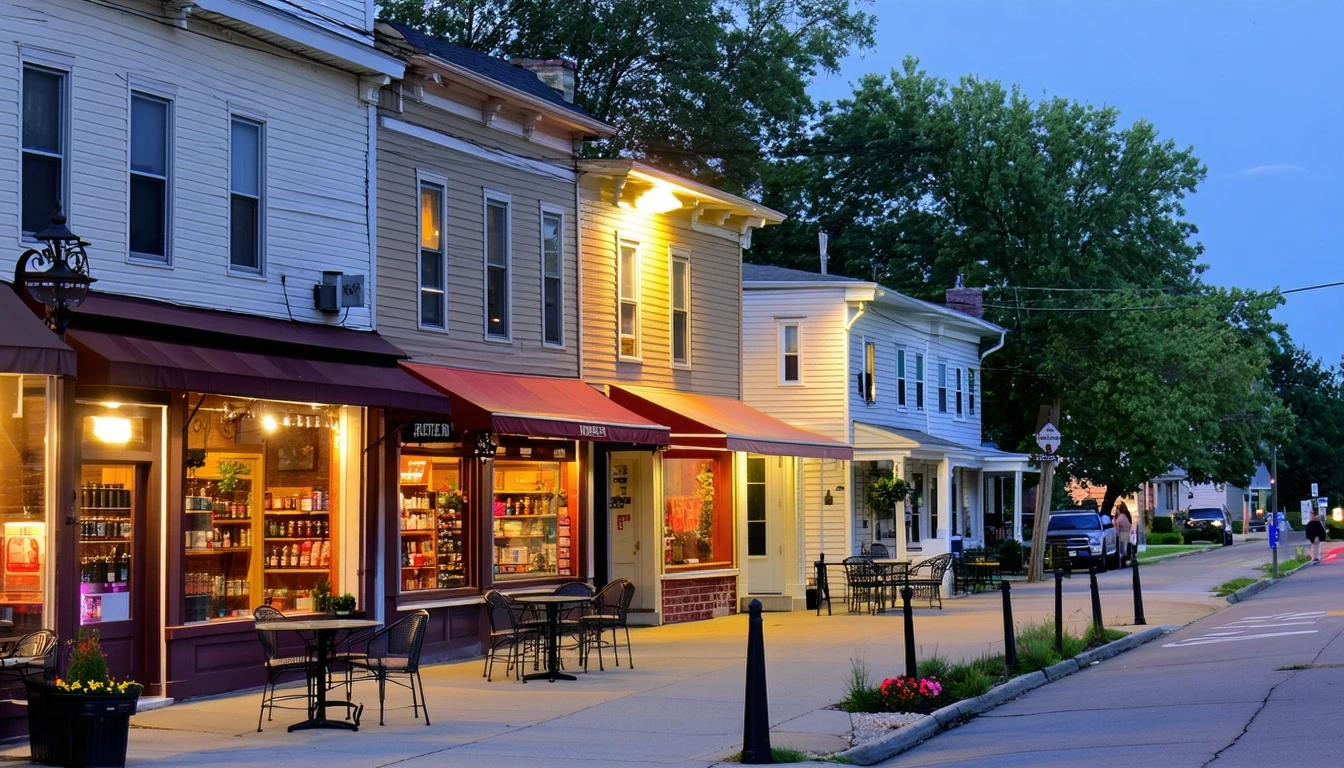
The Housing Market in Lenexa Today
Lenexa functions as a suburban anchor within the Kansas City metro, drawing households seeking space, schools, and relative stability without the density or transit complexity of the urban core. The housing stock reflects that role: predominantly single-family homes with pockets of multifamily development clustered near commercial corridors. Development patterns favor car-oriented layouts, though walkable infrastructure appears in concentrated areas—particularly around mixed-use nodes where residential and commercial land use overlap.
What newcomers often misread is the relationship between home values and actual cost burden. Lenexa’s regional price parity index of 87 means goods, services, and many recurring expenses cost less here than in higher-cost metros. That discount doesn’t erase the upfront investment required to buy, but it does reduce the ongoing financial pressure once you’re in. For renters, the calculus differs: monthly rent remains moderate relative to income, but the infrastructure assumes you’ll own a car, adding a hidden mobility cost that doesn’t show up in housing comparisons.
The market also reflects Lenexa’s economic stability. With an unemployment rate of 3.3% and a strong presence of dual-income households, demand for owner-occupied housing stays consistent. That stability benefits buyers seeking predictability but leaves less room for renters hoping for downward pressure on lease rates.
Renting in Lenexa
At $1,373 per month, median gross rent in Lenexa sits within reach for households earning near or above the metro median, but it doesn’t tell the full story of rental cost exposure. Rent here buys access to suburban infrastructure—parks, schools, grocery density—but it doesn’t buy transit flexibility. Bus service exists, but it’s limited to fixed routes that don’t cover the full geography of daily life. Most renters end up owning a car, which adds fuel, insurance, and maintenance costs that compound the baseline housing expense.
Rental availability clusters along commercial corridors and near mixed-use developments, where walkable infrastructure and errand accessibility reduce some of the logistical friction. Renters who prioritize proximity to grocery stores, clinics, and parks can find locations that minimize daily travel, but those units often command a premium. Renters farther from these nodes face longer drives for routine tasks, which shifts the cost burden from rent to transportation.
Lease renewal behavior in Lenexa follows suburban patterns: landlords adjust rents based on metro-wide demand rather than hyper-local vacancy rates. That means renewals tend to track regional economic conditions—employment growth, wage trends, migration patterns—rather than building-specific factors. Renters should expect modest, steady increases rather than sharp swings, but they should also recognize that the structural cost of renting here includes the car dependency that comes with the territory.
Owning a Home in Lenexa
Ownership in Lenexa centers on single-family homes, and the experience differs sharply from renting—not just in monthly outlay, but in the types of costs you control versus those you don’t. The median home value of $348,600 reflects a market where space, lot size, and school access drive pricing. Buyers here aren’t paying for walkability or transit proximity; they’re paying for square footage, yard space, and the stability that comes with fixed housing costs in a low-volatility market.
Property taxes represent the largest ongoing ownership cost after the mortgage itself, and while no specific rate appears in the data, Lenexa’s suburban infrastructure—roads, parks, schools, public safety—requires funding. Buyers should expect tax bills that reflect both the assessed home value and the cost of maintaining services across a car-dependent geography. Tax exposure grows over time as assessments adjust, but the pace tends to follow market appreciation rather than sudden policy shifts.
Maintenance and utility exposure also differ from renting. Lenexa’s climate brings hot, humid summers and cold winters, which means air conditioning dominates warm-season costs and heating drives expenses when temperatures drop. Homeowners bear the full cost of HVAC upkeep, insulation quality, and system efficiency—variables renters never see itemized. Older homes or those with deferred maintenance can see sharp seasonal spikes, particularly during extended heat or cold stretches.
Governance adds another layer. Some neighborhoods operate under homeowners associations, which bundle services like landscaping, snow removal, or exterior maintenance into monthly or annual fees. Those fees buy predictability and reduce individual upkeep burdens, but they also remove cost control. Buyers should clarify whether a property falls under HOA rules and what those fees cover before closing.
Apartment vs House in Lenexa — Cost Behavior Comparison
| Expense Category | Apartment | House |
|---|---|---|
| Cooling & Heating | Lower exposure due to shared walls and smaller square footage; landlord often controls system efficiency | Full exposure to seasonal extremes; efficiency depends on insulation, HVAC age, and home size |
| Exterior Maintenance | Covered by landlord or property management; tenant has no direct cost or control | Owner responsible for roof, siding, gutters, and yard upkeep; costs vary by home age and lot size |
| Water & Sewer | Sometimes included in rent; when separate, usage lower due to smaller unit and fewer fixtures | Always billed separately; usage higher due to landscaping, multiple bathrooms, and larger household size |
| Parking & Storage | Assigned or covered parking often included; limited storage space | Garage and driveway standard; ample storage in basement or outbuildings |
| Proximity to Errands | More likely located near commercial corridors with high grocery and food density, reducing drive frequency | Often in residential-only zones; errands require intentional trips, increasing fuel and time costs |
Why these categories matter in Lenexa: The differences above reflect Lenexa’s suburban structure and climate exposure. Apartments cluster near mixed-use areas where errands are broadly accessible, while houses dominate residential zones where car trips are unavoidable. Seasonal temperature swings drive the cooling and heating gap, and the prevalence of single-family homes with yards makes exterior maintenance a defining ownership cost. Categories like internet, trash, or insurance were omitted because they behave similarly across housing types or depend on individual provider choice rather than structural differences.
Utilities & Upkeep Differences
Utility exposure in Lenexa hinges on climate and housing type. Summers bring extended heat and humidity, pushing air conditioning into daily use for weeks at a time. Electricity rates sit at 14.29¢ per kWh, and while that’s not extreme, the intensity of cooling demand means houses with poor insulation or aging HVAC systems face noticeable monthly bills. Apartments benefit from smaller conditioned space and shared thermal mass, which dampens the seasonal swing.
Winter heating follows a similar pattern but with natural gas as the primary fuel. At $12.69 per thousand cubic feet, gas costs remain moderate, but older homes with drafty windows or minimal insulation see higher consumption. Apartments, particularly those in newer buildings or interior units, avoid much of that exposure. Homeowners also face the cost of furnace maintenance, filter replacement, and emergency repairs—expenses renters never budget for directly.
Upkeep costs diverge sharply between apartments and houses. Renters in Lenexa typically handle only interior cleanliness and minor fixture issues; property management covers landscaping, snow removal, and structural repairs. Homeowners, by contrast, manage everything: lawn care, gutter cleaning, driveway maintenance, and the unpredictable costs of roof or siding replacement. Lenexa’s tree cover and green space integration add aesthetic value but also increase yard maintenance demands, particularly in fall and after storms.
Rent vs Buy: Long-Term Exposure in Lenexa
The choice between renting and buying in Lenexa isn’t a savings calculation—it’s a risk profile decision. Renting offers flexibility and insulation from maintenance shocks, but it exposes you to lease renewal volatility and leaves you without equity accumulation. Buying locks in a portion of your housing cost (the mortgage principal and interest) but exposes you to property tax adjustments, maintenance surprises, and the full weight of utility and upkeep expenses.
Over time, ownership in Lenexa tends to favor households with stable income, long time horizons, and the capacity to absorb irregular costs. Property taxes and home insurance adjust periodically, and while those increases rarely spike, they compound over years. Maintenance follows a less predictable rhythm: roofs, HVAC systems, and water heaters fail on their own schedules, and the cost of replacement doesn’t correlate with your budget cycle. Renters avoid that lumpiness but pay for the landlord’s risk premium embedded in monthly rent.
Renting makes more sense for households prioritizing mobility, those uncertain about long-term employment in the metro, or those who prefer predictable monthly costs over equity exposure. Ownership suits households ready to trade liquidity for stability, particularly those who value control over their living environment and expect to stay in Lenexa long enough to recover transaction costs.
One often-overlooked factor: Lenexa’s car dependency affects both renters and owners, but it compounds differently. Renters who move frequently face the hassle of coordinating leases, parking, and commute logistics with each transition. Owners settle into a fixed location and optimize their routines around it—finding the closest grocery store, identifying the fastest commute route, and building familiarity with local service providers. That operational stability has value, even if it doesn’t show up in a spreadsheet.
How People Actually Live Here: Errands, Mobility, and Daily Logistics
Lenexa’s infrastructure creates a split experience depending on where you live. Grocery stores and food establishments are broadly accessible across the city, with density that exceeds typical suburban thresholds. That means most households can reach a supermarket, pharmacy, or restaurant within a short drive, reducing the planning burden for routine errands. But “short drive” is the operative phrase—while walkable pockets exist, particularly in areas with high pedestrian-to-road ratios, the city’s overall layout assumes car ownership.
For households near mixed-use corridors where residential and commercial land use overlap, daily logistics feel lighter. You can walk to a coffee shop, pick up groceries on foot, or bike to a nearby park without needing to plan around a car trip. But for those in residential-only zones, every errand becomes a deliberate outing. That distinction matters for families juggling school pickups, grocery runs, and activity schedules—it’s the difference between stacking tasks efficiently and burning time on separate trips.
Public transit exists in the form of bus service, but it doesn’t function as a primary mobility tool for most residents. Routes cover key corridors but lack the frequency and coverage needed to replace a car for daily use. That reinforces the ownership pressure: even renters who’d prefer to avoid a car payment find themselves needing one to manage work commutes, healthcare appointments, and weekend errands. Parks and green spaces are well-integrated, which reduces the need to drive for outdoor recreation, but accessing clinics or specialized services often requires leaving the immediate area, since hospital facilities aren’t present locally.
How this article was built: In addition to public economic data, this article incorporates location-based experiential signals derived from anonymized geographic patterns—such as access density, walkability, and land-use mix—to reflect how day-to-day living actually feels in Lenexa, KS.
FAQs About Housing Costs in Lenexa
Is Lenexa affordable for renters on a single income?
It depends on the income level and whether you’re accounting for transportation costs. At $1,373 per month, median rent is manageable for someone earning near the metro median, but car ownership adds a significant hidden cost. Renters who can find housing near commercial corridors reduce some of that burden, but most of Lenexa assumes you’ll drive for daily needs.
How do property taxes in Lenexa compare to nearby cities?
Specific rates aren’t provided in the data, but Lenexa’s suburban infrastructure—schools, parks, roads—requires funding through property taxes. Buyers should expect assessments that reflect both home value and the cost of maintaining services across a car-dependent geography. Comparing effective tax rates with nearby Johnson County cities can clarify relative exposure.
Do most homes in Lenexa have HOA fees?
HOA prevalence varies by neighborhood. Some developments include associations that cover landscaping, exterior maintenance, or shared amenities, while others leave homeowners fully independent. Buyers should confirm HOA status and fee structure during the purchase process, as those costs add a fixed monthly obligation that doesn’t fluctuate with usage.
What drives utility costs higher in Lenexa—summer or winter?
Both seasons create exposure, but the driver differs. Summer heat and humidity push air conditioning into sustained use, which shows up in electricity bills. Winter heating relies on natural gas, and while rates are moderate, older homes with poor insulation see higher consumption. The intensity of each season depends on the specific year’s weather, but both periods demand budgeting for elevated usage.
Is buying in Lenexa a good long-term investment?
Ownership in Lenexa offers stability and equity accumulation, but it’s not a guaranteed financial win. The market favors households with stable income, long time horizons, and the capacity to absorb maintenance and tax adjustments. If you plan to stay for several years and value control over your living environment, buying aligns well with Lenexa’s low-volatility market. If you prioritize flexibility or expect to relocate, renting avoids the transaction costs and long-term exposure.
Making Housing Choices in Lenexa
Housing costs in Lenexa reflect a suburban market where home values run high but overall living costs stay moderate. That combination creates opportunity for buyers with stable income and long time horizons, particularly those who value space, schools, and predictability over urban density or transit access. Renters face moderate monthly costs but should account for the car dependency that shapes daily logistics—even in neighborhoods with walkable pockets, most routines assume vehicle ownership.
The choice between renting and owning hinges on risk tolerance and time horizon. Ownership locks in stability but exposes you to maintenance, taxes, and utility volatility. Renting preserves flexibility but leaves you vulnerable to lease renewal adjustments and without equity accumulation. Both paths work in Lenexa, but they suit different household types and financial priorities.
For a fuller picture of what costs people most in Lenexa beyond housing, or to see how these expenses fit into a broader monthly budget, other IndexYard resources break down the complete cost structure. And if you’re planning a move, understanding logistics early can reduce friction—whether you’re relocating from across the country or just across the metro.