
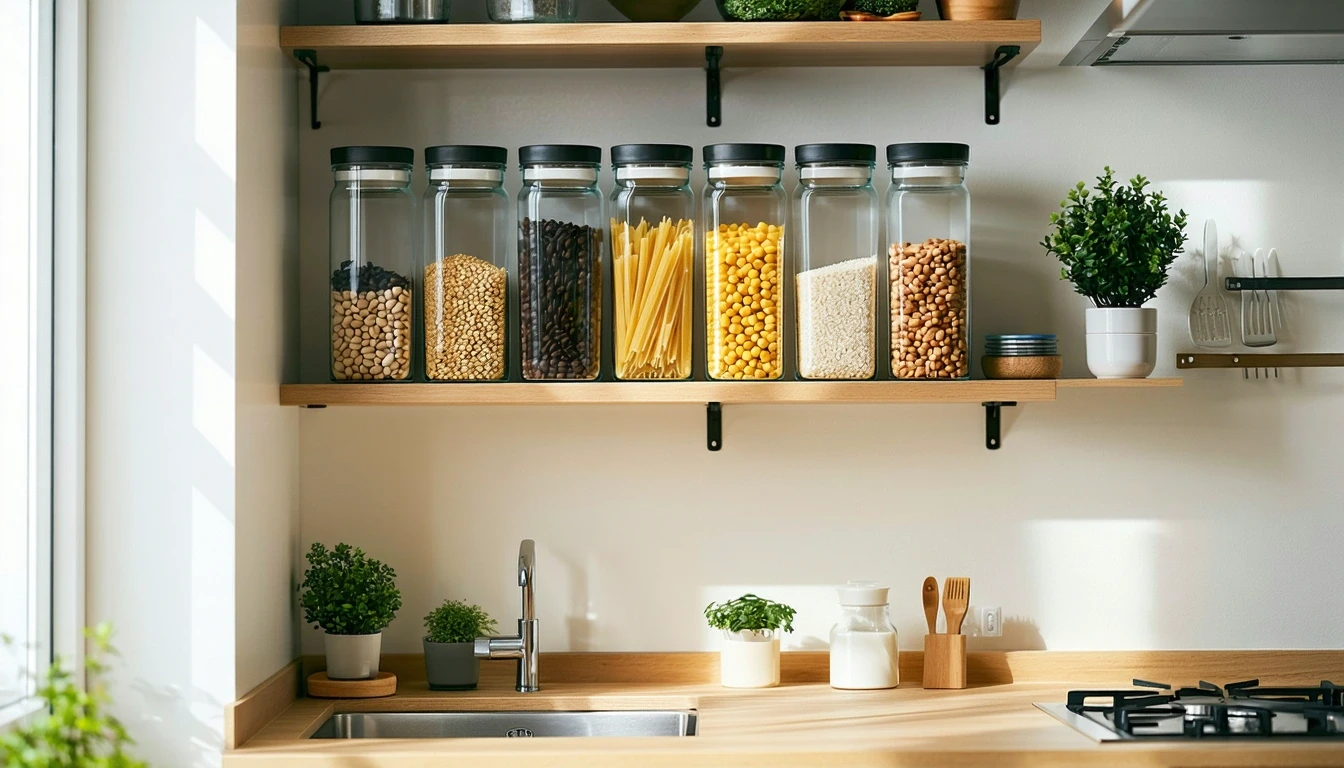
How Grocery Costs Feel in Lenexa
Grocery prices in Lenexa run noticeably below the national average, a reflection of the Kansas City metro’s broader cost structure and the city’s regional price positioning. With a regional price parity index of 87—meaning overall costs sit about 13% below the national baseline—Lenexa offers meaningful relief at the checkout compared to many U.S. metros. For households earning near or above the city’s median income of $101,074 per year, grocery shopping rarely creates financial strain. The combination of lower baseline prices and strong household earnings means food costs occupy a smaller share of the budget than they might in higher-cost or lower-income communities.
That said, grocery pressure isn’t uniform across all household types. Singles living on one income, particularly those earning below the metro median, feel price sensitivity more acutely. A gallon of milk or a pound of ground beef might seem modest in isolation, but these purchases add up quickly when you’re feeding only yourself and managing rent, utilities, and transportation on a tighter margin. Families with multiple children face a different kind of pressure—not from high per-unit prices, but from sheer volume. Even when individual items cost less than the national average, feeding four or five people three meals a day creates steady demand that requires careful planning and smart store choices.
Lenexa’s grocery landscape supports a range of shopping strategies. The city’s food and grocery establishment density exceeds typical thresholds, meaning residents have access to multiple store formats—discount grocers, mid-tier chains, and premium markets—without long drives. This accessibility makes it practical to compare prices, stock up during sales, or split shopping trips between a budget chain for staples and a specialty store for specific items. For households willing to navigate that choice actively, grocery costs become more controllable. For those with less time or transportation flexibility, the default shopping experience still tends to run cheaper than in many comparable suburbs nationwide.
Grocery Price Signals (Illustrative)
These prices illustrate how staple items tend to compare locally—not a full shopping list. They’re derived estimates based on national baseline data adjusted by regional price parity, and they reflect broader cost patterns rather than store-specific or week-specific pricing. Actual prices vary by retailer, brand, package size, and timing, but these figures offer a useful anchor for understanding Lenexa’s relative grocery cost position.
| Item | Illustrative Price |
|---|---|
| Bread (per pound) | $1.57/lb |
| Cheese (per pound) | $4.16/lb |
| Chicken (per pound) | $1.77/lb |
| Eggs (per dozen) | $2.04/dozen |
| Ground beef (per pound) | $5.83/lb |
| Milk (per half-gallon) | $3.54/half-gallon |
| Rice (per pound) | $0.92/lb |
Derived estimate based on national baseline adjusted by regional price parity; not an observed local price.
What stands out here is the consistency of the discount relative to national norms. Staples like chicken, eggs, and rice—items that form the backbone of many household meal plans—all reflect the metro’s lower cost structure. Ground beef, often a bellwether for protein costs, sits well within reach for most families, though it’s still one of the pricier items per pound. Cheese and dairy products track similarly, offering modest savings that compound over time when you’re buying these items weekly.
These prices don’t tell you what you’ll pay at any given store on any given week, but they do clarify why grocery shopping in Lenexa tends to feel less pressured than in higher-cost metros. The baseline is simply lower, and that creates breathing room—especially for households that cook frequently and buy in moderate volume.
Store Choice & Price Sensitivity
Grocery price pressure in Lenexa varies significantly by store tier, and understanding that variation is key to managing food costs effectively. Discount grocers—chains that emphasize private-label goods, no-frills layouts, and high inventory turnover—offer the lowest per-unit prices. Shopping at a discount grocer consistently can reduce grocery spending by a meaningful margin compared to mid-tier or premium options, particularly for households buying staples in volume. These stores tend to carry fewer brands and less variety, but for families focused on stretching each dollar, that tradeoff is often worth it.
Mid-tier grocery chains occupy the middle ground. They offer broader selection, more name-brand options, and often better prepared food sections, but prices run higher than discount competitors. For many Lenexa households, mid-tier stores become the default because they balance convenience, variety, and cost without requiring extreme budget discipline. You’ll pay more per pound for chicken or per gallon for milk than you would at a discount grocer, but the shopping experience is faster and the product range wider. For dual-income households with limited time, that convenience often justifies the premium.
Premium grocers—whether organic-focused chains or upscale markets—charge noticeably more across nearly every category. The gap isn’t just about organic certification or specialty sourcing; it’s also about store format, location, and the customer base these retailers target. A pound of ground beef or a dozen eggs at a premium grocer might run 30% to 50% higher than the same items at a discount chain. For households prioritizing organic produce, sustainably sourced proteins, or specialty dietary products, premium grocers provide value that’s hard to find elsewhere. But for cost-conscious shoppers, these stores represent a significant budget risk if used for routine staples.
Lenexa’s high grocery establishment density means most residents can access all three tiers without long drives, making store choice a practical lever rather than a theoretical one. Households that split their shopping—buying bulk staples at discount grocers and selective items at mid-tier or premium stores—often achieve the best balance of cost control and variety. Those who default to a single store, particularly a premium one, will experience grocery costs at the higher end of the city’s range, even though Lenexa’s baseline remains below the national average.
What Drives Grocery Pressure Here
Income plays the defining role in how grocery costs feel in Lenexa. At a median household income exceeding $101,000, many families experience grocery shopping as a low-stress, routine expense rather than a source of financial anxiety. When your household brings in that level of earnings, even a $150 or $200 weekly grocery run—covering fresh produce, proteins, dairy, and pantry staples—remains well within budget. The pressure points emerge for households earning significantly below the median: single-income renters, service-sector workers, and younger households still building career momentum. For these groups, the same grocery prices that feel modest to higher earners can create tension, particularly when combined with rising rent or transportation costs.
Household size amplifies sensitivity in predictable ways. A single adult or couple without children can navigate Lenexa’s grocery costs with relative ease, even on moderate income. Waste is minimal, meal planning is simpler, and the volume of food required each week stays manageable. Families with three, four, or five members face a different reality. Even when per-unit prices are low, the sheer quantity of food required to keep everyone fed—breakfast, lunch, dinner, snacks—creates steady demand that adds up quickly. A gallon of milk that lasts a single adult a week might disappear in two days in a household with teenagers. Ground beef that serves two people for multiple meals becomes a single-dinner purchase for a family of five.
Lenexa’s position within the Kansas City metro also shapes grocery costs in subtle ways. The city benefits from regional distribution networks that serve the broader metro efficiently, keeping supply chains short and costs competitive. Seasonal variability exists—produce prices shift with growing seasons, and certain proteins fluctuate based on supply conditions—but these swings tend to be less dramatic than in more isolated or higher-cost regions. The result is a relatively stable grocery cost environment where prices don’t spike unpredictably, giving households more confidence in their monthly expenses and planning.
Practical Ways People Manage Grocery Costs
Store choice remains the most direct lever households use to control grocery spending in Lenexa. Shifting routine staple purchases—bread, rice, eggs, milk, chicken—from a mid-tier or premium grocer to a discount chain reduces per-unit costs without requiring significant behavioral change. The time cost is real—discount grocers may be less conveniently located or require navigating a more limited selection—but for households feeling budget pressure, that tradeoff often makes sense. Splitting shopping between stores—buying bulk staples at a discount grocer and selective fresh or specialty items at a mid-tier chain—offers a middle path that balances cost control with variety and convenience.
Buying in bulk works well for non-perishable staples and household items, particularly for families with adequate storage space. Rice, pasta, canned goods, and frozen proteins can be purchased in larger quantities during sales, reducing the per-unit cost and minimizing the frequency of shopping trips. Bulk buying requires upfront capital and planning—you need both the money to buy more at once and the discipline to avoid waste—but for households with predictable consumption patterns, it’s a reliable way to lower grocery costs over time without sacrificing quality or variety.
Cooking frequency directly affects grocery costs, though not always in the ways people expect. Households that cook most meals at home naturally spend more on groceries than those who eat out frequently, but they also avoid the higher per-meal costs of restaurant dining. The key is consistency: cooking regularly allows you to buy ingredients in useful quantities, minimize waste, and build meals around what’s on sale or in season. Households that cook sporadically often end up wasting fresh produce or proteins that spoil before they’re used, which erodes any savings from buying groceries instead of prepared food.
Seasonal awareness helps, though it’s a softer strategy than store choice or bulk buying. Produce prices shift throughout the year based on growing seasons and supply conditions. Buying berries, tomatoes, and leafy greens when they’re in season and abundant keeps costs lower and quality higher. Frozen vegetables and proteins offer a buffer against seasonal price swings, providing consistent pricing and long shelf life without significant quality loss. For households willing to adjust their meal planning around what’s available and affordable each season, grocery costs become more predictable and controllable.
Groceries vs Eating Out (Directional)
The tradeoff between grocery spending and restaurant dining isn’t just about price—it’s about time, convenience, and household complexity. Cooking at home almost always costs less per meal than eating out, but it requires planning, shopping, prep time, and cleanup. For dual-income households with limited evening hours, the time cost of cooking can feel prohibitive, even when the financial savings are clear. A $12 fast-casual meal might cost three times what the same food would cost to prepare at home, but if cooking that meal takes 45 minutes and cleanup takes another 15, the convenience premium starts to make sense for busy families.
Lenexa’s grocery cost structure—running below the national average with strong store accessibility—makes cooking at home more financially attractive than in higher-cost metros. The baseline savings are simply larger when your staple ingredients cost less to begin with. A household that cooks five dinners a week instead of three, replacing those two restaurant meals with home-cooked alternatives, will see noticeable monthly savings. The exact amount depends on restaurant choices and grocery store tier, but the directional impact is consistent: more cooking, lower food costs overall.
The calculus shifts for singles and couples without children. Cooking for one or two people can be less efficient than cooking for a family—ingredients come in quantities that create waste, and the time investment per serving is higher. For smaller households, a mix of home cooking and selective restaurant meals often makes more sense than trying to cook every meal from scratch. The goal isn’t to eliminate dining out entirely; it’s to make intentional choices about when convenience is worth the premium and when cooking at home offers better value.
FAQs About Grocery Costs in Lenexa (2026)
Is it cheaper to shop in bulk in Lenexa? Bulk buying reduces per-unit costs for non-perishable staples like rice, pasta, canned goods, and frozen proteins, especially when purchased during sales at discount or warehouse-format grocers. It requires upfront capital and storage space, but for families with predictable consumption, it’s a reliable way to lower grocery spending over time.
Which stores in Lenexa are best for low prices? Discount grocery chains offer the lowest per-unit prices, particularly for staples and private-label goods. Mid-tier grocers provide broader selection and convenience at a moderate premium, while premium markets charge significantly more for organic, specialty, and prepared items. Splitting shopping between discount and mid-tier stores often balances cost control with variety.
How much more do organic items cost in Lenexa? Organic products typically carry a noticeable premium over conventional equivalents, with the gap widening at premium grocers compared to mid-tier or discount chains. The difference varies by category—organic produce and dairy tend to show larger premiums than shelf-stable goods—but households prioritizing organic options should expect meaningfully higher grocery bills overall.
How do grocery costs for two adults in Lenexa tend to compare to nearby cities? Lenexa’s regional price parity of 87 suggests grocery costs run about 13% below the national baseline, which generally translates to lower prices than higher-cost metros in the region. Actual differences depend on store choice, shopping habits, and income levels, but the baseline cost structure in Lenexa tends to favor affordability compared to many peer suburbs.
How do households in Lenexa think about grocery spending when cooking at home? Most households view grocery spending as controllable through store choice, bulk buying, and meal planning. Cooking at home consistently reduces per-meal costs compared to dining out, but it requires time and discipline. Families with higher incomes often prioritize convenience and variety, while budget-conscious households focus on discount grocers and staple-based meal plans to keep costs low.
Do grocery prices in Lenexa change much throughout the year? Seasonal shifts affect produce prices and certain proteins, but overall grocery costs in Lenexa remain relatively stable compared to more isolated or supply-constrained regions. Buying in-season produce and using frozen alternatives during off-peak months helps smooth out price variability without requiring major changes to shopping habits.
Can you save money by shopping at multiple stores in Lenexa? Yes—splitting shopping between a discount grocer for bulk staples and a mid-tier or premium store for selective fresh or specialty items often delivers the best balance of cost control and variety. The strategy requires more time and planning, but for households feeling grocery budget pressure, the savings can be significant over the course of a month.
How Groceries Fit Into the Cost of Living in Lenexa
Grocery costs in Lenexa occupy a smaller share of household budgets than housing or transportation, but they’re one of the few major expenses where behavior and choice create meaningful control. Unlike rent or mortgage payments—which lock in for months or years—or utility bills that fluctuate with weather and usage, grocery spending responds directly to store choice, meal planning, and shopping discipline. For households earning near or above the city’s median income, groceries rarely create financial strain. For those earning below the median or managing larger families, grocery costs become a more active part of budget management, requiring intentional decisions about where to shop, what to buy, and how often to cook.
The city’s lower-than-national cost baseline and high grocery establishment density create favorable conditions for cost-conscious shopping. Discount grocers, mid-tier chains, and premium markets all operate within practical reach, meaning households can choose the price-quality-convenience balance that fits their priorities. That accessibility matters—it turns store choice from a theoretical strategy into a practical lever that households can pull weekly. Combined with Lenexa’s strong median income, the result is a grocery cost environment that feels manageable for most residents, even as food prices nationwide continue to draw attention.
For a fuller picture of how grocery costs interact with housing, utilities, transportation, and other expenses, the monthly budget breakdown offers a more complete view of where money goes and which expenses drive the most pressure. Groceries are one piece of the puzzle, but understanding the full cost structure helps clarify which tradeoffs matter most and where households have the most room to adjust. Lenexa’s grocery costs are lower than many comparable metros, but they still require attention—especially for households navigating tighter margins or feeding multiple people on a single income.
How this article was built: In addition to public economic data, this article incorporates location-based experiential signals derived from anonymized geographic patterns—such as access density, walkability, and land-use mix—to reflect how day-to-day living actually feels in Lenexa, KS.