
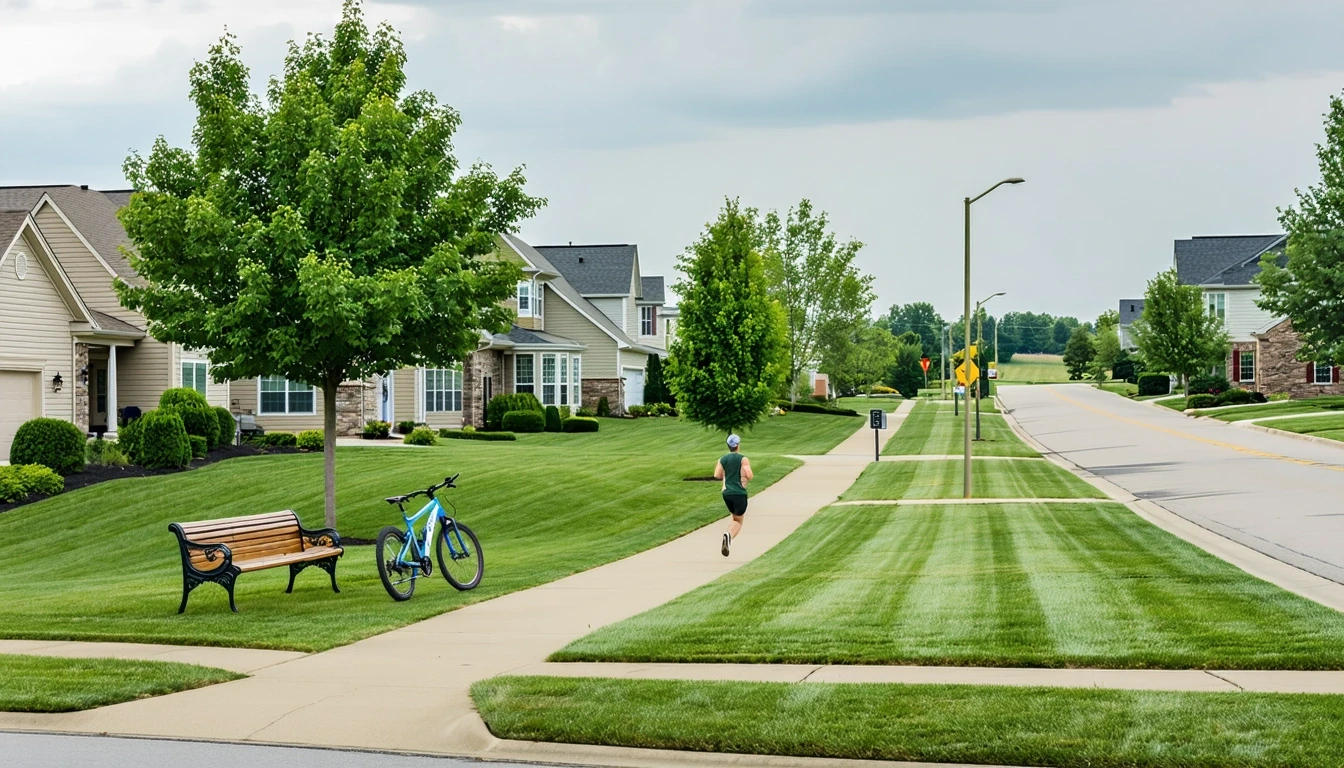
Which city gives you more for your money? For households comparing Lee’s Summit and Raymore in 2026, the answer depends less on total cost and more on where financial pressure shows up in daily life. Both cities sit within the Kansas City metro area, share the same utility providers and gas prices, and attract families seeking suburban space and access to metro employment. Yet the way costs behave—and the tradeoffs households face—differs in meaningful ways. Lee’s Summit offers pockets of walkability, rail transit access, and corridor-clustered grocery and retail options, while Raymore leans heavily on car-oriented infrastructure, hospital presence, and lower home purchase prices. The decision isn’t about which city costs less overall; it’s about which cost structure aligns with your household’s priorities, commute tolerance, and daily logistics.
Understanding these differences matters because the same gross monthly income can feel stable in one city and stretched in the other. Housing entry costs, transportation dependence, and the friction of running errands all vary between Lee’s Summit and Raymore—not because one city is universally cheaper, but because each concentrates cost pressure differently. Renters face one set of tradeoffs, homebuyers another, and commuters yet another. This article walks through how housing, utilities, groceries, transportation, and taxes behave in each city, then explains which households are more exposed to which costs and why.
Housing Costs
Housing costs in Lee’s Summit and Raymore reveal a structural inversion: Lee’s Summit carries a median home value of $291,400, while Raymore’s sits at $278,100. For buyers, that difference translates into lower entry barriers in Raymore—less cash needed for down payments, lower principal balances, and modestly reduced property tax exposure over time. Yet renters face the opposite dynamic: Lee’s Summit’s median gross rent of $1,295 per month sits below Raymore’s $1,410 per month, creating a monthly cost advantage for households not yet ready to buy or preferring rental flexibility.
This inversion matters because it shifts who feels housing pressure most acutely. In Lee’s Summit, homeownership requires a higher upfront commitment, but renters gain breathing room in their monthly budgets. In Raymore, the lower purchase price appeals to first-time buyers stretching toward ownership, but renters absorb higher ongoing obligations without the equity-building benefit. The difference also reflects housing stock composition: Lee’s Summit’s walkable pockets and mixed-use corridors support a broader range of apartment and townhome options, while Raymore’s car-oriented layout skews toward single-family detached homes, where rental supply tightens and landlords pass through higher per-unit costs.
For families prioritizing space and long-term stability, Raymore’s lower home values reduce the initial financial hurdle, making ownership more accessible for households with stable dual incomes and tolerance for car dependency. For younger professionals, couples without children, or households valuing mobility and lower fixed costs, Lee’s Summit’s rental market offers predictability and access to transit-adjacent neighborhoods. Neither city dominates across all household types; the fit depends on whether entry cost or ongoing obligation matters more to your financial strategy.
| Housing Type | Lee’s Summit | Raymore |
|---|---|---|
| Median Home Value | $291,400 | $278,100 |
| Median Gross Rent | $1,295/month | $1,410/month |
Housing takeaway: Lee’s Summit renters experience lower monthly housing costs, while Raymore buyers face lower entry barriers. Households sensitive to upfront cash requirements may prefer Raymore’s home values; those prioritizing rental affordability and flexibility gain advantage in Lee’s Summit. The primary difference is not magnitude but timing—front-loaded cost in Lee’s Summit versus ongoing obligation in Raymore.
Utilities and Energy Costs
Utility costs in Lee’s Summit and Raymore operate under identical rate structures: both cities pay 11.80¢ per kWh for electricity and $14.51 per MCF for natural gas. Because both sit in the same metro area and share the same climate exposure—hot, humid summers requiring extended air conditioning and cold winters demanding heating—the primary cost driver isn’t the rate itself but the housing stock and how efficiently homes convert energy into comfort. Older single-family homes with minimal insulation, common in both cities’ established neighborhoods, amplify cooling and heating loads. Newer construction, more prevalent in Raymore’s recent development clusters, tends to reduce baseline usage through better sealing and HVAC efficiency.
Seasonality introduces volatility in both cities, but the experience differs by housing type. Apartment dwellers in Lee’s Summit’s corridor-clustered areas benefit from shared walls and smaller square footage, reducing exposure to temperature extremes. Single-family homeowners in Raymore, managing larger floor plans and detached structures, face higher baseline consumption and sharper seasonal swings. Summer cooling dominates utility bills in both cities, but winter heating costs rise more predictably for households relying on natural gas furnaces. Households in newer homes experience more predictable bills; those in older stock face greater variability and less control over monthly exposure.
Utility cost exposure also varies by household size and daily occupancy patterns. Single adults working full-time and commuting experience lower usage than families with children home during the day or retirees managing temperature preferences around the clock. Raymore’s car-oriented layout and longer average commutes mean fewer people home during peak daytime hours, potentially reducing cooling costs for working households. Lee’s Summit’s walkable pockets and rail access support more varied schedules, increasing the likelihood of midday occupancy and corresponding energy use. Neither city offers a structural advantage in utility costs; the difference lies in how housing form, home age, and household rhythm interact with shared rate structures.
Utility takeaway: Both cities share identical utility rates, so cost differences emerge from housing type, home age, and household occupancy patterns rather than pricing. Raymore’s newer construction stock offers more predictable energy performance; Lee’s Summit’s apartment options reduce exposure for renters. Households in older single-family homes face higher volatility in both cities, with cooling season driving the largest swings.
Groceries and Daily Expenses

Grocery and daily spending pressure in Lee’s Summit and Raymore reflects differences in access density and shopping infrastructure rather than price levels. Both cities fall within the same regional price parity index (RPP of 87), meaning grocery staples—bread, eggs, milk, chicken—cost roughly the same at checkout. The difference lies in how easily households can comparison-shop, access discount retailers, and avoid convenience markups. Lee’s Summit’s corridor-clustered food and grocery density supports more competitive pricing and shorter trips between options. Raymore’s sparse grocery density means fewer stores within quick reach, increasing reliance on a single primary grocer and reducing flexibility to chase sales or switch stores based on weekly needs.
This access difference compounds for households managing larger grocery volumes. Families with children buying in bulk benefit from proximity to big-box retailers and discount chains, which cluster more densely in Lee’s Summit’s commercial corridors. Raymore households face longer drives to access the same variety, adding time cost and fuel expense to each shopping trip. Single adults and couples, purchasing smaller quantities and prioritizing convenience, may find Raymore’s layout less burdensome—one reliable grocery store suffices when volume and variety matter less. But for households sensitive to price per unit and dependent on frequent restocking, Lee’s Summit’s denser retail footprint reduces both cost and friction.
Dining out and convenience spending also diverge. Lee’s Summit’s mixed-use pockets and walkable corridors support casual dining, coffee shops, and takeout options within short distances, increasing the temptation—and ease—of convenience spending. Raymore’s car-oriented layout concentrates restaurants along major corridors, requiring intentional trips and reducing spontaneous spending. Households disciplined about meal planning may prefer Raymore’s structure, which imposes natural friction on impulse purchases. Those valuing flexibility and variety may find Lee’s Summit’s accessibility worth the trade, even if it invites higher discretionary spending over time.
Grocery takeaway: Price levels remain similar across both cities, but access density differs. Lee’s Summit’s corridor-clustered grocery options reduce friction and support comparison shopping; Raymore’s sparse density increases reliance on a single store and adds travel time. Families managing high grocery volumes feel the access difference more acutely; smaller households experience less impact. Convenience spending creep is higher in Lee’s Summit due to walkable retail proximity.
Taxes and Fees
Property taxes, sales taxes, and recurring fees in Lee’s Summit and Raymore operate under Missouri’s statewide frameworks, but local assessment practices, municipal service fees, and HOA prevalence introduce meaningful differences in how tax and fee burdens show up. Property taxes in both cities tie directly to assessed home values and local mill levies. Lee’s Summit’s higher median home value of $291,400 generates higher annual property tax obligations for homeowners compared to Raymore’s $278,100 median, even if effective rates remain similar. For renters, property taxes remain invisible in monthly rent but influence landlords’ pricing decisions and long-term rent stability.
Recurring fees—trash collection, water, sewer, stormwater management—vary by municipality and housing type. Single-family homeowners in both cities typically pay these fees separately, either as direct utility bills or bundled into HOA dues. Raymore’s newer subdivisions often include HOA structures that bundle landscaping, common area maintenance, and sometimes trash service, creating predictable monthly obligations but reducing individual control. Lee’s Summit’s older neighborhoods and corridor-clustered developments show more variability: some areas lack HOAs entirely, leaving homeowners responsible for individual service contracts; others impose modest fees for shared amenities. Renters in both cities generally see these costs rolled into gross rent, but the structure affects how landlords price units and absorb cost increases over time.
Sales taxes apply uniformly across purchases in both cities, but spending patterns shift exposure. Households making frequent retail purchases, dining out regularly, or relying on convenience goods face higher cumulative sales tax burdens. Lee’s Summit’s denser commercial corridors and walkable retail access increase transaction frequency; Raymore’s car-oriented layout concentrates spending into fewer, larger trips. The difference isn’t rate-based but behavioral: more transactions mean more sales tax events, even if total spending remains similar. Households planning to stay several years should also consider how property tax exposure grows with home appreciation—Lee’s Summit’s higher starting values mean larger absolute increases if assessments rise, while Raymore’s lower base offers modestly more insulation from assessment-driven tax hikes.
Tax and fee takeaway: Lee’s Summit homeowners face higher property tax exposure due to higher home values; Raymore’s lower values reduce ongoing tax obligations. HOA fees are more common in Raymore’s newer subdivisions, bundling services but reducing flexibility. Sales tax exposure depends more on transaction frequency than rates, with Lee’s Summit’s walkable retail increasing spending events. Long-term homeowners in Lee’s Summit face greater absolute tax growth if assessments rise.
Transportation & Commute Reality
Transportation costs and commute patterns diverge sharply between Lee’s Summit and Raymore, driven not by gas prices—both cities pay $3.62 per gallon—but by infrastructure, transit access, and daily mobility needs. Lee’s Summit offers rail transit service, walkable pockets with higher pedestrian-to-road ratios, and corridor-clustered errands that reduce car dependency for some households. Raymore’s car-oriented layout, minimal pedestrian infrastructure, and sparse daily errands density make vehicle ownership and frequent driving non-negotiable for nearly all residents. The difference isn’t subtle: Lee’s Summit supports transit-adjacent lifestyles for households willing to prioritize proximity to rail stops and mixed-use corridors, while Raymore assumes every adult drives and every household manages multiple vehicles.
Raymore’s commute data underscores this reality: the average commute runs 27 minutes, with 47% of workers facing long commutes and only 2.8% working from home. These figures reflect a suburb built for car commuters, where employment centers lie outside city limits and daily travel demands add up quickly. Lee’s Summit lacks comparable commute metrics in the available data, but its rail access and walkable pockets suggest more variability—some households commute by car, others use transit, and proximity to Kansas City’s employment hubs offers shorter drive times for those living near major corridors. The structural difference is clear: Raymore concentrates transportation costs in fuel, vehicle maintenance, and time spent driving, while Lee’s Summit offers optionality that reduces exposure for households able to use transit or live closer to work.
For households running daily errands, the difference compounds. Lee’s Summit’s corridor-clustered grocery and retail options mean shorter, more frequent trips that don’t require highway access. Raymore’s sparse errands density forces longer drives to reach the same services, adding miles and time to routine tasks. Families managing school drop-offs, grocery runs, and extracurricular activities feel this friction more acutely in Raymore, where every trip requires a car and distances stretch longer. Single adults or couples without children may find Raymore’s layout manageable if work commutes dominate transportation time, but the lack of transit fallback means any vehicle breakdown or maintenance need creates immediate logistics pressure.
Transportation takeaway: Lee’s Summit’s rail access and walkable pockets reduce car dependency for some households; Raymore’s car-oriented infrastructure makes vehicle ownership and frequent driving unavoidable. Raymore’s 47% long commute rate and 27-minute average reflect suburb-to-employment-center travel patterns. Households sensitive to commute time, fuel costs, and vehicle dependence face higher exposure in Raymore; those able to use transit or live near Lee’s Summit’s rail stops gain flexibility and lower ongoing transportation costs.
Cost Structure Comparison
Housing pressure concentrates differently in Lee’s Summit and Raymore, shaping which households feel financial strain most acutely. Lee’s Summit’s higher home values create a steeper entry barrier for buyers, requiring larger down payments and higher mortgage principals, but renters benefit from lower monthly obligations. Raymore inverts this: lower home values ease the path to ownership, but renters absorb higher monthly costs without building equity. For first-time buyers prioritizing ownership over rental flexibility, Raymore’s structure favors entry; for households valuing lower fixed costs and mobility, Lee’s Summit’s rental market offers breathing room.
Utilities introduce similar exposure in both cities due to shared rate structures, but housing form and home age shift volatility. Raymore’s newer construction stock delivers more predictable energy performance, reducing seasonal swings for homeowners in recent subdivisions. Lee’s Summit’s apartment options and smaller unit sizes lower baseline consumption for renters, while older single-family homes in both cities face higher heating and cooling exposure. Households in older stock experience more volatility regardless of city; those in newer builds or apartments gain predictability.
Daily living costs—groceries, errands, and convenience spending—reflect access density more than price levels. Lee’s Summit’s corridor-clustered retail supports comparison shopping and reduces travel time for routine purchases, but walkable proximity to dining and coffee shops invites higher discretionary spending. Raymore’s sparse grocery density adds drive time and limits flexibility, but car-oriented layout imposes natural friction on impulse purchases. Families managing high grocery volumes and frequent restocking feel Lee’s Summit’s access advantage; smaller households experience less impact. Households disciplined about meal planning may prefer Raymore’s structure, which reduces convenience spending creep.
Transportation patterns matter more in Raymore, where car dependency, long commutes, and sparse errands density concentrate costs in fuel, maintenance, and time. Lee’s Summit’s rail access and walkable pockets reduce exposure for households able to live near transit or work closer to home, though car ownership remains common. For households sensitive to commute friction and vehicle dependence, the difference is structural: Raymore assumes every adult drives daily, while Lee’s Summit offers optionality that lowers ongoing transportation costs for some.
The better choice depends on which costs dominate your household. Households sensitive to housing entry barriers may prefer Raymore’s lower home values; those prioritizing rental affordability and transit access gain advantage in Lee’s Summit. For families managing long commutes and high transportation exposure, Lee’s Summit’s rail access and denser errands layout reduce friction. For buyers prioritizing newer construction and hospital access, Raymore’s infrastructure and healthcare presence offer tangible benefits. The decision is less about total cost and more about predictability, flexibility, and where your household absorbs pressure most.
How the Same Income Feels in Lee’s Summit vs Raymore
Single Adult
For a single adult, housing becomes the first non-negotiable cost, and the choice between renting in Lee’s Summit or Raymore shifts monthly flexibility immediately. Lee’s Summit’s lower rent leaves more room for discretionary spending, transit passes, or savings, while Raymore’s higher rent tightens the budget before other costs appear. Flexibility exists in transportation: Lee’s Summit’s rail access allows some single adults to reduce or eliminate car ownership, lowering insurance and maintenance exposure, while Raymore assumes a vehicle and daily commuting. Commute friction in Raymore—longer drives, higher fuel consumption—turns time into a hidden cost, reducing schedule flexibility and increasing reliance on predictable work hours.
Dual-Income Couple
For dual-income couples, the front-loaded cost of homeownership in Lee’s Summit versus Raymore determines how quickly equity-building begins. Raymore’s lower home values make ownership accessible sooner, but higher rent in Raymore punishes couples choosing to delay purchase. Flexibility disappears in transportation: both partners likely commute by car in Raymore, doubling fuel and vehicle costs, while Lee’s Summit’s transit options allow one partner to reduce driving if work and home align near rail corridors. Grocery and errands friction matters less for couples without children, but Lee’s Summit’s denser retail reduces time spent on routine tasks, preserving weekend flexibility.
Family with Kids
For families, housing space and school access become non-negotiable first, and Raymore’s lower home values ease entry into larger single-family layouts. Flexibility exists in Raymore’s hospital presence, which reduces healthcare logistics stress, but disappears in transportation: every school drop-off, grocery run, and extracurricular activity requires a car and adds miles. Lee’s Summit’s corridor-clustered errands reduce drive time for daily tasks, and rail access offers older children independent mobility, lowering parental logistics burden. Commute friction in Raymore—47% long commute rate—means less time at home and higher ongoing fuel exposure, while Lee’s Summit’s transit viability allows one parent to reduce driving if work permits.
Decision Matrix: Which City Fits Which Household?
| Decision Factor | If You’re Sensitive to This… | Lee’s Summit Tends to Fit When… | Raymore Tends to Fit When… |
|---|---|---|---|
| Housing entry + space needs | You need lower upfront cash or lower monthly rent | You’re renting and prioritize lower monthly obligations | You’re buying and need lower home values to enter ownership |
| Transportation dependence + commute friction | You want to reduce car dependency or avoid long commutes | You can live near rail stops or work closer to home | You accept car ownership and longer commutes as unavoidable |
| Utility variability + home size exposure | You want predictable energy bills or smaller baseline usage | You’re renting an apartment or prioritize smaller square footage | You’re buying newer construction with better energy efficiency |
| Grocery strategy + convenience spending creep | You need access to multiple stores or want to avoid impulse purchases | You value comparison shopping and shorter errands trips | You prefer fewer shopping trips and natural friction on discretionary spending |
| Fees + friction costs (HOA, services, upkeep) | You want predictable bundled services or prefer individual control | You prefer neighborhoods without HOAs or lower property tax exposure | You accept HOA fees for bundled services and newer infrastructure |
| Time budget (schedule flexibility, errands, logistics) | You want to minimize drive time for daily tasks or preserve weekend flexibility | You value denser errands access and transit options for household members | You accept longer drives and car-dependent logistics as routine |
Lifestyle Fit
Lee’s Summit and Raymore offer distinct suburban lifestyles within the Kansas City metro, shaped by infrastructure, mobility options, and community layout. Lee’s Summit’s walkable pockets, rail transit access, and corridor-clustered retail create a more varied daily experience, where some households walk to coffee shops, use transit for commuting, and run errands without highway access. Raymore’s car-oriented layout, hospital presence, and newer subdivisions appeal to families prioritizing single-family space, predictable infrastructure, and healthcare proximity, even if every trip requires a vehicle. Both cities offer parks and water features, supporting outdoor recreation, but the texture of daily life differs: Lee’s Summit supports more spontaneous, transit-adjacent routines, while Raymore assumes planned, car-dependent logistics.
Commute times and work-from-home rates underscore these differences. Raymore’s 27-minute average commute and 47% long commute rate reflect a suburb built for workers traveling to Kansas City employment centers, with only 2.8% working from home. Lee’s Summit lacks comparable commute data, but rail access and proximity to metro job hubs suggest shorter drive times for households living near transit corridors. For families managing school schedules, extracurricular activities, and dual-income logistics, Lee’s Summit’s denser errands access reduces time spent driving, while Raymore’s layout adds miles but offers newer schools and hospital care within city limits.
Cultural and recreational amenities reflect each city’s development pattern. Lee’s Summit’s mixed-use corridors support local dining, coffee culture, and walkable retail, appealing to younger professionals and couples valuing variety and spontaneity. Raymore’s newer construction and HOA-managed subdivisions offer community pools, playgrounds, and organized events, fitting families seeking structured recreation and neighborhood cohesion. Both cities provide access to Kansas City’s broader metro amenities—sports, arts, dining—but daily life feels different: Lee’s Summit integrates errands and leisure into walkable routines for some, while Raymore separates home, work, and recreation into distinct car trips. Lee’s Summit’s rail access reduces transportation costs for transit-adjacent households, while Raymore’s hospital presence lowers healthcare logistics friction for families.
How this article was built: In addition to public economic data, this article incorporates location-based experiential signals derived from anonymized geographic patterns—such as access density, walkability, and land-use mix—to reflect how day-to-day living actually feels in Lee’s Summit and Raymore.
Frequently Asked Questions
Is Lee’s Summit or Raymore cheaper for renters in 2026? Lee’s Summit offers lower median gross rent at $1,295 per month compared to Raymore’s $1,410 per month, creating a monthly cost advantage for renters. This difference reflects housing stock composition: Lee’s Summit’s corridor-clustered apartments and mixed-use developments support more rental supply, while Raymore’s single-family focus tightens rental availability and raises per-unit costs. Renters prioritizing lower fixed monthly obligations gain advantage in Lee’s Summit.
Which city has lower home prices, Lee’s Summit or Raymore? Raymore’s median home value sits at $278,100, below Lee’s Summit’s $291,400, reducing entry barriers for first-time buyers. This difference translates into lower down payment requirements, smaller mortgage principals, and modestly reduced property tax exposure over time. Buyers prioritizing lower upfront costs and faster entry into ownership face less financial pressure in Raymore, while Lee’s Summit’s higher values reflect denser infrastructure and transit access.
Do Lee’s Summit and Raymore have different utility costs in 2026? Both cities share identical utility rates—11.80¢ per kWh for electricity and $14.51 per MCF for natural gas—because they sit within the same metro area and use the same providers. Cost differences emerge from housing type, home age, and household occupancy patterns rather than pricing. Raymore’s newer construction offers more predictable energy performance; Lee’s Summit’s apartment options reduce baseline consumption for renters. Households in older single-family homes face higher seasonal volatility in both cities.
How do commute costs compare between Lee’s Summit and Raymore? Raymore’s car-oriented infrastructure and 47% long commute rate concentrate transportation costs in fuel, vehicle maintenance, and time, with an average commute of 27 minutes. Lee’s Summit’s rail access and walkable pockets reduce car dependency for households living near transit corridors, lowering ongoing transportation exposure. Both cities pay the same gas price at $3.62 per gallon, so the difference lies in miles driven, transit viability, and daily errands friction rather than fuel cost itself.
Which city is better for families with kids, Lee’s Summit or Raymore? Raymore’s lower home values ease entry into larger single-family layouts, and hospital presence reduces healthcare logistics friction for families managing children’s medical needs. Lee’s Summit’s corridor-clustered errands, rail access for older children, and denser retail reduce daily drive time and offer more independent mobility options. Families prioritizing ownership affordability and hospital proximity may prefer Raymore; those valuing transit access, walkable errands, and lower rental costs gain advantage in Lee’s Summit. The fit depends on whether housing entry cost or daily logistics flexibility matters more.
Conclusion
Lee’s Summit and Raymore offer suburban living within the Kansas City metro, but the way costs behave—and the tradeoffs households face—differs in meaningful ways. Lee’s Summit concentrates financial pressure in higher home values but offers lower rent, rail transit access, and corridor-clustered errands that reduce car dependency and daily friction. Raymore lowers the barrier to homeownership with cheaper home prices and hospital presence but assumes car ownership, longer commutes, and higher rent for those not yet ready to buy. Neither city dominates across all household types; the better choice depends on whether you prioritize housing entry cost, ongoing transportation exposure, or daily logistics flexibility.
For renters, Lee’s Summit’s lower monthly obligations and transit viability create breathing room in budgets and reduce reliance on vehicle ownership. For buyers, Raymore’s lower home values accelerate the path to equity-building and offer newer construction with predictable energy performance. Families managing children, school schedules, and healthcare needs must weigh Raymore’s hospital access and single-family space against Lee’s Summit’s denser errands layout and rail options for older kids. The decision is less about which city costs less overall and more about which cost structure aligns with your household’s rhythm, priorities