
Do you need a car to live in Lee’s Summit? The answer depends more on where you live within the city than on Lee’s Summit as a whole. Rail transit is available here, and some neighborhoods offer genuine pedestrian infrastructure—but those benefits are concentrated in pockets and corridors, not spread evenly across the city. For many households, especially those in newer subdivisions or farther from the rail line, a car remains the primary tool for getting to work, running errands, and managing daily life.
Understanding transportation options in Lee’s Summit means recognizing that this is a city with multiple mobility realities. Some residents commute by rail and walk to nearby shops. Others drive everywhere, every day. The difference isn’t preference—it’s geography.
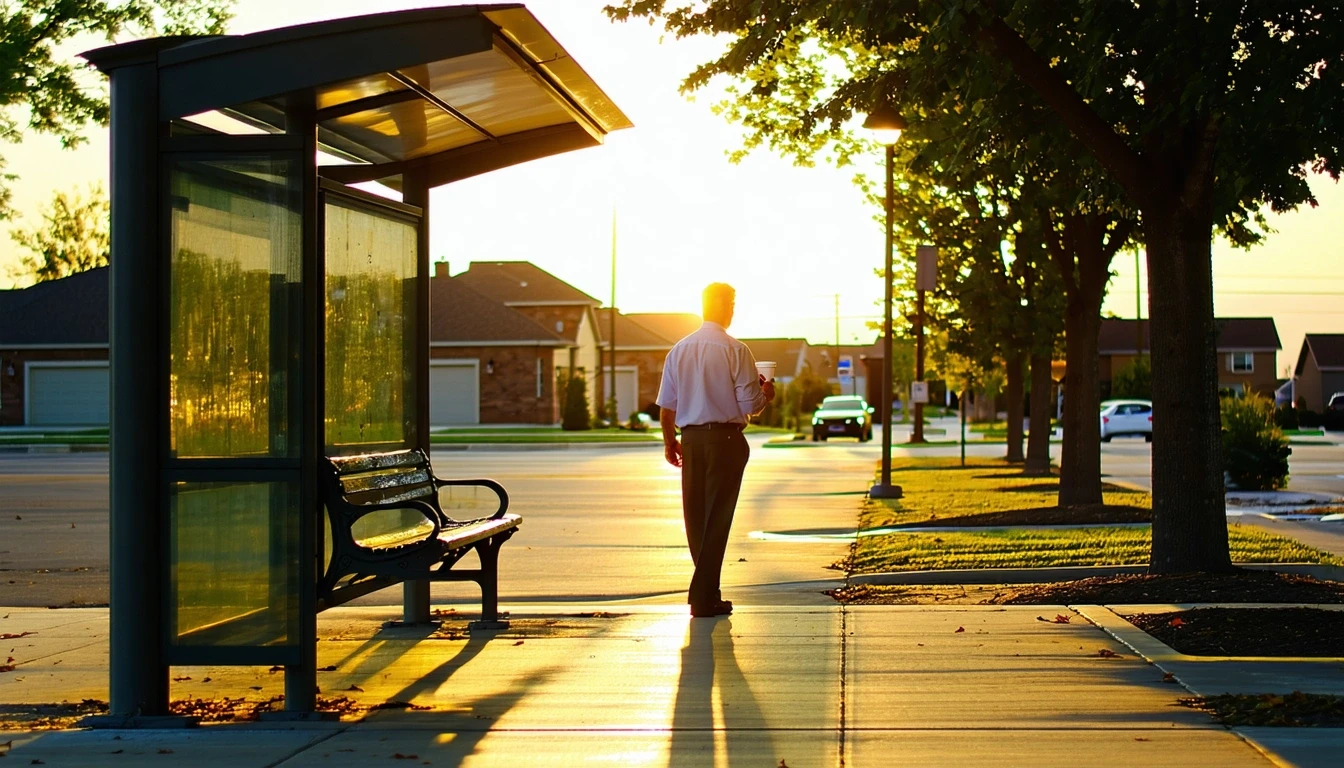
How People Get Around Lee’s Summit
Lee’s Summit sits within the Kansas City metro area, and its transportation landscape reflects that position. The city has grown outward over decades, creating a mix of older, denser neighborhoods near the core and newer, car-oriented subdivisions on the edges. That growth pattern shapes how people move.
Most residents drive. Roads are wide, parking is abundant, and the city’s layout assumes car access. But rail service—provided by systems such as the Kansas City Area Transportation Authority—extends into Lee’s Summit, offering a structured alternative for commuters heading into Kansas City or other metro destinations. That rail presence matters, but only if you live near it and your commute aligns with its routes.
Pedestrian infrastructure exists in parts of Lee’s Summit, particularly in older neighborhoods and near commercial corridors. In those areas, sidewalks, crosswalks, and mixed-use development make walking a practical option for some trips. Outside those pockets, walking becomes less viable. The infrastructure simply isn’t there, and distances between destinations grow quickly.
Cycling infrastructure is present but limited. Some residents bike for recreation or short trips, especially in areas with dedicated paths, but cycling as a primary mode of transportation remains uncommon. The city’s layout and traffic patterns favor cars, and bike infrastructure hasn’t kept pace with demand in most areas.
What newcomers often misunderstand is that Lee’s Summit isn’t uniformly car-dependent or uniformly transit-friendly. It’s both, depending on where you are. That geographic variation creates real differences in daily life, cost exposure, and flexibility.
Public Transit Availability in Lee’s Summit
Public transit in Lee’s Summit centers around rail service, which connects the city to the broader Kansas City metro. For commuters whose jobs are near rail stops and whose schedules align with service hours, this option provides a predictable, structured alternative to driving. It works especially well for single commuters, students, and households that can organize their day around fixed departure times.
Transit tends to work best in and near the city’s core, where residential density is higher and commercial corridors are within walking distance of stations. In these areas, a household can realistically combine rail commuting with walking or short drives for errands. The infrastructure supports that kind of mixed-mode living.
Transit falls short in the suburbs and newer developments on the city’s edges. Coverage doesn’t extend uniformly, and even where bus service exists, frequencies and route structures often require significant time investment. Late-night and weekend service is limited, which creates gaps for shift workers, families with variable schedules, and anyone whose routine doesn’t fit a standard weekday commute pattern.
The rail line is the backbone of transit viability in Lee’s Summit. If you’re not near it, public transportation becomes a secondary option at best. That’s not a failure of the system—it’s a reflection of how the city has developed and where infrastructure investment has been concentrated.
Driving & Car Dependence Reality
For most households in Lee’s Summit, driving isn’t optional—it’s structural. Grocery stores, schools, medical offices, and workplaces are often separated by distances that make walking impractical and transit unavailable. Even in walkable pockets, a car extends your range and reduces friction for multi-stop trips.
Parking is rarely a problem. Residential streets, shopping centers, and office complexes are built with ample parking, and street parking in neighborhoods is generally available. That ease of parking reinforces car use and reduces one of the common pain points found in denser cities.
Sprawl is a factor. Lee’s Summit has grown outward, and that growth has created longer distances between home and daily destinations. For families in peripheral subdivisions, a 10- or 15-minute drive to the nearest grocery store or school is common. Those distances add up over a week, both in time and fuel exposure.
Driving offers flexibility that transit can’t match in most parts of Lee’s Summit. You can leave when you want, stop where you need to, and adjust your route on the fly. For households managing kids, errands, and variable work schedules, that flexibility is worth the cost and responsibility of car ownership.
The tradeoff is exposure. When you rely on a car, you absorb maintenance, insurance, fuel volatility, and depreciation. Those costs are ongoing and non-negotiable. In Lee’s Summit, where public transit doesn’t serve every neighborhood equally, that exposure is part of the cost structure for most households.
Commuting Patterns & Daily Mobility
Commuting in Lee’s Summit varies by neighborhood and job location. Residents who work in downtown Kansas City or other metro hubs may use rail service, especially if they live near a station. For them, the commute is predictable and insulated from traffic variability, though it requires alignment with service schedules.
Many residents commute by car, either to jobs within Lee’s Summit or to employment centers elsewhere in the metro. These commutes range from short drives within the city to longer trips across county lines. The structure of the commute depends on where you live and where you work, but the common thread is that most people drive most of the time.
Multi-stop commutes are common for families. Dropping kids at school, stopping for groceries, and picking up dry cleaning on the way home all require a car in most parts of Lee’s Summit. Transit doesn’t accommodate that kind of routing, and walking those distances isn’t realistic given the city’s layout.
Proximity matters. Households closer to the city’s core or near commercial corridors experience shorter, simpler commutes and can sometimes walk or bike for errands. Households farther out absorb more commute time and rely more heavily on driving. That difference compounds over months and years, affecting both time and cost exposure.
Who Transit Works For — and Who It Doesn’t
Transit works best for single commuters or couples without kids who live near the rail line and work near a metro station. For these households, rail service provides a reliable, low-maintenance commute option that eliminates parking costs and reduces vehicle wear. It’s a genuine alternative, not a compromise.
Students and younger renters in core neighborhoods also benefit. They’re more likely to live in walkable areas, have flexible schedules, and prioritize proximity to transit over space or yard access. For them, transit isn’t just functional—it’s a cost-saving tool that reduces the need for car ownership altogether.
Transit doesn’t work well for families with kids, especially those in suburban neighborhoods. School drop-offs, after-school activities, and grocery runs require the flexibility and cargo capacity that only a car provides. Even if a parent could technically commute by rail, the rest of the household’s logistics usually require a vehicle.
Shift workers and anyone with non-standard hours face real limitations. Late-night and weekend service is limited, and if your job starts or ends outside peak commute windows, transit becomes impractical. In those cases, a car isn’t a preference—it’s a necessity.
Homeowners in peripheral subdivisions are almost universally car-dependent. These neighborhoods were built around driving, and transit infrastructure hasn’t followed. Walking to a bus stop might be possible, but the time cost and limited routing make it uncompetitive with driving for nearly all trips.
Transportation Tradeoffs in Lee’s Summit
Choosing between transit and driving in Lee’s Summit isn’t about cost alone—it’s about control, predictability, and how much friction you’re willing to accept in daily life.
Transit offers predictability. You know when the train leaves, where it stops, and what it costs. You’re insulated from traffic, fuel price swings, and parking hassles. But you give up flexibility. You can’t leave early, make an unplanned stop, or adjust your route. Your schedule bends to the system’s schedule.
Driving offers control. You leave when you want, go where you need to, and handle multi-stop trips without coordination headaches. But you absorb volatility. Fuel prices fluctuate, maintenance is ongoing, and traffic delays are unpredictable. You own the vehicle and all the exposure that comes with it.
For households near the rail line with straightforward commutes, transit reduces transportation costs and simplifies daily routines. For households in the suburbs or with complex logistics, driving is the only practical option, and the tradeoff is accepting the cost and responsibility that comes with it.
The key insight is that where money goes in Lee’s Summit depends heavily on where you live within the city. Proximity to transit, walkable infrastructure, and commercial corridors determines whether you can reduce car dependence or whether you’ll carry full vehicle ownership costs as part of your baseline.
FAQs About Transportation in Lee’s Summit (2026)
Is public transit usable for daily commuting in Lee’s Summit?
Yes, if you live near the rail line and your job is accessible by metro transit. Rail service provides a structured, reliable option for commuters heading into Kansas City or other connected areas. Outside those corridors, transit becomes less practical, and most residents rely on cars.
Do most people in Lee’s Summit rely on a car?
Yes. The majority of households in Lee’s Summit use a car as their primary mode of transportation. Even residents with access to transit often keep a vehicle for errands, family logistics, and trips outside the rail network.
Which areas of Lee’s Summit are easiest to live in without a car?
Neighborhoods near the rail line and within walkable pockets of the city’s core offer the best chance of reducing car dependence. These areas combine transit access with pedestrian infrastructure and nearby commercial options. Suburban and peripheral neighborhoods require a car for nearly all trips.
How does commuting in Lee’s Summit compare to nearby cities?
Lee’s Summit benefits from rail connectivity to the Kansas City metro, which gives it an advantage over purely car-dependent suburbs. However, it’s less transit-rich than urban cores, and most residents still drive. The city sits in the middle—better connected than outer suburbs, but more car-reliant than downtown areas.
Can you bike for transportation in Lee’s Summit?
Cycling is possible in some areas, particularly where dedicated paths exist, but it’s not a primary mode of transportation for most residents. The city’s layout, traffic patterns, and limited bike infrastructure make cycling more common for recreation than for commuting or errands.
How Transportation Fits Into the Cost of Living in Lee’s Summit
Transportation isn’t just a line item—it’s a structural factor that shapes housing choice, time allocation, and financial flexibility. In Lee’s Summit, where you live determines whether you can use transit, walk for errands, or rely entirely on a car. That decision ripples through your monthly budget and daily routine.
Households near the rail line can reduce or eliminate car ownership costs, which frees up income for housing, savings, or other priorities. Households in the suburbs absorb full vehicle costs—insurance, fuel, maintenance, depreciation—as part of their baseline. Over time, that difference compounds.
Transportation also affects time. A rail commute is predictable and hands-off, giving you time to read, work, or rest. A car commute requires attention and absorbs time variably depending on traffic. For families managing multiple stops, driving is faster and more flexible, but it’s also more demanding.
The broader lesson is that mobility and cost structure are linked. If you’re evaluating Lee’s Summit, consider not just whether transit exists, but whether it serves the neighborhoods you’re considering and the destinations you’ll travel to regularly. For a fuller picture of monthly expenses and how transportation fits into the overall cost structure, the budget breakdown article provides numeric context and household-specific scenarios.
Lee’s Summit offers real transportation options, but they’re geographically specific. Understanding where those options exist—and where they don’t—helps you choose a neighborhood that aligns with how you actually live, not how you hope to live. That clarity reduces surprises and builds confidence in your decision.
How this article was built: In addition to public economic data, this article incorporates location-based experiential signals derived from anonymized geographic patterns—such as access density, walkability, and land-use mix—to reflect how day-to-day living actually feels in Lee’s Summit, MO.