
Homeownership in Lakewood, CO isn’t just about the mortgage. Before you calculate what you can borrow, you need to understand what happens after closing: property taxes that adjust with assessed values, utility bills shaped by Colorado’s temperature swings, maintenance demands tied to housing age and weather exposure, and—in many neighborhoods—HOA fees that bundle services but also introduce governance risk. The mortgage is the predictable part. Everything else requires planning.
Lakewood sits in the Denver metro with a median home value of $494,100 and median rent at $1,665 per month. The regional price parity index of 147 signals that costs here run nearly 50% above the national baseline. That premium doesn’t just affect purchase price—it compounds across insurance, taxes, and the replacement cost of systems that fail. Ownership here means absorbing those exposures directly, while renting transfers most of them to a landlord in exchange for less control and no equity accumulation.
This article breaks down the hidden costs, explains how Lakewood’s infrastructure and climate shape ownership expenses, and clarifies when renting or buying makes sense based on your household’s risk tolerance and timeline.
The Housing Market in Lakewood Today
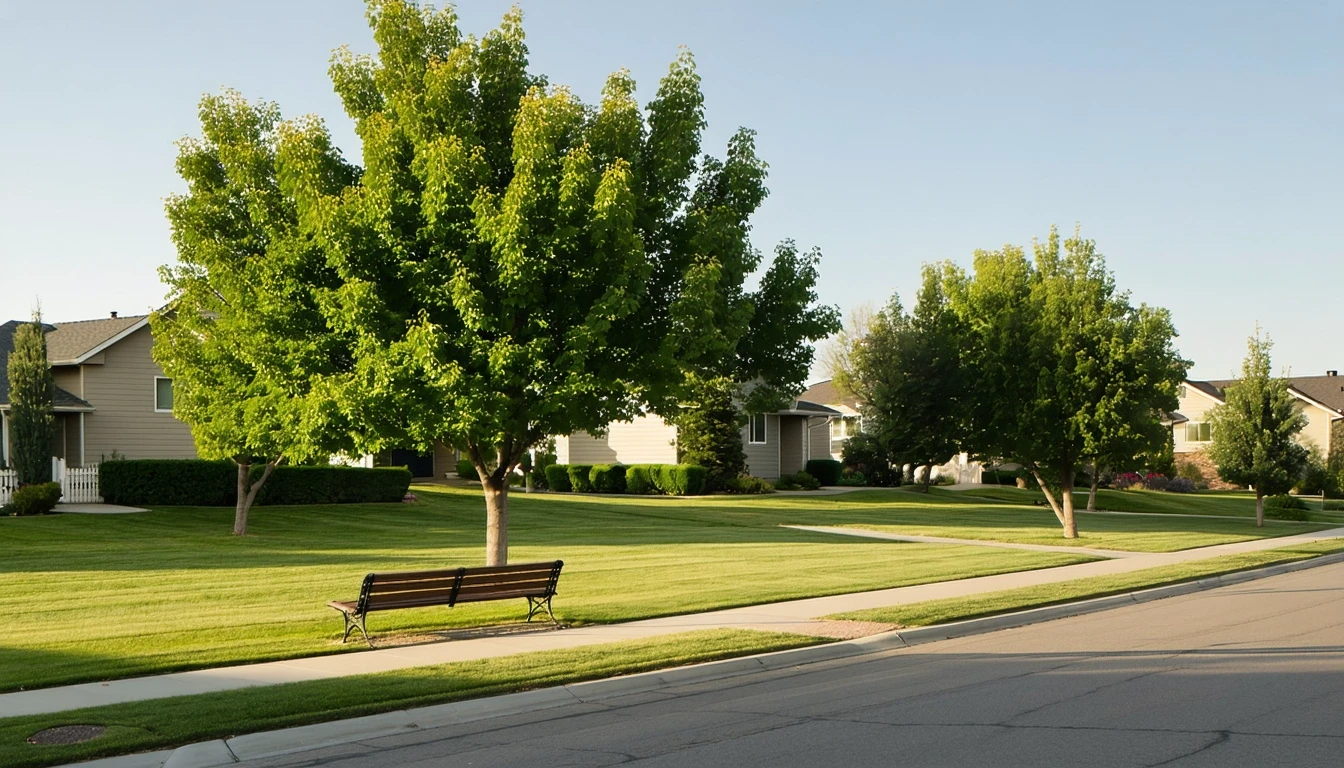
Lakewood functions as an inner-ring suburb within the Denver metro, offering proximity to downtown Denver while maintaining distinct neighborhood character. The city’s housing stock reflects decades of suburban development, with a mix of single-family homes, townhomes, and apartment complexes. What distinguishes Lakewood from outer suburbs is its established infrastructure: rail transit access, integrated park systems, and broadly accessible grocery and food options create pockets where car dependency drops noticeably.
The $494,100 median home value reflects regional demand pressure, not just local wages. Median household income sits at $82,786 per year, which means the typical household faces a home-price-to-income ratio that requires either dual incomes, substantial savings, or acceptance of cost burden that exceeds traditional affordability heuristics. Buyers competing here aren’t just weighing Lakewood against other Denver-area suburbs—they’re deciding whether ownership in this metro fits their financial structure at all.
Newcomers often underestimate how location within Lakewood changes the ownership experience. Walkable pockets near transit and parks reduce transportation costs and daily friction, but those neighborhoods command premium prices. Areas farther from rail or grocery clusters may offer lower entry costs but increase car dependency and time costs, which don’t appear on the closing statement but compound over years of commuting and errands.
Renting in Lakewood
At $1,665 per month, median gross rent in Lakewood represents roughly 24% of median household income—within traditional affordability guidelines for the typical household, but tight for single earners or those below the median. Rental availability varies by neighborhood, with higher concentrations of apartments near commercial corridors and transit nodes. Renters in these areas benefit from reduced car dependency and proximity to grocery density, which lowers transportation and time costs even if rent per square foot runs higher.
Rental pressure in Lakewood tracks Denver metro trends: landlords adjust rents at lease renewal based on regional demand, not just building-level costs. Renters avoid direct exposure to property tax increases, insurance volatility, and maintenance surprises, but they also lack control over renewal terms and rent escalation. The tradeoff is predictability within the lease term versus vulnerability at renewal.
For households prioritizing flexibility—those uncertain about long-term metro commitment, building savings, or exploring neighborhood fit—renting in Lakewood offers a way to access the city’s infrastructure and amenity base without absorbing ownership risk. For those planning to stay multiple years, the lack of equity accumulation and exposure to rent increases become the primary costs of that flexibility.
Owning a Home in Lakewood
Ownership in Lakewood shifts cost structure from landlord-mediated predictability to direct exposure across multiple categories. The $494,100 median home value is the entry point, but the ongoing costs—property taxes, insurance, maintenance, utilities, and potential HOA fees—determine whether ownership remains sustainable over time.
Property taxes in Colorado are governed by state assessment cycles and local mill levies. While the specific rate for Lakewood isn’t provided here, owners should expect taxes to adjust with assessed value changes, which tend to track market appreciation. Unlike rent, which resets annually, property taxes follow assessment schedules that can introduce step changes in cost. Owners in appreciating neighborhoods face higher tax bills even if their income doesn’t rise proportionally.
Insurance costs reflect replacement value, which in a high-cost market like Lakewood means premiums that exceed national averages. Colorado’s hailstorm exposure and occasional wildfire smoke events can affect both availability and pricing, particularly for older roofs or homes near wildland interfaces. Owners carry this risk directly; renters do not.
Maintenance is the wildcard. Lakewood’s climate—cold winters requiring heating, warm summers demanding cooling—stresses HVAC systems, water heaters, and building envelopes. Homes built in earlier decades may lack modern insulation standards, increasing both utility and replacement costs. A furnace failure in January or an AC breakdown in July isn’t optional spending—it’s immediate and often expensive. Renters call the landlord. Owners call the contractor and pay the bill.
HOA fees, where applicable, bundle services like landscaping, snow removal, or exterior maintenance, but they also introduce governance risk. Fees can increase with special assessments or deferred maintenance catching up. Owners in HOA-governed communities trade some autonomy for shared amenity access and exterior upkeep, but they don’t control the budget or timing of those costs.
Apartment vs House in Lakewood — Cost Behavior Comparison
| Expense Category | Apartment | House |
|---|---|---|
| Heating & Cooling | Shared walls and smaller square footage reduce heating demand during cold winters; cooling load moderate in summer | Detached structure and larger square footage increase heating costs during extended cold periods; cooling exposure higher in summer |
| Exterior Maintenance | Landlord or HOA handles roof, siding, landscaping, and snow removal | Owner responsible for roof replacement, gutter maintenance, yard care, and snow removal; Colorado hail and freeze-thaw cycles accelerate wear |
| Water & Sewer | Often included in rent or billed as flat fee; irrigation for common areas not tenant responsibility | Billed separately; landscape irrigation during dry months increases usage; owner pays for all outdoor water |
| Parking & Storage | Assigned or covered parking sometimes included; limited storage space | Garage and driveway included; additional storage available on-site; no monthly parking fee |
Why these categories differ in Lakewood: The city’s climate drives meaningful heating and cooling exposure, and detached homes face greater envelope stress from temperature swings and weather events. Lakewood’s infrastructure separates water billing from rent in most single-family contexts, and outdoor irrigation matters during dry stretches. Categories like trash or basic utilities were excluded because they don’t vary meaningfully by housing type here—both apartments and houses face similar baseline costs, and the differences are driven by usage and square footage rather than structural factors tied to Lakewood specifically.
Utilities & Upkeep Differences
Lakewood’s climate creates a dual-season cost structure: natural gas heating dominates winter months, while electric cooling drives summer bills. At 16.44¢/kWh for electricity and $10.57/MCF for natural gas, owners in detached homes face higher absolute costs than apartment renters due to square footage and building envelope exposure. Older homes with minimal insulation or single-pane windows see the most pronounced seasonal swings.
Houses in Lakewood also absorb exterior maintenance burdens that apartments externalize. Hail events can damage roofs and siding, requiring repairs or insurance claims. Freeze-thaw cycles stress foundations, driveways, and irrigation systems. Landscaping isn’t optional in many neighborhoods—HOAs or city codes enforce yard standards, and Colorado’s dry climate means irrigation costs rise in summer even as water conservation messaging increases.
Apartment renters avoid these exposures entirely. Their utility costs are lower due to shared walls and smaller conditioned space, and exterior maintenance falls to the landlord or property management. The tradeoff is lack of control: renters can’t upgrade insulation, replace windows, or install smart thermostats without landlord approval, limiting their ability to reduce costs through efficiency improvements.
Rent vs Buy: Long-Term Exposure in Lakewood
Renting and owning in Lakewood represent different risk profiles, not just different monthly costs. Renters face income-driven volatility: rent increases at lease renewal track regional demand and landlord strategy, but the magnitude and timing are outside tenant control. Owners face asset-driven volatility: property taxes adjust with assessed values, insurance costs shift with market conditions and claims history, and maintenance expenses arrive unpredictably based on system age and weather events.
Over time, renters in Lakewood gain flexibility and avoid capital risk, but they build no equity and remain exposed to displacement if rent growth outpaces income. Owners gain stability in housing cost structure—fixed-rate mortgages don’t change, and property tax increases are slower than rent spikes—but they absorb all maintenance risk and tie capital to a single asset in a single metro.
The decision hinges on timeline and risk tolerance. Households planning to stay in Lakewood for many years, with stable income and sufficient reserves for maintenance surprises, benefit from ownership’s equity accumulation and cost predictability. Those with shorter timelines, uncertain job stability, or limited savings face lower risk and greater flexibility by renting, even if monthly rent exceeds what a mortgage payment might be.
Lakewood’s infrastructure—rail access, walkable pockets, integrated parks—adds a layer to this calculus. Owning in a transit-accessible, amenity-rich neighborhood reduces long-term transportation and time costs, which compounds the value of ownership if you stay. Renting in the same area offers the same logistical benefits without the capital commitment, but you’re betting that rent growth won’t erase the savings from avoided ownership costs.
How Day-to-Day Living Shapes Housing Decisions in Lakewood
Lakewood’s infrastructure creates meaningful variation in how housing location affects daily life. The city’s pedestrian-to-road ratio exceeds high thresholds in certain areas, and rail transit service is present, which means households near these nodes can reduce car dependency for commuting and errands. Food and grocery establishment density is high, and park access is integrated throughout the city, supported by the presence of water features that enhance outdoor amenity value.
For families, this infrastructure matters beyond aesthetics. School and playground density both meet moderate thresholds, and the combination of strong family amenities with accessible green space means that housing location within Lakewood directly affects how much time parents spend driving kids to activities versus walking to parks or schools. Ownership in these neighborhoods costs more upfront, but it reduces the ongoing time tax and transportation expense that families in car-dependent areas absorb daily.
For commuters, proximity to rail changes the ownership equation. Households able to rely on transit for work trips avoid the fuel, maintenance, and time costs of daily driving. At $3.91/gallon and an average commute of 27 minutes, the savings from reduced car dependency compound over years of ownership. Renters near transit gain the same logistical benefit, but owners lock in that advantage as long as they stay, while renters risk displacement if rent growth in transit-accessible areas outpaces income.
The presence of both residential and commercial land use throughout Lakewood means that walkable errands—groceries, pharmacies, clinics—are feasible in many neighborhoods, not just downtown. This mixed-use character reduces the frequency of car trips for daily needs, which lowers transportation costs and increases the value of housing in those areas. Buyers and renters alike should evaluate not just the home itself, but the density and accessibility of services within walking or biking distance, because that infrastructure determines how much of your budget goes to transportation versus housing.
How this article was built: In addition to public economic data, this article incorporates location-based experiential signals derived from anonymized geographic patterns—such as access density, walkability, and land-use mix—to reflect how day-to-day living actually feels in Lakewood, CO.
FAQs About Housing Costs in Lakewood
Is it cheaper to rent or buy in Lakewood, CO?
It depends on timeline and risk tolerance. Renting at $1,665/month avoids property taxes, maintenance, and insurance volatility, but builds no equity and exposes you to rent increases at renewal. Buying at $494,100 median value requires capital and absorbs all ownership costs, but offers equity accumulation and long-term cost stability if you stay multiple years.
What hidden costs should I expect when buying a home in Lakewood?
Beyond the mortgage: property taxes that adjust with assessed values, homeowner’s insurance reflecting high replacement costs, maintenance for HVAC and exterior systems stressed by Colorado weather, utility bills driven by heating and cooling seasons, and HOA fees where applicable. These costs are ongoing and some—like maintenance—arrive unpredictably.
How does Lakewood’s climate affect homeownership costs?
Cold winters require natural gas heating, and warm summers demand electric cooling, creating dual-season utility exposure. Hail events and freeze-thaw cycles stress roofs, siding, and building envelopes, increasing maintenance frequency and insurance claims. Detached homes face greater exposure than apartments due to larger conditioned space and full envelope responsibility.
Do all neighborhoods in Lakewood have similar housing costs?
No. Walkable areas near rail transit, parks, and grocery density command premium prices but reduce transportation and time costs. Car-dependent neighborhoods may offer lower purchase prices but increase ongoing expenses for fuel, vehicle maintenance, and commute time. Location within Lakewood changes both upfront and long-term cost structure.
Should I prioritize a lower purchase price or a better-located home in Lakewood?
Better location—near transit, parks, and grocery density—reduces daily logistics burden and transportation costs, which compound over years of ownership. A lower purchase price in a car-dependent area may cost less upfront but increase time and fuel expenses that don’t appear on the mortgage statement. Evaluate total cost of living, not just home price.
Making Housing Choices in Lakewood
Housing in Lakewood isn’t a single decision—it’s a series of tradeoffs between upfront cost, ongoing exposure, and daily logistics. The $494,100 median home value and $1,665 median rent both reflect regional price pressure, but they represent different risk structures. Renters avoid ownership volatility and capital commitment but face renewal uncertainty and no equity. Owners absorb taxes, maintenance, and insurance risk but gain stability and asset accumulation if they stay.
What makes Lakewood distinct is how location within the city changes the cost experience. Walkable pockets near rail and parks reduce car dependency and daily friction, which compounds value for families and commuters willing to pay more upfront. Car-dependent areas offer lower entry costs but higher ongoing transportation and time expenses. The infrastructure is there—rail service, integrated green space, high grocery density—but access to it depends on where you choose to live.
For more context on where money goes across all household categories, or a broader look at what drives expenses in Lakewood beyond housing, explore the related guides. And if you’re planning a move, understanding pods vs trucks can help you control one of the largest one-time costs of changing cities.