
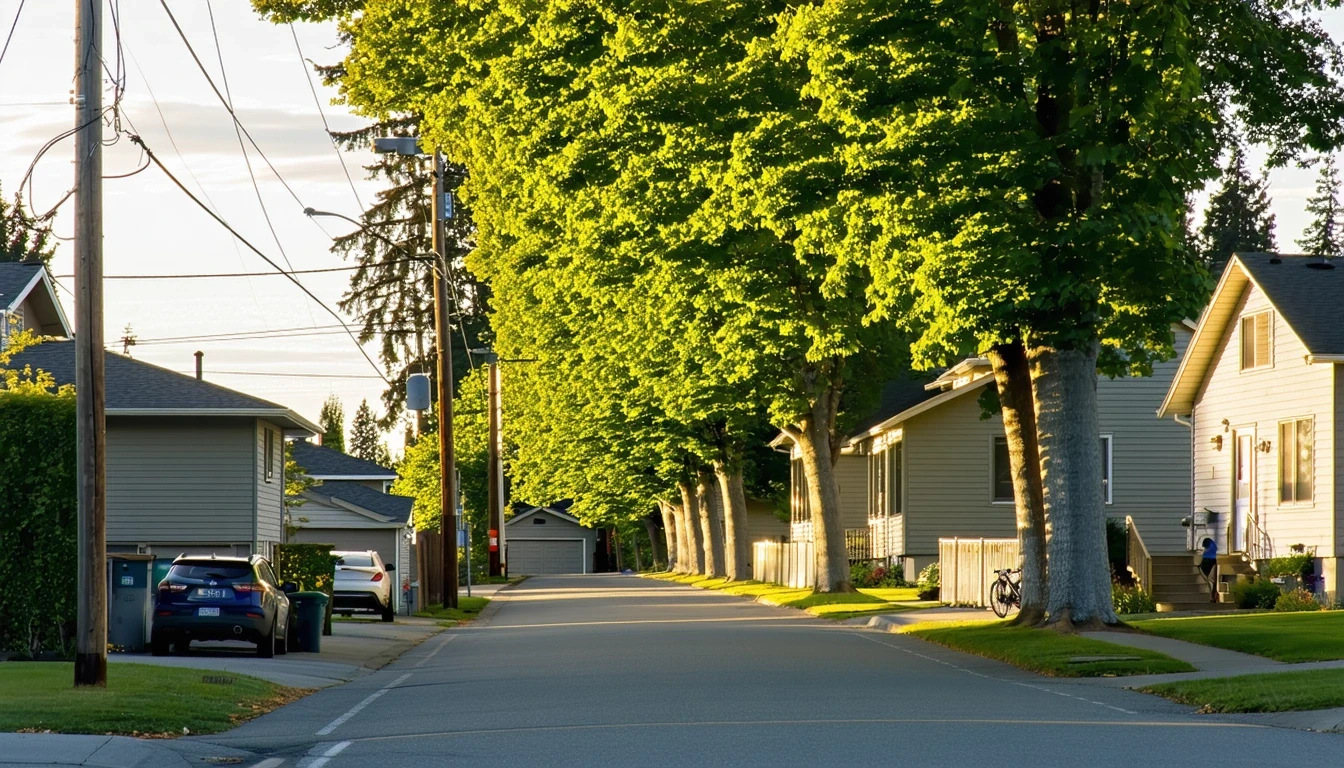
Apartment vs House in Kent — Cost Behavior Comparison
| Expense Category | Apartment | House |
|---|---|---|
| Base Rent/Mortgage Exposure | $1,742/month median gross rent | $478,400 median home value |
| Utilities | Often partially included; lower individual exposure to seasonal swings | Full exposure to electricity (13.33¢/kWh) and natural gas ($15.51/MCF) volatility; mild winters and moderate summers keep seasonal swings manageable |
| Maintenance & Repairs | Landlord responsibility; renter insulated from surprise costs | Owner bears full cost and timing risk; older housing stock in some neighborhoods increases frequency |
| Outdoor Space Management | Minimal or none; integrated public parks (high density) reduce need for private yard access | Yard maintenance required but public green space access high; less pressure to maximize private outdoor investment |
| Mobility Costs | Walkable pockets and rail access reduce car dependency in some complexes; location within Kent drives variation | Same transit and errands access available but typically farther from rail; car ownership more common in single-family zones |
Why these categories? Kent’s mixed-density layout and strong transit infrastructure create meaningful cost differences tied to location and housing type. Integrated park access reduces the private-yard premium common in purely suburban markets, while rail presence and high errands accessibility make car dependency negotiable in some apartment zones. Utility exposure remains modest due to Kent’s mild climate. Categories like insurance and HOA fees were excluded due to lack of local data and limited Kent-specific variation drivers.
The Housing Market in Kent Today
Kent sits in a transitional zone within the Seattle metro—close enough to access regional employment and transit, but far enough south to reflect suburban density and pricing. The median home value of $478,400 positions Kent below Seattle’s core but above many outer suburbs, a result of its rail connectivity and commercial corridor density. Unlike bedroom communities that depend entirely on highway commutes, Kent’s Link light rail station and high errands accessibility create pockets of walkability uncommon at this price point.
What newcomers often misunderstand is that Kent’s cost structure isn’t uniform across the city. Proximity to the rail line, access to walkable commercial corridors, and neighborhood-level differences in pedestrian infrastructure create variation in both housing prices and ongoing transportation costs. A renter near the transit station may avoid car ownership entirely, while a homeowner in a less-connected neighborhood will face the region’s high gas prices ($5.26/gallon) and longer drives for errands.
The regional price parity index of 113 confirms that Kent’s overall cost of living runs above the national baseline, but housing remains the dominant driver. The market here rewards those who can navigate location tradeoffs—choosing transit access over square footage, or accepting a longer walk to reduce car dependency.
Renting in Kent
Median gross rent in Kent is $1,742 per month, a figure that reflects both the city’s proximity to Seattle and its role as a commuter hub. Renters here face pressure from regional demand but benefit from Kent’s mixed housing stock, which includes both older apartment complexes and newer transit-oriented developments near the rail station.
Location within Kent matters significantly for renters. Those near the Link light rail station gain access to Seattle and SeaTac Airport without car ownership, a meaningful cost advantage given the region’s gas prices and parking scarcity in urban job centers. Renters farther from transit corridors often need a car, which shifts the effective cost of housing when fuel, insurance, and maintenance are included.
Rental availability tends to cluster along commercial corridors where errands accessibility is high—grocery stores, pharmacies, and clinics are broadly distributed across Kent, reducing the need to drive for daily needs in many neighborhoods. This density also means renters can often find housing near parks and green space, which are integrated throughout the city rather than concentrated in a few areas.
Renters should expect variation in what’s included. Some complexes bundle water, sewer, or garbage into rent, while others pass through all utilities separately. Given Kent’s mild winters and moderate summers, heating and cooling costs remain manageable compared to more extreme climates, but electricity (13.33¢/kWh) and natural gas ($15.51/MCF) are both billed at rates reflecting Washington’s energy market.
Owning a Home in Kent
At a median home value of $478,400, ownership in Kent requires significant upfront capital and exposes buyers to ongoing costs that renters avoid. Property taxes, homeowner’s insurance, and maintenance all fall directly on the owner, and while specific rates aren’t available in local data, Washington’s tax structure and the region’s cost environment suggest these expenses are non-trivial.
Ownership in Kent also means navigating the city’s mixed building character. Some neighborhoods feature older single-family homes that may require more frequent repairs, while others include newer construction with lower near-term maintenance risk but higher purchase prices. The presence of both low-rise and mixed-height buildings across the city indicates a housing stock in transition, with some areas seeing redevelopment and others remaining stable.
One advantage of ownership here is control over housing stability. Renters face potential rent increases at lease renewal, while owners lock in their principal and interest payments (if financed with a fixed-rate mortgage). However, owners remain exposed to changes in property taxes, insurance premiums, and utility rates over time, all of which can rise independently of the mortgage.
Kent’s integrated park access and water features reduce the pressure to prioritize private yard size, a shift from traditional suburban ownership models. Buyers can often find smaller lots or townhomes that still provide strong access to outdoor space, which can lower both purchase price and ongoing maintenance costs.
Utilities & Upkeep Differences
Utility exposure in Kent is shaped by the Pacific Northwest’s mild climate. Winters are cool but rarely freezing, and summers are warm but not extreme, meaning neither heating nor cooling dominates annual costs the way they do in harsher climates. For context, a typical household using 1,000 kWh per month would face an illustrative electricity cost of around $133 per month before fees and taxes, while natural gas usage of 1 MCF per month during heating season would run roughly $15.51, also before fees.
Apartment renters often see lower utility bills due to smaller square footage, shared walls that reduce heating and cooling loss, and landlords who sometimes include water, sewer, or garbage in rent. Homeowners, by contrast, pay for all utilities separately and face greater exposure to seasonal variation, particularly if the home is older or poorly insulated.
Maintenance costs differ sharply by housing type. Apartment renters call the landlord when something breaks; homeowners bear the full cost and timing risk of repairs. Kent’s older housing stock in some neighborhoods increases the likelihood of deferred maintenance issues—roofs, siding, and mechanical systems all age and require replacement on timelines owners can’t always control.
Yard work is another ownership-specific cost, though Kent’s integrated public green space reduces the need to maintain large private yards. Homeowners who prioritize outdoor access can often rely on nearby parks rather than investing heavily in landscaping or irrigation.
Rent vs Buy: Long-Term Exposure in Kent
The choice between renting and owning in Kent is less about monthly payment comparison and more about risk profile and control. Renters face the possibility of rent increases at each lease renewal, but they avoid exposure to property tax changes, insurance premium shifts, and major repair costs. Owners lock in their mortgage payment but remain exposed to all other housing-related costs, which can rise over time in ways that are difficult to predict.
Ownership also brings control over housing stability. Renters can be asked to leave if the landlord sells or redevelops the property; owners can stay as long as they continue paying their mortgage and taxes. In a market like Kent, where transit access and walkability vary significantly by neighborhood, losing a well-located rental can mean accepting a longer commute or higher transportation costs elsewhere.
One often-overlooked factor is how housing costs interact with transportation. A renter near the Link station may pay more in rent but eliminate car ownership entirely, while a homeowner in a less-connected neighborhood may have a lower mortgage but face ongoing costs for fuel, insurance, and vehicle maintenance. Over time, these tradeoffs shift the effective cost of each option in ways that depend heavily on location within Kent.
Renters also retain flexibility to move as circumstances change—job loss, family growth, or shifts in commute patterns—without the transaction costs of selling a home. Owners build equity over time but face significant costs when selling, including real estate commissions, closing fees, and the risk of selling during a market downturn.
FAQs About Housing Costs in Kent
What is the median home value in Kent, WA?
The median home value in Kent is $478,400, positioning the city above many outer suburbs but below Seattle’s core. This price reflects Kent’s rail connectivity, errands accessibility, and mixed-density housing stock.
How much is rent in Kent, WA?
Median gross rent in Kent is $1,742 per month. Renters near the Link light rail station often pay more but may avoid car ownership, while those farther from transit face lower rent but higher transportation costs.
Are utilities expensive in Kent, WA?
Utilities in Kent are moderate due to the mild climate. Electricity costs 13.33¢/kWh and natural gas runs $15.51/MCF, both before fees. Seasonal swings are manageable compared to regions with extreme heat or cold.
Is it better to rent or buy in Kent, WA?
The answer depends on your risk tolerance and timeline. Renters avoid property tax and maintenance exposure but face potential rent increases. Owners lock in mortgage payments but remain exposed to taxes, insurance, and repair costs that can rise over time.
Does Kent, WA have good public transportation for renters?
Yes. Kent has Link light rail service, which connects to Seattle and SeaTac Airport. Renters near the station can often avoid car ownership, a significant cost advantage given the region’s high gas prices and parking costs.
Making Housing Choices in Kent
Housing costs in Kent are shaped by the city’s position as a transit-connected suburb with mixed-density neighborhoods and strong errands accessibility. The median home value of $478,400 and median rent of $1,742 per month reflect regional demand, but the real cost of housing here depends on location within the city and how well your household can leverage Kent’s transit and walkability infrastructure.
Renters who prioritize flexibility and want to avoid maintenance risk will find Kent’s rental market accessible, especially near commercial corridors and the rail line. Owners who value stability and are prepared to manage property taxes, insurance, and upkeep will benefit from locking in their mortgage payment, though they remain exposed to other costs that can shift over time.
The choice between an apartment and a house isn’t just about square footage—it’s about whether you want to insulate yourself from repair risk and utility volatility, or whether you’re willing to accept those exposures in exchange for control and equity. Kent’s integrated park access and transit options reduce some of the traditional premiums associated with homeownership, making smaller homes and apartments more viable than in purely car-dependent suburbs.
For more on how housing fits into the broader cost picture, see A Month of Expenses in Kent: What It Feels Like. If you’re weighing moving companies and logistics, that guide covers costs and planning considerations.
How this article was built: In addition to public economic data, this article incorporates location-based experiential signals derived from anonymized geographic patterns—such as access density, walkability, and land-use mix—to reflect how day-to-day living actually feels in Kent, WA.