
Is Kent expensive to live in? Kent is considered moderately priced in 2026, with a median home value of $478,400 and median gross rent of $1,742 per month. The value proposition depends on housing entry cost versus transportation exposure—rail access and walkable pockets reduce car dependence for some households, while nearly half of commuters face long trips that amplify fuel and vehicle costs.
Over the last five years, Kent’s cost structure has shifted noticeably: housing values have climbed faster than income growth, transportation costs have become more volatile due to fluctuating fuel prices, and utility exposure has intensified during extreme weather months. These trends haven’t fundamentally changed what drives expenses here, but they’ve sharpened the tradeoffs between housing entry cost, commute length, and household logistics.
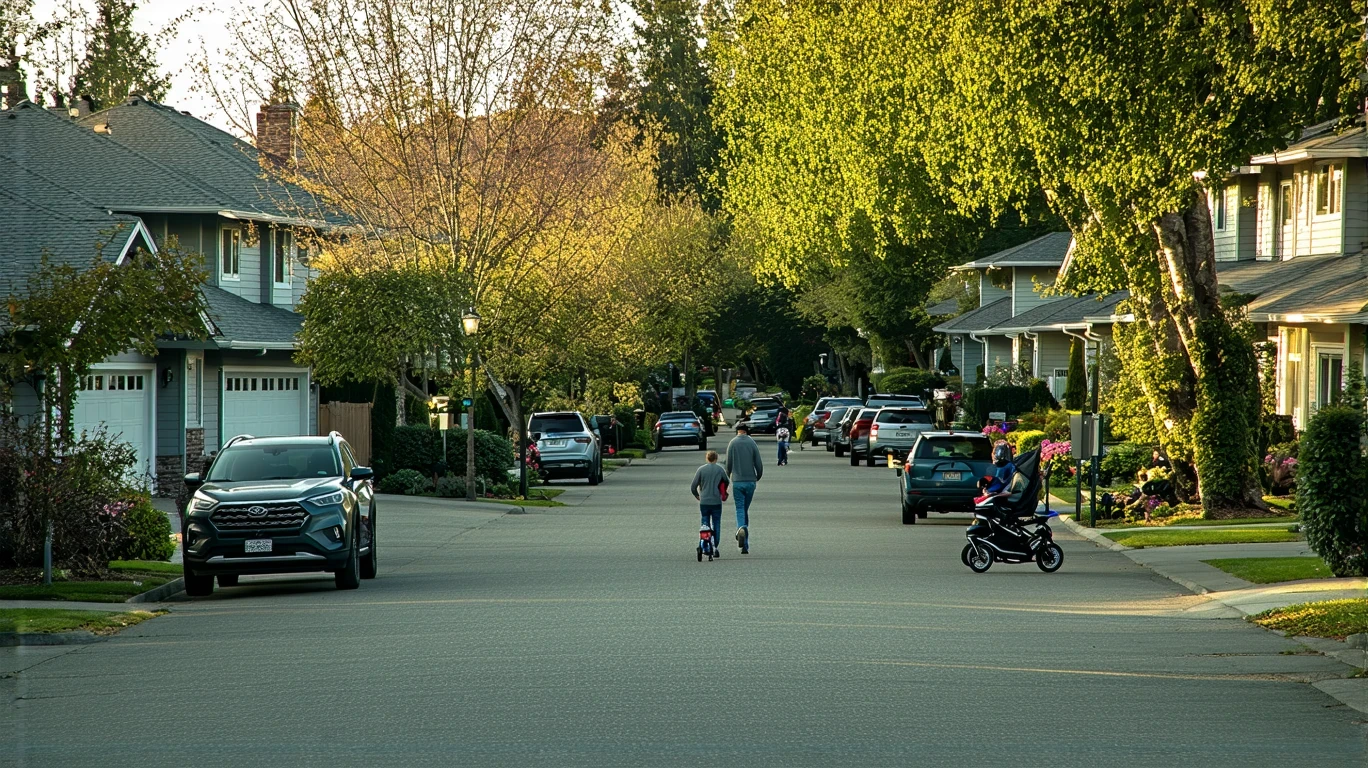
Overall Cost of Living Snapshot
Kent sits 13% above the national baseline for regional price parity, meaning goods, services, and housing carry a modest premium compared to the country as a whole. Housing dominates the cost structure—whether through mortgage obligations tied to a $478,400 median home value or recurring rent at $1,742 per month. Transportation follows closely behind, driven by a 30-minute average commute, $5.26 per gallon gas prices, and the reality that 48.3% of workers face long commutes. Utilities introduce moderate seasonal volatility, particularly during extended cooling months when electricity demand rises, and heating months when natural gas usage climbs.
What sets Kent apart is the interplay between urban form and cost exposure. Rail service is present, and certain neighborhoods feature substantial pedestrian infrastructure, creating pockets where car dependency eases. Daily errands are broadly accessible—food and grocery density exceeds high thresholds citywide—which reduces the planning friction and time cost that often accompany suburban living. Parks and water features are integrated throughout, offering outdoor access without requiring a vehicle or membership fees. These structural features don’t eliminate cost structure pressure, but they do create meaningful differentiation in how households experience day-to-day expenses.
Driver verdict: Housing entry cost is the dominant pressure point, but transportation exposure varies sharply depending on proximity to rail, commute direction, and vehicle count. Surprises tend to come from the gap between Kent’s accessible errands and its persistent car dependence for work trips—households that assume walkability translates to low transportation costs often underestimate fuel and maintenance burdens.
Housing Costs (Primary Driver)
Housing is the primary cost driver in Kent, and the decision between renting and owning hinges on entry cost tolerance, timeline, and exposure to long-term ownership obligations. At $478,400, the median home value represents a substantial upfront commitment, requiring significant down payment reserves and the ability to service mortgage debt, property taxes, insurance, and maintenance over time. Ownership locks in principal and interest but exposes households to variable costs—insurance premiums respond to regional risk factors, property taxes adjust with assessed values, and maintenance demands are unpredictable.
Renting at $1,742 per month offers lower entry cost and eliminates direct responsibility for major repairs, but it trades ownership equity for recurring payments that can shift at lease renewal. Rental households avoid property tax exposure and large-scale maintenance obligations, but they remain vulnerable to rent increases and have no stake in long-term value appreciation. The mixed building height profile and presence of both residential and commercial land use suggest a range of housing types—single-family homes, townhomes, and multifamily units—which creates some flexibility in matching housing cost to household structure.
Kent functions as a transitional city for many households: renters who plan to stay short-term benefit from avoiding ownership risk, while buyers who can manage the entry cost and intend to remain for several years gain stability and potential equity growth. The decision is not about which option is universally cheaper—it’s about which exposure profile aligns with income stability, timeline, and tolerance for variable costs.
| Housing Type | Cost Anchor | What That Buys You |
|---|---|---|
| Median Home (Ownership) | $478,400 | Equity stake, fixed principal/interest, exposure to taxes, insurance, and maintenance |
| Median Rental | $1,742/month | Lower entry cost, flexibility, no maintenance obligation, no equity, renewal risk |
Utilities & Energy Risk
Utility costs in Kent introduce moderate seasonal volatility, driven primarily by electricity demand during extended cooling months and natural gas usage during heating periods. At 13.33¢ per kWh, electricity rates sit above many inland markets but remain below coastal extremes. The Pacific Northwest climate brings warm, dry summers that push air conditioning usage higher than many residents expect, and while freezing nights are rare, heating demand persists through long, damp winters.
Natural gas is priced at $15.51 per MCF (roughly 100 therms), and households relying on gas heat face exposure to price swings during peak heating months. The combination of moderate electricity rates and variable gas pricing creates a cost structure where seasonal bills can shift noticeably—summer cooling and winter heating represent the two primary exposure windows, and households without efficiency measures or programmable controls experience the full swing.
Risk classification: moderate. Utilities are not the dominant cost driver in Kent, but they are a meaningful secondary exposure. Seasonal volatility is predictable in direction but variable in magnitude, and households that underestimate cooling season length or heating fuel consumption often face bill surprises in their first year.
Groceries & Daily Costs
Grocery costs in Kent reflect the city’s 13% premium over the national baseline, meaning staple items—bread, eggs, milk, chicken, ground beef—carry modestly higher price tags than the national average. The regional price parity index captures this pressure, and while individual item prices vary by retailer and season, the overall grocery burden is consistent with other mid-sized cities in the Seattle metro area.
What matters more than individual item pricing is the accessibility of grocery options. Food and grocery establishment density exceeds high thresholds citywide, meaning most households can reach multiple stores without long drives or extensive planning. This broad accessibility reduces the hidden costs of grocery shopping—time, fuel, and the need to batch trips—which can add up quickly in car-dependent suburbs. The presence of mixed land use and integrated commercial corridors means errands can often be combined, lowering the friction and frequency of dedicated shopping trips.
For households accustomed to lower-cost regions, the grocery premium is noticeable but not extreme. The bigger differentiator is whether your housing location allows you to walk, bike, or make short trips to restock—a structural advantage that Kent offers in certain neighborhoods, reducing the compounding effect of transportation costs on top of grocery prices.
Transportation Reality
Transportation is the second-largest cost exposure in Kent, and the intensity varies sharply based on commute patterns, vehicle count, and proximity to rail. The average commute is 30 minutes, but 48.3% of workers face long commutes—trips that extend well beyond the citywide average and amplify fuel, maintenance, and time costs. At $5.26 per gallon, gas prices are elevated compared to national norms, and households making daily long-distance trips face recurring exposure that compounds over months.
Rail service is present in Kent, which creates a meaningful alternative for households whose work destinations align with transit routes. For those who can use rail, transportation costs shift from per-mile fuel and vehicle wear to fixed transit fares, and the time cost of commuting becomes more predictable. However, only 12.0% of workers report working from home, meaning the vast majority of households are making regular trips—either by car or transit—and the cost structure depends heavily on which mode dominates.
Cycling infrastructure is present in some pockets, and the pedestrian-to-road ratio exceeds high thresholds in parts of the city, but these features primarily serve local errands rather than work commutes. The transportation reality in Kent is that most households need a vehicle for flexibility, even if rail reduces the frequency of car trips. The cost exposure comes not from occasional driving, but from the compounding effect of long commutes, multi-vehicle households, and the maintenance burden that builds over time.
Cost Exposure Profiles
Cost exposure in Kent is shaped by three primary factors: housing entry cost, transportation dependence, and the degree to which household logistics align with the city’s accessible errands and rail presence. Low-exposure households typically rent near rail stations, work locally or use transit, and take advantage of broadly accessible grocery and retail options to minimize car trips. These households avoid the dual burden of mortgage obligations and long commutes, and their transportation costs remain contained by structural proximity rather than behavioral discipline.
High-exposure households face the opposite configuration: ownership at or above the median home value, long commutes by car (often in multi-vehicle households), and limited ability to substitute transit or walking for driving. For these households, housing and transportation costs compound—mortgage payments, property taxes, and insurance combine with fuel, maintenance, and vehicle depreciation to create a cost structure where two categories dominate monthly outflows. Utility volatility and grocery premiums add secondary pressure, but they rarely shift the overall burden as much as commute length and housing tenure.
The structural advantage Kent offers is differentiation: the presence of rail, walkable pockets, and integrated parks means that households willing to prioritize location and housing type can meaningfully reduce transportation and logistics costs. The city is not universally low-cost, but it rewards proximity and planning in ways that purely car-dependent suburbs do not. Households that ignore these structural features—choosing distant housing for square footage or assuming all neighborhoods require equal car dependence—tend to experience the highest cost exposure and the sharpest gap between expectations and reality.
Frequently Asked Questions
Is Kent more affordable than Seattle in 2026? Kent’s median home value and rent are lower than Seattle’s, and the cost structure is less compressed, but transportation exposure can be higher for households commuting into the city. The affordability advantage depends on whether you’re comparing housing entry cost or total recurring expenses including commute.
What does a typical cost profile look like in Kent? Housing dominates, followed by transportation—especially for households with long commutes or multiple vehicles. Utilities introduce moderate seasonal swings, and groceries reflect a modest regional premium, but neither approaches the pressure of housing and commute costs.
Do utilities cost more in Kent than in nearby areas? Electricity rates and natural gas pricing are consistent with the broader Seattle metro area, meaning utility costs are driven more by usage patterns and seasonal exposure than by rate differences. Cooling season length and heating fuel type matter more than location within the region.
What costs tend to surprise newcomers in Kent? Transportation exposure surprises households who underestimate commute length or assume walkable neighborhoods eliminate the need for a car. Seasonal utility swings—particularly summer cooling—also catch renters and new owners off guard if they’re accustomed to milder climates.
Are property taxes higher in Kent than in Tacoma? Property tax rates vary by jurisdiction and assessment practices, and while both cities are in the Seattle metro area, specific tax burdens depend on assessed home value and local levies. Kent’s median home value is lower than some nearby cities, which can reduce absolute tax amounts even if rates are similar.
Is Kent a good value for renters in 2026? At $1,742 per month median rent, Kent offers lower entry cost than Seattle and access to rail and broadly accessible errands, which can reduce transportation and logistics friction. The value proposition is strongest for renters who work locally or use transit and plan to stay short-term.
How does commute length affect cost of living in Kent? Long commutes—experienced by 48.3% of workers—amplify fuel, vehicle maintenance, and time costs significantly. Households with short commutes or rail access face much lower transportation exposure, which can offset Kent’s housing premium compared to more distant suburbs.
Does Kent’s rail access make it cheaper to live without a car? Rail presence reduces car dependency for some households, particularly those working along transit corridors, but most residents still need a vehicle for flexibility. The cost advantage comes from reducing car trips, not eliminating vehicle ownership entirely.
How this article was built: In addition to public economic data, this article incorporates location-based experiential signals derived from anonymized geographic patterns—such as access density, walkability, and land-use mix—to reflect how day-to-day living actually feels in Kent, WA.