
It’s Sunday evening in Kannapolis, and you’re planning meals for the week ahead. You’ve got a handwritten list—chicken, ground beef, eggs, bread, cheese, rice, milk—and you’re deciding which store to visit tomorrow. That decision matters more than you might think. In Kannapolis, grocery costs don’t follow a single average experience. Instead, food price pressure depends heavily on which store tier you choose, how far you’re willing to travel, and how much volume your household moves through each week. For families buying in bulk or retirees on fixed income, the difference between discount and premium aisles can reshape weekly routines and monthly flexibility.
Kannapolis sits slightly below the national cost baseline, with a regional price index of 97, but that modest advantage doesn’t guarantee grocery relief. The city’s food establishment density falls below typical thresholds, and grocery options, while present, cluster in ways that require intentional planning. You won’t stumble into a discount grocer on every corner. Instead, you’ll need to know where the value lives and be willing to drive there. That friction—between modest regional pricing and sparse daily access—defines the grocery experience here. It’s not that food is expensive in Kannapolis. It’s that getting to affordable food takes effort, and that effort compounds for households already stretched thin.
Median household income in Kannapolis is $66,487 per year, positioning many families in the range where grocery costs are visible but manageable—if store choice is deliberate. For singles and young professionals, grocery pressure is moderate but noticeable. Sparse food density means you can’t rely on convenience; you plan trips, consolidate errands, and choose stores based on value rather than proximity. For families with children, the stakes rise quickly. Larger volumes amplify per-unit price differences, and the gap between discount and mid-tier stores becomes a meaningful monthly cost lever. Retirees on fixed income feel grocery volatility most acutely. When your income doesn’t flex, every price shift registers, and the planning burden imposed by sparse access becomes a daily friction point rather than an occasional inconvenience.
Grocery Price Signals in Kannapolis
To understand how grocery costs feel in Kannapolis, it helps to see how staple items tend to compare locally. The prices below illustrate relative positioning—not a complete shopping list or a checkout total. They reflect regional price structure adjusted for local conditions, and they’re useful for understanding which categories carry more weight and which households feel pressure most. These are illustrative anchors, not store-specific guarantees, and they don’t account for sales, promotions, or brand variation. But they do show where Kannapolis sits on the national spectrum and why certain households notice grocery costs more than others.
| Item | Illustrative Price |
|---|---|
| Bread | $1.79/lb |
| Cheese | $4.54/lb |
| Chicken | $1.99/lb |
| Eggs | $2.42/dozen |
| Ground Beef | $6.54/lb |
| Milk | $3.91/half-gallon |
| Rice | $1.04/lb |
Derived estimate based on national baseline adjusted by regional price parity; not an observed local price.
These prices reveal a pattern: staples like rice, bread, and chicken sit comfortably below national pressure points, while proteins like ground beef and dairy items like cheese and milk carry more weight. For a household buying several pounds of ground beef and multiple gallons of milk each week, those per-unit differences accumulate quickly. A family of four moving through a dozen eggs, two pounds of cheese, and five pounds of chicken in a week will feel grocery costs more intensely than a single professional buying smaller volumes. The price structure itself isn’t punishing, but it rewards households that can plan around sales, buy in bulk when prices dip, and avoid last-minute convenience purchases at higher-tier stores.
What these numbers don’t show is the access friction. Kannapolis has grocery options, but they’re not evenly distributed, and food establishment density falls below thresholds that would make daily errands feel effortless. That means the prices above represent what’s available if you know where to look and you’re willing to travel. If you default to the nearest store without comparing tiers, you’ll pay more—not because Kannapolis is expensive, but because convenience costs extra here, and the city’s layout doesn’t make it easy to avoid that premium.
Store Choice and Price Sensitivity in Kannapolis
Grocery costs in Kannapolis vary more by store tier than by any single average price level. Discount grocers—regional chains and no-frills formats—offer the lowest per-unit costs, but they require deliberate travel and don’t always sit on your daily route. Mid-tier stores are more accessible, often located near residential clusters, and they balance price and convenience without dramatic premiums. Premium grocers—whether national brands or specialty formats—charge noticeably more, but they’re where you go when time matters more than cost or when you need specific products that discount stores don’t carry.
For families buying in volume, the discount-to-premium gap is the most important cost lever in the grocery category. A household moving through ten pounds of chicken, three gallons of milk, and two dozen eggs each week will see meaningful monthly differences depending on which tier they default to. That gap widens further for households buying fresh produce, dairy, and proteins in bulk. The challenge in Kannapolis is that discount options aren’t always nearby, and grocery density in the medium band means you won’t find multiple discount stores clustered together. You’ll need to identify one or two value anchors, plan trips around them, and resist the convenience pull of mid-tier stores when you’re short on time.
Singles and young professionals can often absorb mid-tier pricing without major strain, especially if they’re buying smaller volumes and prioritizing convenience. But even for this group, defaulting to premium stores for routine staples erodes flexibility quickly. Retirees on fixed income face the opposite pressure: they need discount pricing to maintain stability, but sparse food density and limited mobility options make it harder to reach those stores consistently. The city’s rail presence helps—it’s possible to use transit to access grocery corridors—but that requires planning and time, and it’s not a seamless substitute for a car-based discount store run.
What Drives Grocery Pressure in Kannapolis
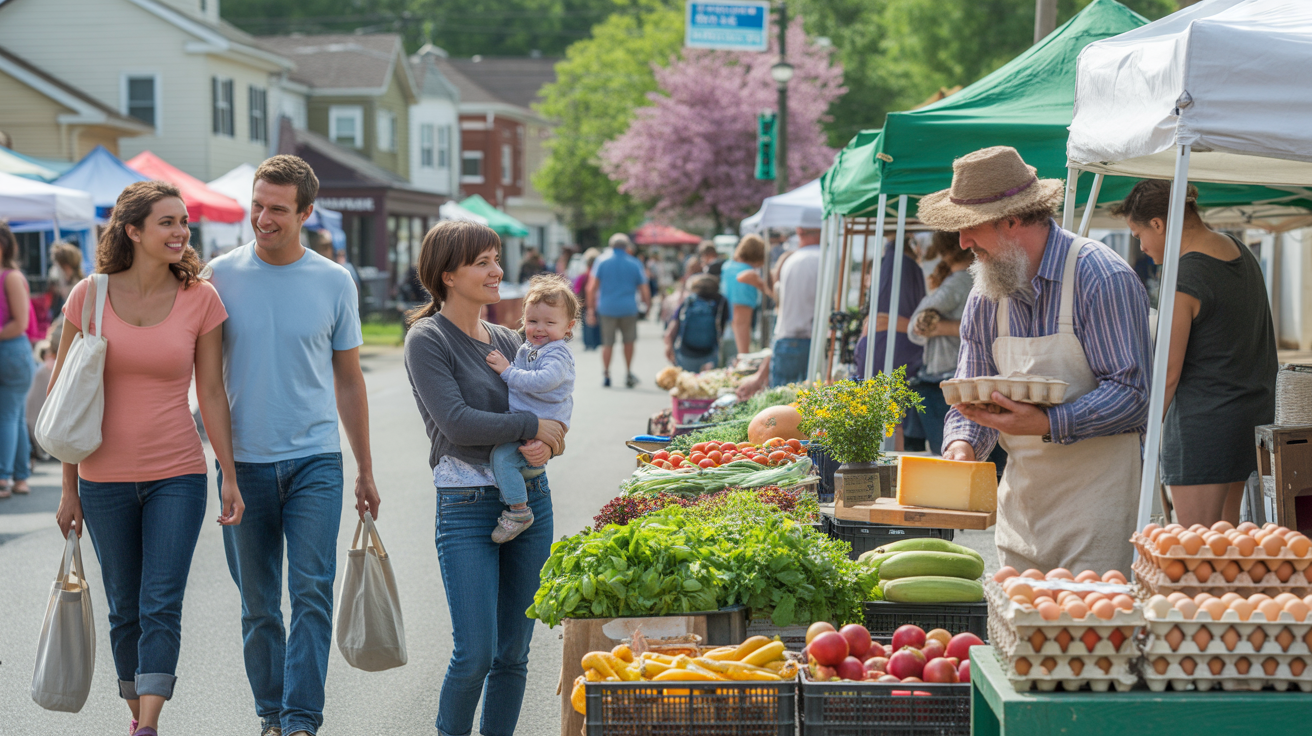
Grocery pressure in Kannapolis is shaped by the interaction between modest regional pricing, sparse food access, and household income positioning. The regional price index of 97 suggests costs run slightly below the national average, but that advantage is unevenly distributed. If you live near a discount grocer and shop there regularly, you’ll feel that relief. If you rely on the nearest mid-tier store or default to premium options out of convenience, you’ll experience grocery costs closer to or above national norms.
Household size amplifies every price difference. A single professional buying for one feels grocery costs as a manageable line item, even at mid-tier stores. A family of four buying for twenty-eight meals a week feels every per-unit price shift, and the cumulative effect of choosing premium over discount stores can rival a utility bill. That’s why store tier choice becomes a primary cost lever for families in Kannapolis: it’s one of the few grocery variables households can control directly, and the payoff is immediate and recurring.
Income positioning matters too. With median household income at $66,487 per year, many families in Kannapolis sit in the range where grocery costs are visible and require active management but don’t force severe tradeoffs. That income level supports a monthly budget that includes food, housing, and transportation, but it doesn’t leave much room for grocery inefficiency. Households that default to convenience or fail to compare store tiers will feel pressure faster than those who treat grocery shopping as a planned, strategic task.
Seasonal variability plays a quieter role. Produce prices shift with growing seasons, and proteins fluctuate based on supply conditions, but those changes are less dramatic in Kannapolis than in more isolated or supply-constrained markets. The bigger seasonal factor is behavioral: summer heat and longer days make it easier to plan multi-stop trips, while winter weather and shorter daylight hours push households toward convenience and closer stores, even if prices are higher.
Practical Ways People Manage Grocery Costs in Kannapolis
Managing grocery costs in Kannapolis starts with knowing which stores offer the best value and being willing to travel there. That means identifying one or two discount grocers within a reasonable drive, planning weekly trips around them, and resisting the convenience pull of mid-tier stores for routine staples. Households that treat grocery shopping as a planned event rather than a daily errand consistently spend less, because they avoid impulse purchases, take advantage of sales, and buy in bulk when per-unit prices drop.
Meal planning reduces waste and prevents last-minute convenience purchases. When you know what you’re cooking for the week, you buy only what you need, and you’re less likely to default to takeout or premium-priced prepared foods when you’re short on time. Planning also lets you structure meals around sale items and seasonal produce, which shifts your spending toward lower-cost categories without sacrificing variety or nutrition.
Buying in bulk works well for non-perishables and freezer-stable proteins, especially for families. Rice, pasta, canned goods, and frozen chicken all store easily, and buying larger quantities when prices are favorable smooths out cost volatility over time. The challenge in Kannapolis is that bulk buying requires upfront capital and storage space, and it only pays off if you’re shopping at discount stores to begin with. Buying in bulk at premium stores doesn’t generate the same savings, because the per-unit premium erases much of the volume advantage.
Store loyalty programs and digital coupons help, but they’re not a primary cost lever. They shave a few dollars off each trip, and over time that adds up, but they don’t overcome the structural difference between discount and premium store tiers. The bigger opportunity is learning which stores run predictable sales on high-cost items like meat and dairy, and timing purchases around those cycles. That requires consistency and attention, but it’s one of the most effective ways to lower grocery costs without changing what you eat.
Groceries vs Eating Out in Kannapolis
The tradeoff between cooking at home and eating out is less about absolute cost and more about time, convenience, and how much flexibility your budget allows. Cooking at home in Kannapolis is almost always cheaper per meal, especially if you’re shopping at discount stores and planning around sales. But cooking requires time, energy, and a stocked kitchen, and for households stretched thin on any of those resources, the convenience of eating out becomes appealing even when the cost is higher.
For families, eating out regularly is expensive enough to reshape monthly flexibility. A household that eats out three or four times a week will spend significantly more on food than one that cooks at home most nights, and that gap widens if the household defaults to mid-tier or premium grocery stores when they do cook. The most cost-effective pattern is cooking at home most of the time, treating dining out as occasional rather than routine, and using meal planning to reduce the temptation to order takeout when you’re tired or short on time.
Singles and young professionals face a different calculus. Cooking for one is less efficient, both in time and in cost per serving, and the convenience of eating out or ordering in is harder to resist when the price difference feels smaller. But even for this group, frequent dining out erodes financial flexibility quickly, especially in a city where grocery costs are manageable if you’re willing to plan. The key is finding a balance that fits your schedule and priorities, rather than defaulting to convenience out of habit.
FAQs About Grocery Costs in Kannapolis (2026)
Is it cheaper to shop in bulk in Kannapolis? Buying in bulk lowers per-unit costs for non-perishables and freezer-stable items, but only if you’re shopping at discount stores. Bulk purchases at premium stores don’t generate the same savings, because the per-unit premium remains.
Which stores in Kannapolis are best for low prices? Discount grocers and no-frills formats consistently offer the lowest per-unit costs, but they require deliberate travel and aren’t always on your daily route. Mid-tier stores balance price and convenience, while premium stores charge noticeably more for the same staples.
How much more do organic items cost in Kannapolis? Organic products typically carry a premium over conventional equivalents, and that gap is larger at premium stores than at discount grocers. The premium reflects certification, supply chain differences, and retailer positioning, not just local cost structure.
How do grocery costs for households in Kannapolis compare to nearby cities? Kannapolis sits slightly below the national cost baseline, but grocery pressure depends more on store tier choice and access than on regional averages. Households that shop strategically experience relief; those that default to convenience pay closer to or above national norms.
How do households in Kannapolis think about grocery spending when cooking at home? Most households treat grocery shopping as a planned, strategic task rather than a daily errand. Store tier choice, meal planning, and bulk buying are the primary cost levers, and households that use them consistently spend less without sacrificing variety or nutrition.
How Groceries Fit Into the Cost of Living in Kannapolis
Groceries are a visible, recurring cost, but they’re not the dominant line item in most household budgets. Housing and transportation typically consume more income, and utilities fluctuate more dramatically with seasonal weather. What makes groceries important is that they’re one of the few major cost categories where households have direct, immediate control. You can’t easily change your rent or mortgage, and commuting costs are largely fixed by where you live and work. But you can choose which store to visit, what to buy, and how often to cook at home, and those decisions reshape your monthly financial picture faster than almost any other lever.
In Kannapolis, grocery costs feel manageable for households that plan deliberately and shop strategically. The regional price structure is slightly favorable, and discount options exist if you’re willing to travel. But sparse food density and uneven grocery access mean that convenience costs extra, and households that default to the nearest store or premium tiers will feel pressure faster than those who treat grocery shopping as a planned event. For families buying in volume, store tier choice is the most important cost lever in the food category, and the difference between discount and premium stores can rival a utility bill over the course of a month.
For a complete picture of how groceries fit into your overall spending, including housing, transportation, and utilities, see Your Monthly Budget in Kannapolis: Where It Breaks. That guide walks through how all major cost categories interact, where trade-offs emerge, and how different household types experience financial pressure in Kannapolis. Grocery costs are one piece of that puzzle, but understanding the full structure helps you make better decisions about where to live, how to allocate income, and which costs you can control.
How this article was built: In addition to public economic data, this article incorporates location-based experiential signals derived from anonymized geographic patterns—such as access density, walkability, and land-use mix—to reflect how day-to-day living actually feels in Kannapolis, NC.
—