
Most people assume utility bills are predictable—a fixed line item you can budget around. In Kannapolis, that’s only half true. While your electricity rate is set, your actual monthly exposure swings with the calendar, your home’s efficiency, and how much cooling you need during the region’s extended summer heat.
Understanding Utilities in Kannapolis
When people talk about the cost of living in Kannapolis, housing usually comes first. But utilities—electricity, water, natural gas, trash, and recycling—are typically the second-largest monthly expense for most households. Unlike rent or a mortgage, utility costs shift with the seasons, your home’s age, and how you use energy day to day.
For renters, especially those in apartments, some utilities may be bundled into your lease or covered by HOA fees. But if you’re in a single-family home, you’re managing each bill separately. That means understanding not just what you’ll pay, but when costs spike and why. Kannapolis sits in the humid subtropical zone of the Charlotte metro area, where cooling season stretches longer than heating season—and that imbalance shows up in your electricity bill.
New movers often underestimate how much summer air conditioning drives up monthly costs. A household that pays modest electric bills in spring might see usage double or triple once temperatures climb into the 90s and stay there for weeks. That’s not a rate problem—it’s an exposure problem, and it’s one of the most important budget dynamics to understand before you settle in.
Utilities at a Glance in Kannapolis
The table below shows how core utility costs typically behave for a mid-size household in a single-family home in Kannapolis. Where city-level prices are available in the data feed, they are shown directly. When exact figures are not provided, categories are described qualitatively to reflect how costs are structured and what drives variability.
| Utility | Cost Structure |
|---|---|
| Electricity | 13.68¢/kWh; usage-sensitive and climate-driven |
| Water | Tiered pricing; usage-dependent |
| Natural Gas | $17.87/MCF; winter-driven; heating-dependent |
| Trash & Recycling | Often bundled with water or HOA fees |
| Total | Seasonal variability driven by electricity and heating |
This table reflects utility cost structure for a mid-size household in a single-family home in Kannapolis during 2026. Where exact figures are not provided in the IndexYard data feed, categories are described directionally to reflect how costs behave rather than a receipt-accurate total.
Electricity is billed at 13.68¢ per kilowatt-hour in Kannapolis, but the rate itself doesn’t tell the full story. What matters is how many kilowatt-hours you use—and that’s driven by your home’s insulation, your HVAC system’s efficiency, and how long you run the air conditioner. In a typical summer month, a mid-size household might use 1,000 kWh or more, pushing the bill well above what you’d see in spring or fall. Electricity is typically the most exposure-sensitive utility in Kannapolis, driven more by climate and home efficiency than by base rates.
Water costs in Kannapolis are structured on tiered usage, meaning the more you use, the higher your per-unit rate climbs. Outdoor watering, pools, and larger households push usage into higher tiers. Many providers bundle water with trash and recycling fees, so your “water bill” may include services beyond the tap. If you’re renting, check whether water is included in your lease—it often is in apartments, but rarely in single-family homes.
Natural gas is priced at $17.87 per thousand cubic feet (MCF) and is primarily a winter expense in Kannapolis. If your home uses gas for heating, you’ll see higher bills from December through February. Homes with electric heat won’t have a natural gas bill at all, but they’ll see their electricity usage climb during cold snaps. Gas exposure is moderate here compared to colder climates, but it’s still a meaningful line item for households with gas furnaces or water heaters.
Trash and recycling are often bundled with water service or covered by HOA fees, especially in newer subdivisions. Standalone trash service exists, but pricing varies by provider and pickup frequency. If you’re moving into a neighborhood with an HOA, confirm what’s included before budgeting separately for waste services.
How Weather Impacts Utilities in Kannapolis
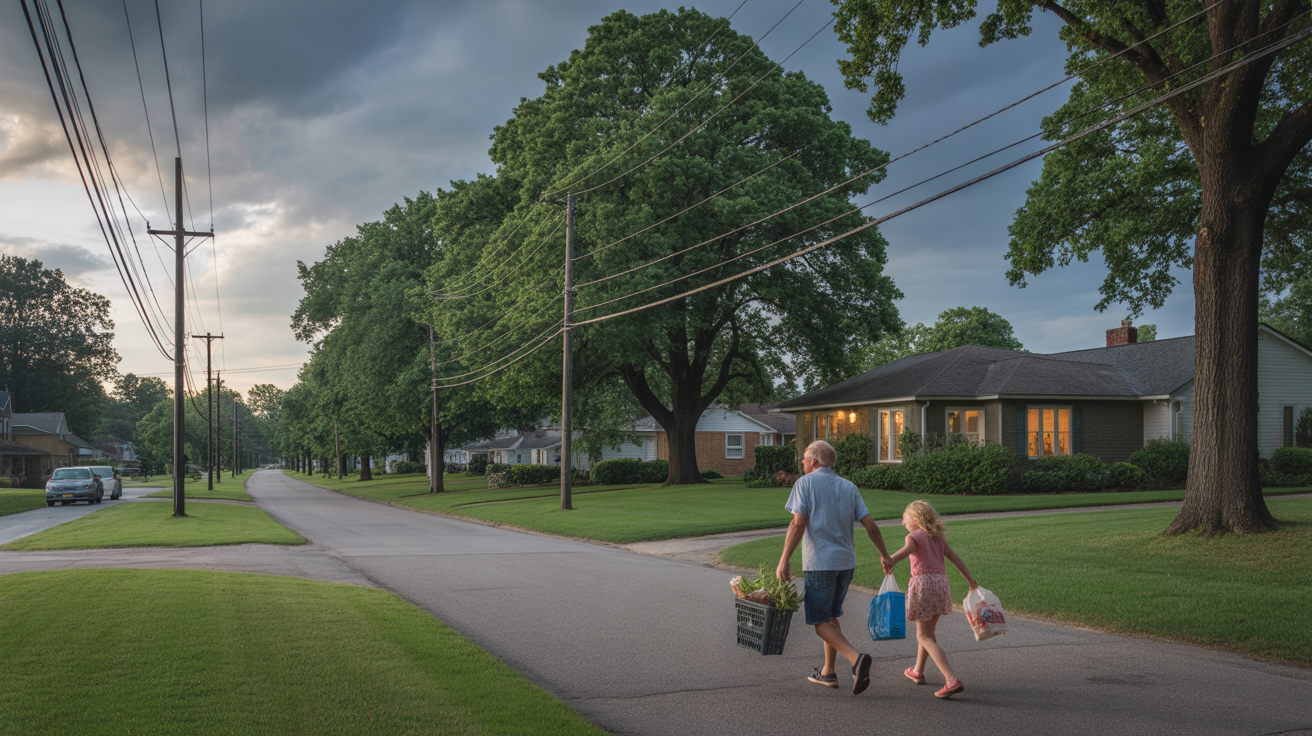
Kannapolis experiences hot, humid summers and mild winters—a climate profile that tilts utility exposure heavily toward cooling. From June through September, daytime highs regularly push into the 90s, and overnight lows often stay in the 70s. That means your air conditioner isn’t just running during the afternoon; it’s cycling through the evening to keep indoor humidity and temperature comfortable.
Many Kannapolis households experience noticeably higher electric bills during peak summer compared to spring. The difference isn’t subtle—it’s common to see usage double between April and July. Humidity plays a role here, too: your HVAC system has to work harder to remove moisture from the air, not just cool it down. Homes with poor insulation, older units, or south- and west-facing windows see the steepest increases.
Winter heating costs are far more modest. Freezing temperatures are rare, and extended cold snaps are the exception rather than the rule. If your home uses natural gas for heat, you’ll see higher gas bills from December through February, but the seasonal swing is much smaller than what summer does to electricity. Homes with electric heat will see a winter uptick in electricity usage, but it still won’t match the summer peak. One regional quirk: Kannapolis sits far enough inland that you don’t get the moderating effect of coastal breezes, so summer heat lingers longer than it does closer to the Atlantic.
How to Save on Utilities in Kannapolis
The most effective way to reduce utility costs in Kannapolis is to manage your cooling exposure. That means focusing on your HVAC system’s efficiency, your home’s insulation, and how you use air conditioning during the hottest months. Small changes—like raising your thermostat by a few degrees or using ceiling fans to circulate air—can lower electricity usage without sacrificing comfort.
Shade trees and window treatments also make a measurable difference. Homes with mature trees on the south and west sides stay cooler naturally, reducing how hard your air conditioner has to work. Inside, blackout curtains or reflective blinds block heat gain during peak sun hours. These aren’t dramatic interventions, but they reduce the baseline load your HVAC system has to manage.
Beyond cooling, here are practical strategies that work in Kannapolis:
- Enroll in budget billing or equalized payment plans if your provider offers them—they smooth out seasonal spikes so you’re not hit with a $200+ bill in July.
- Check for utility rebates on high-efficiency HVAC systems, smart thermostats, or insulation upgrades. North Carolina and some local providers offer incentives that offset upfront costs.
- Switch to LED bulbs and unplug devices you’re not using. Phantom load—the power drawn by electronics in standby mode—adds up over time.
- Water your lawn early in the morning to minimize evaporation and avoid pushing into higher water usage tiers.
- Service your HVAC system annually. A clogged filter or low refrigerant level forces your unit to work harder, driving up electricity usage and shortening the system’s lifespan.
🏆 Tip: Check if your provider in Kannapolis offers rebates for energy-efficient AC units or heating systems. Some programs cover a portion of the replacement cost, making upgrades more affordable upfront.
FAQs About Utility Costs in Kannapolis
Why are utility bills so high in Kannapolis during summer?
Summer bills spike because of extended cooling season and high humidity, which forces air conditioners to run longer and work harder. Homes with older HVAC systems or poor insulation see the steepest increases, sometimes doubling or tripling spring usage.
Do HOAs in Kannapolis usually include trash or water in their fees?
Many newer subdivisions bundle trash and sometimes water into HOA fees, but it varies by neighborhood. Always confirm what’s covered before assuming you’ll need to budget separately for waste services.
How does seasonal weather affect monthly utility bills in Kannapolis?
Summer drives the highest bills due to air conditioning demand, while winter heating costs are moderate. The seasonal swing is asymmetric—cooling exposure far outweighs heating exposure in this climate.
What is the average winter heating cost in Kannapolis?
Winter heating costs depend on whether your home uses natural gas or electric heat. Gas-heated homes see modest increases from December through February, but the exposure is far lower than summer cooling. Electric heat adds to your electricity bill but still doesn’t match peak summer usage.
Do utility providers in Kannapolis offer budget billing or equalized payment plans?
Many providers offer budget billing, which averages your annual usage into equal monthly payments. This smooths out seasonal spikes and makes it easier to plan your monthly budget, especially if you’re managing other variable expenses.
How Utilities Fit Into the Cost Structure in Kannapolis
Utilities in Kannapolis aren’t just a fixed expense—they’re a volatility factor that shifts with the calendar and your household’s behavior. Electricity dominates the picture, especially during summer, and that exposure is compounded by the region’s car-dependent layout. Because daily errands accessibility is sparse and walkable areas exist only in pockets, most households rely on personal vehicles for groceries, errands, and commuting. That means you’re managing both climate-driven electricity costs and transportation fuel expenses at the same time, and both are sensitive to usage patterns rather than fixed rates.
For families in single-family homes, utilities represent a meaningful share of what costs people most—not because rates are unusually high, but because exposure is high. Renters in apartments often have lower utility costs, either because water and trash are included or because smaller square footage reduces cooling demand. But even in apartments, summer electricity bills can surprise newcomers who aren’t used to running air conditioning for months at a stretch.
The key to managing utilities in Kannapolis is understanding that your bill is a function of structure, not just price. Your home’s age, your HVAC system’s efficiency, and how you use energy day to day matter more than the rate you’re charged per kilowatt-hour. That’s why two households on the same street can have wildly different bills—even if they’re paying the same rate. If you want a fuller picture of how utilities fit into your overall monthly expenses, explore the broader budget breakdown to see how electricity, transportation, and housing costs interact across different household types.
How this article was built: In addition to public economic data, this article incorporates location-based experiential signals derived from anonymized geographic patterns—such as access density, walkability, and land-use mix—to reflect how day-to-day living actually feels in Kannapolis, NC.
—