
Can you live in Johns Creek without a car? For most people, the answer is no — and understanding why reveals a lot about how this suburban city is structured, how daily life actually works, and what kinds of households thrive here versus those that struggle with the commute reality.
How People Get Around Johns Creek
Johns Creek is a car-first environment. The city’s layout, density, and infrastructure all point toward driving as the primary — and often only — practical mode of transportation for most residents. While some neighborhoods feature walkable pockets with higher pedestrian-to-road ratios, these areas are localized exceptions rather than the norm. The broader pattern is one of spread-out development, where daily errands, work commutes, and household logistics almost always require a vehicle.
What newcomers often misunderstand is that Johns Creek isn’t simply “suburban” in a generic sense — it’s a suburb built around the assumption of car ownership. Sidewalks exist in certain areas, and some corridors support walking for specific errands, but the city lacks the density and land-use integration that would make car-free living viable for most households. Even in the more pedestrian-friendly pockets, residents typically own cars for trips beyond their immediate neighborhood.
The city’s mixed building heights and presence of both residential and commercial land use suggest some degree of planning for walkability, but these elements are concentrated rather than distributed. If you’re evaluating Johns Creek, assume you’ll need a car unless you’re certain your specific neighborhood and daily routine align with one of the walkable zones.
Public Transit Availability in Johns Creek
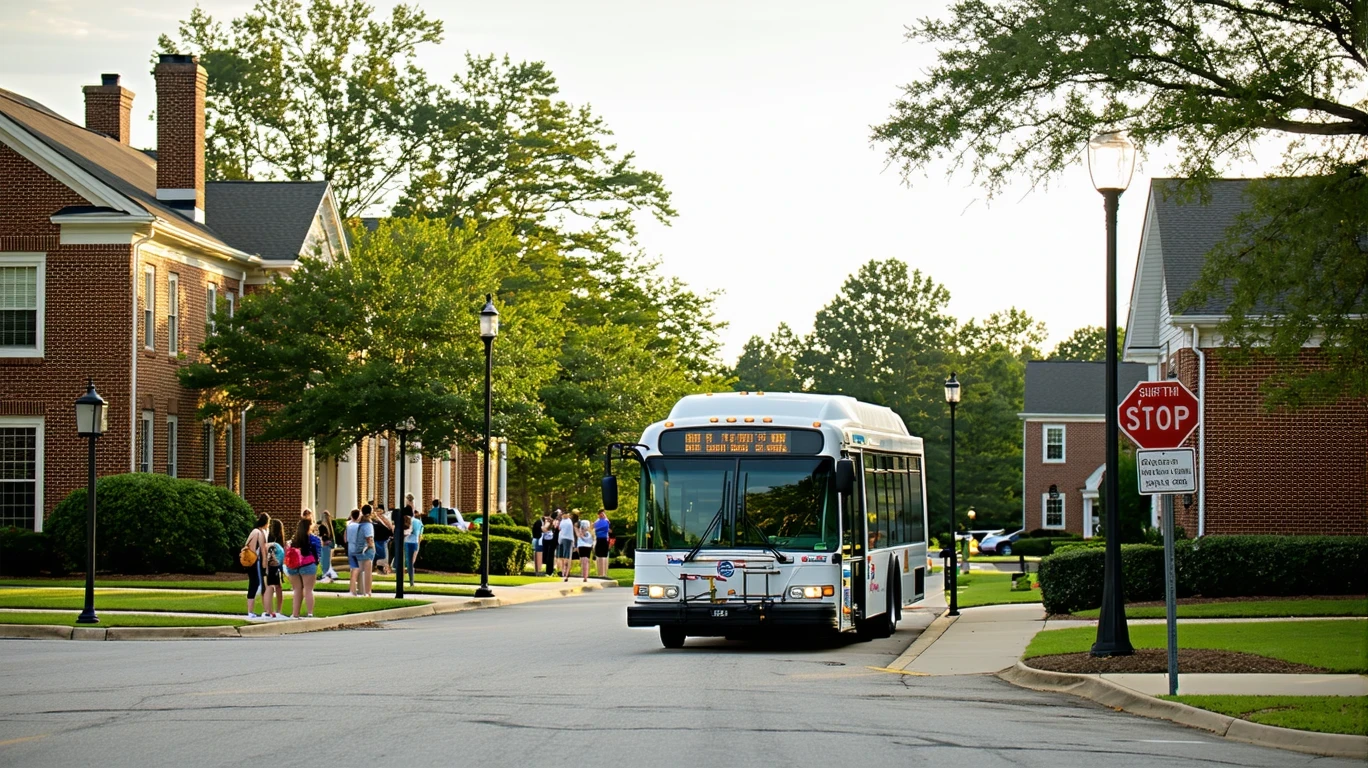
Public transit plays a minimal role in Johns Creek’s transportation landscape. The city’s infrastructure and commute patterns show no meaningful reliance on buses, rail, or other shared transit systems. For residents accustomed to cities where transit provides a real alternative to driving, Johns Creek represents a sharp departure.
This isn’t a coverage gap that affects only certain neighborhoods or times of day — it’s a structural reality. The city’s development pattern, density, and regional position don’t support the kind of transit network that would make car-free commuting practical. Households that depend on public transit for work, errands, or daily mobility will find Johns Creek difficult to navigate without significant compromise.
If you’re moving from a transit-rich environment, it’s important to recognize that the lack of transit here isn’t a temporary inconvenience or a service you can work around. It’s a fundamental characteristic of how the city functions.
Driving & Car Dependence Reality
Driving isn’t just common in Johns Creek — it’s structurally necessary for most households. The city’s layout spreads residential areas, shopping corridors, schools, and workplaces across distances that make walking or biking impractical for daily routines. Even in neighborhoods with sidewalks and nearby amenities, the majority of errands and obligations require a car.
Parking is generally abundant and accessible, which reduces one friction point common in denser cities. However, this ease of parking reinforces car dependence rather than offering an alternative. The tradeoff is straightforward: you gain control, flexibility, and predictability in your daily movements, but you absorb the full cost and responsibility of vehicle ownership, maintenance, fuel, and insurance.
For families, this often means multiple cars per household. One vehicle rarely suffices when adults have separate work commutes, children need transportation to school or activities, and errands are distributed across different parts of the city. The infrastructure assumes this level of car ownership, and households without it face significant logistical challenges.
Commuting Patterns & Daily Mobility
Commuting in Johns Creek reflects the broader reality of suburban Atlanta. Data shows that 31 minutes is the average commute time, and 48.6% of workers face long commutes — a signal that many residents travel well beyond city limits for work. Only 11.8% work from home, meaning the vast majority of households are managing regular, often lengthy, car-based commutes.
These aren’t abstract numbers — they describe daily life. A 31-minute average commute typically means highway driving, multi-stop errands on the way home, and careful planning around traffic patterns. For households with two working adults, this often translates to separate vehicles, staggered schedules, and limited flexibility for mid-day errands or emergencies.
The high percentage of long commutes suggests that many residents are trading proximity for housing, school quality, or neighborhood character. This is a common suburban tradeoff, but it’s one that demands reliable transportation and a tolerance for time spent in the car. Households that benefit most from Johns Creek’s layout are those with predictable schedules, the ability to absorb commute time, and the financial capacity to maintain multiple vehicles.
How this article was built: In addition to public economic data, this article incorporates location-based experiential signals derived from anonymized geographic patterns—such as access density, walkability, and land-use mix—to reflect how day-to-day living actually feels in Johns Creek, GA.
Who Transit Works For — and Who It Doesn’t
Transit doesn’t work for anyone in Johns Creek in a practical, day-to-day sense. This isn’t a question of optimizing routes or finding the right pass — the infrastructure simply isn’t there. Households that rely on public transportation for work, medical appointments, or grocery shopping will find Johns Creek incompatible with their needs.
Renters without cars face the steepest challenges. Unlike homeowners who may have already factored vehicle ownership into their housing decision, renters often have less financial cushion to absorb the cost of a car, insurance, and maintenance. Yet the city’s layout offers no viable alternative. Even in the walkable pockets, the lack of transit means that any trip beyond the immediate neighborhood requires a car, a ride, or significant inconvenience.
Retirees or households with limited mobility may find Johns Creek particularly difficult if they’re unable to drive. The absence of transit removes a critical safety net that exists in more connected cities, where losing the ability to drive doesn’t immediately mean losing independence.
Transportation Tradeoffs in Johns Creek
The tradeoff in Johns Creek is between control and cost. Driving offers predictability, flexibility, and the ability to structure your day around your own schedule rather than a transit timetable. You’re not waiting for a bus, planning around service gaps, or adjusting your routine to fit someone else’s infrastructure.
But that control comes with full exposure to vehicle ownership costs, fuel price volatility, maintenance unpredictability, and the time burden of commuting. Gas prices in Johns Creek currently sit at $3.65 per gallon, but the bigger cost driver is the frequency and distance of trips. Households making long commutes, running errands across spread-out corridors, and managing multiple vehicles face cumulative exposure that builds steadily over time.
There’s no middle option here. You can’t rely on transit for some trips and driving for others, because transit isn’t a functional part of the equation. The question isn’t whether to own a car — it’s whether you’re prepared to build your entire household logistics around driving, and whether the benefits of living in Johns Creek justify that commitment.
FAQs About Transportation in Johns Creek (2026)
Is public transit usable for daily commuting in Johns Creek?
No. Public transit does not play a meaningful role in Johns Creek’s transportation system. The city’s infrastructure is built around car ownership, and households that depend on transit for commuting will find it impractical to live here without a vehicle.
Do most people in Johns Creek rely on a car?
Yes. The vast majority of residents depend on cars for work, errands, and daily mobility. The city’s layout, density, and lack of transit options make car ownership a practical necessity for nearly all households.
Which areas of Johns Creek are easiest to live in without a car?
No area of Johns Creek is truly easy to navigate without a car. Some neighborhoods feature walkable pockets with sidewalks and nearby amenities, but even in these areas, most residents own vehicles because trips beyond the immediate neighborhood require driving.
How does commuting in Johns Creek compare to nearby cities?
Johns Creek’s commute patterns reflect its role as a suburban city within the Atlanta metro area. With an average commute time of 31 minutes and nearly half of workers facing long commutes, the city is typical of car-dependent suburbs where residents often travel outside city limits for work.
Can you walk or bike for errands in Johns Creek?
In limited areas, yes — but not citywide. Some corridors and neighborhoods support walking or biking for specific errands, but the broader infrastructure is car-oriented. Cycling infrastructure exists in pockets, and food and grocery options are clustered along corridors rather than distributed evenly, which limits how much you can accomplish on foot or bike.
How Transportation Fits Into the Cost of Living in Johns Creek
Transportation in Johns Creek isn’t just a line item in a budget — it’s a structural factor that shapes where you live, how you spend your time, and what kind of flexibility you have in daily life. The city’s car-dependent layout means that vehicle ownership, fuel, insurance, and maintenance are non-negotiable for most households, and those costs compound over time in ways that aren’t always visible upfront.
The real impact shows up in tradeoffs: longer commutes in exchange for housing you prefer, multiple cars to manage separate schedules, and the time burden of driving that limits how much you can compress errands or adjust plans on the fly. These aren’t problems unique to Johns Creek, but they’re more pronounced here than in cities with transit options or denser, more walkable layouts.
If you’re evaluating whether Johns Creek fits your household, start by asking whether you’re prepared to own at least one car — and likely more than one if you have multiple working adults or school-age children. Then consider whether the benefits of the city’s schools, neighborhoods, and character justify the cost structure that comes with car dependence.
For a fuller picture of how transportation costs interact with housing, utilities, and other expenses, see the article on what a budget has to handle in Johns Creek. The goal isn’t to avoid car ownership — that’s not realistic here — but to understand how it fits into the larger financial and logistical picture, and whether Johns Creek’s tradeoffs align with what your household values and can sustain.