
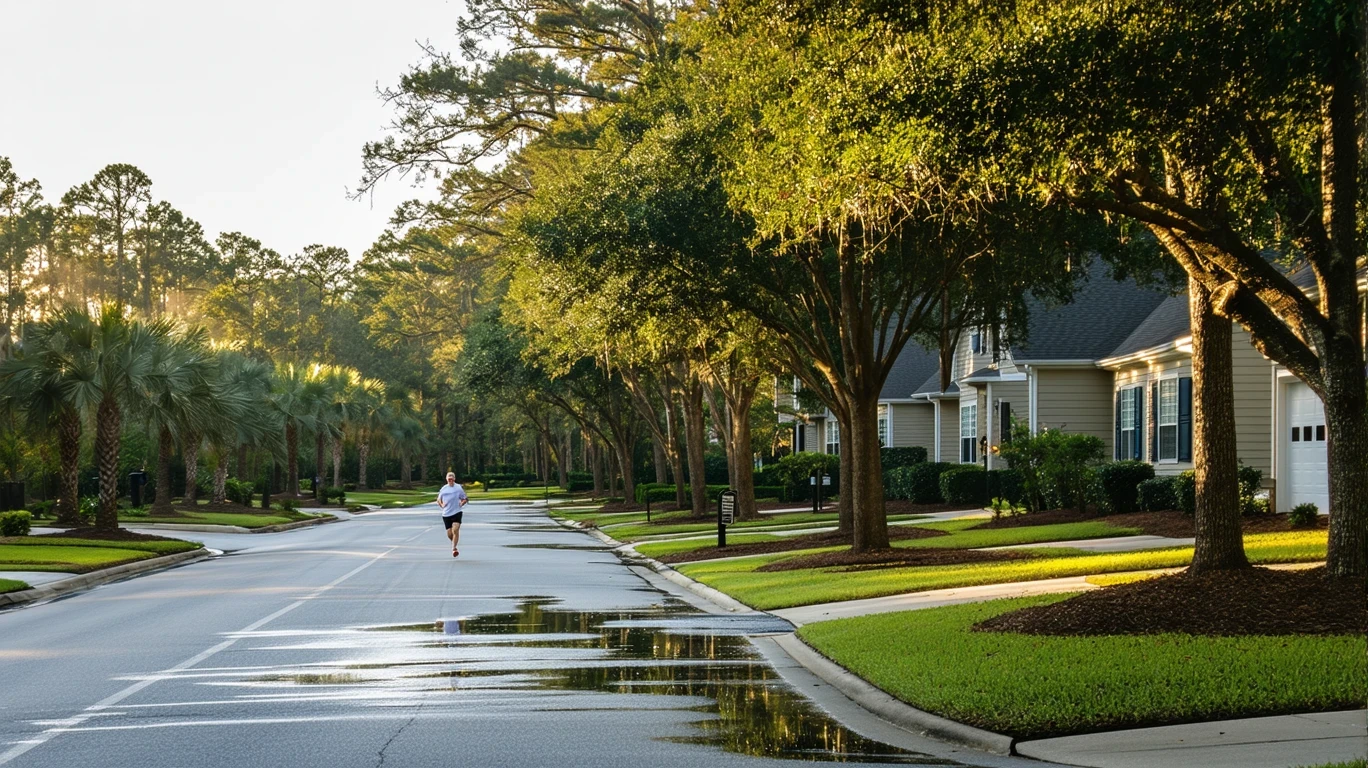
Johns Creek and Smyrna sit roughly 30 miles apart in the Atlanta metro, but the cost pressures households face in each city diverge in ways that matter far beyond the distance. Johns Creek, positioned in the northern suburbs, attracts families drawn to newer housing stock and a reputation for strong schools, while Smyrna—closer to the urban core and major employment corridors—offers tighter integration with transit, parks, and daily amenities. In 2026, choosing between them isn’t about finding the “cheaper” option; it’s about understanding where cost pressure concentrates, how predictably it arrives, and which household types feel those differences most acutely.
Both cities share the same regional price environment and similar utility rate structures, but the mechanics of day-to-day spending, commute friction, and housing access differ substantially. Johns Creek’s housing market reflects its positioning as an affluent suburban enclave, with higher entry costs for both renters and buyers. Smyrna’s lower housing prices come with tradeoffs in space and neighborhood character, but the city’s denser errands infrastructure and integrated park access reduce friction in other parts of the household budget. Families managing school-age children, single adults prioritizing walkability, and dual-income couples balancing commute time against housing size will all experience these two cities differently.
This comparison explains how cost structure—not total cost of living—shapes daily life in Johns Creek versus Smyrna. It examines where money goes, what drives volatility, and which households gain flexibility or lose it depending on the city they choose. The goal is to clarify decision tradeoffs, not to declare a winner.
Housing Costs
Housing dominates the cost experience in both cities, but the entry barrier and ongoing obligations differ sharply. In Johns Creek, the median home value stands at $525,100, while Smyrna’s median home value is $380,100. For renters, Johns Creek’s median gross rent is $1,944 per month compared to Smyrna’s $1,553 per month. These differences reflect not just price levels but the type of housing stock available, the age of development, and the spatial tradeoffs households must accept.
Johns Creek’s housing market skews toward larger single-family homes on suburban lots, often in planned communities with HOA structures that bundle landscaping, amenities, and maintenance into predictable monthly fees. The higher home values and rents reflect both the size of the housing and the premium attached to the city’s school reputation and newer construction. Renters in Johns Creek typically face limited apartment inventory concentrated along commercial corridors, which keeps rental prices elevated and reduces flexibility for households seeking smaller or more affordable units. Buyers entering the market confront not only higher purchase prices but also property tax obligations tied to those valuations, plus the likelihood of HOA fees that add a recurring cost layer.
Smyrna’s housing market offers more variety in form and price. The lower median home value reflects a mix of older single-family homes, townhomes, and a broader apartment inventory that serves renters across income levels. The city’s proximity to major employment centers and its denser development pattern mean that renters can often find units within walking distance of grocery stores, parks, and bus stops—reducing the indirect costs of car dependency. Buyers in Smyrna gain access to ownership at a lower entry price, though they may trade square footage or yard space for that affordability. Property tax exposure remains significant, but the lower home values mean smaller absolute tax bills even at similar millage rates.
| Housing Type | Johns Creek | Smyrna |
|---|---|---|
| Median Home Value | $525,100 | $380,100 |
| Median Gross Rent | $1,944/month | $1,553/month |
| Typical Housing Form | Larger single-family, planned communities | Mixed: older single-family, townhomes, apartments |
| Rental Inventory | Limited, corridor-clustered | Broader, more distributed |
For first-time buyers, the difference in entry cost is substantial. Johns Creek requires significantly more upfront capital for down payments and closing costs, and the higher monthly mortgage obligations leave less room for other financial goals. Families prioritizing space, newer construction, and access to highly rated schools may find the premium justified, but they must accept that housing will dominate their monthly obligations. Renters in Johns Creek face similar pressure: the higher rent reflects not just the unit but the embedded cost of living in a low-density, car-dependent environment where errands and commutes add friction.
Smyrna’s lower housing costs create more flexibility for households willing to accept smaller homes or older construction. Renters benefit from a more competitive apartment market, and buyers can enter ownership with less capital and lower monthly obligations. The tradeoff is often space—both indoor square footage and outdoor yard area—but for households prioritizing walkability, transit access, or proximity to parks and schools, Smyrna’s housing market aligns better with those goals. The city’s denser development also means that housing costs, while still significant, don’t crowd out other spending categories as aggressively as they do in Johns Creek.
Housing takeaway: Johns Creek’s housing market favors households with higher incomes who prioritize space, newer construction, and school reputation, but it front-loads cost pressure into the monthly housing obligation. Smyrna offers lower entry costs and more rental flexibility, making it more accessible for households sensitive to upfront capital requirements or those seeking to preserve budget room for other priorities. The choice hinges on whether space and newness justify the premium, or whether proximity and density reduce total friction enough to offset smaller living quarters.
Utilities and Energy Costs
Utility costs in Johns Creek and Smyrna operate within nearly identical rate structures—electricity costs 14.46¢/kWh in Johns Creek and 14.42¢/kWh in Smyrna—but the way those rates translate into household exposure depends on housing type, home age, and cooling demands. Both cities experience hot, humid summers that drive air conditioning usage for extended periods, making cooling the dominant seasonal cost driver. Heating needs remain modest, with only occasional cold snaps requiring furnace use, but natural gas prices differ slightly: Johns Creek’s natural gas costs $16.56/MCF, while Smyrna’s costs $18.94/MCF. For most households, this difference matters less than electricity exposure, since cooling dominates annual energy spending.
Johns Creek’s housing stock skews newer, with better insulation, more efficient HVAC systems, and tighter building envelopes that reduce baseline energy waste. Larger homes, however, mean more square footage to cool, and the suburban lot sizes often result in greater sun exposure and less shade from neighboring structures. Families in single-family homes with two-story layouts face higher cooling costs during peak summer months, and the predictability of those bills depends on how well the home was built and maintained. Apartments and townhomes in Johns Creek benefit from shared walls and smaller footprints, which lower cooling exposure, but the limited rental inventory means fewer households access that advantage.
Smyrna’s older housing stock introduces more variability. Homes built in earlier decades often lack modern insulation standards, and windows, doors, and ductwork may allow conditioned air to escape. This increases cooling costs during summer and heating costs during winter, even though heating remains a minor expense overall. However, Smyrna’s denser development pattern and greater prevalence of townhomes and apartments mean that many households benefit from shared walls, reduced sun exposure, and smaller spaces to condition. For renters in multi-unit buildings, utility costs often remain more predictable and lower than in single-family homes, though individual circumstances vary widely based on building age and landlord investment in efficiency upgrades.
Household size amplifies these differences. A single adult in a one-bedroom apartment in Smyrna faces minimal cooling exposure, especially if the unit benefits from shade or shared walls. A family of four in a 2,500-square-foot single-family home in Johns Creek, by contrast, must cool a much larger space, often with multiple HVAC zones, and the summer utility bills reflect that scale. Older homes in Smyrna can surprise new owners or renters with higher-than-expected bills if the HVAC system is inefficient or the building envelope is compromised, but smaller square footage often compensates. In Johns Creek, even efficient homes carry higher baseline costs simply due to size.
Both cities benefit from utility programs that offer time-of-use rates, energy audits, and rebates for efficiency upgrades, though participation varies by provider and household initiative. These programs don’t eliminate cost exposure, but they offer households tools to manage volatility. In practice, families in Johns Creek with newer, larger homes face more predictable but higher baseline costs, while households in Smyrna’s older, smaller homes face more variability but often lower absolute spending. The key difference is whether predictability or flexibility matters more to the household budget.
Utility takeaway: Johns Creek households experience higher baseline utility costs driven by larger home sizes, but newer construction offers more predictability. Smyrna households face more variability due to older housing stock, but smaller units and denser development often result in lower absolute spending. Families managing larger homes feel the difference most acutely, while single adults and couples in apartments benefit from Smyrna’s lower exposure. The choice depends on whether the household prioritizes predictability or lower baseline costs.
Groceries and Daily Expenses
Grocery and daily spending pressure in Johns Creek and Smyrna reflects not just prices but access, convenience, and the friction involved in running errands. Both cities operate within the same regional price environment, with derived grocery estimates showing minimal variation: bread costs roughly $1.87/lb in Johns Creek and $1.86/lb in Smyrna, ground beef $6.81/lb versus $6.82/lb, and eggs $2.52/dozen versus $2.60/dozen. These differences are negligible. What matters more is how food and grocery establishments are distributed, how easily households can access them, and whether the built environment encourages convenience spending or forces more intentional planning.
Smyrna’s food and grocery density exceeds high thresholds, meaning that households can access supermarkets, specialty grocers, and prepared food options without long drives or complex trip-chaining. The city’s denser development and mixed land use mean that many residents live within walking or short driving distance of multiple grocery options, which reduces the need to stockpile or plan around infrequent shopping trips. This accessibility also increases exposure to convenience spending—coffee shops, takeout, and quick-service restaurants are more visible and easier to access, which can quietly inflate monthly spending for households that don’t actively manage those habits. For single adults and couples, this convenience often feels like a net benefit, reducing the time cost of errands. For families managing larger grocery volumes, the ability to make quick trips without extensive planning reduces logistical friction.
Johns Creek’s food and grocery options are more corridor-clustered, concentrated along major commercial roads rather than distributed throughout residential neighborhoods. This means that most households must drive to access groceries, and the trip often involves navigating traffic, parking, and longer distances. The upside is that Johns Creek’s grocery landscape includes a mix of big-box stores, discount chains, and specialty markets, giving households more control over price sensitivity if they’re willing to drive to different locations. The downside is that errands require more planning, and the car-dependent structure increases the likelihood of consolidating trips—which can reduce convenience spending but also adds time and logistical complexity.
For single adults, Smyrna’s accessibility reduces the friction of daily life. Grabbing groceries after work, picking up a prepared meal, or stopping for coffee doesn’t require a dedicated trip or significant time investment. This convenience comes with a cost: the ease of access makes it easier to spend incrementally, and those small purchases accumulate. In Johns Creek, single adults face more planning burden—grocery trips are events, not quick stops—but the structure also forces more intentional spending, which can reduce convenience creep if managed actively.
Couples experience similar dynamics, but the impact depends on work schedules and household division of labor. In Smyrna, the ability to split errands or handle them on the way home from work reduces coordination costs. In Johns Creek, grocery shopping often becomes a weekend task, requiring more time but also offering opportunities to shop strategically across multiple stores. Families with kids feel the difference most acutely: Smyrna’s accessibility means fewer logistical headaches, but it also increases exposure to convenience spending when time is tight. Johns Creek’s structure forces more planning but rewards households that can batch errands and shop with intention.
Grocery and daily expense takeaway: Smyrna’s higher food and grocery density reduces errands friction and time costs, but it increases exposure to convenience spending for households that don’t actively manage habits. Johns Creek’s corridor-clustered structure requires more planning and driving, but it rewards intentional shopping and reduces incremental spending. Single adults and couples often prefer Smyrna’s accessibility, while families with strong planning habits may find Johns Creek’s structure more compatible with budget discipline.
Taxes and Fees
Property taxes, sales taxes, and recurring local fees shape the ongoing cost structure in both cities, but the way those obligations scale with housing choices and household behavior differs. Both Johns Creek and Smyrna fall under Georgia’s state sales tax structure, with local rates adding incremental costs to everyday purchases. Property taxes, however, reflect the substantial difference in home values: Johns Creek’s median home value of $525,100 results in higher absolute property tax bills than Smyrna’s $380,100 median, even if millage rates are comparable. For homeowners, this difference is significant and recurring, affecting monthly escrow obligations and long-term ownership costs.
Johns Creek’s higher home values mean that property taxes represent a larger share of the homeowner’s fixed monthly obligations. Families buying into the city’s housing market must account not only for the mortgage but also for the tax burden tied to the property’s assessed value. These taxes fund local services, schools, and infrastructure, and while they contribute to the amenities that attract families to Johns Creek, they also reduce flexibility in the household budget. HOA fees, common in Johns Creek’s planned communities, add another layer of recurring cost, often bundling landscaping, amenities, and exterior maintenance into a predictable monthly charge. For some households, this predictability is valuable; for others, it feels like a loss of control over spending priorities.
Smyrna’s lower home values result in lower absolute property tax bills, which frees up budget room for other priorities. Homeowners in Smyrna still face significant tax obligations, but the lower baseline means that property taxes don’t dominate the monthly budget as aggressively as they do in Johns Creek. HOA fees are less prevalent in Smyrna, particularly in older neighborhoods, which reduces recurring obligations but also shifts responsibility for maintenance and upkeep to individual homeowners. This can introduce variability—unexpected repairs, landscaping costs, or exterior work—but it also gives households more control over when and how they spend on those items.
Renters in both cities are indirectly exposed to property taxes through rent levels, but the impact is more visible in Johns Creek, where higher property values and taxes contribute to elevated rental prices. In Smyrna, renters benefit from lower baseline costs, though they still absorb property tax exposure through their monthly rent. Sales taxes affect all households equally in terms of rate structure, but spending patterns determine total exposure: families with higher consumption, particularly on taxable goods, feel the impact more acutely, while households that minimize discretionary purchases reduce their sales tax burden.
Recurring city-specific fees—trash collection, water, sewer, stormwater management—vary by provider and service structure, but both cities operate within similar frameworks. Some neighborhoods in Johns Creek bundle these services into HOA fees, creating predictability but also limiting flexibility. In Smyrna, these fees are more often billed separately, which introduces variability but also allows households to see exactly what they’re paying for and adjust usage where possible.
Taxes and fees takeaway: Johns Creek homeowners face higher property tax exposure due to elevated home values, and HOA fees add predictable but inflexible recurring costs. Smyrna homeowners benefit from lower property taxes and less HOA prevalence, gaining flexibility but accepting more responsibility for maintenance variability. Renters in Johns Creek absorb higher tax exposure through elevated rents, while Smyrna renters benefit from lower baseline costs. The choice depends on whether the household values predictability and bundled services or prefers lower fixed costs and more control over spending.
Transportation & Commute Reality
Transportation costs in Johns Creek and Smyrna diverge not just in fuel prices but in the structure of daily mobility and the friction involved in getting around. Johns Creek’s gas price stands at $3.65/gal, while Smyrna’s is $2.71/gal—a substantial difference that affects households driving frequently or commuting long distances. Johns Creek’s average commute time is 31 minutes, reflecting the city’s positioning in the northern suburbs and the likelihood that many residents travel toward Atlanta’s urban core or other employment centers. Smyrna lacks specific commute data in the feed, but its proximity to major corridors and denser development suggest shorter average distances for many households, though individual experiences vary widely.
Johns Creek’s mobility texture shows walkable pockets with a high pedestrian-to-road ratio, meaning that some neighborhoods support walking for errands or recreation, but the city’s overall structure remains car-dependent. The corridor-clustered distribution of grocery stores, services, and employment means that most daily trips require driving, and the lack of rail transit limits alternatives. Households in Johns Creek must own and maintain at least one vehicle, and many families require two to manage work commutes, school drop-offs, and errands. The higher gas price amplifies this exposure, particularly for households with long commutes or frequent driving needs.
Smyrna’s mixed mobility texture and bus service presence offer more flexibility. The city’s higher food and grocery density means that some households can walk or bike for daily errands, reducing car dependency for routine tasks. Bus service provides an alternative for commuters willing to trade time for lower transportation costs, though coverage and frequency determine whether this option is practical for individual households. The lower gas price reduces fuel costs for households that still rely on cars, and the denser development pattern often shortens trip distances, further lowering transportation exposure.
For single adults, Smyrna’s structure often reduces transportation pressure. A household that can walk to groceries, access bus service for commuting, and limit driving to occasional trips faces significantly lower transportation costs than a comparable household in Johns Creek, where nearly every trip requires a car and fuel costs are higher. Couples managing two work commutes feel the difference more acutely: in Johns Creek, both partners likely need cars, and the higher gas price increases monthly fuel spending. In Smyrna, one partner might rely on bus service or reduce driving frequency, lowering total transportation costs.
Families with kids face the most complex transportation dynamics. School drop-offs, extracurricular activities, and errands require flexibility that public transit rarely provides, meaning that most families in both cities rely on cars regardless of infrastructure. However, Smyrna’s shorter trip distances and lower gas prices reduce the cost of that car dependency, while Johns Creek’s longer commutes and higher fuel costs increase it. Families in Johns Creek also face more time costs: the 31-minute average commute represents time that could otherwise be spent on household tasks, childcare, or rest, and that time cost compounds the financial cost of transportation.
Transportation takeaway: Johns Creek’s higher gas prices and longer average commutes increase transportation costs for all households, particularly those with multiple drivers or long work commutes. Smyrna’s lower gas prices, denser development, and bus service reduce car dependency for some households and lower fuel costs for those who still drive. Single adults and couples in Smyrna benefit most from reduced transportation pressure, while families in both cities remain car-dependent but face lower costs in Smyrna due to shorter distances and cheaper fuel.
Cost Structure Comparison
Housing pressure dominates the cost experience in Johns Creek, where the $525,100 median home value and $1,944 median rent create a high entry barrier and ongoing obligation that leaves less budget flexibility for other categories. Families and couples drawn to Johns Creek’s newer housing stock, larger lots, and school reputation must accept that housing will consume a larger share of monthly income, and the property tax exposure tied to those home values adds a recurring cost layer that compounds over time. Renters face similar pressure: the limited apartment inventory and elevated rents reflect not just the unit but the embedded cost of living in a low-density, car-dependent environment.
Smyrna’s lower housing costs—$380,100 median home value and $1,553 median rent—create more budget room for other priorities. Homeowners enter at a lower price point and face smaller property tax obligations, while renters benefit from a more competitive apartment market and greater inventory. The tradeoff is often space and newness, but for households prioritizing walkability, transit access, or proximity to parks and schools, Smyrna’s housing market aligns better with those goals without crowding out other spending categories as aggressively.
Utilities introduce more variability in Smyrna due to older housing stock, but the smaller average unit size and prevalence of shared-wall construction often result in lower absolute spending. Johns Creek households face higher baseline utility costs driven by larger homes, but newer construction offers more predictability. Families managing larger homes feel this difference most acutely, while single adults and couples in apartments benefit from Smyrna’s lower exposure.
Daily living costs reflect access and convenience more than price. Smyrna’s broadly accessible food and grocery density reduces errands friction and time costs, but it increases exposure to convenience spending for households that don’t actively manage habits. Johns Creek’s corridor-clustered structure requires more planning and driving, but it rewards intentional shopping and reduces incremental spending. Single adults and couples often prefer Smyrna’s accessibility, while families with strong planning habits may find Johns Creek’s structure more compatible with budget discipline.
Transportation patterns matter more in Johns Creek, where higher gas prices ($3.65/gal versus $2.71/gal) and longer commutes increase both fuel costs and time costs. Smyrna’s lower gas prices, denser development, and bus service reduce car dependency for some households and lower fuel costs for those who still drive. Families in both cities remain car-dependent, but Smyrna’s shorter trip distances and cheaper fuel reduce total transportation exposure.
The decision between Johns Creek and Smyrna isn’t about finding the cheaper city overall—it’s about understanding which cost pressures dominate the household and whether the tradeoffs align with priorities. Households sensitive to housing entry barriers and ongoing obligations may struggle more in Johns Creek, while those prioritizing space and newness may find the premium justified. Households seeking lower baseline costs, better walkability, and reduced transportation friction often find Smyrna more compatible, though they must accept smaller homes and older construction. The better choice depends on which costs the household can absorb and which create friction that undermines financial stability or quality of life.
How the Same Income Feels in Johns Creek vs Smyrna
Single Adult
In Johns Creek, housing costs claim a larger share of income upfront, leaving less flexibility for discretionary spending, savings, or unexpected expenses. The car-dependent structure means that transportation becomes non-negotiable, with higher gas prices and longer commutes adding both financial and time costs. Flexibility exists in grocery spending and utilities, but the corridor-clustered errands structure requires planning and driving, which adds friction to daily routines. In Smyrna, lower rent and reduced car dependency free up budget room, and the ability to walk to groceries or use bus service for commuting reduces both transportation costs and time pressure. Convenience spending becomes easier to fall into, but the baseline cost structure leaves more room for savings or discretionary choices.
Dual-Income Couple
In Johns Creek, the higher housing cost becomes more manageable with two incomes, but transportation pressure doubles if both partners commute, and the higher gas prices amplify that exposure. The larger homes and newer construction offer predictability in utilities, but the front-loaded housing obligation limits flexibility for other financial goals. In Smyrna, lower housing costs and reduced transportation exposure create more budget flexibility, and the denser errands infrastructure reduces coordination costs when both partners work. The tradeoff is smaller living space, but the ability to preserve budget room for savings, travel, or other priorities often outweighs the loss of square footage for couples without kids.
Family with Kids
In Johns Creek, housing costs dominate, but the larger homes, newer construction, and school reputation justify the premium for families prioritizing space and educational access. Transportation becomes a major ongoing cost, with multiple vehicles, longer commutes, and higher gas prices compounding the financial burden. Utilities scale with home size, and the suburban structure requires more planning for errands and activities, adding time costs that compound financial pressure. In Smyrna, lower housing costs and shorter transportation distances reduce baseline pressure, and the integrated park access and strong family infrastructure lower the logistical burden of managing kids’ activities. The tradeoff is less indoor and outdoor space, but the reduced friction in daily logistics and lower baseline costs often create more breathing room for families managing tight schedules and multiple competing priorities.
Decision Matrix: Which City Fits Which Household?
| Decision Factor | If You’re Sensitive to This… | Johns Creek Tends to Fit When… | Smyrna Tends to Fit When… |
|---|---|---|---|
| Housing entry + space needs | Upfront capital, monthly obligations, square footage | You prioritize newer construction, larger lots, and school reputation over lower baseline costs | You need lower entry costs and can accept smaller homes or older construction |
| Transportation dependence + commute friction | Fuel costs, commute time, car dependency | You accept higher gas prices and longer commutes in exchange for suburban space and privacy | You value shorter distances, lower fuel costs, and the option to reduce car dependency |
| Utility variability + home size exposure | Seasonal bill swings, predictability, cooling costs | You prefer predictable utility costs in newer, larger homes despite higher baseline spending | You can manage variability in older homes and benefit from lower baseline costs in smaller units |
| Grocery strategy + convenience spending creep | Errands friction, time costs, incremental purchases | You plan shopping trips intentionally and value control over convenience spending | You prioritize accessibility and reduced errands friction over strict spending discipline |
| Fees + friction costs (HOA, services, upkeep) | Recurring obligations, predictability, control | You value bundled services and predictable monthly costs over flexibility | You prefer lower fixed costs and more control over maintenance spending |
| Time budget (schedule flexibility, errands, logistics) | Commute duration, errands planning, household coordination | You accept longer commutes and more planning in exchange for space and privacy | You prioritize shorter distances, walkability, and reduced logistical complexity |
Lifestyle Fit
Johns Creek and Smyrna offer distinct lifestyle experiences shaped by their development patterns, proximity to Atlanta’s core, and the infrastructure that supports daily life. Johns Creek’s suburban character emphasizes space, privacy, and access to highly rated schools, with newer planned communities offering amenities like pools, tennis courts, and walking trails within HOA-managed environments. The city’s walkable pockets provide some pedestrian infrastructure, but most daily activities require driving, and the corridor-clustered commercial areas mean that errands, dining, and entertainment involve intentional trips rather than spontaneous stops. Families drawn to Johns Creek often prioritize the combination of larger homes, newer construction, and a quieter, more residential feel, accepting the tradeoffs in commute time and car dependency.
Smyrna’s denser development and proximity to major corridors create a more integrated lifestyle, where parks, grocery stores, restaurants, and bus stops are often within walking or short driving distance. The city’s integrated park access and strong family infrastructure make it easier for families to manage kids’ activities without extensive driving, and the mixed land use means that residential and commercial areas overlap, reducing the separation between home and daily errands. Single adults and couples often appreciate Smyrna’s accessibility and the ability to reduce car dependency for routine tasks, while families benefit from the shorter distances and lower logistical complexity. The tradeoff is less space—both in home size and yard area—but the reduced friction in daily life often compensates.
Both cities benefit from the Atlanta metro’s cultural and recreational offerings, but the distance and commute time required to access them differ. Johns Creek’s northern position means longer drives to downtown Atlanta, midtown entertainment districts, or major sporting venues,