
How much is enough to feel at ease? In Johns Creek, that question doesn’t come with a clean answer—because comfort isn’t just about hitting a number. It’s about whether your income absorbs the tradeoffs this place asks you to make, and whether those tradeoffs feel manageable or constant.
This article explains how income pressure works in Johns Creek, who tends to feel stretched and who doesn’t, and how to judge whether your earnings and expectations actually line up with life here.
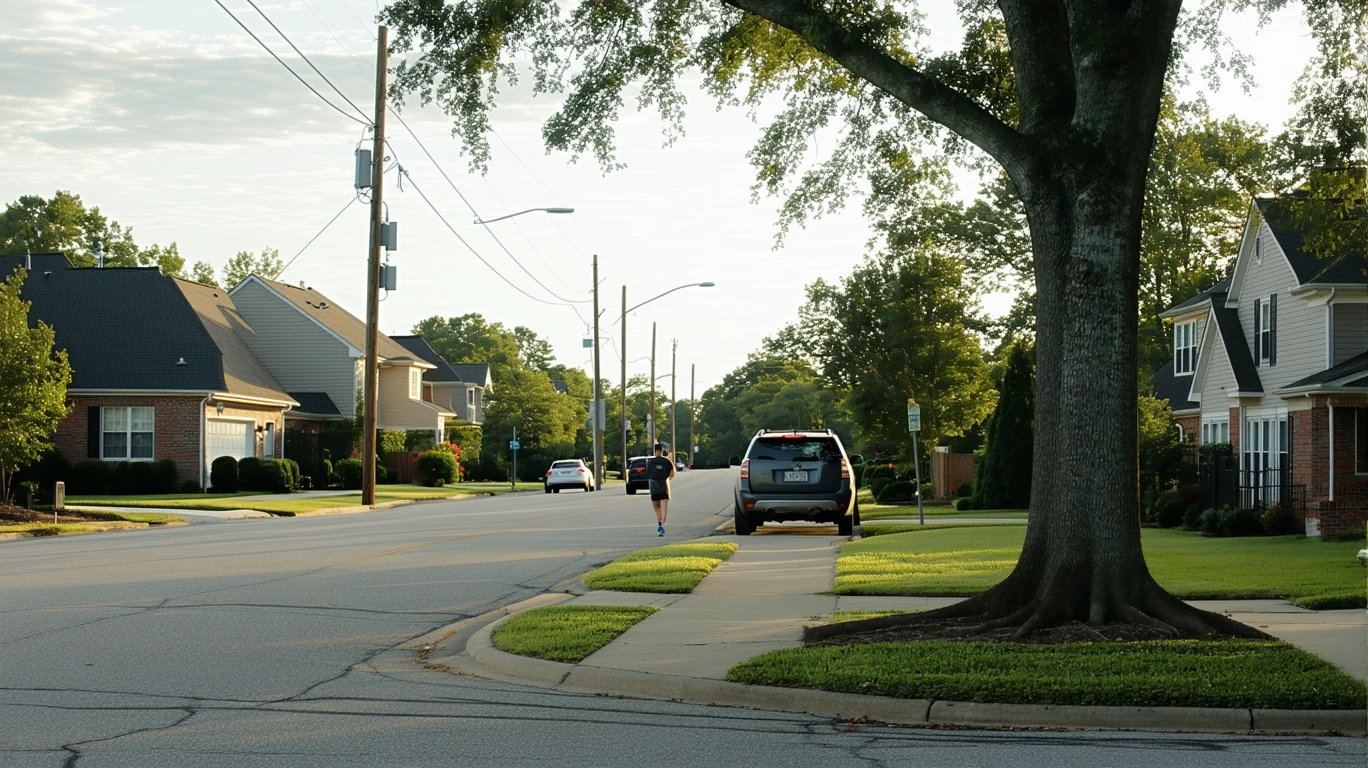
What “Living Comfortably” Means in Johns Creek
Comfort in Johns Creek isn’t about luxury—it’s about predictability. It means your housing doesn’t dominate every other decision. It means a surprise utility bill or a car repair doesn’t derail your month. It means you can occasionally eat out, replace what breaks, and still put something aside without constant recalculation.
For many households, comfort also means space: a yard, a second bedroom, a garage. Johns Creek’s housing stock reflects that expectation, with a median home value of $525,100 and median rent at $1,944 per month. Those figures set the baseline for what “normal” looks like here—and they shape everything downstream.
Climate adds another layer. Summers are long and hot, often pushing into triple digits, which means air conditioning isn’t optional. Electricity rates sit at 14.46¢/kWh, and cooling costs can spike hard during peak months. Comfort, in this context, means being able to run the AC without anxiety.
Finally, comfort means time. The average commute is 31 minutes, and nearly half of workers face longer trips. If your income buys you proximity or flexibility, that changes how the day feels. If it doesn’t, time becomes another cost you’re paying.
Where Income Pressure Shows Up First
In Johns Creek, housing is the first place income gets tested. Whether you’re renting or buying, the cost is high enough that it crowds out other priorities unless your earnings can absorb it comfortably. Renters at $1,944 per month are spending a significant share of gross income before utilities, transportation, or food even enter the picture. Buyers face not just the mortgage on a $525,100 home, but property taxes, insurance, and maintenance—all of which compound over time.
Utilities add volatility. Electricity bills swing with the season, and natural gas (priced at $16.56 per MCF) can drive up costs during the occasional cold snap. For households already stretched thin, these swings don’t average out—they create friction every few months.
Transportation pressure is less about gas prices ($3.65 per gallon) and more about time and dependency. Only 11.8% of workers can avoid the commute entirely by working from home. For everyone else, the car is non-negotiable, and the costs—fuel, insurance, maintenance—are fixed and recurring. When commutes stretch past 30 minutes, that’s not just money; it’s hours that could have been spent elsewhere.
For families, the pressure multiplies. Schools and playgrounds are present but limited in density, meaning proximity to the right amenities often requires deliberate housing choices—and those choices cost more. Childcare, activities, and healthcare (though a hospital is present) all add layers that single adults and couples without children simply don’t face.
How the Same Income Feels Different by Household
A single adult earning a solid income in Johns Creek can live comfortably if they’re willing to rent a smaller place or share space. The flexibility to prioritize location over square footage makes a big difference. Utilities are manageable when you’re cooling or heating a one-bedroom apartment, and transportation costs stay predictable if the commute is solo and routine.
Couples often feel more stretched at the same income level, especially if both are commuting. Two cars, two sets of work expenses, and the expectation of more space—whether for guests, hobbies, or future plans—push costs up without necessarily doubling income. Rent or mortgage payments that felt reasonable for one person start to dominate the budget when lifestyle expectations expand.
Families face the steepest climb. Even at higher income levels, the combination of housing, transportation, utilities, and family-specific costs creates constant pressure. A second bedroom becomes a third. Cooling a larger home in summer means higher bills. School proximity matters more, which narrows housing options. Grocery costs rise. Healthcare visits multiply. The income that felt comfortable for a couple often feels tight once children enter the picture, not because any single cost is unmanageable, but because there’s no slack left for surprises.
How Place Structure Shapes Daily Life in Johns Creek
The way Johns Creek is built affects how people move, shop, and manage time—and those patterns shape what income has to cover. Pedestrian infrastructure is more developed than in many suburban areas, particularly in pockets where walking is viable, though the overall environment still leans car-dependent. Grocery stores and food options are clustered along corridors rather than spread evenly, meaning errands often require deliberate trips rather than quick stops. For households juggling work, school, and activities, that clustering adds planning friction—and for those without flexible schedules, it can mean more time in the car and less control over the day.
Transit options are limited, and most households rely on personal vehicles for nearly every trip. That dependence doesn’t just show up in gas and insurance costs—it shows up in time, in the need for multiple cars per household, and in the logistics of managing overlapping schedules. Families with school-age children feel this most acutely, as the lack of walkable access to schools and playgrounds often means driving becomes the default for even short distances.
Parks and green space are present and accessible, offering some relief from the car-dependent rhythm, but the overall texture of daily life here rewards households that can afford proximity to the right corridors and flexibility in how they structure their time. For those who can’t, the cost isn’t always financial—it’s the cumulative weight of distance, planning, and repetition.
The Comfort Threshold (Qualitative)
There’s a point where income stops dictating every decision—where housing becomes a choice rather than a compromise, where utility swings are annoying but not destabilizing, where transportation is a given rather than a tradeoff. That’s the threshold.
Below it, households are managing tradeoffs constantly. Rent or mortgage payments leave little room for error. A hot summer or a car repair creates stress. Dining out or replacing furniture requires planning. Saving is aspirational, not automatic.
Above it, choices expand. You can prioritize location without sacrificing space. You can absorb a high utility month without adjusting elsewhere. You can replace what breaks when it breaks. You can save, plan, and occasionally spend without recalculating the month.
The threshold isn’t a number—it’s the point where your income matches the expectations this place sets. For a single adult, that threshold is lower. For a couple, it’s higher. For a family, it’s higher still, and it shifts depending on how much space, proximity, and flexibility matter to you.
Why Online Cost Calculators Get Johns Creek Wrong
Most cost-of-living calculators treat Johns Creek as a data problem: add up housing, utilities, transportation, food, and spit out a total. But totals don’t explain why two households at the same income level feel completely different levels of pressure.
Calculators assume average behavior—average commutes, average utility usage, average housing choices. They don’t account for the fact that cooling a 2,000-square-foot home in July costs more than cooling a 900-square-foot apartment. They don’t capture the difference between a 20-minute commute and a 45-minute slog, or the cost of needing two cars instead of one.
They also ignore expectations. A household moving from a walkable city might find Johns Creek’s car dependency frustrating and expensive in ways that don’t show up in a grocery or gas price comparison. A household moving from a rural area might find the same setup liberating. The numbers don’t change, but the experience does.
People feel surprised after moving because they optimized for totals instead of tradeoffs. They assumed comfort would scale with income, without realizing that comfort here depends on how well your income absorbs housing, cooling, commuting, and time—all at once.
How to Judge Whether Your Income Fits Johns Creek
Instead of asking “Is my income high enough?”, ask these questions:
- Can you absorb Johns Creek’s housing cost without it dictating every other decision? If rent at $1,944 per month or a mortgage on a home valued at $525,100 leaves little room for anything else, the fit is poor.
- How sensitive are you to seasonal utility swings? If a high summer cooling bill or an unexpected winter heating cost would force you to adjust elsewhere, that’s a sign of tight margins.
- Is your commute time or money your limiting factor? If you’re spending 31 minutes or more each way and it’s eating into your day, that’s a cost your income can’t fix. If you’re spending heavily on transportation to avoid time loss, that’s a different tradeoff.
- Do you need two cars, and can you maintain both without stress? For most households here, two vehicles aren’t optional. If that’s a stretch, the logistics get harder fast.
- How much flexibility do you expect month to month? If you want the ability to dine out, travel occasionally, or handle surprises without recalculating, your income needs to exceed the baseline by a meaningful margin.
- If you have children, can you afford proximity to the amenities that matter? Schools and family infrastructure are present but not evenly distributed. The right location costs more, and that gap widens quickly.
There’s no pass or fail here. These questions just clarify whether your income and expectations align with how Johns Creek actually works.
FAQs About Living Comfortably in Johns Creek
Is Johns Creek affordable for single adults?
It can be, depending on income and expectations. A single adult with a solid income can live comfortably if they’re willing to rent a smaller space and keep transportation costs predictable. The challenge is that even modest housing here costs more than in many other suburbs, and car dependency is nearly universal. If you’re earning well and don’t need much space, it works. If you’re stretched thin or expecting urban-style walkability, it doesn’t.
How much does it cost to cool a home in Johns Creek during summer?
Illustrative context: a typical household using around 1,000 kWh per month would face a bill of approximately $145 before fees and taxes, based on the local electricity rate of 14.46¢/kWh. In practice, summer cooling often pushes usage higher, especially in larger homes, and bills can swing significantly depending on insulation, thermostat settings, and how much of the day the system runs. The cost isn’t just the rate—it’s the exposure to heat and the size of the space you’re trying to keep comfortable.
Do you need two cars to live in Johns Creek?
For most households, yes. Only 11.8% of workers can avoid commuting by working from home, and public transit options are limited. If both adults in a household are working, or if children need to be driven to school and activities, a second car quickly becomes non-negotiable. That means doubling not just the purchase or lease cost, but insurance, maintenance, and fuel as well.
Is Johns Creek a good fit for families?
It can be, but it depends on income and priorities. Schools are present, and the area offers parks and green space, but family infrastructure is less dense than in some other suburbs. That means proximity to the right schools or amenities often requires deliberate housing choices, which cost more. Families also face higher utility bills, transportation costs, and grocery expenses. If your income can absorb those layers without constant tradeoffs, Johns Creek works well. If it can’t, the pressure compounds quickly.
Why do people say they feel more stretched in Johns Creek than they expected?
Because the costs that matter most here—housing, cooling, commuting—don’t average out. A household might budget for rent and transportation, but underestimate how much it costs to cool a larger home in summer, or how much time and money two long commutes actually consume. The baseline expectations are also higher: more space, more driving, more climate control. Those expectations feel normal once you’re here, but they cost more than many people anticipate.
How this article was built: In addition to public economic data, this article incorporates location-based experiential signals derived from anonymized geographic patterns—such as access density, walkability, and land-use mix—to reflect how day-to-day living actually feels in Johns Creek, GA.
Johns Creek can work well for some households—but only if expectations match reality. If your income absorbs the housing, cooling, and transportation costs without forcing constant tradeoffs, and if you’re comfortable with car dependency and the logistics it requires, the fit can be strong. If those costs stretch you thin, or if you’re expecting a different rhythm of daily life, the pressure shows up fast and doesn’t ease.