
74 out of 100 residents say they’re happy in Irvine. But what does happiness look like here, and who tends to feel it most? The answer isn’t about perfection—it’s about alignment. Irvine’s emotional tone is shaped by a distinctive tradeoff: exceptional planning, safety, and family infrastructure on one side; a longing for spontaneity, texture, and character on the other. Understanding which side of that tension resonates with you is the key to predicting whether Irvine will feel like home or like a beautiful cage.
The Emotional Landscape of Irvine
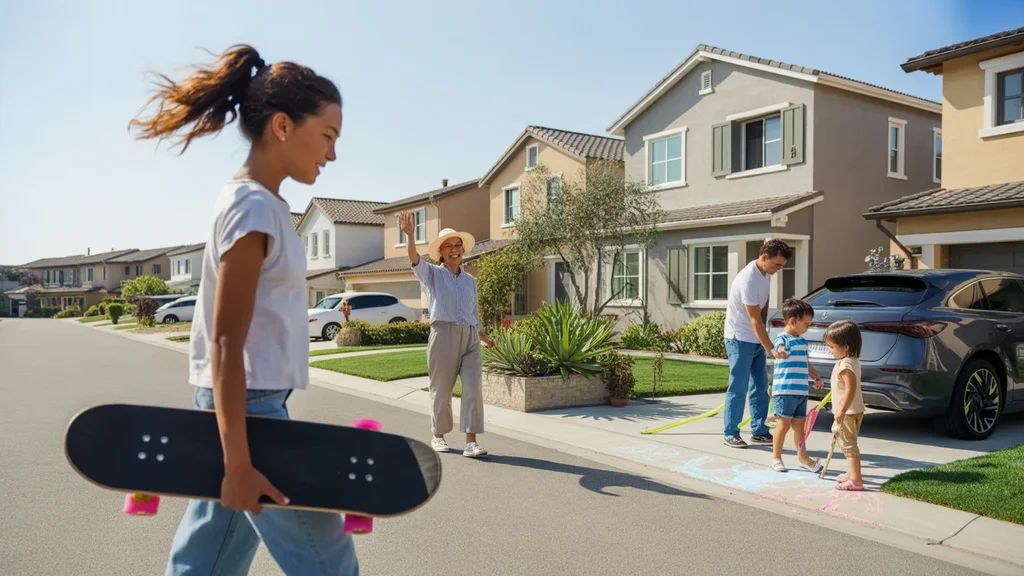
Irvine doesn’t ask you to rough it. The city is meticulously designed, with broad accessibility to groceries, parks, schools, and healthcare. Walkable pockets exist throughout the city, supported by notable cycling infrastructure and rail transit—unusual for a suburban environment. For families prioritizing low-friction logistics, this is a dream: playgrounds exceed density thresholds, park access is integrated into daily life, and food and grocery options are broadly accessible. The result is a place where running errands, getting kids to school, and accessing green space doesn’t require constant planning or long drives.
But that same precision creates emotional friction for others. The city’s carefully managed aesthetic—clean, orderly, predictable—can feel sterile to those seeking grit, diversity, or the kind of spontaneous street life that emerges organically rather than by design. Irvine rewards people who value control and convenience. It frustrates those who crave surprise.
What People Are Talking About Online
On platforms like Reddit and local Facebook groups, Irvine residents cycle through a familiar set of themes: pride in safety and schools, frustration with sameness, and ongoing debates about whether the city feels “real” or overly manufactured. The tone is rarely angry—more often, it’s reflective, protective, or gently exasperated.
“It’s so clean and safe, but sometimes I miss places that feel a little more lived-in,” one commenter wrote, capturing the central tension. Another noted, “If you have kids, this place is unbeatable—but if you’re single and want nightlife, you’ll be driving to other cities constantly.” A third observed, “Irvine feels like it was designed by someone who never wanted anything to go wrong, and that’s both the best and worst thing about it.”
Discussion often centers on what Irvine isn’t: it’s not gritty, not spontaneous, not diverse in architectural character. But it’s also not chaotic, not neglected, not a place where basic errands become an ordeal. The emotional tone is one of qualified appreciation—people recognize what they’re getting, even if it’s not everything they wanted.
How Local Coverage Frames the City
Local news and community coverage tend to frame Irvine through the lens of growth, planning, and identity evolution. Headlines and story themes reflect ongoing conversations about what the city is becoming, rather than what it has always been. Common topic buckets include:
- “Community Debates What Growth Should Look Like”
- “New Amenities Arrive as Planned Neighborhoods Expand”
- “Residents Weigh Convenience Against Character”
- “Family Infrastructure Continues to Draw New Households”
- “Transit and Walkability Gain Attention in Suburban Context”
The framing is rarely alarmist. Instead, it reflects a city negotiating its identity: how to grow without losing the planning precision that defines it, how to add texture without sacrificing safety, and how to remain accessible to families while housing costs climb. The tone is one of cautious optimism mixed with pragmatic concern—Irvine is doing well, but the question is whether it can stay that way for everyone.
Review-Based Public Perception
On Google, Yelp, and Nextdoor-style platforms, Irvine earns praise for what it delivers reliably: cleanliness, safety, parks, schools, and grocery accessibility. Families new to the area often express relief—this is a place where the basics work, where you don’t have to fight the city to live comfortably. One reviewer wrote, “Everything is where it should be, and it all works. That’s rarer than you’d think.”
But the same reviews reveal gaps. Complaints center on monotony, lack of nightlife, limited dining variety outside of chain options, and a sense that the city feels more like a well-run office park than a living neighborhood. “It’s great if you want suburban comfort,” one review noted, “but if you’re looking for character or spontaneity, you’ll be disappointed.” Another observed, “Newer planned areas feel almost identical—it’s efficient, but it’s also kind of eerie.”
Older pockets of the city receive slightly warmer reviews for feeling more established, with mature trees and a sense of history. But even there, the tone is one of mild appreciation rather than deep affection. Irvine doesn’t inspire passionate love—it inspires respect, gratitude, and occasional restlessness.
How Irvine Compares to Nearby Cities
| Dimension | Irvine | Tustin | Lake Forest |
|---|---|---|---|
| Overall Vibe | Planned, safe, family-optimized | More established, slightly grittier | Newer, quieter, more residential |
| Walkability & Transit | Walkable pockets, rail present | Car-dependent, limited transit | Highly car-dependent |
| Family Appeal | Strong schools, parks, playgrounds | Good schools, fewer amenities | Family-friendly, quieter tone |
| Spontaneity & Texture | Low; highly planned | Moderate; older neighborhoods add character | Very low; newer development |
| Affordability Pressure | High; median rent $2,749/month | Moderate; slightly lower costs | Moderate to high; similar trajectory |
Irvine sits at the high end of planning precision and family infrastructure within Orange County. Tustin offers a bit more texture and established neighborhood feel, with slightly lower costs but less transit access. Lake Forest leans even quieter and more residential, appealing to those who want suburban calm without the intensity of Irvine’s planning. If you prioritize walkable pockets, rail access, and integrated parks, Irvine delivers more than its neighbors. If you want lower costs or a less manufactured feel, Tustin or Lake Forest may offer better alignment.
Voices from the Community
“We moved here for the schools and parks, and it’s been everything we hoped for. Our kids can bike to friends’ houses, and we’re not constantly driving them everywhere. It’s not exciting, but it’s exactly what we needed.” — Family with young children
“Irvine is great if you like things to be predictable. I appreciate the safety and cleanliness, but sometimes I wish there was more variety—more hole-in-the-wall restaurants, more neighborhoods that feel different from each other.” — Young professional, renting
“I’ve lived here for fifteen years, and it’s changed a lot. More people, more traffic, higher costs. But the bones are still good—it’s still safe, still clean, still well-run. I just worry about whether my kids will be able to afford to stay.” — Long-time resident
“If you work remotely and want a low-stress environment, Irvine is solid. But if you’re looking for nightlife or spontaneous weekend plans, you’ll be driving to other cities constantly. It’s a trade I’m willing to make, but not everyone is.” — Remote worker
“I moved from a grittier city, and Irvine felt like a relief at first. But after a year, I started to miss the texture—the weird little shops, the dive bars, the neighborhoods that felt lived-in. Irvine is beautiful, but it’s also kind of… blank.” — Newcomer from out of state
“Retired here a few years ago, and it’s been wonderful. Everything is accessible, the weather is great, and I feel safe walking around. It’s not the most exciting place, but at this stage of life, that’s fine with me.” — Retiree
“The cost is the hardest part. We make good money, but even with a household income over $120,000, renting vs owning feels like a constant calculation. The city is great, but the financial pressure is real.” — Dual-income household, no kids
Does Irvine Feel Like a Good Fit?
Irvine doesn’t ask you to love chaos or tolerate neglect. It offers a different deal: exceptional planning, safety, and family infrastructure in exchange for predictability and a certain emotional flatness. The city works best for households that value control, convenience, and low-friction logistics—families with kids, professionals seeking stability, and retirees who want accessibility without drama.
It tends to frustrate those seeking spontaneity, texture, or a sense of organic neighborhood character. The city’s precision is its strength, but it’s also the source of its emotional limitation. If you need a place that feels lived-in, unpredictable, or culturally diverse in its streetscape, Irvine may feel more like a well-run simulation than a real city.
The question isn’t whether Irvine is happy—it’s whether the kind of happiness it offers matches what you’re looking for. If you value walkable pockets, rail access, integrated parks, and strong family infrastructure, Irvine delivers more than most suburban environments. If you need grit, nightlife, or affordability without financial strain, you’ll likely feel the gaps. Understanding that tradeoff is the key to predicting whether Irvine will feel like home.
For a deeper look at how costs break down month to month, explore your monthly budget in Irvine. To understand whether your income supports the quality of life factors that matter most to you, consider what lifestyle needs you’re unwilling to compromise. And if you’re weighing whether to rent or buy, the real tradeoffs go beyond monthly payments—they shape how much flexibility and control you’ll have over the next decade.
How this article was built: In addition to public economic data, this article incorporates location-based experiential signals derived from anonymized geographic patterns—such as access density, walkability, and land-use mix—to reflect how day-to-day living actually feels in Irvine, CA.
The perspectives shown reflect commonly expressed local sentiment and recurring themes in public discussion, rather than individual accounts.