
The rent-versus-buy decision in Irvine doesn’t hinge on preference—it hinges on whether you can clear the entry threshold. With a median home value of $1,025,700 and median rent at $2,749 per month, the gap between renting indefinitely and building equity is wide, steep, and unforgiving. Most newcomers arrive weighing lifestyle and schools; they leave weighing cash reserves and income documentation. Irvine’s housing market isn’t structured around incremental transitions. It’s structured around whether you already have the down payment or whether you’re locking in years of rent payments that won’t convert to ownership.
This article explains how housing costs actually behave in Irvine—what drives rent, what ownership entails beyond the purchase price, and which expenses stay predictable versus which ones shift under your feet. It’s not about qualifying for a mortgage. It’s about understanding what you’re committing to and whether the structure of costs here fits the structure of your household.
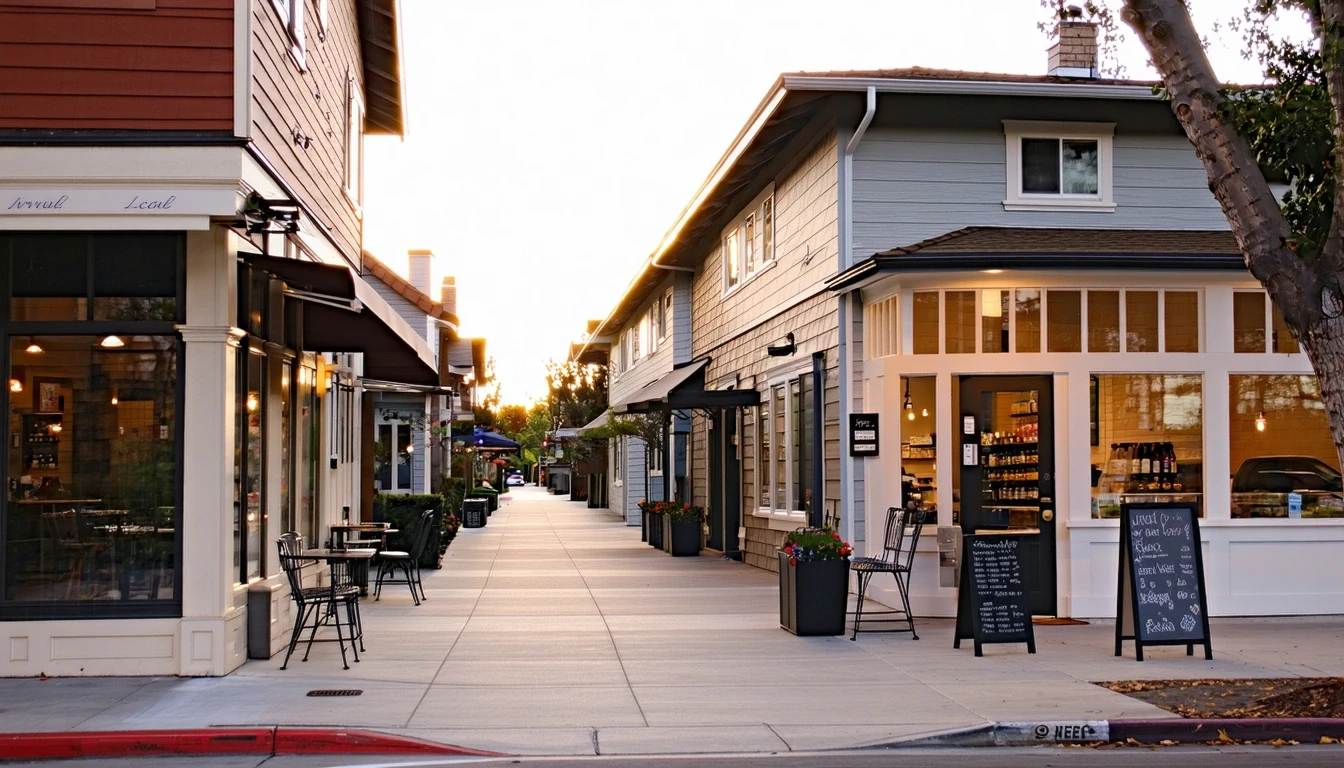
The Housing Market in Irvine Today
Irvine’s housing market reflects decades of master-planned development by a dominant landowner, resulting in a housing stock that’s newer, more uniform, and more tightly governed than most U.S. suburbs. Homes aren’t just expensive—they’re part of planned villages with architectural guidelines, homeowner associations, and embedded amenities. That governance creates predictability in neighborhood character, but it also means ownership comes with layers of oversight and fees that renters don’t always see until they’re comparing costs line by line.
The city’s role as an employment hub for technology, biotech, and higher education keeps demand high. People move here for jobs at companies clustered in the Irvine Spectrum and University Research Park, and they stay for nationally recognized schools. That demand doesn’t fluctuate with seasonal trends—it’s structural. Housing supply, meanwhile, is controlled by planned development cycles, not speculative building. The result is a market where prices reflect scarcity that’s partly artificial and partly geographic, hemmed in by Orange County’s limited developable land.
Compared to nearby cities like Santa Ana or Anaheim, Irvine sits at the higher end of the cost structure. Compared to coastal enclaves like Newport Beach, it’s the more accessible option. But “accessible” here is relative. For households arriving from regions where $1 million buys estate property, Irvine’s pricing feels like a reckoning. For those coming from the Bay Area, it feels like a discount. Neither perspective changes what it costs—it just changes how long it takes to accept it.
Renting in Irvine
Renting in Irvine means paying $2,749 per month at the median, and that figure represents the middle of the market—not the entry point. Apartments in older complexes or less central locations start lower, but they’re harder to find and they turn over quickly. Newer complexes, especially those near the Spectrum or along the I-5 corridor, command premiums for amenities, finishes, and proximity to employment centers. Rental availability is tight, not because inventory is scarce, but because turnover is low. People who secure rent-controlled or below-market leases tend to stay.
The rental experience in Irvine is shaped by the same master-planned structure that defines ownership. Many apartment communities are managed by large institutional operators, meaning lease terms are standardized, renewals are formulaic, and rent increases follow corporate models rather than individual landlord discretion. That creates consistency, but it also means tenants have little room to negotiate. Rent doesn’t spike unpredictably, but it doesn’t stay flat either. Annual increases are common, and they compound over time in ways that make long-term renting financially uncomfortable for households trying to stabilize expenses.
Because Irvine offers broadly accessible grocery and food options with high-density availability, renters benefit from proximity that reduces some car-dependent errands. The city’s walkable pockets and notable cycling infrastructure mean that certain neighborhoods allow renters to live without constant driving, which offsets some transportation costs. But that convenience doesn’t translate to rent relief—it’s already priced in. The neighborhoods where you can walk to errands are the same ones where rent reflects that access.
Owning a Home in Irvine
Ownership in Irvine begins with a $1,025,700 median home value, and that’s the starting line, not the finish. Property taxes, homeowner association fees, insurance, and maintenance costs layer on top, creating a cost structure that’s less volatile than rent but more complex. Ownership doesn’t eliminate monthly expenses—it shifts them into categories you control on different timelines.
Property taxes in California are governed by Proposition 13, which caps assessed value increases and creates long-term predictability for owners who stay put. That stability is a major advantage over renting, where annual increases are standard. But the initial tax base is calculated from the purchase price, meaning buyers entering at today’s values lock in a higher baseline than owners who purchased a decade ago. The result is a two-tier system: established owners with low tax bills, and new buyers with substantially higher ones.
Homeowner associations are nearly ubiquitous in Irvine’s planned communities. Fees vary by village and amenity level, but they’re not optional, and they’re not trivial. HOAs cover landscaping, common area maintenance, and sometimes utilities like water or trash. They also enforce architectural guidelines, which means exterior modifications—paint colors, roofing materials, landscaping choices—require approval. For some buyers, that governance preserves neighborhood character. For others, it’s a perpetual friction point. Either way, it’s a cost and a constraint that renters don’t face.
Maintenance expenses in Irvine skew differently than in older cities. Because much of the housing stock was built in the past few decades, major systems—HVAC, roofing, plumbing—are newer and less likely to fail catastrophically in the first years of ownership. But Southern California’s climate creates different pressures. Cooling systems run long seasons, and they’re not optional. Landscaping requires irrigation management in a semi-arid climate. Exterior surfaces face intense sun exposure. These aren’t emergency costs, but they’re ongoing, and they don’t pause when other expenses spike.
Apartment vs House in Irvine — Cost Behavior Comparison
The distinction between renting an apartment and owning a house in Irvine isn’t just about square footage—it’s about which costs you control, which ones you inherit, and how the city’s climate and governance structure shape your exposure. The table below reflects only the categories where Irvine’s conditions create meaningful differences. Omitted rows—such as heating costs and snow removal—don’t apply in this climate, and parking isn’t a differentiator in a car-oriented suburban market.
| Expense Category | Apartment | House |
|---|---|---|
| Base Monthly Cost | Rent paid to landlord; increases annual and non-negotiable in institutional complexes | Property tax and insurance; tax base locked at purchase under Prop 13, creating long-term predictability |
| Utility Responsibility | Electricity tenant-paid; water/trash often included in rent or HOA | All utilities owner-paid; larger conditioned space increases cooling exposure in extended summer season |
| Cooling Costs | Lower due to smaller square footage and shared-wall insulation; still significant during long, hot summers | Dominant summer expense; standalone homes condition more space and face greater sun exposure on all sides |
| Maintenance Control | Landlord handles repairs; tenant has no control over timing, quality, or contractor choice | Owner controls maintenance decisions but must seek HOA architectural approval for exterior changes; adds process layer |
| Governance Fees | Apartment complex fees embedded in rent; not itemized separately | HOA dues explicit and mandatory; cover landscaping, common areas, and enforcement of design guidelines |
Why these categories? Irvine’s master-planned villages create governance structures that affect both renters and owners, but the visibility and control differ. The city’s Southern California climate makes cooling the primary utility driver, and the difference in conditioned space between apartments and houses is substantial. Maintenance responsibility splits along the typical rent/own line, but Irvine’s HOA prevalence adds a layer of oversight that’s more intrusive than in unplanned suburbs. Categories like heating and winter weatherization were excluded because they’re not material cost factors in this climate.
Utilities & Upkeep Differences
Utility costs in Irvine are shaped by Southern California’s energy market and the city’s semi-arid climate. Electricity rates sit at 30.29¢/kWh, which is high by national standards and reflects California’s grid costs and renewable energy mandates. Natural gas, priced at $22.96 per thousand cubic feet, sees limited use—most homes rely on it for water heating and cooking, not space heating. The result is a utility profile that’s cooling-dominant, with air conditioning driving the largest seasonal swings.
For apartment renters, smaller square footage and shared-wall construction provide some insulation from extreme cooling costs, but the long summer season still creates noticeable bills. For homeowners, especially those in detached single-family homes, cooling costs are a major budget line from late spring through early fall. Homes in Irvine’s planned villages often feature larger floor plans and vaulted ceilings, which increase the volume of air that needs conditioning. Running an air conditioner for months at a time at California’s electricity rates isn’t incidental—it’s a structural cost that owners need to plan for, not react to.
Maintenance and upkeep differences between apartments and houses in Irvine are less about frequency and more about control and complexity. Apartment tenants don’t handle landscaping, exterior painting, or irrigation system repairs—those fall to property management. Homeowners, meanwhile, must navigate HOA approval processes for anything visible from the street, which adds time and procedural friction to routine upkeep. Landscaping in a semi-arid climate requires irrigation management and drought-tolerant planning, both of which cost more upfront but reduce long-term water use. Exterior surfaces—stucco, tile roofing, painted trim—face intense sun exposure and degrade on predictable timelines. These aren’t emergency repairs, but they’re not optional either, and they don’t align neatly with other financial priorities.
Rent vs Buy: Long-Term Exposure in Irvine
The long-term cost difference between renting and owning in Irvine isn’t about totaling up payments—it’s about understanding which risks you’re taking on and which ones you’re avoiding. Renters face annual increases that compound over time, with no mechanism to lock in today’s cost or convert payments into equity. Rent doesn’t build wealth, and it doesn’t create stability. It buys flexibility, and in Irvine’s market, that flexibility is expensive.
Owners, by contrast, lock in a tax base at purchase and gain predictability that renters don’t have. Property taxes rise slowly under Proposition 13, and mortgage payments stay fixed if you avoid refinancing. But ownership also means absorbing costs that renters never see: HOA fees that increase annually, insurance premiums that respond to state-level market conditions, and maintenance expenses that arrive on their own schedule. Ownership doesn’t eliminate cost growth—it just makes it more predictable and ties it to decisions you control.
The emotional and financial case for ownership in Irvine is strongest for households that plan to stay long enough to absorb transaction costs and benefit from equity accumulation. For those who might relocate in three to five years, the math is harder. Closing costs, HOA fees, and the opportunity cost of a large down payment don’t disappear quickly. Renters who stay flexible and invest the difference between rent and ownership costs elsewhere may come out ahead in the short term, but they’re also betting that rent increases won’t outpace their investment returns.
What ownership provides—and what renters give up—is insulation from the market’s next move. Irvine’s housing costs have risen steadily for decades, driven by constrained supply and sustained demand. Renters are exposed to that pressure every lease cycle. Owners who bought in are not. That insulation has value, but only if you can afford the entry price and only if you’re prepared to stay.
FAQs About Housing Costs in Irvine
Is renting in Irvine cheaper than buying in the short term?
Renting avoids the down payment, closing costs, and HOA fees that come with ownership, so the upfront cash requirement is lower. But monthly rent at $2,749 is substantial, and it increases annually without building equity. Ownership costs more upfront and requires more cash reserves, but monthly expenses become more predictable over time. The “cheaper” option depends on how long you’re staying and whether you have the capital to buy in the first place.
How do HOA fees in Irvine affect ownership costs?
HOA fees are nearly universal in Irvine’s master-planned villages and cover landscaping, common area maintenance, and enforcement of architectural guidelines. Fees vary by community and amenity level, and they increase over time. They’re not optional, and they don’t go away when you pay off your mortgage. For some buyers, the services justify the cost. For others, the loss of autonomy over exterior modifications is a persistent frustration. Either way, it’s a cost layer that renters don’t face directly.
Does Irvine’s climate make utilities more expensive for homeowners?
Southern California’s long, hot summers make cooling the dominant utility expense, and electricity rates at 30.29¢/kWh are high by national standards. Homeowners in detached single-family homes face larger cooling loads than apartment renters due to greater square footage and sun exposure on all sides. Heating costs are minimal, but air conditioning runs for months, and that’s a structural cost that doesn’t fluctuate much year to year—it’s just high.
Are property taxes in Irvine predictable over time?
California’s Proposition 13 caps annual assessed value increases at 2% for existing owners, which creates long-term predictability. But the initial tax base is set at the purchase price, so buyers entering at today’s $1,025,700 median home value lock in a much higher baseline than owners who purchased years ago. Taxes are predictable, but they’re also tied to the price you paid, and that price is high.
Is it realistic to transition from renting to buying in Irvine?
The transition requires a substantial down payment, strong income documentation, and the ability to qualify for a mortgage on a seven-figure home. For households earning near the $122,948 median income, that’s a difficult threshold to meet without significant savings or dual incomes. Renting doesn’t naturally lead to ownership in Irvine’s market—it’s a separate financial position that requires deliberate preparation and often outside help, whether from family wealth, stock compensation, or years of aggressive saving.
Making Housing Choices in Irvine
Housing costs in Irvine don’t offer an easy path—they offer a set of tradeoffs that depend entirely on your timeline, your capital position, and your tolerance for long-term financial commitment. Renting keeps you flexible but exposes you to annual increases and eliminates wealth-building. Owning locks in predictability and builds equity but requires a large upfront investment and ongoing governance fees that never disappear. Neither option is forgiving, and neither option gets cheaper if you wait.
The city’s master-planned structure, strong schools, and broadly accessible errands infrastructure make it a logical choice for families who can afford the entry cost. The walkable pockets and strong family infrastructure—with high playground density and solid school access—mean that daily logistics are manageable once you’re here. But those advantages don’t reduce the cost of getting in. They just explain why demand stays high and why prices don’t correct.
If you’re deciding whether Irvine fits, start with the numbers that don’t bend: the $1,025,700 median home value, the $2,749 median rent, and the income required to qualify for either. Then ask whether your household can absorb those costs without eliminating other financial goals. The answer to that question matters more than whether you prefer renting or owning in theory. In Irvine, the market decides what’s possible. You decide whether that’s acceptable.
For a broader look at how these expenses fit into overall where your money actually goes each month, see the detailed breakdown of budget categories. And if you’re planning a move to Irvine, understanding moving companies, costs, and logistics early can help you avoid last-minute surprises.
How this article was built: In addition to public economic data, this article incorporates location-based experiential signals derived from anonymized geographic patterns—such as access density, walkability, and land-use mix—to reflect how day-to-day living actually feels in Irvine, CA.