
Highlands Ranch sits southwest of Denver with a housing market shaped by strong family infrastructure, integrated park access, and household incomes well above metro norms. The median home value of $637,400 reflects premium positioning in a community built around schools, green space, and managed amenities rather than urban density. Median rent reaches $2,353 per month, signaling that both ownership and rental costs carry substantial weight in household budgets. With a regional price parity index of 147—meaning costs run roughly 47% above the national baseline—housing expenses here don’t just reflect the structure itself but the infrastructure, governance, and access that come with it.
This article explains how housing costs behave in Highlands Ranch, what drives the differences between renting and owning, and which household types fit the market’s structure. It’s not about whether you qualify for a mortgage or what you can afford—it’s about understanding what you’re paying for, which costs stay predictable, and which ones shift over time.
How this article was built: In addition to public economic data, this article incorporates location-based experiential signals derived from anonymized geographic patterns—such as access density, walkability, and land-use mix—to reflect how day-to-day living actually feels in Highlands Ranch, CO.
The Housing Market in Highlands Ranch Today
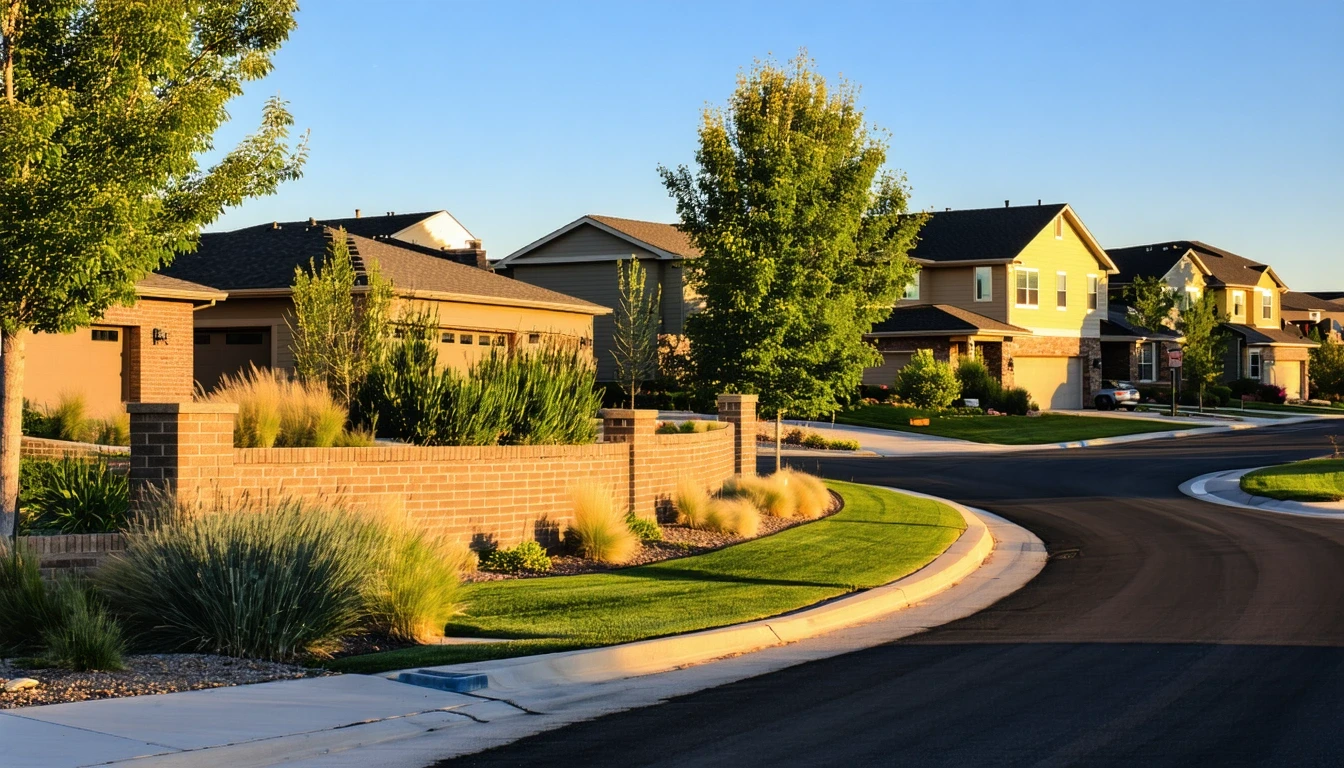
Highlands Ranch developed as a master-planned community, and that origin still defines its housing market. Homes here aren’t just priced on square footage or lot size—they’re priced on proximity to highly rated schools, maintained trails, recreation centers, and parks that exceed regional density thresholds. The community’s infrastructure reflects deliberate planning: park density is high, school and playground access is strong, and grocery density exceeds typical suburban patterns despite food establishments clustering along corridors rather than spreading evenly.
The $637,400 median home value positions Highlands Ranch well above Denver metro’s middle tier, and that gap isn’t accidental. Buyers here are paying for stability, governance, and amenity access that requires ongoing funding. Most neighborhoods operate under homeowners associations that manage landscaping, trails, and recreation facilities, which means ownership here involves not just a mortgage but participation in a privately governed system. That structure appeals to families prioritizing predictability and maintained quality of life, but it’s a poor fit for buyers seeking autonomy or lower entry costs.
The rental market mirrors this positioning. At $2,353 per month, median rent reflects the same premium that ownership commands. Renters gain access to the same schools, parks, and infrastructure without the long-term exposure to property taxes, maintenance, or governance fees, but they also absorb year-to-year rent adjustments in a market where demand remains strong. The unemployment rate of 3.9% and median household income of $148,227 suggest a stable, high-earning population that can sustain these costs, but newcomers often underestimate how much of that income gets absorbed by housing pressure alone.
Renting in Highlands Ranch
Renting in Highlands Ranch means paying for access to a built environment designed around families and outdoor activity, without taking on the long-term financial exposure that ownership requires. The $2,353 median rent isn’t just covering an apartment or townhome—it’s covering proximity to schools with strong reputations, parks that integrate into daily routines, and grocery access that exceeds typical suburban density. For households prioritizing flexibility or unwilling to commit capital to a down payment, renting offers a way to live in Highlands Ranch without the governance obligations or maintenance volatility that come with owning.
Rental availability tends to concentrate in multi-family developments near commercial corridors, where mixed land use supports both residential and retail activity. These areas benefit from higher grocery and food establishment density, making errands more accessible than in purely residential zones. However, the overall layout still requires a car for most daily needs—despite notable bike infrastructure and rail transit presence, the community’s suburban form means that walkability exists in pockets rather than throughout. Renters should expect that convenience comes from planning and vehicle access, not spontaneous walkability.
Rent volatility in Highlands Ranch follows demand patterns typical of high-income suburbs: adjustments tend to track broader metro trends rather than local downturns, and landlords can sustain increases because the tenant base remains employed and financially stable. The 3.9% unemployment rate signals limited distress, and the $148,227 median household income suggests that most renters here can absorb moderate increases without relocating. That stability benefits landlords but limits renters’ negotiating power, especially in developments with strong amenity packages or school district access.
For renters weighing Highlands Ranch against other Denver metro options, the tradeoff is clear: you’re paying a premium for family-oriented infrastructure and managed outdoor access, not for urban density or transit-first living. If your household prioritizes school quality, park integration, and suburban predictability, the rent reflects that value. If you’re seeking walkable urbanism or lower-cost flexibility, the same rent buys more density and transit access closer to Denver’s core.
Owning a Home in Highlands Ranch
Owning a home in Highlands Ranch means entering a market where the $637,400 median value reflects not just the structure but the infrastructure, governance, and amenity access that define the community. Property taxes, homeowners association fees, and maintenance costs all layer on top of the mortgage, and each one behaves differently over time. Property taxes in Colorado operate under assessment and mill levy systems that vary by district, and Highlands Ranch sits within Douglas County, where rates and voter-approved measures directly affect annual obligations. Without a specific rate in the data, it’s enough to know that taxes here aren’t static—they adjust with assessed value and local funding decisions, and owners should expect those adjustments to continue.
Homeowners associations are nearly universal in Highlands Ranch, and they’re not optional. These organizations manage the trails, parks, landscaping, and recreation centers that justify the community’s premium positioning. Fees vary by neighborhood and amenity package, but they’re a permanent cost of ownership here, and they typically increase over time to cover maintenance, insurance, and capital improvements. For buyers accustomed to full autonomy over their property, this governance structure can feel restrictive. For families prioritizing maintained green space and predictable neighborhood standards, it’s exactly what they’re paying for.
Maintenance exposure in Highlands Ranch reflects both the housing stock and the climate. Homes here experience hot, dry summers and cold winters with occasional heavy snow, which means roofs, HVAC systems, and exterior materials all face seasonal stress. Ownership transfers that exposure entirely to the homeowner, unlike renting, where the landlord absorbs repair costs. The age of the home matters significantly—newer builds in recently developed sections carry lower near-term maintenance risk, while older homes in established neighborhoods may require roof replacement, furnace upgrades, or exterior work within the first few years of ownership.
Insurance costs, while not specified in the data, tend to reflect the community’s low crime profile and stable housing stock, but they’re also subject to regional trends in weather-related claims and carrier availability. Colorado’s hail exposure and wildfire risk in surrounding areas can drive premium increases even in suburbs like Highlands Ranch that don’t directly face those hazards. Owners should treat insurance as a variable cost, not a fixed one, and expect periodic adjustments that don’t necessarily correlate with the home’s condition.
The long-term value proposition of owning in Highlands Ranch depends on whether the household prioritizes stability and amenity access over flexibility and liquidity. Ownership here locks in a cost structure that includes predictable mortgage payments but variable taxes, fees, and maintenance. It’s a strong fit for families planning to stay long enough to absorb transaction costs and benefit from the community’s infrastructure, but it’s a poor fit for buyers seeking low entry costs, minimal governance, or short-term flexibility.
Apartment vs House in Highlands Ranch — Cost Behavior Comparison
| Expense Category | Apartment | House |
|---|---|---|
| Base Housing Cost | Median $2,353/month; includes structure and often water/trash | Median value $637,400 implies mortgage + property tax + insurance; no shared cost absorption |
| Heating & Cooling | Shared walls reduce exposure; tenant pays electricity and sometimes gas separately | Full envelope exposure to hot, dry summers and cold winters; owner pays all heating and cooling directly |
| Outdoor Maintenance | Landlord or HOA handles landscaping, snow removal, exterior upkeep | Owner responsible for yard care, irrigation (significant in dry climate), snow removal, and exterior repairs |
| Governance & Amenities | HOA fees typically included in rent; tenant accesses pools, trails, rec centers without separate billing | Owner pays HOA fees directly (amount varies by neighborhood); fees fund same amenities but appear as separate monthly cost |
| Repair Volatility | Landlord absorbs HVAC failure, roof damage, appliance replacement | Owner carries full exposure to furnace, AC, roof, and structural repairs; timing unpredictable |
Why these categories? The distinctions above reflect Highlands Ranch’s climate (hot summers and cold winters drive HVAC exposure), its governance model (HOAs are nearly universal and fund significant amenities), and its suburban form (houses carry full outdoor maintenance in a dry climate requiring irrigation). Categories like utilities or trash service were excluded because they don’t differ meaningfully by housing type here—both apartments and houses face similar per-unit costs for electricity and gas, and trash service is typically bundled or billed separately regardless of structure type.
Utilities & Upkeep Differences
Utility exposure in Highlands Ranch depends heavily on housing type and the seasonal demands of Colorado’s Front Range climate. The electricity rate of 16.44¢/kWh and natural gas price of $10.57/MCF are the baseline costs, but how much those rates matter depends on whether you’re heating and cooling a full house or an apartment with shared walls. Summers here bring extended heat that drives air conditioning use, while winters require consistent heating through cold stretches and occasional heavy snow. Houses face full envelope exposure—every wall, window, and roofline is a thermal boundary—while apartments benefit from shared walls that buffer temperature swings and reduce the work HVAC systems have to do.
Natural gas typically handles heating in Highlands Ranch, and usage spikes during winter months when overnight lows stay well below freezing for extended periods. A house with older windows, minimal insulation, or a furnace nearing the end of its lifespan will see noticeably higher gas bills than a newer townhome or apartment with modern HVAC and better thermal performance. Electricity covers cooling, lighting, and appliances, and summer bills rise as air conditioning runs through long stretches of heat. The difference between housing types isn’t just the rate—it’s the volume of conditioned space and the efficiency of the systems doing the work.
Water and irrigation add another layer of cost that varies significantly by housing type. Apartments typically include water and sewer in rent or charge a modest flat fee, and outdoor watering is handled by the landlord or HOA. Houses, on the other hand, require owners to manage irrigation for lawns and landscaping in a climate where rainfall alone won’t sustain greenery. Highlands Ranch’s dry summers mean that maintaining a yard requires consistent watering, and that usage shows up directly on the owner’s bill. Some neighborhoods have HOA-managed landscaping for front yards, which shifts the cost into HOA fees rather than direct water bills, but backyard irrigation and any additional landscaping remain the owner’s responsibility.
Maintenance exposure also splits sharply by housing type, and climate plays a role here too. Highlands Ranch’s elevation and weather patterns mean roofs face UV exposure, hail risk, and occasional heavy snow loads. Apartment renters don’t carry that risk—the landlord handles roof repairs, gutter maintenance, and exterior upkeep. Homeowners, however, own the full structure and everything attached to it, which means that a hailstorm or aging roof becomes a multi-thousand-dollar obligation with unpredictable timing. HVAC systems, water heaters, and appliances all have finite lifespans, and in a climate with significant seasonal swings, those systems work harder and wear out faster than they would in milder regions.
The upkeep difference isn’t just about cost—it’s about predictability. Renters face stable monthly costs with occasional modest increases. Homeowners face stable mortgage payments but variable and sometimes urgent repair costs that can’t be deferred. A furnace failure in January or an AC breakdown in July isn’t optional spending—it’s immediate, and it’s entirely the owner’s responsibility. That volatility is manageable for households with emergency savings and stable income, but it’s a significant stressor for buyers stretching to afford the $637,400 median home value without a repair cushion.
Rent vs Buy: Long-Term Exposure in Highlands Ranch
The decision to rent or buy in Highlands Ranch isn’t primarily about monthly payment size—it’s about which costs you control, which ones you’re exposed to, and how those exposures change over time. Renting offers predictability in the short term: the $2,353 median rent covers housing, and while it may increase annually, those increases are visible and can be planned for. Renters avoid property tax adjustments, HOA fee increases, and the unpredictable timing of major repairs. They also avoid the transaction costs and capital requirements of buying, which makes renting a strong fit for households prioritizing flexibility or unwilling to commit significant savings to a down payment.
Ownership, by contrast, trades short-term flexibility for long-term cost control and stability. The mortgage payment on a $637,400 home stays fixed (assuming a fixed-rate loan), but property taxes, HOA fees, insurance, and maintenance all vary over time. Property taxes adjust with assessed value and local funding decisions, and in a community where home values remain elevated, those adjustments tend upward. HOA fees increase to cover rising costs for landscaping, amenities, and infrastructure maintenance, and those increases are decided by the association, not the homeowner. Insurance premiums shift with regional risk trends and carrier behavior, and maintenance costs arrive on their own schedule, driven by the age of the home and the wear that Colorado’s climate imposes on roofs, HVAC systems, and exterior materials.
For families planning to stay in Highlands Ranch long enough to absorb the transaction costs of buying and selling—typically at least five to seven years—ownership offers the advantage of locking in the largest single cost (the mortgage) while building equity that renters don’t accumulate. That equity isn’t liquid, and it doesn’t pay the bills, but it represents a form of forced savings that can be accessed later through sale or refinancing. For households with stable, high incomes and the ability to handle repair volatility, ownership aligns well with the community’s infrastructure and governance model.
Renters, meanwhile, remain insulated from the governance obligations and capital exposure that ownership requires. They don’t vote on HOA budgets, they don’t fund roof replacements, and they don’t absorb property tax increases. But they also don’t control rent adjustments, and in a market where demand remains strong and household incomes support premium pricing, landlords have limited incentive to hold rents flat. Over time, renters face the risk that rent increases outpace income growth, especially if they’re not in the high-income tier that dominates Highlands Ranch’s demographics.
The tradeoff isn’t about which option costs less—it’s about which cost structure fits your household’s timeline, income stability, and tolerance for volatility. Ownership in Highlands Ranch works best for families with long horizons, stable earnings, and the financial cushion to handle unpredictable repairs. Renting works best for households prioritizing flexibility, avoiding governance obligations, or unable to commit the capital required for a down payment and closing costs in a market where the median home value sits well above $600,000.
FAQs About Housing Costs in Highlands Ranch
Why are home values in Highlands Ranch higher than nearby Denver metro suburbs?
Home values in Highlands Ranch reflect the community’s master-planned infrastructure, including highly rated schools, integrated park access, and managed amenities funded through homeowners associations. Buyers here are paying not just for the structure but for the governance, outdoor space, and family-oriented infrastructure that define the community. The $637,400 median value positions Highlands Ranch as a premium suburb within Douglas County, and that premium persists because demand remains strong among high-income families prioritizing stability and amenity access over urban density or lower entry costs.
Does renting in Highlands Ranch make sense if I can afford to buy?
Renting makes sense if your timeline is short, your income is variable, or you want to avoid the governance obligations and repair exposure that come with ownership. The $2,353 median rent is substantial, but it includes access to the same schools, parks, and infrastructure that homeowners pay for through mortgages, property taxes, and HOA fees. Renters avoid the capital commitment of a down payment, the transaction costs of buying and selling, and the unpredictable timing of major repairs. If you’re planning to stay in Highlands Ranch for less than five years, or if you’re uncertain about long-term stability, renting preserves flexibility without sacrificing access to the community’s infrastructure.
How much do HOA fees typically add to the cost of owning in Highlands Ranch?
HOA fees in Highlands Ranch vary by neighborhood and the amenities included, but they’re a near-universal cost of ownership here. These fees fund landscaping, trail maintenance, recreation centers, pools, and other shared infrastructure that justify the community’s premium positioning. Fees typically increase over time to cover rising maintenance costs, insurance, and capital improvements, and those increases are decided by the association rather than the homeowner. Buyers should treat HOA fees as a permanent, variable cost that layers on top of the mortgage, property taxes, and insurance, and they should confirm the current fee and the association’s financial health before purchasing.
What drives utility costs higher in a house versus an apartment in Highlands Ranch?
Houses in Highlands Ranch face full exposure to the region’s hot, dry summers and cold winters, which means heating and cooling a larger, fully detached structure with no shared walls. Apartments benefit from thermal buffering—shared walls reduce the work HVAC systems have to do, and smaller square footage means less space to condition. Houses also require outdoor water use for irrigation in a climate where lawns and landscaping don’t survive on rainfall alone, while apartments typically include water in rent or charge a modest flat fee. The electricity rate of 16.44¢/kWh and natural gas price of $10.57/MCF are the same for both housing types, but the volume of energy and water consumed differs significantly based on structure size, thermal efficiency, and outdoor maintenance requirements.
Is Highlands Ranch a good fit for first-time buyers?
Highlands Ranch can work for first-time buyers with substantial down payment capacity, stable high income, and a long-term commitment to the community. The $637,400 median home value represents a significant entry cost, and buyers should be prepared for additional expenses including property taxes, HOA fees, insurance, and maintenance. First-time buyers stretching to afford the purchase price without a financial cushion for repairs may find the cost structure stressful, especially given the unpredictable timing of HVAC, roof, and appliance expenses. The community’s infrastructure and family-oriented amenities make it a strong fit for buyers planning to stay long enough to benefit from that access, but it’s a poor fit for buyers prioritizing low entry costs or short-term flexibility.
Making Housing Choices in Highlands Ranch
Housing costs in Highlands Ranch reflect a community built around family infrastructure, managed outdoor access, and suburban stability rather than urban density or transit-first living. The $637,400 median home value and $2,353 median rent both signal premium positioning, and that premium persists because the infrastructure—schools, parks, trails, recreation centers—requires ongoing funding through property taxes, HOA fees, and rental pricing that supports landlord investment. Buyers here are committing to a governance model that trades autonomy for maintained quality of life, while renters are paying for access to that same infrastructure without the long-term exposure to taxes, fees, and repair volatility.
The choice between renting and owning depends on your household’s timeline, income stability, and tolerance for cost volatility. Ownership works best for families planning to stay long enough to absorb transaction costs and benefit from the community’s amenities, and who have the financial capacity to handle property taxes, HOA fees, and unpredictable maintenance. Renting works best for households prioritizing flexibility, avoiding governance obligations, or unable to commit the capital required for a down payment in a market where home values sit well above $600,000.
Highlands Ranch fits high-income families prioritizing school quality, park access, and suburban predictability. It’s a poor fit for households seeking walkable urbanism throughout, minimal governance, or lower entry costs. The infrastructure here is real, the costs are substantial, and the tradeoffs are clear. Understanding where money goes in this market means recognizing that housing isn’t just shelter—it’s access, governance, and long-term exposure rolled into one decision.
For more context on how housing costs fit into the broader financial picture, see Highlands Ranch Affordability: What’s Easy, What’s Expensive. If you’re planning a move and need to compare logistics and costs, compare moving company costs and options to make the transition smoother.