
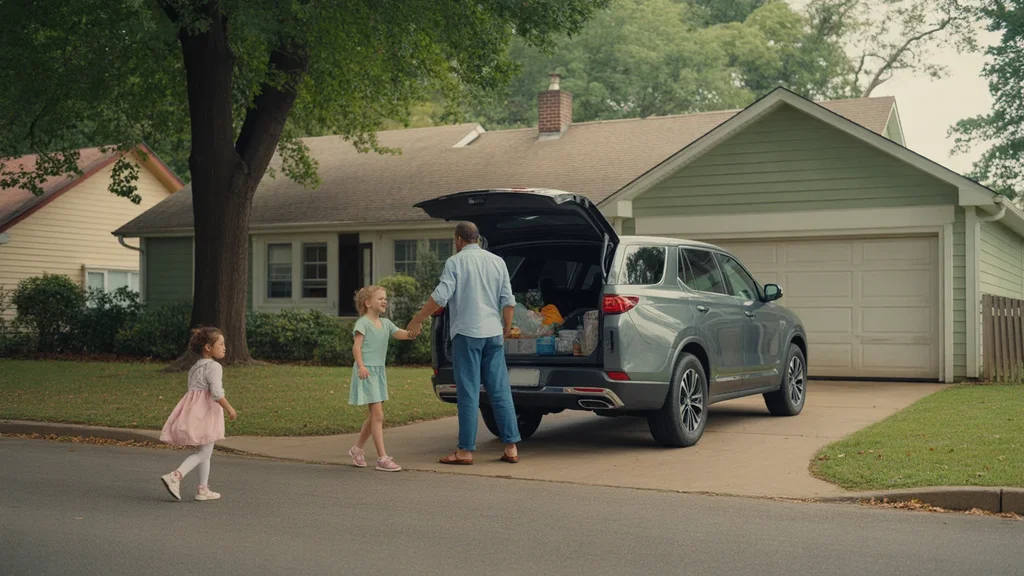
Brentwood’s median rent sits at $2,459 per month, while its median home value reaches $842,400—numbers that immediately signal a high-barrier housing market in one of Nashville’s most established suburbs. Just miles away, Hermitage operates under a different cost structure entirely, one where rail transit access and corridor-clustered grocery options reshape how households manage daily expenses. Both cities share the Nashville metro’s economic momentum, but the way cost pressure shows up—and which households feel it most—depends less on totals and more on whether your budget is more exposed to upfront housing barriers, ongoing utility volatility, or the friction costs of car dependency.
For families weighing space against access, young professionals prioritizing commute flexibility, or dual-income couples managing competing work locations, the Hermitage vs Brentwood decision hinges on which costs dominate your household’s financial texture. Brentwood’s appeal lies in its established residential character and lower transportation fuel costs, but that comes with higher natural gas prices and sparse grocery density. Hermitage offers rail connectivity and more walkable errand patterns, but higher gas prices and different housing availability. Neither city is universally cheaper—each simply concentrates cost pressure in different categories, making the better fit a question of which expenses you’re most sensitive to in 2026.
Understanding these structural differences means looking beyond sticker prices to examine where costs become non-negotiable, where flexibility exists, and how daily logistics either smooth out or amplify financial friction. The sections that follow break down housing entry barriers, utility seasonality, grocery strategy, transportation dependence, and the hidden costs of time and convenience—not to declare a winner, but to clarify which city aligns with which household’s cost tolerance and lifestyle priorities.
Housing Costs: Entry Barriers vs Market Structure
Brentwood’s housing market centers on single-family ownership, with a median home value of $842,400 creating a steep entry threshold for buyers. Renters face a median gross rent of $2,459 per month, positioning Brentwood as a high-cost environment where housing dominates the monthly obligation structure. These figures reflect an established, low-turnover market where housing stock skews toward larger homes on spacious lots, and where competition for available rentals remains intense. For households able to meet these thresholds, Brentwood offers predictability in the form of stable neighborhoods and mature infrastructure, but the upfront cost—whether down payment or first month’s rent—represents the single largest financial hurdle.
Hermitage operates with a different housing texture, one where mixed land use and walkable pockets suggest a more varied housing stock that includes apartments, townhomes, and single-family options. Without documented median values in the feed, the clearest signal comes from the built environment itself: both residential and commercial land use detected, mixed building heights, and pedestrian infrastructure that exceeds high thresholds relative to road networks. This suggests housing pressure in Hermitage is less about prohibitive entry costs and more about availability, turnover, and competition within specific neighborhoods. Renters and first-time buyers may find more flexibility in housing type and location, though the tradeoff often involves older housing stock or less spacious layouts.
The difference matters most for households at different financial stages. First-time buyers and single adults face lower barriers to entry in Hermitage, where housing options span a wider range of forms and price sensitivities. Families prioritizing space, school access, and long-term stability may find Brentwood’s higher costs justified by the residential character and infrastructure maturity, provided they can meet the entry threshold. Dual-income couples without children often split the difference, valuing Hermitage’s transit access and walkable errands over Brentwood’s residential spaciousness, especially when both partners commute to different parts of the metro.
Housing takeaway: Brentwood’s cost pressure is front-loaded and concentrated in housing entry—high for both renters and buyers, but predictable once secured. Hermitage distributes housing pressure differently, with lower entry barriers but more variability in housing type, age, and neighborhood walkability. Households sensitive to upfront costs or those prioritizing transit access tend to find more flexibility in Hermitage, while those who can absorb higher housing costs in exchange for established residential character and larger homes gravitate toward Brentwood.
Utilities and Energy Costs: Heating Exposure vs Baseline Rates
Utility cost behavior in these two cities diverges most sharply during heating months, when natural gas prices create measurably different exposure levels. Brentwood’s natural gas rate sits at $20.33 per MCF, while Hermitage’s rate is $11.31 per MCF—a structural difference that compounds over the course of a Tennessee winter. Households in Brentwood face nearly double the per-unit cost for heating, meaning that older homes, larger square footage, or less efficient HVAC systems translate into significantly higher seasonal bills. Electricity rates show a smaller gap, with Brentwood at 13.06¢ per kWh and Hermitage at 12.87¢ per kWh, a difference that matters more for year-round baseline usage than for cooling-season spikes.
The interaction between housing stock and utility exposure amplifies these differences. Brentwood’s housing market skews toward larger single-family homes, which require more energy to heat and cool regardless of efficiency. Even well-insulated homes face higher absolute costs simply due to square footage, and older homes—common in established suburbs—often lack modern insulation standards or efficient windows. Hermitage’s mixed building stock, which includes apartments and townhomes alongside single-family homes, offers more variability in utility exposure. Smaller units and shared-wall construction reduce heating and cooling loads, while newer apartment complexes often include energy-efficient appliances and better insulation as standard features.
Seasonality plays out differently depending on household type and housing choice. Families in Brentwood’s larger homes experience pronounced heating cost spikes from November through March, with natural gas bills rising sharply during cold snaps. Single adults or couples in Hermitage apartments face lower absolute utility costs year-round, though those in older single-family homes still contend with heating exposure—just at a lower per-unit rate. Cooling costs, driven by Tennessee’s humid summers, affect both cities similarly, though Brentwood’s larger homes again face higher absolute usage. Households that prioritize budget predictability may find Hermitage’s lower natural gas rates and smaller average unit sizes reduce the volatility of seasonal swings.
Utility takeaway: Brentwood households face higher heating cost exposure due to elevated natural gas rates and larger average home sizes, with the greatest impact felt by families in older or less efficient single-family homes. Hermitage offers lower per-unit heating costs and more housing options that reduce baseline utility loads, making it a better fit for households sensitive to seasonal volatility or those living in smaller units. The difference is less about electricity and more about how heating costs interact with housing form and square footage.
Groceries and Daily Expenses: Errand Density vs Convenience Friction
Grocery and daily expense pressure in Hermitage and Brentwood reflects differences in access density rather than price variation. Hermitage shows corridor-clustered food and grocery options, with medium-density establishments concentrated along main thoroughfares. This pattern supports households that can plan errands around a few key routes, where supermarkets, discount grocers, and prepared food options sit within a short drive or, in some neighborhoods, a walkable distance. The structure favors households that batch errands and prioritize access to multiple grocery formats—big-box stores for bulk staples, neighborhood markets for fill-ins, and takeout options for convenience meals.
Brentwood’s grocery landscape operates with sparse food and grocery density, meaning fewer establishments per square mile and longer distances between options. This doesn’t necessarily mean higher prices, but it does mean more driving, more time spent on errands, and fewer opportunities to comparison-shop or pivot to a different store when a specific item is unavailable. Households in Brentwood often rely on a single primary grocery store, supplemented by occasional trips to specialty retailers or big-box stores located farther out. The convenience friction adds up over time—not as a line item, but as a constraint on flexibility and a driver of impulse spending when convenience becomes more valuable than price optimization.
The difference in errand accessibility affects household types unevenly. Single adults and dual-income couples without children often prioritize convenience over price, making Hermitage’s corridor-clustered options more valuable for quick stops and varied dining choices. Families managing larger grocery volumes benefit from Brentwood’s residential spaciousness and the ability to store bulk purchases, but they also absorb more driving time and fuel costs to access those options. Households sensitive to grocery price volatility—those who rely on discount chains, compare unit prices, or cook most meals at home—find more flexibility in Hermitage’s denser errand network, where switching between stores or formats requires less logistical overhead.
Grocery takeaway: Hermitage’s corridor-clustered grocery density reduces errand friction and supports households that value access to multiple store formats and prepared food options within a compact area. Brentwood’s sparse grocery landscape increases driving time and reduces comparison-shopping flexibility, making it a better fit for households that prioritize residential spaciousness over errand convenience and are willing to absorb the time cost of less dense access. The primary difference is structural—how much time and fuel households spend managing daily errands, not how much groceries cost per item.
Taxes and Fees: Predictability vs Hidden Costs
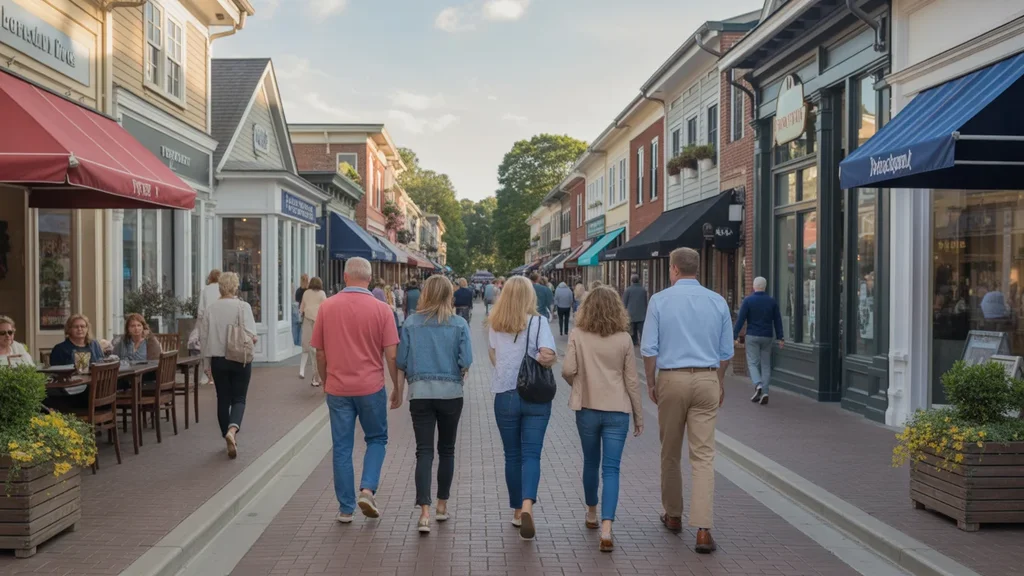
Tax and fee structures in Hermitage and Brentwood operate within Tennessee’s state framework, which relies heavily on sales taxes and property taxes while imposing no state income tax. Both cities benefit from this structure, but the way property taxes and local fees show up depends on housing type, ownership status, and the presence of homeowners’ associations or special service districts. Brentwood’s higher median home value of $842,400 translates into higher absolute property tax bills, even at identical millage rates, meaning homeowners face a larger annual obligation simply due to assessed value. Renters in Brentwood indirectly absorb these costs through rent levels, though the burden is less visible and more predictable month-to-month.
Hermitage’s mixed housing stock—apartments, townhomes, and single-family homes—creates more variability in how taxes and fees accumulate. Apartment renters face minimal direct exposure to property taxes or HOA fees, while townhome owners may encounter monthly HOA assessments that bundle services like landscaping, trash, or exterior maintenance. Single-family homeowners in Hermitage experience property tax obligations tied to assessed values that are typically lower than Brentwood’s, though older homes may face higher maintenance costs that offset some of the tax savings. The key difference is predictability: Brentwood’s property tax burden is higher but more stable, while Hermitage’s fee structure varies more by housing type and neighborhood.
Recurring fees—trash collection, water, sewer, and stormwater management—often appear as separate line items in both cities, though some neighborhoods bundle these into HOA dues or municipal service fees. Brentwood’s established infrastructure and mature neighborhoods mean fewer surprise assessments for road repairs or utility upgrades, but HOA fees in planned communities can range widely depending on amenities. Hermitage’s older infrastructure and mixed development patterns mean some neighborhoods face periodic special assessments for infrastructure improvements, though these are less common in apartment-heavy areas where landlords absorb such costs.
Tax and fee takeaway: Brentwood homeowners face higher absolute property tax obligations due to elevated home values, but the cost structure is predictable and tied to stable residential neighborhoods. Hermitage offers more variability, with lower property tax exposure for homeowners but more dependence on housing type and HOA presence for determining total fee burden. Renters in both cities experience taxes and fees indirectly, though Hermitage’s apartment-heavy stock reduces direct exposure to HOA assessments and property tax volatility.
Transportation & Commute Reality
Transportation cost structure in Hermitage and Brentwood hinges less on fuel prices alone and more on how car dependency, transit access, and commute patterns interact with daily logistics. Hermitage benefits from rail transit service, a rare asset in suburban Nashville that provides a viable alternative to driving for commuters heading into downtown or other transit-connected employment centers. This access reduces the non-negotiable need for a second vehicle in dual-income households and offers a hedge against fuel price volatility. Brentwood lacks rail service, meaning households rely almost entirely on personal vehicles for commuting, errands, and school runs.
Fuel prices show a modest difference, with Hermitage at $2.95 per gallon and Brentwood at $2.48 per gallon. For households driving 25 miles round-trip daily at 25 MPG, this translates to a small but consistent difference in weekly fuel spending. However, the larger cost driver is not the per-gallon price but the total miles driven and the number of vehicles required. Brentwood’s sparse grocery density and lack of transit options mean households make more trips by car, often requiring two vehicles for families where both adults work or where school and activity schedules don’t align. Hermitage’s corridor-clustered errands and walkable pockets reduce the frequency of short car trips, and rail access allows some households to function with one vehicle instead of two.
The time cost of commuting also differs structurally. Hermitage’s rail service provides predictable travel times and eliminates parking costs for downtown commuters, though it requires proximity to a station and alignment with transit schedules. Brentwood commuters face more variability depending on traffic patterns, highway access, and the specific employment location within the metro. Households with flexible schedules or remote work arrangements feel this difference less acutely, while those with fixed office hours or multiple daily trips experience Brentwood’s car dependency as a persistent friction cost—not just in fuel, but in time, vehicle wear, and the logistical complexity of coordinating multiple drivers.
Transportation takeaway: Hermitage’s rail transit access and corridor-clustered errands reduce car dependency and support households that can function with one vehicle or prefer predictable commute times. Brentwood’s lack of transit and sparse errand density increase reliance on personal vehicles, making it a better fit for households that prioritize residential spaciousness and are willing to absorb higher driving frequency and the need for multiple cars. The cost difference is less about fuel prices and more about how many vehicles a household needs and how much time they spend managing transportation logistics.
Cost Structure Comparison
Housing pressure dominates the cost experience in Brentwood, where the median home value of $842,400 and median rent of $2,459 per month create a steep entry threshold that shapes every other financial decision. Once that threshold is met, costs become more predictable—property taxes are stable, neighborhoods are established, and infrastructure is mature. Hermitage distributes cost pressure differently, with lower housing entry barriers but more variability in housing type, age, and neighborhood walkability. The tradeoff is flexibility: Hermitage households face less upfront financial strain but more ongoing decision-making about where to live and how to manage daily logistics.
Utilities introduce more volatility in Brentwood, where natural gas prices at $20.33 per MCF create pronounced heating cost exposure during winter months. Larger homes amplify this effect, turning seasonal temperature swings into significant budget variability. Hermitage’s lower natural gas rate of $11.31 per MCF and smaller average unit sizes reduce this exposure, making utility costs more predictable for households in apartments or townhomes. The difference is most acute for families in older single-family homes, where heating costs can swing sharply depending on insulation quality and square footage.
Transportation patterns matter more in Hermitage, where rail transit access and corridor-clustered errands reduce the non-negotiable need for multiple vehicles. Brentwood’s car dependency is near-total, meaning households absorb not just fuel costs but the logistical complexity of coordinating multiple drivers, managing vehicle maintenance, and spending more time on errands. For households sensitive to time costs or those trying to minimize vehicle ownership, Hermitage’s transit access and denser errand network provide meaningful relief. For households that prioritize residential spaciousness and are less constrained by commute schedules, Brentwood’s car-dependent structure is less of a burden.
Daily living costs—groceries, dining, convenience spending—reflect access density more than price differences. Hermitage’s corridor-clustered grocery options support households that value comparison-shopping and quick access to multiple store formats. Brentwood’s sparse grocery landscape increases driving time and reduces flexibility, making it a better fit for households that batch errands and prioritize residential character over errand convenience. Neither city is universally cheaper for groceries; the difference is how much time and fuel households spend managing daily purchases.
The decision between Hermitage and Brentwood is not about which city costs less overall, but about which cost structure aligns with a household’s financial sensitivities and lifestyle priorities. Households sensitive to upfront housing costs, utility volatility, or car dependency may prefer Hermitage’s lower entry barriers, transit access, and denser errand network. Households that can absorb higher housing costs in exchange for residential spaciousness, established neighborhoods, and predictable property taxes may find Brentwood a better fit, provided they’re willing to manage higher heating exposure and near-total car reliance.
How the Same Income Feels in Hermitage vs Brentwood
Single Adult
For a single adult, housing becomes the first non-negotiable cost, and in Brentwood that means absorbing a median rent of $2,459 per month before any other expenses enter the picture. Flexibility disappears quickly when housing consumes such a large share of income, leaving little room for savings, discretionary spending, or unexpected costs. In Hermitage, lower housing entry barriers and access to rail transit reduce the pressure to own a car, creating more breathing room for other priorities. The commute becomes more predictable, and the ability to walk or bike for errands reduces the friction cost of daily logistics. Brentwood’s car dependency means a single adult must budget for vehicle ownership, fuel, insurance, and maintenance, all of which compound the upfront housing burden.
Dual-Income Couple
A dual-income couple faces a different calculus, where the ability to split housing costs makes Brentwood’s higher rent or mortgage more manageable, but the need for two vehicles becomes harder to avoid. In Brentwood, sparse grocery density and lack of transit mean both partners likely need cars, especially if work locations don’t align or if schedules require independent mobility. Hermitage’s rail access allows one partner to commute without a car, reducing the household’s total vehicle ownership burden and freeing up income for other priorities. Heating costs in Brentwood’s larger homes create more seasonal volatility, while Hermitage’s smaller units and lower natural gas rates keep utility bills more predictable. The couple’s flexibility depends less on total income and more on whether they prioritize residential space or logistical simplicity.
Family with Kids
For a family with children, non-negotiable costs expand rapidly to include school access, healthcare proximity, and the logistical complexity of managing multiple schedules. Brentwood’s higher housing costs buy access to established neighborhoods and mature infrastructure, but the family must also absorb higher heating exposure in larger homes and the near-certainty of needing two vehicles for school runs, activities, and errands. Hermitage offers lower housing entry barriers and hospital access, but families must navigate more variability in school density and playground availability. The time cost of commuting and errands becomes more acute for families, where Brentwood’s car dependency increases the hours spent coordinating logistics, while Hermitage’s transit access and corridor-clustered errands reduce some of that friction. Flexibility for a family depends on whether they can absorb upfront housing costs in exchange for residential stability, or whether they need to preserve flexibility by minimizing vehicle ownership and utility volatility.
Decision Matrix: Which City Fits Which Household?
| Decision factor | If you’re sensitive to this… | Hermitage tends to fit when… | Brentwood tends to fit when… |
|---|---|---|---|
| Housing entry + space needs | Upfront costs, down payments, first month’s rent, or flexibility in housing type | You need lower entry barriers, mixed housing options, and can trade space for access | You can meet high entry thresholds and prioritize established neighborhoods with larger homes |
| Transportation dependence + commute friction | Vehicle ownership costs, commute predictability, or time spent driving | You value rail transit access, can function with one vehicle, or prioritize walkable errands | You’re comfortable with car dependency, need multiple vehicles, and prioritize residential spaciousness over transit |
| Utility variability + home size exposure | Seasonal heating costs, bill volatility, or square footage impact on energy usage | You prefer lower natural gas rates, smaller units, and more predictable seasonal bills | You can absorb higher heating exposure in larger homes and prioritize residential space over utility predictability |
| Grocery strategy + convenience spending creep | Errand time, access to multiple store formats, or comparison-shopping flexibility | You value corridor-clustered options, shorter trips, and varied grocery formats within a compact area | You’re willing to drive farther for errands, batch shopping trips, and prioritize residential character over errand density |
| Fees + friction costs (HOA, services, upkeep) | Predictability of recurring fees, property tax exposure, or hidden costs | You prefer lower property tax exposure and more variability in fee structure depending on housing type | You can absorb higher property taxes tied to home values and prioritize stable, established fee structures |
| Time budget (schedule flexibility, errands, logistics) | Hours spent coordinating transportation, managing multiple vehicles, or running errands | You need to minimize time spent on logistics, value transit predictability, and prefer denser errand access | You have schedule flexibility, can manage multiple vehicles, and prioritize residential space over logistical simplicity |
Lifestyle Fit: Access vs Residential Character
Hermitage and Brentwood offer distinct lifestyle textures shaped by transit access, errand density, and residential form. Hermitage’s rail transit service connects residents to downtown Nashville and other transit-accessible employment centers, making it a practical choice for commuters who want predictable travel times and reduced parking costs. Walkable pockets throughout the city support households that prefer to run errands on foot or by bike, and corridor-clustered grocery options mean daily necessities sit within a short drive or walk. The mixed land use—both residential and commercial detected—creates a more varied streetscape where homes, shops, and services intermingle, reducing the need for long trips to access basic amenities.
Brentwood’s appeal lies in its established residential character, where larger homes on spacious lots dominate the housing stock and neighborhoods feel more insulated from commercial activity. The lack of rail transit and sparse grocery density mean households rely almost entirely on personal vehicles, but for families prioritizing yard space, school access, and a quieter residential environment, this tradeoff feels justified. Hospital access is present in both cities, ensuring that routine and emergency healthcare needs are met locally. Brentwood’s mature infrastructure and stable neighborhoods attract households seeking long-term residential stability, while Hermitage’s transit connectivity and denser errand network appeal to those who value access and logistical flexibility over residential spaciousness.
Outdoor access and family infrastructure show moderate availability in both cities. Hermitage’s park density sits in the medium band, with water features present that add to the outdoor environment. Brentwood similarly shows medium park density and water features, suggesting both cities offer green space without being dominated by it. School density in Hermitage reaches the medium band, while playground density falls below the low threshold, indicating that family amenities are present but not abundant. Brentwood shows lower school density but medium playground density, reflecting a different distribution of family-oriented infrastructure. Neither city stands out as exceptionally family-focused, but both provide baseline access to schools, parks, and healthcare.
Rail transit in Hermitage reduces the need for a second vehicle in dual-income households. Brentwood’s median home value of $842,400 reflects an established, low-turnover housing market.
Frequently Asked Questions
Is Hermitage or Brentwood better for renters trying to keep housing costs manageable in 2026?
Hermitage offers more flexibility for renters due to lower housing entry barriers and a mixed housing stock that includes apartments and townhomes, reducing the upfront financial strain. Brentwood’s median rent of $2,459 per month creates a steep threshold that dominates the monthly budget, leaving less room for other expenses. Renters sensitive to upfront costs or those who value transit access and walkable errands tend to find more breathing room in Hermitage, while those prioritizing established residential neighborhoods and larger rental units may justify Brentwood’s higher rent if they can meet the entry threshold.
How do heating costs in Hermitage and Brentwood compare during winter months in 2026?
Brentwood’s natural gas rate of $20.33 per MCF creates significantly higher heating cost exposure compared to Hermitage’s rate of $11.31 per MCF, meaning households in Brentwood face nearly double the per-unit cost for heating. This difference compounds in larger homes or older housing stock with less efficient insulation, making Brentwood’s heating season more volatile for families. Hermitage households, especially those in smaller units or apartments, experience lower absolute heating costs and more predictable seasonal bills, making it a better fit for those sensitive to utility volatility.
Which city requires more driving for groceries and daily errands in 2026?
Brentwood’s sparse grocery density means households drive farther and more frequently to access food and daily necessities, with fewer opportunities to comparison-shop or switch between store formats. Hermitage’s corridor-clustered grocery options reduce driving time and support households that value quick access to multiple store types within a compact area. The difference is structural—Brentwood households spend more time managing errands by car, while Hermitage households benefit from denser access that reduces the logistical overhead of daily shopping.
Can a household in Hermitage or Brentwood function with one vehicle in 2026?
Hermitage’s rail transit access makes it more feasible for dual-income households to function with one vehicle, especially if one partner commutes to a transit-connected employment center. Brentwood’s lack of transit and sparse errand density mean most households require two vehicles, particularly families managing school runs, activities, and errands across different locations. Single adults or couples without children may manage with one vehicle in Brentwood if work-from-home arrangements reduce commute frequency, but the logistical friction is higher compared to Hermitage’s transit-supported mobility options.
How do property taxes and fees differ between Hermitage and Brentwood in 2026?
Brentwood homeowners face higher absolute property tax obligations due to the median home value of $842,400, even at identical millage rates, meaning the annual tax burden is larger simply due to assessed value. Hermitage offers more variability, with lower property tax exposure for homeowners but more dependence on housing type and HOA presence for determining total fee burden. Renters in both cities experience taxes an