
Is Hemet the kind of place you grow roots—or just pass through? The answer depends less on what the city offers and more on what you’re leaving behind—or running toward. Hemet sits in the San Jacinto Valley, about 90 minutes east of Los Angeles and an hour from both Riverside and Palm Springs. It’s a place where housing costs drop, yards expand, and the pace slows. But that shift comes with tradeoffs: fewer walkable errands, longer drives for work and entertainment, and a community character shaped heavily by retirees and families seeking affordability over amenity density.
For some, Hemet feels like relief—a chance to own a home, enjoy space, and step off the treadmill of coastal California expense. For others, it feels like isolation—a place where convenience requires planning, spontaneity requires a tank of gas, and social life requires intentional effort. The city’s vibe isn’t about whether it’s “good” or “bad.” It’s about whether the tradeoffs match what you need right now.
The Emotional Landscape of Hemet
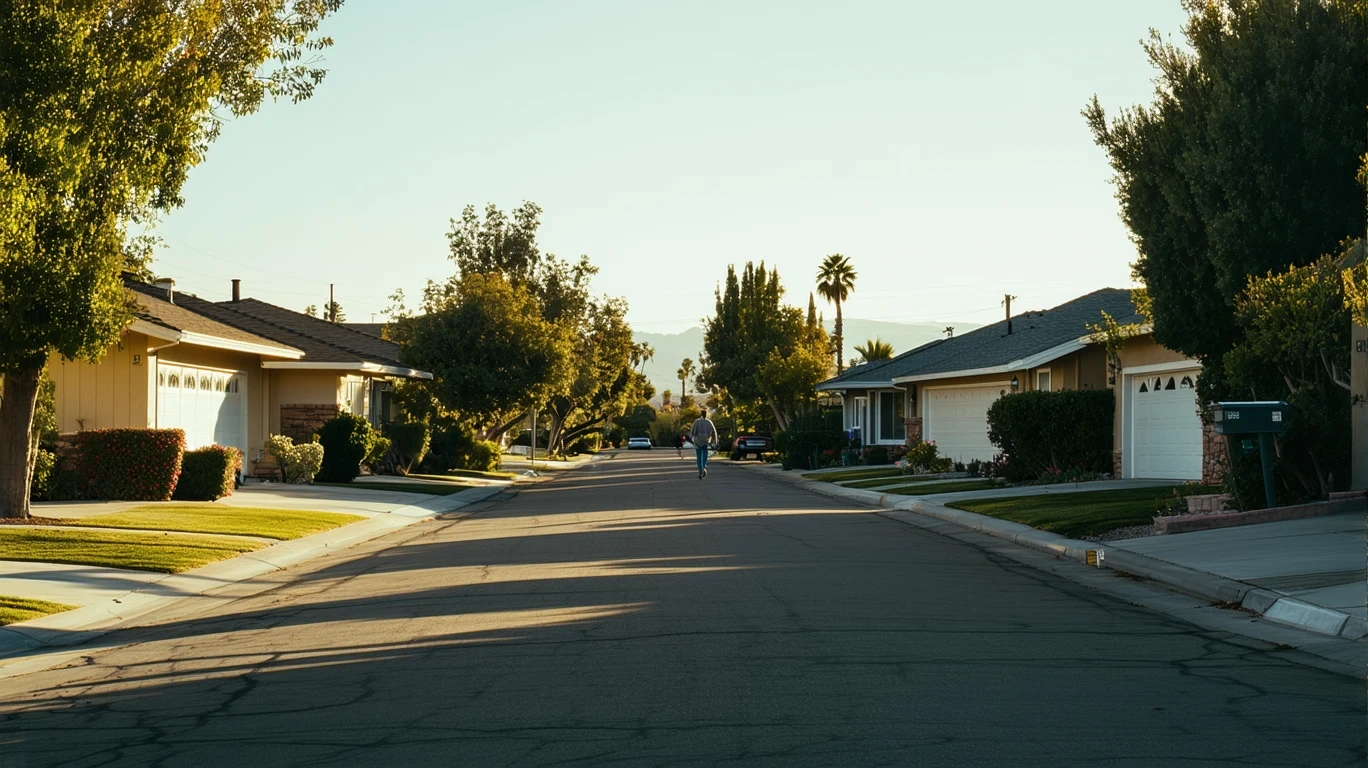
Hemet’s emotional tone is defined by contrast. People who arrive from pricier metros often describe a sense of breathing room—not just in square footage, but in financial pressure. The ability to afford a house with a yard, to park easily, to move through daily life without constant friction, registers as a meaningful quality-of-life upgrade. There’s pride in the natural setting: mountain views, access to parks, proximity to hiking and open space. For retirees and families prioritizing stability over stimulation, Hemet delivers.
But that same spaciousness can feel like emptiness to those who crave density, variety, and spontaneity. The city’s car-oriented layout means most errands require driving, and while grocery stores and essential services cluster along main corridors, the experience lacks the texture of walkable neighborhoods. Public transit exists in the form of bus service, but it’s not a practical substitute for car ownership. For young professionals, remote workers tied to urban social networks, or anyone who thrives on cultural programming and nightlife, Hemet can feel like a place that requires you to leave in order to fully live.
The recurring emotional tension isn’t about dissatisfaction—it’s about expectation alignment. People who wanted exactly what Hemet offers tend to feel content. People who hoped it might also offer what it doesn’t tend to feel restless.
What People Talk About Online
In local Facebook groups and broader Inland Empire discussions, Hemet’s name tends to surface in conversations about affordability, commute tradeoffs, and the search for “somewhere quieter.” The tone is rarely celebratory, but it’s also rarely bitter—it’s pragmatic. People weigh what they’re gaining against what they’re giving up, and the calculus varies widely depending on life stage and income.
“We moved here because we could finally afford a house. It’s not exciting, but it’s ours, and that matters more than we thought it would.”
“If you work remotely, Hemet makes sense. If you commute to Riverside or farther, you’ll spend your life in the car and wonder why you bothered.”
“It’s a retirement town. If you’re under 40 and not raising kids, you’re going to feel that pretty quickly.”
Discussions about amenities tend to focus on what’s missing rather than what’s present: limited dining variety, few entertainment venues, sparse nightlife. But there’s also acknowledgment that for households prioritizing outdoor recreation over urban texture, the tradeoff works. The city’s parks, nearby trails, and access to natural areas earn consistent appreciation, especially from families and retirees who value green space more than walkable commercial districts.
How Local Coverage Frames the City
Local news coverage and community-focused outlets tend to frame Hemet through the lens of change, growth, and identity negotiation. The city is neither booming nor stagnant—it’s adjusting. Headlines and story themes reflect ongoing conversations about what kind of place Hemet is becoming, and whether that evolution serves long-time residents or newcomers differently.
- “Community Debates What Growth Should Look Like”
- “New Retail Arrives as Town Identity Shifts”
- “Residents Weigh Affordability Against Amenity Access”
- “Outdoor Recreation Remains Draw for Families”
- “Commute Times Shape Housing Decisions”
The tone is rarely celebratory or crisis-driven. Instead, it reflects a community in transition—one where housing affordability attracts new residents, but infrastructure, services, and cultural programming haven’t kept pace with that growth. The result is a city that feels functional but incomplete, practical but not particularly vibrant.
Review-Based Public Perception
On platforms like Google Reviews, Yelp, and Nextdoor-style community boards, Hemet’s public perception splits along predictable lines. People who wanted suburban affordability and succeeded in finding it tend to express quiet satisfaction. People who hoped for more—walkability, dining variety, cultural texture—tend to express mild disappointment, though rarely outrage.
Positive sentiment clusters around:
- Housing affordability relative to coastal and central Inland Empire markets
- Access to parks, trails, and outdoor recreation
- Ease of parking and low day-to-day congestion
- Family-friendly neighborhoods with schools and playgrounds
Critical sentiment clusters around:
- Limited dining and entertainment options
- Car dependency for nearly all errands and activities
- Long commutes for those working in Riverside, Orange County, or LA metro
- Perception of limited social and cultural programming for younger adults
Neighborhood variation exists, though it’s often described in broad terms: newer planned developments versus older pockets, areas closer to commercial corridors versus more isolated residential streets. The differences tend to be about age of housing stock and proximity to services, not dramatic shifts in character or walkability.
Comparison to Nearby Cities
| Aspect | Hemet | San Jacinto | Menifee |
|---|---|---|---|
| Overall Vibe | Quiet, affordable, car-dependent, retirement-leaning | Similar affordability, slightly smaller, more rural feel | Newer growth, more family-oriented, slightly more amenities |
| Walkability | Low; errands require driving | Low; even more car-dependent | Low to moderate in newer areas |
| Dining & Entertainment | Limited variety, chain-focused | Very limited | Growing, but still suburban-standard |
| Commute Burden | High for Riverside/OC/LA workers | High, similar to Hemet | Moderate; closer to I-215 corridor |
| Outdoor Access | Strong; parks and trails integrated | Strong; more open space nearby | Moderate; newer parks, less mature landscape |
Hemet, San Jacinto, and Menifee all occupy the same affordability-driven suburban tier, but they differ in texture and trajectory. San Jacinto feels quieter and more rural, with even fewer amenities but similar access to outdoor space. Menifee skews younger and more family-oriented, with newer housing developments and slightly better access to commercial corridors and freeway connections. Hemet sits in the middle: more established than Menifee, more amenity-rich than San Jacinto, but still defined by the same core tradeoff—affordability and space in exchange for convenience and variety.
If you prioritize outdoor recreation and don’t mind driving for everything else, all three work. If you need shorter commutes or more dining options, Menifee edges ahead. If you want the lowest cost and the most isolation, San Jacinto delivers. Hemet is the compromise: not the cheapest, not the most connected, but functional for households who know exactly what they’re optimizing for.
What Locals Are Saying
“We retired here five years ago and haven’t regretted it. The cost of living is manageable, the weather is great, and we’re close enough to Palm Springs when we want a night out. It’s not flashy, but we’re not looking for flashy.”
“I work remotely and moved here from Orange County. The housing tradeoffs made sense on paper, but socially it’s been harder than I expected. There’s just not much happening unless you drive somewhere else.”
“For families with kids, Hemet works. The schools are fine, there are parks, and you can actually afford a house with a yard. But if you’re commuting to Riverside every day, that’s two hours of your life gone.”
“It’s a sleepy town. If you’re okay with that, you’ll be fine. If you’re expecting culture, nightlife, or walkable neighborhoods, you’re going to be disappointed.”
“The outdoor access is underrated. We’re near trails, the views are beautiful, and it’s easy to get out and do things. You just have to be the kind of person who wants to do those things.”
“Hemet gets a bad reputation, but honestly, it’s just a normal suburban town. It’s not fancy, but it’s not falling apart either. It’s just… there.”
“If you don’t have a car, you’re stuck. There’s no getting around that. Everything requires driving, and the bus system isn’t going to change that.”
The Day-to-Day Reality of Getting Around
Hemet’s layout reflects a car-first design, and that shapes daily life in ways that aren’t always obvious until you’re living it. Pedestrian infrastructure exists, but it’s sparse relative to the road network, and the ratio makes walking feel like an afterthought rather than a practical choice. Grocery stores, pharmacies, and essential services cluster along main corridors, which means access exists—but it’s access by car, not by foot or bike.
For households accustomed to running quick errands on foot or grabbing dinner without planning ahead, this creates friction. The city isn’t designed for spontaneity. You don’t “pop out” for something; you drive, park, complete the task, and drive home. For retirees and families who already plan their weeks around driving, this feels normal. For younger adults, remote workers, or anyone used to denser, more walkable environments, it can feel isolating.
Bus service exists, but it functions as a supplemental option rather than a core mobility system. For households without reliable car access, this limits job opportunities, social participation, and access to services outside the immediate area. The city’s structure assumes car ownership, and what makes life feel tight often comes down to whether that assumption holds true for your household.
Parks and outdoor spaces, by contrast, are well-distributed and accessible, which matters for families and outdoor-oriented households. The city’s green space density exceeds typical suburban thresholds, and water features add to the sense of natural integration. For households prioritizing outdoor recreation over urban walkability, this is where Hemet delivers. But it doesn’t change the fact that getting to those parks—or anywhere else—still requires a car.
How this article was built: In addition to public economic data, this article incorporates location-based experiential signals derived from anonymized geographic patterns—such as access density, walkability, and land-use mix—to reflect how day-to-day living actually feels in Hemet, CA.
Does Hemet Feel Like a Good Fit?
Hemet doesn’t ask you to love it. It asks you to know what you need and whether this city provides it. For retirees seeking affordability, space, and outdoor access without the pressure of urban density, Hemet tends to work. For families willing to trade walkability and variety for lower monthly expenses and more square footage, the tradeoff often makes sense. For remote workers who don’t need to commute and who value natural surroundings over nightlife, the city can feel like a practical, low-friction choice.
But for young professionals, commuters to Riverside or beyond, or anyone who thrives on cultural programming, dining variety, and walkable neighborhoods, Hemet is more likely to feel like a compromise than a fit. The city’s structure rewards those who already know they want suburban quiet and car-dependent living. It frustrates those who hoped it might also offer urban convenience or social texture.
The question isn’t whether Hemet is happy. The question is whether the life it supports matches the life you’re trying to build. If it does, the city works. If it doesn’t, no amount of affordability will make the friction disappear.
The perspectives shown reflect commonly expressed local sentiment and recurring themes in public discussion, rather than individual accounts.