
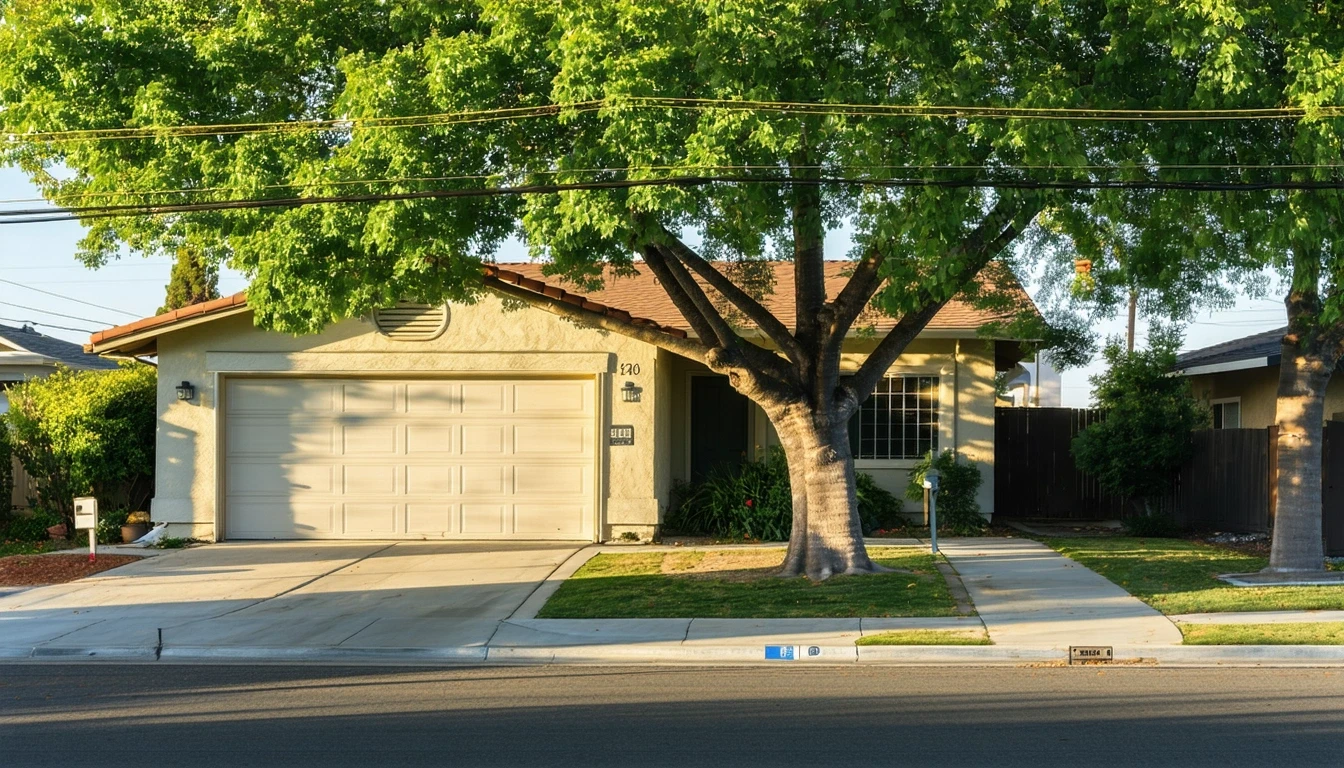
Apartment vs House in Hemet — Monthly Cost Behavior Comparison
The table below isolates cost categories that behave differently in Hemet depending on housing type. Omitted categories either don’t vary meaningfully by type in this market or lack local data to justify inclusion.
| Expense Category | Apartment | House |
|---|---|---|
| Base Housing Cost | Median gross rent $1,357/month (often includes water/trash) | Mortgage varies by down payment and rate; property taxes and insurance paid separately |
| Cooling (Summer) | Smaller footprint and shared walls reduce cooling load; electricity at 34.71¢/kWh | Larger square footage and standalone structure increase AC runtime during extended heat; same rate, higher usage |
| Heating (Winter) | Minimal exposure; shared walls and mild winters limit gas usage | Standalone homes lose more heat on rare cold nights; natural gas at $23.78/MCF |
| Yard & Exterior Maintenance | None; landlord or HOA handles landscaping and exterior repairs | Ongoing obligation; desert-adapted landscaping reduces water costs but requires upkeep or service expense |
| Driving & Parking Access | Assigned or shared parking; errands require driving to corridor-clustered grocery and services | Private driveway/garage; same car dependency for errands but more storage and vehicle flexibility |
Why these categories: Hemet’s car-oriented layout and hot, dry summers make cooling and vehicle access the primary differentiators. Walkable errand access doesn’t vary by housing type here—both require driving to reach grocery density along commercial corridors. Categories like internet, trash, or HOA fees were excluded because they vary more by landlord or neighborhood than by apartment vs house structure in this market.
—
The Housing Market in Hemet Today
Hemet sits in the Inland Empire, far enough from coastal job centers that housing pressure follows a different pattern than metro cores. The median home value of $277,200 reflects a market shaped by retirees, commuters willing to trade distance for space, and families priced out of Riverside or Orange County. What newcomers often misunderstand is that the lower entry cost doesn’t eliminate financial pressure—it shifts it. Ownership here means absorbing summer cooling bills, maintaining standalone structures in dry heat, and depending entirely on cars for daily logistics. The unemployment rate of 5.3% signals a local economy that doesn’t generate dense job clusters, so many buyers here are either remote workers or long-distance commuters.
Hemet’s housing stock skews toward single-family homes on larger lots, with mixed building heights and both residential and commercial land use present throughout the city. This isn’t a walkable grid—it’s a car-oriented suburb where errands funnel toward specific corridors. That structure holds prices down but raises operating costs in ways that don’t show up in list prices or rent ads.
—
Renting in Hemet
Median gross rent of $1,357 per month positions Hemet below coastal comparables but still creates meaningful pressure against the local median household income of $49,901 per year. Renters here face a market where most apartment complexes cluster near commercial corridors rather than distributing evenly across neighborhoods. That clustering reflects the car dependency baked into Hemet’s layout—pedestrian infrastructure is minimal, and bus service exists but doesn’t replace the need for a vehicle.
Rental stock in Hemet tends to include water, trash, and sometimes gas in gross rent, which simplifies budgeting but doesn’t eliminate utility exposure. Summer cooling costs still fall to tenants, and at 34.71¢/kWh, electricity becomes a noticeable line item during extended heat. Renters also inherit the limitations of Hemet’s structure: errands require planning and driving, spontaneous walkable trips aren’t viable, and access to parks (which are well-integrated) still depends on a car for most residents.
The rental experience here rewards those who already own a reliable vehicle and can absorb seasonal utility swings. It punishes those who assumed lower rent would offset transportation or cooling costs.
—
Owning a Home in Hemet
The $277,200 median home value makes ownership accessible compared to metro cores, but the cost behavior shifts entirely once you close. Homeowners in Hemet absorb property taxes, insurance, and maintenance on standalone structures exposed to dry heat, occasional wind, and temperature swings that stress roofing, HVAC, and landscaping. Property tax rates aren’t provided in the available data, but owners should expect assessments to rise over time as the city adjusts to infrastructure needs and state-level policy changes.
Cooling dominates the ownership cost profile. Standalone homes here run air conditioning from late spring through early fall, and larger square footage means higher runtime. Heating exposure is minor—rare cold nights require minimal natural gas usage—but summer electricity bills create a seasonal cost spike that renters in smaller units avoid. Exterior maintenance is another ownership-specific exposure: desert-adapted landscaping reduces water use but still requires either labor or service contracts, and stucco, tile roofing, and aging HVAC systems all demand periodic investment.
Homeownership in Hemet also means navigating governance variability. Some neighborhoods operate under HOAs that bundle landscaping or exterior rules; others leave all decisions and costs to the owner. That variability makes pre-purchase research critical—two identical homes can have very different cost trajectories depending on HOA structure and enforcement.
—
Utilities & Upkeep Differences
Utility exposure in Hemet is driven almost entirely by cooling intensity. Summer heat is the dominant cost factor, and housing type determines how much of that exposure you absorb. Apartments benefit from shared walls and smaller footprints, which reduce the cooling load even at the same electricity rate. Houses, especially older or poorly insulated ones, run AC longer and harder to maintain comfort during triple-digit afternoons.
Heating costs remain minor across both housing types. Winters here are mild, and natural gas usage at $23.78/MCF stays low except on rare freezing nights. Water costs vary more by landscaping choices than housing type—apartments typically bundle water into rent, while homeowners pay directly and face pressure to minimize outdoor irrigation in a desert climate.
Maintenance exposure is where houses diverge sharply. Renters offload all structural upkeep to landlords. Homeowners inherit responsibility for HVAC servicing, roof integrity, and exterior paint in an environment where sun and heat accelerate wear. These aren’t catastrophic costs, but they’re persistent and non-negotiable. The age of Hemet’s housing stock means many homes are approaching or past the point where major systems need replacement, and that timing risk falls entirely on owners.
—
Rent vs Buy: Long-Term Exposure in Hemet
Renting in Hemet offers predictability within each lease term but no control over renewal increases or landlord decisions. Rent can rise at renewal, and tenants have no hedge against those changes beyond moving. Ownership inverts that tradeoff: monthly housing costs become more predictable if you lock a fixed-rate mortgage, but you absorb all volatility in taxes, insurance, and maintenance. Over time, those ownership costs tend to rise, driven by aging systems, policy changes, and infrastructure assessments.
The long-term case for ownership in Hemet depends on how long you stay and whether you value control over cost stability. Owners gain the ability to make efficiency upgrades, lock in financing, and avoid displacement risk. They also accept exposure to market downturns, deferred maintenance consequences, and the reality that Hemet’s car-dependent layout makes resale dependent on buyers willing to commute or work remotely.
Renters avoid those risks but remain subject to a landlord’s timeline and a market where monthly expenses can shift suddenly at lease end. Neither path eliminates financial pressure in a city where median income sits below $50,000 and operating costs—gas at $5.51/gal, summer electricity, vehicle maintenance—run higher than the housing sticker price suggests.
—
FAQs About Housing Costs in Hemet
Is $277,200 considered affordable for a home in Hemet, CA?
Affordability depends on income, not just price. At $49,901 median household income, a $277,200 home creates financial pressure even if it’s lower than coastal markets. Ownership costs beyond the mortgage—taxes, insurance, cooling, maintenance—add up quickly in Hemet’s climate and car-dependent layout.
How much does summer heat affect utility bills in Hemet homes?
Summer heat is the dominant utility cost driver. Electricity at 34.71¢/kWh means extended cooling seasons create noticeable bills, especially in standalone houses with larger square footage. Apartments with shared walls and smaller footprints see lower usage, but no housing type avoids the exposure entirely.
Do most rentals in Hemet include utilities?
Median gross rent of $1,357/month often includes water, trash, and sometimes gas, but electricity typically falls to the tenant. That means renters still absorb summer cooling costs, which vary by unit size, insulation, and personal comfort preferences.
What makes Hemet different from other Inland Empire cities for homebuyers?
Hemet’s distance from job centers and car-oriented layout create a market where home prices stay lower but operating costs—gas, vehicle maintenance, cooling—run higher. It’s a tradeoff that works for remote workers and retirees but punishes daily commuters who underestimate transportation and time costs.
Should I rent or buy in Hemet if I’m planning to stay five years?
Five years is long enough to justify ownership if you can handle maintenance exposure and accept that resale depends on finding another buyer willing to absorb Hemet’s commute and car-dependency tradeoffs. Renting makes sense if you value flexibility or can’t absorb the upfront and ongoing costs of ownership in a hot, car-reliant market.
—
Making Housing Choices in Hemet
Housing costs in Hemet follow a clear pattern: entry prices stay accessible, but operating costs and car dependency shift the financial pressure away from rent or mortgage and toward utilities, transportation, and time. Renters gain simplicity and avoid maintenance risk but remain exposed to renewal increases and a market where walkable alternatives don’t exist. Owners gain control and long-term predictability but absorb cooling costs, exterior upkeep, and the structural reality that Hemet’s layout requires a vehicle for every household member who needs independent mobility.
The city’s car-oriented design, integrated parks, and corridor-clustered grocery access mean that housing type matters less for daily logistics than vehicle access and tolerance for driving. Families, retirees, and remote workers fit best here if they accept that convenience costs more in time and gas than the housing sticker price suggests. For more detail on how these costs interact across categories, see monthly spending patterns and overall affordability in Hemet. If you’re planning a move and weighing logistics, pods vs trucks can help clarify your options.
How this article was built: In addition to public economic data, this article incorporates location-based experiential signals derived from anonymized geographic patterns—such as access density, walkability, and land-use mix—to reflect how day-to-day living actually feels in Hemet, CA.