
“It’s not quite small-town anymore, but it’s not trying to be Atlanta either — and honestly, that’s exactly what some of us want.” That sentiment captures much of what defines life in Fayetteville, GA: a city caught between identities, where the emotional experience depends heavily on what you came here looking for.
The Emotional Landscape of Fayetteville
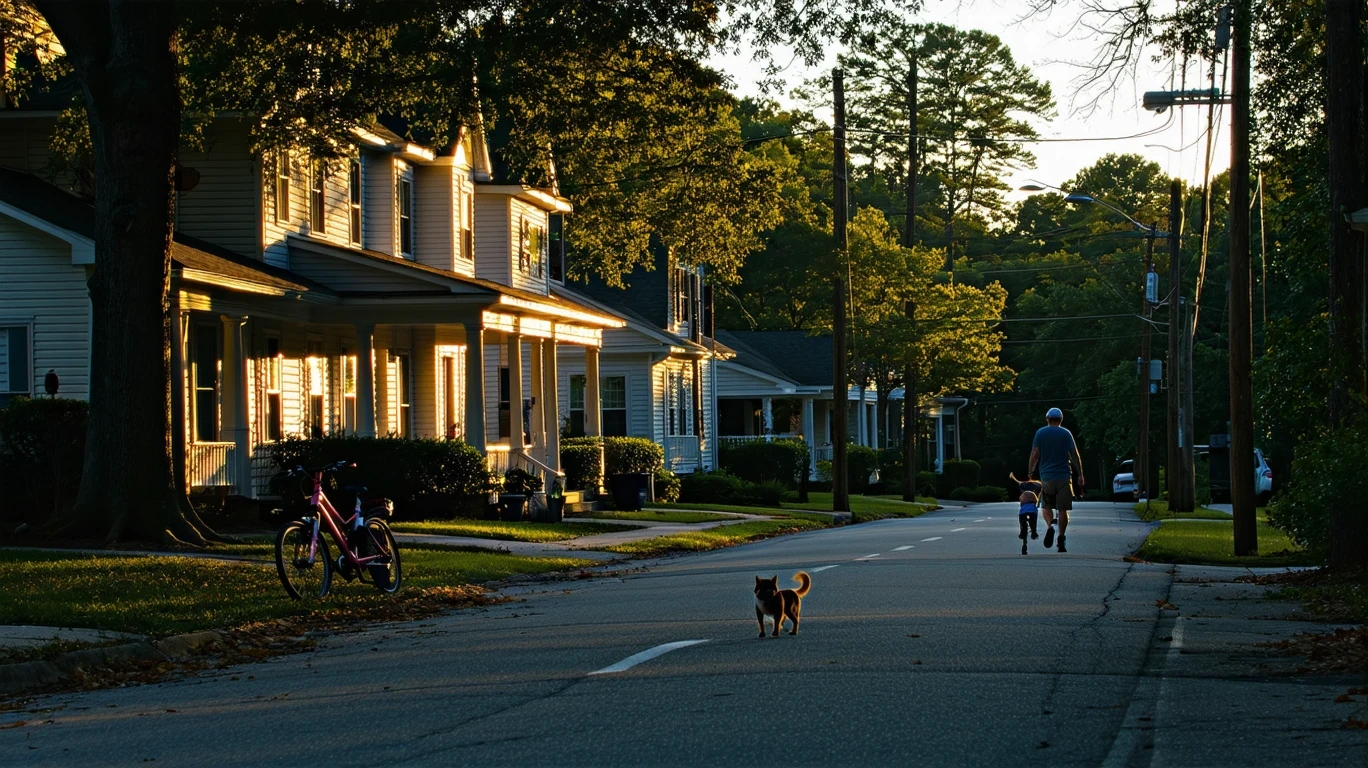
Fayetteville sits in a peculiar sweet spot — close enough to Atlanta to feel its gravitational pull, far enough to maintain breathing room. For people seeking suburban predictability with hospital access and moderate home prices, this place tends to deliver comfort without much fuss. The structure of daily life here reflects that: grocery stores cluster along main corridors, schools operate at steady density, and the low-rise building character keeps the visual scale manageable.
But that same structure creates friction for households expecting walkable spontaneity or dense neighborhood texture. Because errands and amenities concentrate in specific zones rather than spreading evenly, getting through the day often means driving between distinct destinations rather than strolling through mixed-use blocks. Pedestrian infrastructure exists in pockets, but the overall ratio of sidewalks to roads sits in a middle band — enough to support some walking, not enough to eliminate car dependency.
The tradeoff that keeps surfacing emotionally: Fayetteville rewards people who value stability and space over variety and immediacy. If your idea of a good Saturday involves a quiet yard, a short drive to familiar stores, and reliable access to medical care, this city tends to feel like it fits. If you crave walkable coffee shops, late-night options, or the ability to run daily errands on foot, the friction becomes harder to ignore.
What People Talk About Online
Public discussion in Fayetteville — across neighborhood groups, local forums, and social media — tends to circle around a few recurring emotional themes: growth anxiety, convenience gratitude, and identity negotiation.
“I moved here because it felt manageable. Now I’m watching it turn into everywhere else.”
“We’ve got what we need without the chaos. That’s worth protecting.”
“It’s fine if you don’t expect much beyond the basics. Just don’t come here looking for culture.”
The tone isn’t angry, but it’s watchful. Long-time residents express protectiveness over the pace and scale of the place, while newer arrivals often defend the conveniences that drew them here. The tension isn’t about whether Fayetteville is “good” — it’s about what kind of place it should become, and whether growth will erase the qualities people moved here to find.
How Local Coverage Frames the City
Local news and community coverage tend to frame Fayetteville through the lens of transition and negotiation. Headlines and story angles often reflect these recurring themes:
- “New Development Brings Amenities, Raises Questions About Character”
- “Residents Weigh Convenience Against Quiet”
- “Schools Steady as Enrollment Shifts”
- “Hospital Expansion Reflects Growing Demand”
- “Community Debates What Walkability Should Look Like”
The framing rarely declares victory or crisis. Instead, it reflects a city processing change in real time — aware that proximity to Atlanta brings both opportunity and pressure, and uncertain about how much transformation feels right.
What Reviews and Public Feedback Reveal
On platforms where people rate their experience living here, the feedback splits predictably along expectation lines. Households who wanted suburban ease tend to praise exactly what walkability-focused movers find limiting.
Positive sentiment clusters around: reliable grocery access along main roads, hospital presence, parks that feel maintained, and housing stock that doesn’t require urban-level income. The recurring phrase is “it works” — not thrilling, but functional and predictable.
Critical sentiment focuses on: car dependency for nearly every errand, limited playground infrastructure for families with young children, lack of spontaneous dining or entertainment options, and a sense that the city serves as a pass-through rather than a destination. One common frustration: “Everything’s fifteen minutes away by car, nothing’s five minutes away on foot.”
Newer planned areas tend to get described as clean and convenient but visually repetitive, while older pockets earn mentions for character but sometimes feel disconnected from newer retail clusters. The city doesn’t inspire strong dislike — it inspires mild restlessness in people who expected more texture, and mild contentment in people who wanted less intensity.
How Fayetteville Compares to Nearby Cities
| Dimension | Fayetteville | Peachtree City | Newnan |
|---|---|---|---|
| Overall Vibe | Transitional suburban, identity in flux | Planned, golf-cart culture, insular | Historic downtown, more rooted identity |
| Walkability Feel | Pockets exist, mostly car-dependent | Cart paths create unique mobility | Walkable core, suburban edges |
| Errands Access | Corridor-clustered, drive between zones | Centralized retail, cart-friendly | Downtown cluster plus highway strips |
| Community Tone | Watchful, negotiating growth | Protective, lifestyle-focused | Civic pride, small-town continuity |
Fayetteville sits between Peachtree City’s planned distinctiveness and Newnan’s historic anchor. If you want a highly structured, amenity-rich environment with unique mobility options, Peachtree City offers that — but at the cost of insularity and conformity. If you want a downtown with character and civic identity, Newnan provides more of that texture. Fayetteville offers neither extreme: it’s more open-ended than Peachtree City, less defined than Newnan, and that ambiguity becomes either freedom or frustration depending on what you value.
Voices from Different Household Perspectives
“We wanted space, good schools, and a hospital nearby. Fayetteville checked all three boxes without breaking the bank. We’re not looking for nightlife.”
“It’s a great place to raise kids if you’re okay driving them everywhere. There’s just not much they can walk to on their own.”
“I work remotely and honestly, the lack of walkable coffee shops or coworking spots makes it feel isolating. I end up driving to the same chain places over and over.”
“Coming from Atlanta, this feels like a relief. Quiet streets, less traffic, and I can still get to the city when I need to.”
“I’ve been here twenty years. It’s changed a lot, but it’s still recognizable. I just hope it doesn’t turn into another crowded suburb with no personality.”
“The parks are nice, but I wish there were more playgrounds. We end up driving to neighboring towns for better options.”
“If you’re retiring and want low-key living with medical access, it’s solid. Just don’t expect much cultural variety.”
Does Fayetteville Feel Like a Good Fit?
Fayetteville doesn’t inspire passionate declarations in either direction — and that’s the most honest thing you can say about it. It tends to work well for households prioritizing housing affordability, hospital proximity, and suburban calm over walkable spontaneity or urban texture. The city’s structure rewards people who plan their days around driving between clustered destinations, and frustrates those who want errands, dining, and recreation within walking distance.
The emotional experience here hinges on alignment: if you came looking for a manageable, car-oriented suburb with access to green space and steady schools, Fayetteville delivers without much drama. If you expected a place where daily life unfolds on foot, or where neighborhood character creates a strong sense of place, the gaps become harder to overlook.
For families weighing what ‘enough’ actually means, Fayetteville offers a version of suburban life that’s neither thrilling nor punishing — functional, evolving, and still figuring out what it wants to be. Whether that feels like home or like a placeholder depends entirely on what you’re hoping to find.
If you’re considering a move, it’s worth exploring how monthly expenses break down and whether the city’s structure matches the rhythm you’re looking for. Fayetteville won’t surprise you with intensity, but it also won’t demand much compromise if your priorities align with what it already does well.
How this article was built: In addition to public economic data, this article incorporates location-based experiential signals derived from anonymized geographic patterns—such as access density, walkability, and land-use mix—to reflect how day-to-day living actually feels in Fayetteville, GA.
The perspectives shown reflect commonly expressed local sentiment and recurring themes in public discussion, rather than individual accounts.