
Housing costs in Fayetteville don’t announce themselves with extremes—they settle into a middle band that feels accessible on paper but tightens quickly once you account for how the city actually works. At $299,500 for a median home and $1,418 per month for rent, the numbers suggest affordability relative to the broader Atlanta metro. But those figures don’t capture the structural tradeoffs embedded in Fayetteville’s low-rise, corridor-clustered layout, where access to daily needs often requires a car, and where ownership means absorbing not just the purchase price but the ongoing costs of maintaining a detached home in a climate that stresses cooling systems and exterior surfaces.
This article explains how housing costs behave in Fayetteville—not what you can afford, but what you’re exposed to once you commit. It breaks down the difference between renting and owning, the hidden friction in apartment versus house living, and the long-term cost structure that separates predictable expenses from volatile ones. If you’re deciding whether Fayetteville’s housing market fits your household, the answer depends less on the sticker price and more on how you navigate distance, seasonality, and the logistics of a place built around cars and commercial corridors.
The Housing Market in Fayetteville Today
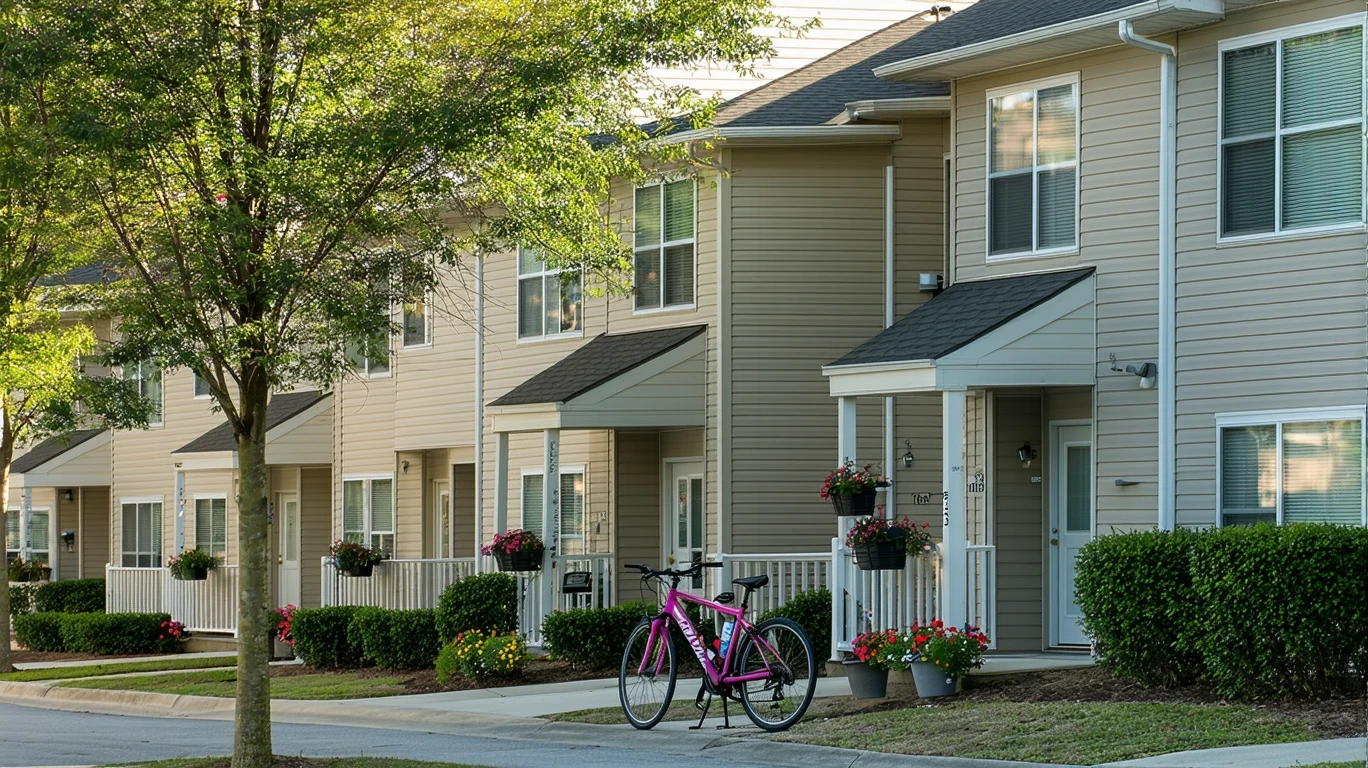
Fayetteville operates as a suburban node within the Atlanta metro, far enough south to avoid the density and price pressure of the inner ring but close enough to remain tethered to the region’s employment centers. The housing stock reflects this positioning: predominantly single-family detached homes on modest lots, with limited multifamily inventory and almost no high-rise or mid-rise construction. The low-rise character creates a supply ceiling—there’s only so much housing you can build when zoning and infrastructure favor horizontal sprawl over vertical density.
What newcomers often misread is the gap between nominal affordability and functional cost. A $299,500 home looks reasonable against a median household income of $79,865 per year, but that home comes with car dependency baked in. The mixed pedestrian infrastructure and corridor-clustered grocery and food access mean most errands require driving, which layers transportation costs onto housing expenses in ways that don’t show up in mortgage calculators. The city’s land-use mix—residential and commercial zones exist, but they don’t overlap—means convenience isn’t walkable; it’s a function of how far you’re willing to drive and how often.
The rental market operates under similar constraints. At $1,418 per month, rent sits below the metro average, but availability clusters along specific corridors rather than spreading evenly across neighborhoods. If you need proximity to schools, parks, or healthcare, your options narrow quickly, and the rent advantage shrinks once you factor in commute distance and fuel costs at $3.45 per gallon.
Renting in Fayetteville
Renting in Fayetteville means navigating a market shaped more by location than by unit type. The corridor-clustered errands accessibility—where grocery stores and food establishments concentrate along main roads rather than distributing through neighborhoods—creates a rental geography where some addresses offer convenience and others demand planning. If your apartment sits near one of these commercial spines, daily errands stay manageable. If you’re tucked into a residential pocket, every trip to the store becomes a deliberate car journey.
At $1,418 per month, median rent reflects this variability. Units closer to schools, parks, or the hospital command higher rents because they reduce logistical friction. Units farther out trade lower monthly costs for longer drives and fewer walkable options. The mixed pedestrian infrastructure means even “walkable” areas require caution—sidewalks exist in some neighborhoods but not universally, and crossing busy roads on foot often feels riskier than it should.
Renters also face limited housing diversity. The low-rise building character means most rentals are garden-style apartments or single-family homes, with few townhomes or stacked flats. This limits flexibility: if you want a two-bedroom apartment, you’re competing for a narrow slice of inventory. If you need a yard or garage, you’re pushed toward single-family rentals, which come with higher rents and often require tenants to handle lawn care and minor exterior maintenance—costs that don’t appear in the lease but add up over time.
The rental experience in Fayetteville rewards car ownership and punishes spontaneity. If you can absorb the transportation overhead and plan your errands in batches, the rent itself stays reasonable. If you expect to walk to the store or rely on transit, the city’s structure works against you.
Owning a Home in Fayetteville
Ownership in Fayetteville shifts the cost equation from monthly rent to long-term exposure. The $299,500 median home value positions the city as accessible for first-time buyers, but that figure represents only the entry point. Once you own, you’re responsible for property taxes, insurance, maintenance, and utilities—all of which behave differently in a low-rise suburban market than in denser or more temperate cities.
Property taxes in Georgia vary by county and municipality, and while specific rates aren’t provided here, Fayette County’s governance structure means homeowners face annual reassessments that can shift tax burdens as property values change. Unlike rent, which resets at lease renewal, property taxes compound over time, and appeals processes require documentation and persistence. Homeowners also absorb the cost of exterior maintenance—roofs, siding, driveways, and landscaping—all of which degrade faster under Georgia’s humid summers and occasional winter freezes.
Insurance costs reflect both climate exposure and replacement value. Fayetteville doesn’t face hurricane storm surge or wildfire risk, but severe thunderstorms, high winds, and occasional ice storms create localized damage that insurers price into premiums. Detached homes with aging roofs or HVAC systems face higher rates, and deductibles often exceed what renters expect to pay out-of-pocket for repairs.
The hospital-present healthcare access and moderate school density make Fayetteville appealing for families, but those amenities don’t reduce ownership costs—they increase demand for homes near them, which drives up purchase prices in specific neighborhoods. Buyers who prioritize proximity to Piedmont Fayette Hospital or higher-rated schools pay a location premium that persists through property taxes and resale value.
Ownership in Fayetteville rewards stability and punishes mobility. If you plan to stay for a decade, the predictability of a fixed-rate mortgage outweighs the volatility of rent increases. If you might relocate in three years, the transaction costs and maintenance exposure make renting the safer bet.
Apartment vs House in Fayetteville — Cost Behavior Comparison
The table below isolates cost categories where apartments and houses diverge meaningfully in Fayetteville. Rows are included only where local housing stock, climate, or infrastructure create a functional difference. Generic distinctions—such as “houses have more space”—are omitted because they don’t explain cost behavior specific to this city.
| Expense Category | Apartment | House |
|---|---|---|
| Cooling Exposure | Shared walls reduce heat gain; central systems often managed by landlord | Full sun exposure on all sides; homeowner absorbs system wear and summer demand spikes |
| Exterior Maintenance | Landlord handles roof, siding, landscaping | Homeowner pays for roof replacement, gutter cleaning, driveway sealing, and lawn care |
| Storm Damage Risk | Landlord covers structural repairs; tenant may lose belongings | Homeowner absorbs full repair cost after deductible; insurance premiums reflect risk |
| Errands Accessibility | Apartment complexes near corridors reduce trip frequency | Detached homes in residential pockets require car trips for all errands |
| Parking and Vehicle Exposure | Assigned or covered parking common; reduces weather exposure | Garage or driveway; homeowner maintains pavement and drainage |
Why these categories matter in Fayetteville: The low-rise building character and corridor-clustered commercial layout mean apartments and houses don’t just differ in size—they differ in how much logistical friction and climate exposure you absorb. Apartments near commercial spines reduce driving and share cooling costs through attached walls. Houses in residential neighborhoods maximize privacy but require more trips, more maintenance, and more direct exposure to Georgia’s humid summers and storm seasons. Omitted categories—such as property taxes or insurance—apply to both renters (indirectly) and owners (directly) but don’t vary meaningfully by structure type within Fayetteville’s housing stock.
Utilities & Upkeep Differences
Utility and maintenance costs in Fayetteville split along two axes: structure type and climate exposure. The electricity rate of 13.67¢ per kWh sits near the national average, but the cost experience depends on how much cooling your home demands during Georgia’s long, humid summers. Apartments with shared walls and smaller square footage use less electricity for climate control. Detached houses—especially older builds with single-pane windows or undersized insulation—run air conditioning from May through September, and peak-month bills reflect that sustained load.
Natural gas at $16.56 per MCF matters primarily for heating, which in Fayetteville means a few cold months rather than a prolonged winter. Houses with gas furnaces or water heaters see noticeable bills in December and January, but the exposure remains secondary to cooling. Apartments often bundle gas into rent or rely on electric heat, which shifts the cost to the electricity line item but doesn’t eliminate it.
Maintenance diverges sharply by structure type. Apartment tenants pay rent and utilities; landlords handle HVAC servicing, roof leaks, and pest control. Homeowners absorb all of it: HVAC filters and tune-ups, gutter cleaning to prevent water damage, and lawn care to meet neighborhood standards or HOA requirements. Georgia’s humidity accelerates mold growth, wood rot, and exterior paint degradation, which means houses require more frequent upkeep than in drier climates. The low-rise housing stock also skews older in some neighborhoods, and aging systems—water heaters, HVAC units, roofs—fail on timelines that don’t align with household budgets.
The cost difference isn’t just magnitude; it’s predictability. Renters face stable monthly bills with occasional spikes. Homeowners face baseline costs plus episodic failures that demand immediate cash outlays. In Fayetteville’s climate, those failures cluster around cooling systems and water intrusion, both of which escalate quickly if ignored.
Rent vs Buy: Long-Term Exposure in Fayetteville
The rent-versus-buy decision in Fayetteville hinges on volatility, control, and time horizon. Renting at $1,418 per month offers predictability within the lease term but exposes tenants to annual increases driven by landlord discretion and market pressure. Lease renewals in suburban Atlanta markets often bring mid-single-digit percentage increases, and tenants have no mechanism to lock in costs beyond the current term. Over five or ten years, rent grows, and tenants build no equity.
Buying at $299,500 replaces rent volatility with ownership exposure. A fixed-rate mortgage stabilizes the principal and interest payment, but property taxes, insurance, and maintenance all drift upward over time. Property taxes respond to assessed value changes and millage rate adjustments, both of which tend to rise as municipalities fund schools, infrastructure, and services. Insurance premiums increase with replacement costs and claim history, and maintenance expenses grow as homes age and systems fail.
The tradeoff isn’t rent versus mortgage—it’s predictable monthly costs versus long-term control. Renters avoid maintenance risk and retain mobility, but they surrender control over annual cost increases and build no ownership stake. Buyers absorb maintenance risk and transaction costs, but they lock in housing payments (excluding taxes and insurance) and gain equity as the mortgage amortizes.
In Fayetteville, the ownership advantage compounds for households planning to stay a decade or more. The low-rise housing stock and limited multifamily construction mean rental supply stays tight, which sustains upward rent pressure. Homeowners, meanwhile, benefit from fixed mortgage payments even as property values and rents rise around them. But that advantage requires financial resilience: homeowners need cash reserves for HVAC replacement, roof repairs, and storm damage—expenses that renters never face directly.
The decision also depends on household logistics. Families with school-age children benefit from ownership stability, especially in neighborhoods near schools with moderate density. Renters who prioritize flexibility or expect job relocation avoid the transaction costs and maintenance exposure that make short-term ownership financially punishing. In Fayetteville’s car-dependent layout, both renters and owners need vehicles, so the mobility difference between renting and owning doesn’t extend to transportation—it’s purely about housing cost structure and long-term equity.
How this article was built: In addition to public economic data, this article incorporates location-based experiential signals derived from anonymized geographic patterns—such as access density, walkability, and land-use mix—to reflect how day-to-day living actually feels in Fayetteville, GA.
FAQs About Housing Costs in Fayetteville
Is renting or buying cheaper in Fayetteville, GA?
Renting at $1,418 per month avoids maintenance costs and property taxes but exposes you to annual rent increases with no equity accumulation. Buying at $299,500 replaces rent with mortgage payments, property taxes, insurance, and upkeep, but locks in the principal and interest portion and builds ownership over time. The cheaper option depends on how long you stay and whether you can absorb the episodic costs of homeownership—HVAC repairs, roof replacement, and storm damage—without financial strain.
What drives housing costs up in Fayetteville over time?
For renters, annual lease renewals bring rent increases tied to landlord pricing and market demand. For owners, property taxes rise with assessed values and millage rates, insurance premiums increase with replacement costs and claim history, and maintenance expenses grow as homes age. Fayetteville’s low-rise housing stock and limited new construction sustain upward pressure on both rents and home values, which compounds over long time horizons.
Do apartments or houses cost more to maintain in Fayetteville?
Houses cost significantly more because homeowners absorb all exterior and system maintenance—roofs, HVAC, gutters, driveways, and landscaping—in a climate that accelerates wear through humidity, heat, and storm exposure. Apartment tenants pay rent and utilities; landlords handle structural repairs and system replacements. The cost gap widens in older houses or neighborhoods with aging infrastructure.
How does Fayetteville’s layout affect housing costs?
The corridor-clustered errands accessibility and low-rise building character mean most housing requires car ownership for daily errands, which layers transportation costs onto rent or mortgage payments. Homes near commercial corridors or schools command higher prices and rents because they reduce trip frequency and commute distance. Homes in residential pockets trade lower purchase prices for higher driving costs and less walkable access to groceries, healthcare, and services.
What should first-time buyers know about Fayetteville’s housing market?
The $299,500 median home value offers entry-level accessibility relative to the $79,865 median household income, but buyers must budget for property taxes, insurance, and maintenance—all of which grow over time. The low-rise housing stock limits attached or townhome options, so most buyers face detached single-family homes with full exterior and system responsibility. First-time buyers should prioritize neighborhoods near schools or healthcare if they plan to stay long-term, and they need cash reserves for the inevitable HVAC, roof, or storm-related repairs that come with Georgia homeownership.
Making Housing Choices in Fayetteville
Housing costs in Fayetteville don’t punish through extremes—they accumulate through structure. Rent stays moderate but grows annually with no equity offset. Ownership locks in mortgage payments but exposes you to taxes, insurance, and maintenance that drift upward as homes age and climate stresses systems. The city’s low-rise, car-dependent layout adds transportation costs to every housing decision, and the corridor-clustered access pattern means location determines not just convenience but ongoing fuel and time expenses.
Renters who value mobility and want to avoid maintenance risk fit Fayetteville’s market, especially if they’re near commercial corridors and can tolerate annual rent increases. Buyers who plan to stay a decade or more and can absorb episodic repair costs benefit from mortgage stability and equity accumulation, but they need financial reserves and a tolerance for the logistical friction of suburban homeownership. Families prioritizing school access and healthcare proximity should focus on neighborhoods with strong infrastructure density, even if that means paying a location premium upfront.
The housing decision in Fayetteville isn’t about affordability in isolation—it’s about matching cost structure to household stability, financial resilience, and willingness to navigate a place where convenience requires a car and where long-term costs depend more on how you manage volatility than on the initial price you pay. For more detail on where housing fits into your overall monthly expenses, see our breakdown of budget allocation across categories.