
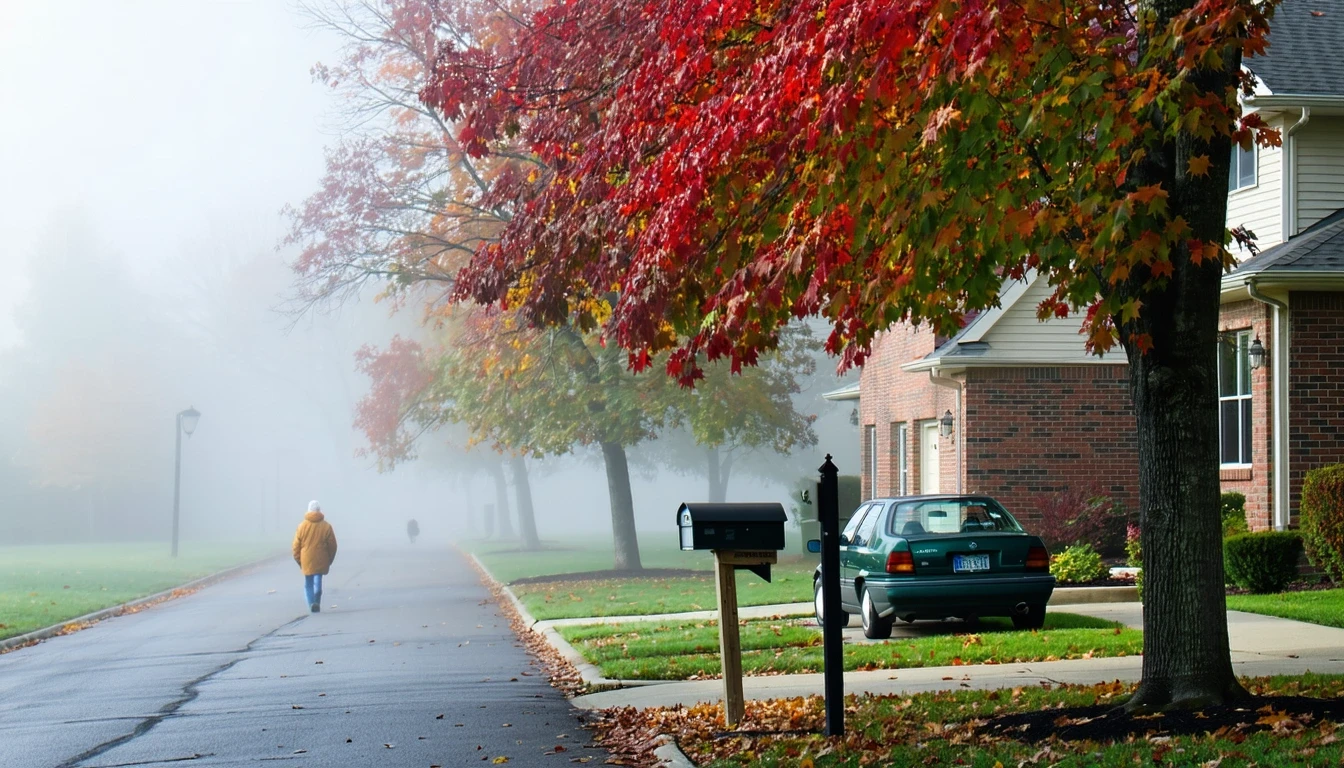
Apartment vs House in Farmington Hills — Cost Behavior Comparison
| Expense Category | Apartment | House |
|---|---|---|
| Base Housing Payment | $1,401/month median rent | Mortgage varies by down payment and rate; property taxes added separately |
| Heating (Winter Months) | Often included or shared; smaller square footage reduces individual exposure | Full responsibility; older single-family stock and larger footprints drive higher natural gas usage during extended heating season |
| Cooling (Summer Months) | Moderate; shared walls reduce heat gain | Higher exposure in detached homes; electricity at 19.53¢/kWh applies to full square footage |
| Exterior Maintenance | Landlord responsibility; no direct cost or time burden | Owner responsibility; aging housing stock increases frequency and unpredictability of roof, siding, and driveway work |
| Yard and Snow Removal | Typically handled by property management | Owner responsibility; long winters and regular snowfall create recurring labor or service cost |
| Parking and Garage | May be assigned or limited; garages uncommon in apartment complexes | Typically includes garage or driveway; essential given car-dependent errands structure and winter weather |
Why these categories differ in Farmington Hills: The extended heating season and aging single-family housing stock make climate exposure and maintenance unpredictability the primary cost differentiators. Apartments buffer these through shared infrastructure and landlord responsibility, while houses transfer full seasonal and upkeep risk to owners. The comparison omits categories like water, trash, and insurance because variation depends more on lease terms and individual coverage choices than on housing type in this market.
The Housing Market in Farmington Hills Today
Farmington Hills sits in the suburban Detroit market, shaped by a mature housing stock, mixed building heights, and a designated role as a retirement community. The median home value of $319,000 positions the city as accessible to dual-income households earning near or above the area’s median household income of $101,728 per year, but the cost structure extends well beyond the purchase price. Property taxes, heating exposure during Michigan’s long winters, and the maintenance demands of aging homes define the ownership experience here more than the initial transaction.
The rental market reflects similar pressures. Median gross rent of $1,401 per month represents a moderate burden for median earners, but the cost structure of renting in Farmington Hills depends heavily on location within the city. Walkable pockets exist where pedestrian infrastructure is strong, but most of the city remains car-dependent. Grocery stores cluster along corridors rather than spreading evenly, and bus service—while present—does not substitute for vehicle ownership. Renters who assume suburban convenience without a car will face friction in daily errands and commute logistics.
Newcomers often misunderstand how much the climate and housing age interact. A home that appears well-maintained in summer may reveal deferred roof work, outdated insulation, or failing furnace components once heating season begins. The unemployment rate of 3.6% signals a stable local economy, but housing affordability here is less about job availability and more about managing the long-term exposure that comes with older housing stock in a cold climate.
Renting in Farmington Hills
Renting in Farmington Hills offers predictability in monthly obligations but limits control over location-specific tradeoffs. The median rent of $1,401 per month typically includes some utilities—often water and trash—but electricity and natural gas are frequently billed separately. In a region where heating dominates winter energy use and cooling drives summer bills, renters in older buildings or units without updated insulation face higher seasonal volatility than those in newer construction.
The structure of the city shapes rental experience as much as the lease terms. Food and grocery options cluster along commercial corridors rather than distributing evenly across neighborhoods. This means renters must plan errands intentionally, routing trips to access higher-density retail areas. Walkable pockets exist, particularly where the pedestrian-to-road ratio is strong, but these areas represent only parts of the city. Most renters will rely on a car for work commutes, grocery runs, and accessing healthcare—Farmington Hills has hospital facilities, but transit does not connect residential areas to services reliably enough to eliminate vehicle dependency.
Rental availability in Farmington Hills reflects the broader suburban Detroit pattern: single-family homes dominate the housing stock, and apartment complexes tend to concentrate near major roads. Renters seeking proximity to parks, schools, or quieter streets may find fewer options and face competition from families and retirees who prioritize those features. The city’s designation as a retirement community also means some rental properties cater to older adults, which can narrow choices for younger households or those with children.
Lease renewals in Farmington Hills follow the same pressures seen across suburban Michigan markets: landlords adjust rents based on property tax changes, maintenance costs, and regional demand. Renters should expect variability over time, particularly if heating or cooling system failures force mid-lease repairs that landlords pass through indirectly in future terms.
Owning a Home in Farmington Hills
Owning a home in Farmington Hills means taking on the full cost structure of a cold-climate suburban property, where predictability ends at the mortgage payment. The median home value of $319,000 serves as an entry point, but ownership exposure grows through property taxes, insurance, maintenance, and the seasonal intensity of heating and exterior upkeep. Unlike renting, where landlords absorb these variables, homeowners carry the risk of deferred maintenance, aging systems, and weather-driven damage.
Property taxes in Michigan vary by jurisdiction and are not included in the provided data, but they represent a recurring cost that escalates independently of the owner’s income or usage. Taxes fund schools, infrastructure, and municipal services, and they adjust over time as assessments and millage rates change. Homeowners in Farmington Hills should expect this expense to behave as a fixed obligation that rises gradually, with limited control beyond the initial purchase price.
The age and condition of Farmington Hills’s housing stock create maintenance exposure that differs from newer suburban markets. Roofs, furnaces, water heaters, and driveways all have finite lifespans, and many homes in the area were built decades ago. A furnace failure in January is not just an inconvenience—it’s an urgent, high-cost repair that cannot be deferred. Similarly, roof leaks, foundation settling, and outdated electrical systems emerge unpredictably, and owners must either address them immediately or accept the risk of compounding damage.
Heating costs dominate the winter utility burden. Natural gas, priced locally at $10.24 per MCF, fuels most home heating systems, and usage scales with square footage, insulation quality, and thermostat settings. Larger homes or those with poor insulation face significantly higher costs during the extended heating season. Cooling costs, while notable in summer, are secondary to heating exposure in this climate. Electricity at 19.53¢ per kWh applies to air conditioning, but the intensity and duration of summer cooling demands are far less than winter heating.
Exterior maintenance in Farmington Hills includes snow removal, driveway upkeep, and yard care. Snow accumulation is routine, and owners must either clear it themselves or hire services. Driveways crack and heave due to freeze-thaw cycles, and repairs are periodic but necessary. Yard maintenance is less intensive than in warmer climates, but spring and fall work—mulching, trimming, gutter cleaning—still require time or contractor expense.
Homeownership in Farmington Hills also means navigating the logistics of a car-dependent city. Garages and driveways are standard, and they’re essential—not just for convenience, but for protecting vehicles from winter weather and ensuring reliable access during snow events. The city’s corridor-clustered errands structure and bus-only transit system mean that owning a home here assumes owning at least one vehicle, and often two for dual-income households.
Utilities & Upkeep Differences
Utility and maintenance exposure in Farmington Hills varies sharply between apartments and houses, driven by climate intensity, building age, and responsibility structure. The extended heating season creates the dominant cost difference: houses face full exposure to natural gas usage across larger square footage, while apartments benefit from shared walls, smaller footprints, and often landlord-controlled heating systems. In older single-family homes, poor insulation or aging furnaces amplify this gap, making winter utility bills a primary ownership burden.
Cooling costs, while present, are secondary. Summer electricity usage at 19.53¢ per kWh affects both housing types, but detached homes with full sun exposure and larger interior spaces see higher air conditioning loads than apartments with shared walls and limited exterior surface area. The difference is noticeable but not dominant—winter heating exposure outweighs summer cooling in this climate.
Maintenance responsibility defines the upkeep gap. Apartment residents avoid direct costs for roof repairs, exterior painting, driveway work, and snow removal—all of which fall to property management. Homeowners carry these obligations in full, and the age of Farmington Hills’s housing stock makes them frequent and unpredictable. A roof may last 20 years, but once it begins failing, replacement is a multi-thousand-dollar event. Furnace breakdowns, water heater failures, and sump pump malfunctions follow similar patterns: low probability in any given month, but high impact when they occur.
Snow removal and winter exterior work add seasonal labor or service costs that apartments typically bundle into rent. Homeowners must either clear driveways and sidewalks themselves or hire contractors, and the frequency depends on snowfall patterns that vary year to year. Freeze-thaw cycles also damage driveways, walkways, and foundations over time, creating repair needs that apartments transfer to landlords.
Water, sewer, and trash services are often included in apartment rent but billed separately to homeowners. These costs are modest compared to heating or maintenance, but they add to the baseline obligation that persists regardless of usage or season.
Rent vs Buy: Long-Term Exposure in Farmington Hills
The choice between renting and buying in Farmington Hills is not a calculation of monthly payments—it’s a decision about which risks and responsibilities fit a household’s timeline and capacity. Renting offers cost predictability within the lease term: the monthly payment is fixed, and major maintenance burdens fall to the landlord. Buying transfers all long-term exposure to the owner: property taxes, insurance, maintenance, and the volatility of aging systems and seasonal weather.
Renters in Farmington Hills face lease renewal adjustments that reflect landlord costs—property tax changes, deferred maintenance catching up, and regional rental demand. These adjustments are typically incremental and occur annually, giving renters time to evaluate whether to stay or move. Owners, by contrast, face property tax adjustments, insurance premium changes, and the compounding cost of deferred maintenance, all of which escalate independently of the owner’s control. A roof that could have been patched five years ago may require full replacement now, and the cost difference is not linear.
Heating exposure over time favors apartments in Farmington Hills. Shared walls, smaller square footage, and landlord-controlled systems buffer renters from the full intensity of Michigan winters. Homeowners absorb the entire heating load, and as furnaces age or insulation degrades, efficiency declines and costs rise. Replacing a furnace is a discretionary decision for renters—it’s the landlord’s problem. For owners, it’s a non-negotiable expense that arrives on the coldest day of the year.
Maintenance unpredictability grows with ownership duration. In the first few years, a home may require little beyond routine upkeep. By year ten, water heaters fail, roofs develop leaks, and driveways crack. By year twenty, siding, windows, and major systems reach end-of-life. Renters avoid this escalation entirely; owners must either budget for it or accept the risk of emergency spending.
The structure of Farmington Hills also affects long-term fit. The city’s corridor-clustered errands and bus-only transit mean that both renters and owners need cars, but owners gain garage space and driveway access that protect vehicles from winter weather and eliminate the parking constraints common in apartment complexes. For households planning to stay long-term, this infrastructure control matters. For those uncertain about duration, renting preserves mobility without the transaction costs of selling.
Ownership in Farmington Hills rewards households with stable income, long timelines, and the capacity to manage irregular expenses. Renting rewards those who value flexibility, predictable monthly obligations, and freedom from maintenance risk. Neither choice is universally better—each fits different household structures and risk tolerances.
FAQs About Housing Costs in Farmington Hills
Is $1,401 per month a typical rent in Farmington Hills?
$1,401 per month is the median gross rent, meaning half of renters pay more and half pay less. Actual rent depends on unit size, location, building age, and whether utilities are included. Renters in walkable pockets or near commercial corridors may pay premiums for convenience, while those farther from services may find lower rents but higher transportation costs.
How much does heating cost in a house in Farmington Hills during winter?
Heating costs depend on home size, insulation quality, thermostat settings, and furnace efficiency. Natural gas is priced locally at $10.24 per MCF, and usage scales with the intensity and duration of cold weather. Older homes with poor insulation or aging furnaces face higher costs than newer, well-sealed properties. Winter heating is the dominant utility expense in this climate.
Do most homes in Farmington Hills have HOA fees?
HOA prevalence is not specified in available data. Some neighborhoods, particularly newer subdivisions or condo complexes, may have HOA fees that cover exterior maintenance, snow removal, or shared amenities. Older single-family neighborhoods typically do not. Buyers should verify HOA obligations before purchase, as they add a recurring cost that behaves like property taxes—fixed, non-negotiable, and subject to periodic increases.
Can you live in Farmington Hills without a car?
Bus service is present, but transit does not substitute for car ownership in Farmington Hills. Grocery stores and food options cluster along corridors rather than spreading evenly, and walkable pockets exist only in parts of the city. Most households rely on cars for commuting, errands, and accessing healthcare. Renters or buyers planning a car-free lifestyle will face significant friction in daily logistics.
How does home maintenance in Farmington Hills compare to other suburban Detroit cities?
Maintenance exposure in Farmington Hills reflects the broader suburban Detroit pattern: aging housing stock, cold-climate wear, and freeze-thaw damage to driveways and foundations. The city’s mixed building heights and mature neighborhoods mean many homes are decades old, increasing the likelihood of deferred maintenance and end-of-life system replacements. Maintenance costs here are driven more by housing age and climate than by city-specific factors.
Making Housing Choices in Farmington Hills
Housing costs in Farmington Hills are shaped by climate, housing age, and the structure of daily life in a car-dependent suburb. The median home value of $319,000 and median rent of $1,401 per month provide entry points, but the real cost experience unfolds over time—through heating exposure, maintenance unpredictability, and the logistics of accessing day-to-day costs in a city where errands cluster along corridors and transit does not eliminate the need for a vehicle.
Renters gain predictability and freedom from maintenance risk, but they sacrifice control over location-specific tradeoffs and face lease renewal adjustments that reflect landlord costs. Owners gain stability, garage access, and the ability to manage their property on their own timeline, but they absorb the full burden of property taxes, aging systems, and seasonal upkeep in a climate where winter is long and maintenance demands are frequent.
Households planning to stay long-term, with stable income and the capacity to handle irregular expenses, will find ownership in Farmington Hills a viable path. Those prioritizing flexibility, predictable monthly obligations, or freedom from winter maintenance burdens will find renting a better fit. The city’s designation as a retirement community, hospital presence, and moderate park access make it well-suited for aging-in-place, but families with young children should weigh the limited playground infrastructure and car-dependent errands structure against their household logistics needs.
For more context on how housing fits into broader spending patterns, see Farmington Hills Cost Reality: The Big Pressure Points. Households planning a move should also consider logistics and timing—pods vs trucks: which move is best for you? offers practical guidance on managing the transition.
How this article was built: In addition to public economic data, this article incorporates location-based experiential signals derived from anonymized geographic patterns—such as access density, walkability, and land-use mix—to reflect how day-to-day living actually feels in Farmington Hills, MI.