
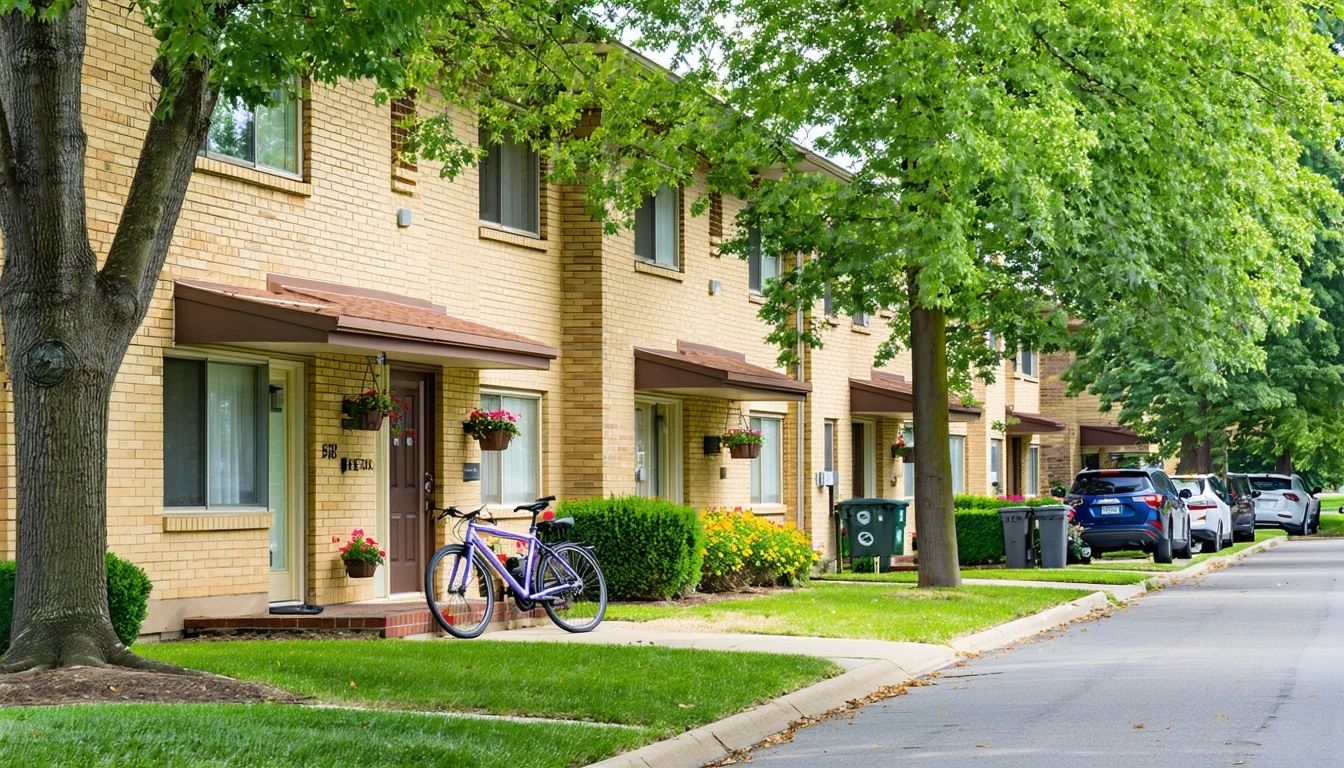
Farmington Hills and Novi sit just miles apart in Oakland County, sharing school district boundaries, highway access, and the same regional job market. For families and professionals weighing a move within the Detroit metro, the decision between these two suburbs often comes down to how different cost structures interact with household priorities in 2026. Both cities offer walkable pockets, bus transit, and mixed building forms, but the pressure points—housing entry barriers, healthcare access, grocery logistics, and outdoor infrastructure—show up differently depending on income level, family composition, and lifestyle expectations.
This isn’t a question of which city is cheaper overall. It’s about understanding where costs concentrate, which expenses remain predictable, and which households feel the trade-offs most acutely. A family prioritizing school density and hospital access will experience Farmington Hills differently than a dual-income couple seeking integrated park systems and cycling infrastructure in Novi. The same gross income can feel stable in one city and stretched in the other, not because of a single expense, but because of how housing, transportation, healthcare friction, and daily errands combine.
What follows is a structured comparison of how cost pressure behaves in each city—focusing on mechanisms, exposure, and fit rather than totals or savings claims.
Housing Costs: Entry Barriers and Ongoing Obligations
Housing dominates the cost experience in both cities, but the entry barrier and ongoing obligation structure differ in ways that matter for renters, first-time buyers, and families managing multi-year budgets. Farmington Hills has a median home value of $319,000 and median gross rent of $1,401 per month. Novi’s median home value is $380,200, with median gross rent at $1,584 per month. These differences reflect not just price levels, but the types of housing stock available, the competition for rental units, and the predictability of property tax and insurance exposure over time.
For renters, the gap in median gross rent represents a structural difference in what’s available at different price points. Farmington Hills offers more rental options in the corridor-clustered grocery zones, where apartment complexes and smaller rental homes sit near commercial strips. Novi’s rental stock skews toward newer construction and larger single-family homes, which drives up baseline rent but often includes more predictable utility costs due to better insulation and modern HVAC systems. Renters in Farmington Hills may face lower monthly rent but higher seasonal utility volatility, especially in older units. Renters in Novi pay more upfront but gain some insulation from extreme heating and cooling bills.
For buyers, the difference in median home value translates directly into down payment requirements, mortgage approval thresholds, and ongoing property tax exposure. A household with $60,000 in savings can access homeownership in Farmington Hills with a conventional loan, while the same household faces a longer savings timeline in Novi. Property taxes in both cities are structured similarly, but the higher assessed values in Novi mean higher annual tax bills even at identical millage rates. Families planning to stay five or more years must account for how property tax increases compound over time, particularly as home values adjust. Insurance costs also rise with home value, and Novi’s newer housing stock sometimes qualifies for lower premiums due to updated electrical and roofing systems.
The housing takeaway: Farmington Hills fits households with lower entry capital and tolerance for utility variability. Novi fits households with higher income able to absorb upfront costs in exchange for more predictable ongoing expenses and access to newer housing stock. First-time buyers sensitive to down payment size will find more accessible entry points in Farmington Hills. Families prioritizing long-term predictability and lower maintenance friction may justify the higher entry cost in Novi.
Utilities and Energy Costs: Seasonality and Predictability
Utility costs in both cities are shaped by Michigan’s long heating season and the mix of housing stock, but the predictability and volatility differ based on home age, insulation quality, and household size. Farmington Hills has an electricity rate of 19.53¢/kWh and natural gas price of $10.24/MCF. Novi’s electricity rate is 19.94¢/kWh, with natural gas at $11.89/MCF. These rates are close enough that the primary driver of utility exposure is not the rate itself, but how much energy a household uses—and that depends heavily on housing type, square footage, and seasonal behavior.
In Farmington Hills, the mixed building height character and moderate pedestrian infrastructure mean many households live in older single-family homes or mid-rise apartment buildings built before modern energy codes. Older homes experience higher heating exposure during Michigan’s cold months, and apartments in older buildings often lack individual climate control, forcing tenants to overheat or underheat depending on building-wide settings. Families in larger homes face compounding utility bills as square footage increases, especially if the home has original windows, minimal attic insulation, or an aging furnace. Renters in Farmington Hills should expect utility bills to spike in winter and remain elevated through early spring, with less predictability month-to-month.
Novi’s housing stock includes more recent construction, particularly in subdivisions built after 2000, where homes feature better insulation, programmable thermostats, and high-efficiency furnaces. This doesn’t eliminate utility costs, but it does reduce volatility. Families in newer Novi homes can expect more stable bills across the heating season, with fewer surprise spikes during extreme cold snaps. However, larger homes in Novi—common in family-oriented subdivisions—still carry baseline utility costs that exceed smaller homes in Farmington Hills, even with better efficiency. The tradeoff is predictability versus magnitude: Novi households pay more on average, but experience fewer month-to-month swings.
The utility takeaway: Farmington Hills households face more volatility, especially in older housing stock, but lower baseline costs in smaller units. Novi households pay higher baseline costs due to larger homes, but gain more predictable bills in newer construction. Renters in Farmington Hills should budget for winter spikes. Families in Novi should expect higher year-round utility costs but fewer seasonal surprises. Households sensitive to budget predictability may prefer Novi’s newer stock; households prioritizing lower baseline exposure may prefer Farmington Hills’ smaller, older units.
Groceries and Daily Expenses: Access, Habits, and Price Sensitivity
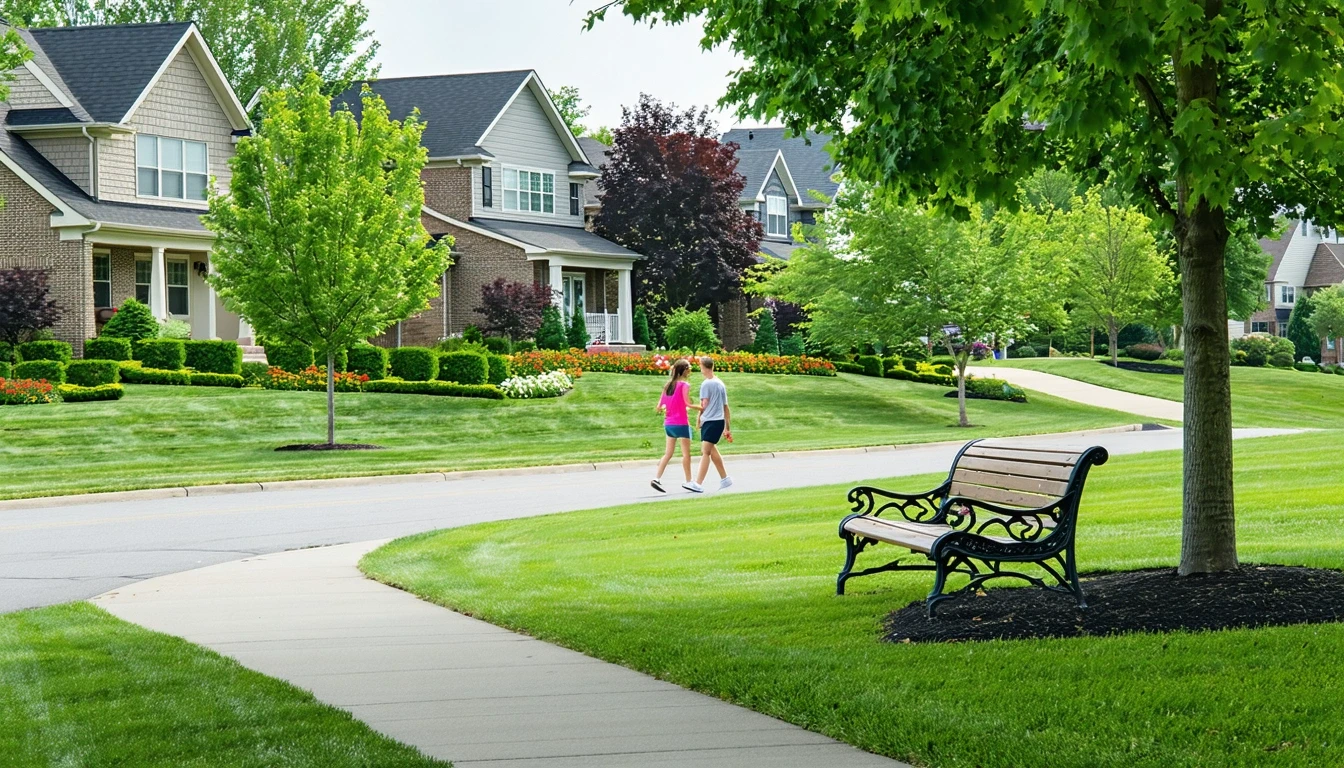
Grocery and daily spending pressure in both cities is shaped less by individual item prices—which remain similar across the Detroit metro—and more by access patterns, shopping habits, and the friction cost of running errands. Farmington Hills has corridor-clustered food access with high grocery density, meaning households can reach multiple grocery options without long drives. Novi also has corridor-clustered food access, but with medium grocery density, meaning fewer options within a short radius and more reliance on planned, consolidated shopping trips.
In Farmington Hills, the high grocery density supports frequent, smaller shopping trips. Households can stop at a grocery store on the way home from work, pick up missing ingredients for dinner, or compare prices across multiple stores without adding significant drive time. This flexibility benefits families with unpredictable schedules, single adults managing limited fridge space, and households that prefer fresh produce over bulk frozen goods. The downside is that easy access can lead to convenience spending creep—more frequent trips mean more opportunities for impulse purchases, prepared foods, and higher-margin items. Families managing tight grocery budgets may find that the convenience of Farmington Hills’ grocery density works against disciplined shopping habits.
Novi’s medium grocery density requires more planning. Households typically consolidate errands into fewer trips per week, which can reduce impulse spending but increases the importance of meal planning and bulk storage. Families with larger homes and dedicated pantry space can take advantage of bulk pricing at big-box stores, which are accessible in Novi’s commercial corridors. However, households without the time or space to plan weekly menus may find themselves making extra trips, which adds drive time and gas costs. The integrated green space access in Novi also shifts some discretionary spending away from indoor entertainment and toward outdoor recreation, which can reduce dining out frequency but requires upfront investment in outdoor gear.
The grocery takeaway: Farmington Hills fits households that value flexibility and frequent access, but must guard against convenience spending. Novi fits households with the time and space to plan consolidated shopping trips and take advantage of bulk pricing. Single adults and couples in Farmington Hills benefit from easy access to smaller grocery runs. Families in Novi benefit from bulk options and lower dining-out pressure due to outdoor recreation access. Households sensitive to impulse spending may find Novi’s lower grocery density a structural advantage; households with unpredictable schedules may prefer Farmington Hills’ flexibility.
Taxes and Fees: Predictability and Structure
Property taxes and local fees in both cities follow Oakland County’s assessment and millage structure, but the magnitude of exposure differs due to home values, and the predictability of fees depends on housing type and neighborhood characteristics. Both cities rely heavily on property taxes to fund schools, public safety, and infrastructure, meaning homeowners carry the primary tax burden while renters experience indirect exposure through lease terms.
In Farmington Hills, the lower median home value of $319,000 translates to lower annual property tax bills compared to Novi, even at identical millage rates. For a household planning to stay several years, this difference compounds—property tax increases tied to home value appreciation accumulate more slowly in Farmington Hills, reducing long-term exposure. However, older housing stock in Farmington Hills sometimes comes with higher maintenance and special assessment risk, particularly in neighborhoods with aging water and sewer infrastructure. Homeowners in certain Farmington Hills subdivisions may face periodic special assessments for road resurfacing, drainage improvements, or utility upgrades, which add unpredictable costs outside the regular tax cycle.
Novi’s higher median home value of $380,200 means higher baseline property tax bills, which affect both monthly mortgage payments (if escrowed) and annual cash flow for households that pay taxes directly. Newer subdivisions in Novi often include HOA fees that bundle services like landscaping, snow removal, and common area maintenance, which can add $50 to $200 per month depending on the neighborhood. These fees are predictable and disclosed upfront, but they represent an ongoing obligation that doesn’t build equity. Renters in Novi sometimes see these costs passed through in higher lease rates, particularly in managed communities. The tradeoff is predictability: HOA fees are fixed and cover services that would otherwise require individual contracts, but they also limit flexibility and increase baseline housing costs.
The tax and fee takeaway: Farmington Hills offers lower baseline property tax exposure due to lower home values, but carries higher risk of special assessments in older neighborhoods. Novi offers more predictable fee structures through HOAs, but higher baseline property taxes and recurring HOA obligations. Homeowners planning long-term stays in Farmington Hills benefit from slower property tax growth. Homeowners in Novi benefit from bundled services and predictable fees, but must absorb higher annual tax bills. Renters in both cities should ask whether HOA fees or special assessments are passed through in lease terms.
Transportation and Commute Reality
Both Farmington Hills and Novi have walkable pockets and bus-only transit, but the day-to-day experience of getting around differs based on cycling infrastructure, commute patterns, and the friction cost of running errands without a car. Farmington Hills has some bike infrastructure in limited pockets, while Novi has notable bike infrastructure throughout parts of the city. Gas prices are $3.24/gal in Farmington Hills and $2.95/gal in Novi, reflecting localized pricing and proximity to different fuel distribution networks. Farmington Hills has an average commute time of 25 minutes, while Novi’s commute data is unavailable but likely similar given shared highway access to Detroit’s job centers.
In Farmington Hills, the walkable pockets support some errand-running on foot, particularly in commercial corridors near grocery stores and pharmacies. However, the pedestrian-to-road ratio is high only in certain areas, meaning most households still rely on cars for daily logistics. The hospital present in Farmington Hills reduces emergency travel friction and supports routine medical appointments without long drives, which matters for families with young children, older adults managing chronic conditions, or households without flexible work schedules. The moderate school density means families can often access public schools within a reasonable drive, though bus routes and pickup logistics still require car ownership for most households.
Novi’s notable bike infrastructure supports cycling for recreation and some commuting in parts of the city, particularly near the integrated green space network. Households with flexible schedules and proximity to bike-friendly corridors can reduce car dependence for errands and exercise, which lowers gas costs and reduces vehicle wear. However, the limited family infrastructure—specifically low school and playground density—means families often face longer drives to access schools, after-school programs, and youth sports facilities. The absence of a hospital in Novi adds friction for emergency care and specialist appointments, requiring drives to neighboring cities. For households without school-age children or medical needs, this friction is minimal. For families with kids or ongoing healthcare requirements, it represents a recurring time and fuel cost.
The transportation takeaway: Farmington Hills fits households prioritizing healthcare access and school proximity, with moderate bike infrastructure for recreation. Novi fits active adults and cyclists willing to trade family infrastructure density for integrated outdoor access and lower gas prices. Families in Farmington Hills benefit from hospital presence and moderate school density. Families in Novi must plan for longer school and healthcare drives, but gain cycling and outdoor recreation options that reduce other transportation needs.
Where Cost Pressure Concentrates Differently
Housing pressure dominates in both cities, but the entry barrier is higher in Novi while the ongoing volatility is higher in Farmington Hills. Novi’s $380,200 median home value and $1,584 median rent create a steeper climb for first-time buyers and renters with limited savings, but the newer housing stock and predictable utility costs reduce month-to-month surprises once a household is established. Farmington Hills’ $319,000 median home value and $1,401 median rent lower the entry threshold, but older housing stock and higher utility volatility mean households must budget for seasonal spikes and maintenance unpredictability.
Utilities introduce more volatility in Farmington Hills, where older homes and mixed building stock create wide variation in heating and cooling costs. Novi’s newer construction and higher-efficiency housing reduce seasonal swings, but larger homes and higher baseline square footage mean total utility costs remain elevated year-round. Households sensitive to budget predictability will find Novi’s utility experience more manageable; households prioritizing lower baseline costs will prefer Farmington Hills’ smaller, older units despite the volatility.
Transportation patterns matter more in Novi, where limited family infrastructure and absence of a hospital create recurring friction for families and households with medical needs. Farmington Hills’ hospital presence and moderate school density reduce emergency travel costs and support routine logistics without long drives. Novi’s integrated green space and notable bike infrastructure shift some transportation spending away from car dependence, but only for households able to take advantage of cycling and outdoor recreation. Families with young children or ongoing healthcare needs will feel the transportation difference more acutely in Novi; active adults and cyclists will find Novi’s infrastructure a meaningful cost offset.
Grocery and daily spending pressure is more about habits than prices. Farmington Hills’ high grocery density supports flexibility but increases convenience spending risk. Novi’s medium grocery density requires planning and consolidation, which can reduce impulse purchases but adds time cost for households without the schedule flexibility to batch errands. Households managing tight grocery budgets may find Novi’s lower density a structural advantage; households with unpredictable work schedules may prefer Farmington Hills’ easy access.
The decision is not about which city costs less, but about which cost structure aligns with a household’s income stability, savings capacity, and daily logistics. Households sensitive to entry barriers and healthcare access may prefer Farmington Hills. Households with higher income, outdoor lifestyle priorities, and tolerance for longer school and medical drives may prefer Novi. For families with school-age children, the difference is less about price and more about time friction and infrastructure density.
How the Same Income Feels in Farmington Hills vs Novi
Single Adult
For a single adult, housing becomes non-negotiable first—rent or mortgage absorbs the largest share of income in both cities, but the entry point is lower in Farmington Hills. Flexibility exists in grocery spending and transportation, where Farmington Hills’ high grocery density and hospital presence reduce errand friction, while Novi’s integrated green space and cycling infrastructure support lower-cost recreation. The role of commute friction is minimal for single adults with flexible schedules, but Farmington Hills’ hospital access reduces emergency travel risk. Novi’s higher rent and home values tighten the budget upfront, but predictable utilities and outdoor access reduce discretionary spending pressure.
Dual-Income Couple
For a dual-income couple, housing costs remain the primary non-negotiable, but the higher combined income makes Novi’s entry barrier more manageable. Flexibility exists in dining out and convenience spending, where Novi’s integrated parks and cycling infrastructure shift discretionary time toward outdoor activities and away from restaurant spending. Farmington Hills’ corridor-clustered grocery access supports frequent, smaller shopping trips, which can increase convenience spending if not managed. The role of commute friction depends on whether both partners work in Detroit’s core or surrounding suburbs—Farmington Hills’ hospital and moderate school density matter less without children, while Novi’s outdoor infrastructure becomes a lifestyle asset rather than a cost offset.
Family with Kids
For a family with kids, housing and healthcare access become non-negotiable first, and this is where the cities diverge most clearly. Farmington Hills’ hospital presence and moderate school density reduce emergency travel friction and support routine pediatric care, school pickups, and after-school logistics without long drives. Flexibility disappears quickly in Novi, where limited family infrastructure means longer drives to schools, playgrounds, and medical appointments. The role of commute friction compounds for families managing two-parent work schedules, school bus routes, and extracurricular activities—Farmington Hills’ infrastructure density reduces time cost, while Novi’s integrated green space offers recreation benefits but requires more planning and driving for daily logistics.
Decision Matrix: Which City Fits Which Household?
| Decision factor | If you’re sensitive to this… | Farmington Hills tends to fit when… | Novi tends to fit when… |
|---|---|---|---|
| Housing entry + space needs | You have limited savings or need to minimize down payment and monthly rent | Lower entry barriers and accessible rental stock matter more than predictable utilities | You can absorb higher upfront costs in exchange for newer construction and stable ongoing expenses |
| Transportation dependence + commute friction | You need hospital access, school proximity, or reduced emergency travel time | Hospital presence and moderate school density reduce daily logistics friction | You prioritize cycling infrastructure and outdoor access over family-oriented density |
| Utility variability + home size exposure | You want predictable monthly bills and minimal seasonal spikes | You accept volatility in exchange for lower baseline costs in smaller or older units | Newer construction and better insulation reduce seasonal swings despite higher square footage |
| Grocery strategy + convenience spending creep | You need flexible access to frequent shopping or struggle with impulse purchases | High grocery density supports last-minute trips but requires discipline to avoid convenience spending | Medium grocery density forces planning and consolidation, which can reduce impulse purchases |
| Fees + friction costs (HOA, services, upkeep) | You want bundled services and predictable monthly obligations | Lower property taxes and fewer HOA fees reduce baseline costs but increase special assessment risk | HOA fees bundle services and provide predictability despite higher baseline property taxes |
| Time budget (schedule flexibility, errands, logistics) | You have unpredictable work hours or manage complex household schedules | Corridor-clustered grocery and hospital access reduce time cost for errands and emergencies | Integrated parks and cycling infrastructure support outdoor lifestyle but require longer drives for schools and medical care |
Lifestyle Fit: Recreation, Amenities, and Daily Rhythm
Beyond cost structure, the daily rhythm of life in Farmington Hills and Novi differs in ways that indirectly affect household budgets. Farmington Hills’ moderate park density and water features provide outdoor access, but the city’s lifestyle centers more on corridor-clustered commercial areas, hospital proximity, and moderate school density. Families with young children benefit from accessible pediatric care, school bus routes, and after-school programs within reasonable driving distance. The walkable pockets support some errand-running on foot, but most households still rely on cars for groceries, medical appointments, and social activities. The presence of a hospital reduces emergency travel friction and supports routine specialist care without drives to neighboring cities.
Novi’s integrated green space access and notable bike infrastructure shift the lifestyle toward outdoor recreation and active transportation. The park density exceeds high thresholds, and water features are present, creating opportunities for weekend activities, cycling, and outdoor exercise that reduce discretionary spending on gyms, entertainment, and dining out. However, the limited family infrastructure—low school and playground density—means families must plan for longer drives to access public schools, youth sports, and after-school programs. For households without school-age children, this tradeoff is minimal. For families with kids, it represents a recurring time cost that compounds during the school year. The absence of a hospital in Novi adds friction for emergency care and specialist appointments, requiring drives to Farmington Hills or other nearby cities.
Both cities have mixed building height character and land use that blends residential and commercial areas, but the texture differs. Farmington Hills’ corridor-clustered grocery and moderate school density create a more family-oriented infrastructure, while Novi’s integrated parks and cycling infrastructure appeal more to active adults, retirees, and dual-income couples without children. Farmington Hills’ hospital presence reduces emergency travel time and supports routine medical care within city limits. Novi’s park density exceeds high thresholds, offering extensive outdoor recreation options that can offset entertainment and fitness spending. Commute times in Farmington Hills average 25 minutes, with 39.4% of workers facing long commutes and only 3.8% working from home, suggesting most households rely on cars for work travel. Novi’s commute data is unavailable, but shared highway access to Detroit’s job centers likely produces similar patterns.
Frequently Asked Questions
Is Farmington Hills or Novi more affordable for families with kids in 2026?
Affordability depends on which costs dominate your household. Farmington Hills has lower housing entry costs and better family infrastructure—moderate school density, hospital presence, and accessible pediatric care—which reduces daily logistics friction. Novi has higher housing costs but integrated green space and outdoor recreation options that can lower discretionary spending. Families sensitive to school proximity and healthcare access will find Farmington Hills’ infrastructure more manageable. Families with higher income and outdoor lifestyle priorities may justify Novi’s higher entry costs.
How do utility costs compare between Farmington Hills and Novi in 2026?
Utility rates are similar, but exposure differs based on housing stock. Farmington Hills has more older homes and mixed building types, which increases seasonal heating and cooling volatility. Novi has more recent construction with better insulation, reducing month-to-month swings but often involving larger homes with higher baseline usage. Households in Farmington Hills should budget for winter spikes, especially in older units. Households in Novi can expect more predictable bills year-round, but higher total costs due to larger square footage.
Which city has better access to groceries and daily errands in 2026?
Farmington Hills has higher grocery density, meaning more stores within a short drive and easier access for last-minute trips. Novi has medium grocery density, requiring more planning and consolidated shopping trips. Farmington Hills fits households with unpredictable schedules or those who prefer frequent, smaller grocery runs. Novi fits households with time and space to plan weekly shopping and take advantage of bulk pricing. Both cities have corridor-clustered food access, so car ownership remains necessary for most errands.
Does Novi or Farmington Hills require more driving for daily life in 2026?
Novi requires more driving for family-oriented logistics—schools, playgrounds, and medical care—due to limited family infrastructure and absence of a hospital. Farmington Hills has moderate school density and hospital presence, reducing emergency travel friction and supporting routine appointments within city limits. However, Novi’s notable bike infrastructure and integrated parks support cycling and outdoor recreation, which can reduce car dependence for active adults without children. Families with kids will drive more in Novi; active adults may drive less.
How do property taxes and fees differ between Farmington Hills and Novi in 2026?
Both cities follow Oakland County’s property tax structure, but Novi’s higher median home value means higher annual property tax bills even at identical millage rates. Novi also has more neighborhoods with HOA fees that bundle services like landscaping and snow removal, adding predictable monthly costs. Farmington Hills has lower baseline property taxes due to lower home values, but older neighborhoods carry higher risk of special assessments for infrastructure upgrades. Homeowners in Novi pay more upfront but gain predictable fee structures; homeowners in Farmington Hills pay less annually but face more variability in special assessments.
Conclusion
Farmington Hills and Novi offer different cost structures within the same regional economy, and the better choice depends on which expenses dominate your household and how you manage daily logistics. Farmington Hills fits households with lower entry capital, families needing hospital and school proximity, and renters willing to accept utility volatility in exchange for lower baseline housing costs. Novi fits households with higher income able to absorb upfront housing costs, active adults prioritizing outdoor recreation and cycling infrastructure, and households without school-age children or medical needs requiring frequent local access.
The decision is not about which city costs less overall, but about which cost pressures you’re equipped to handle and which infrastructure gaps you can work around. Families with young children will feel the difference in school density and healthcare access most acutely—Farmington Hills reduces daily friction, while Novi requires longer drives and more planning. Dual-income couples without kids may find Novi’s outdoor infrastructure and predictable utilities worth the higher entry cost. Single adults and first-time buyers will find more accessible housing in Farmington Hills, but must budget for seasonal utility spikes and older housing stock. Both cities require car ownership for most households, but the reasons differ: Farmington Hills for commuting and errands, Novi for family logistics and medical care. Choose based on where your household’s non-negotiable costs fall, not on which city appears cheaper at first glance.
How this article was built: In addition to public economic data, this article incorporates location-based experiential signals derived from anonymized geographic patterns—such as access density, walkability, and land-use mix—to reflect how day-to-day living actually feels in Farmington Hills, MI.