
“I take the train downtown every day—it’s easy. But if I need groceries after work? I’m in the car.”
That’s the reality of transportation options in Elmhurst: rail access is real, walkable pockets exist, but daily life still leans heavily on driving. Elmhurst sits in a mobility middle ground—close enough to Chicago to support commuter rail, suburban enough that errands, flexibility, and off-peak travel almost always require a car. Understanding how people actually get around here means recognizing that transit works brilliantly for some trips and fails completely for others, often for the same household.
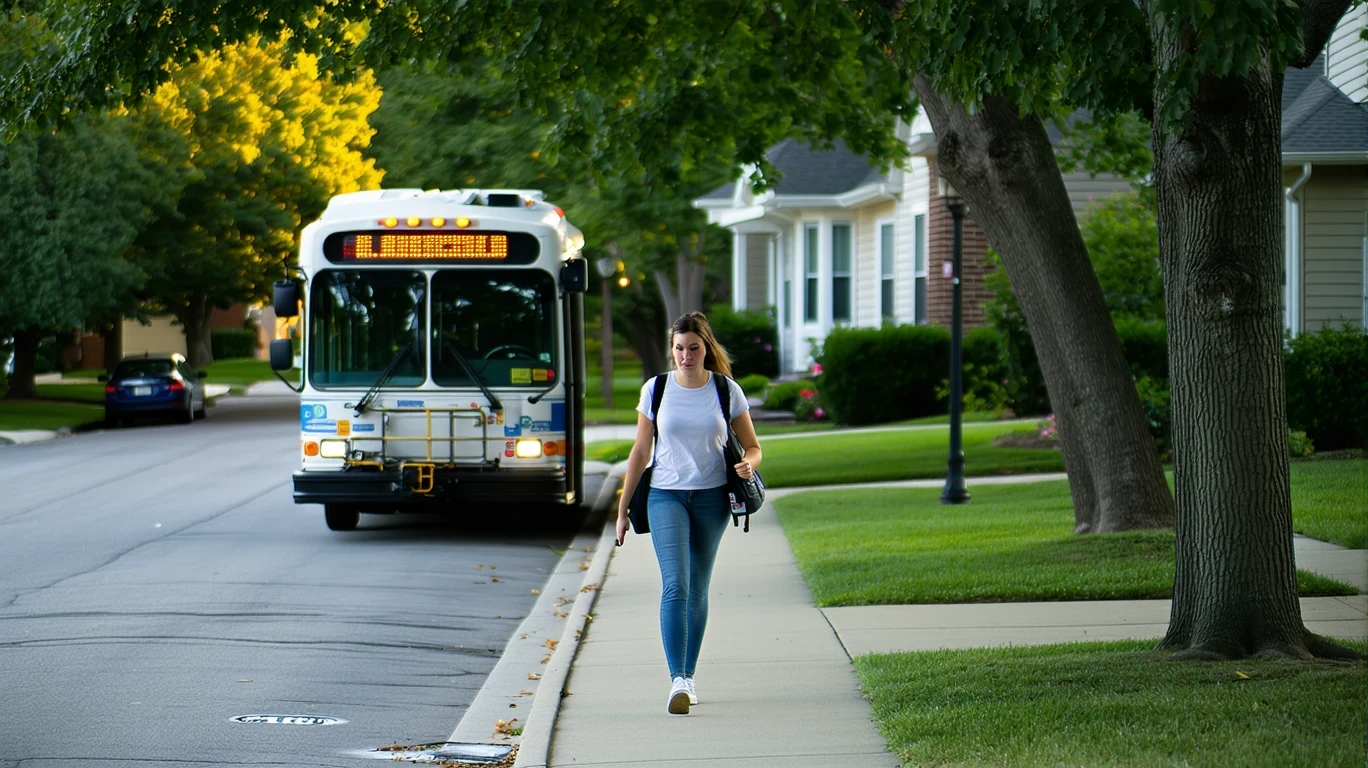
How People Get Around Elmhurst
Elmhurst’s transportation landscape reflects its role as a commuter suburb with strong rail connections and moderate walkability in select areas. Rail service is present and well-used, particularly by professionals commuting to downtown Chicago. Pedestrian infrastructure is denser than many comparable suburbs, especially near the downtown core, creating pockets where walking to coffee, dinner, or the library feels natural. Cycling infrastructure exists but remains limited to certain corridors.
That said, the dominant mobility pattern is still car-first. Errands are clustered along commercial corridors rather than distributed evenly, meaning most households rely on driving for groceries, appointments, and multi-stop trips. The average commute is 27 minutes, and 43.1% of workers face long commutes—a reflection of both regional job distribution and the limits of transit coverage outside peak hours and core routes.
What newcomers often misunderstand is that Elmhurst’s transit strength is directional, not universal. If your life runs on a predictable loop between home and downtown Chicago, transit can anchor your routine. If your day involves daycare, grocery runs, evening activities, or reverse commutes, you’ll need a car.
Public Transit Availability in Elmhurst
Public transit in Elmhurst often centers around systems such as Metra commuter rail, which provides direct access to downtown Chicago. Rail service is the backbone of transit viability here, particularly for professionals whose workdays align with peak schedules. Stations are accessible from walkable neighborhoods, and the presence of mixed residential and commercial land use near the core supports a transit-oriented lifestyle for those who live close in.
Bus service is also present, though coverage and frequency are more limited. Transit tends to work best along established corridors and during traditional commute windows. Late-night service, weekend flexibility, and coverage in peripheral residential areas fall short. If you live outside the walkable core or work non-traditional hours, transit becomes a secondary option rather than a primary tool.
Transit’s role in Elmhurst is less about replacing the car and more about reducing reliance on it for specific, high-frequency trips. It’s a commuter asset, not a comprehensive mobility solution.
Driving & Car Dependence Reality
For most households, driving isn’t optional—it’s structural. Elmhurst’s layout, while more pedestrian-friendly than many suburbs, still spreads daily errands across corridors and commercial nodes that aren’t easily walkable from every neighborhood. Grocery stores, pediatricians, gyms, and retail clusters are accessible by car in minutes but require significant planning or time on foot.
Parking is generally available and straightforward, both at home and at destinations. This reduces one friction point common in denser cities, but it also reinforces car dependence. Families with children, multi-income households, and anyone managing complex logistics will find that a car provides the flexibility transit can’t match.
Driving also offers predictability. You control departure times, routes, and stops. That control becomes especially valuable when managing school drop-offs, evening activities, or errands that don’t align with fixed schedules. The tradeoff is exposure to fuel prices—currently $4.29 per gallon—and the ongoing costs of insurance, maintenance, and depreciation, though this article focuses on access rather than expense.
Commuting Patterns & Daily Mobility
Commuting in Elmhurst breaks into two distinct patterns. The first is the linear downtown commute: professionals who live near rail stations and work in Chicago’s Loop can structure their days around predictable train schedules, often without needing a car during the week. This group benefits directly from Elmhurst’s rail access and walkable core.
The second pattern is everyone else. Reverse commuters heading to suburban office parks, multi-stop workers managing client visits or job sites, and parents coordinating school and activity schedules all rely on cars. Even households that use transit for one commute often keep a second vehicle for errands, flexibility, and off-peak needs.
Only 9.5% of workers in Elmhurst work from home, meaning the vast majority are moving daily. The 27-minute average commute reflects a mix of short local trips and longer regional hauls, but averages obscure the reality: your commute experience depends entirely on where you’re going and when.
Who Transit Works For — and Who It Doesn’t
Transit works well for single professionals or couples without children who live in walkable neighborhoods near rail stations and commute to downtown Chicago on a predictable schedule. If your routine is home-to-office-to-home, five days a week, Elmhurst’s rail access is a genuine asset. You can skip car ownership entirely or relegate it to weekend use.
Transit works poorly for families managing school runs, daycare, and activities. It also falls short for anyone working outside traditional hours, commuting to suburban job centers, or needing flexibility for mid-day errands. Peripheral neighborhoods, even within Elmhurst, often lack the density and walkability that make car-free living practical.
Renters in the downtown core have the best shot at reducing car dependence. Homeowners in quieter residential blocks farther from the station will almost certainly need at least one vehicle, and most will need two.
Transportation Tradeoffs in Elmhurst
Choosing between transit and driving in Elmhurst isn’t about cost alone—it’s about control, predictability, and lifestyle fit. Transit offers lower direct expenses and eliminates parking hassles downtown, but it locks you into fixed schedules and limits spontaneity. Driving offers flexibility and door-to-door convenience but exposes you to fuel price swings, parking costs in the city, and the ongoing burden of vehicle ownership.
For commuters, the tradeoff often comes down to time versus autonomy. A train commute might take the same 27 minutes as driving, but it’s passive time—you can read, work, or rest. Driving the same route means active attention, traffic variability, and parking uncertainty on the other end.
For families, the tradeoff is more lopsided. Transit can’t easily accommodate multiple stops, child seats, or grocery hauls. The car becomes the default not because transit is bad, but because daily logistics demand the flexibility only driving provides.
FAQs About Transportation in Elmhurst (2026)
Is public transit usable for daily commuting in Elmhurst?
Yes, if you’re commuting to downtown Chicago during peak hours and live near a rail station. Transit is reliable and well-used for that specific trip. For other commute patterns—reverse commutes, off-peak travel, or multi-stop days—transit becomes far less practical.
Do most people in Elmhurst rely on a car?
Yes. Even households that use transit for commuting typically own at least one car for errands, flexibility, and trips that don’t align with train schedules. Car dependence is the norm, though rail access reduces how often some households need to drive.
Which areas of Elmhurst are easiest to live in without a car?
Neighborhoods near the downtown core and rail stations, where pedestrian infrastructure is denser and errands are more clustered. Even there, most households find that occasional car access—whether owned, shared, or rented—makes life significantly easier.
How does commuting in Elmhurst compare to nearby cities?
Elmhurst offers stronger rail access than many comparable suburbs, which gives downtown Chicago commuters a real advantage. For other commute types, the experience is similar to surrounding communities: car-dependent, with commute times shaped more by destination than by Elmhurst itself.
Can you bike for daily errands in Elmhurst?
In some areas, yes. Cycling infrastructure exists in pockets, and the moderate density near the core makes short trips feasible by bike during good weather. But cycling isn’t a comprehensive solution—seasonal weather, distance to commercial corridors, and limited bike lane coverage mean most households still rely on cars for the majority of errands.
How Transportation Fits Into the Cost of Living in Elmhurst
Transportation isn’t just a line item—it’s a structural factor that shapes where you can live, how you spend your time, and what tradeoffs you’re willing to accept. In Elmhurst, rail access creates real optionality for downtown commuters, but it doesn’t eliminate the need for a car for most households. The result is a hybrid model: transit reduces driving frequency for some, but few households escape car ownership entirely.
That duality affects housing decisions, too. Proximity to the train station commands a premium, both in rent and home prices, because it unlocks a different daily rhythm. But even in those walkable pockets, families and multi-income households often find that monthly expenses still include vehicle costs alongside the benefits of transit access.
If you’re evaluating Elmhurst, start by mapping your actual trips—commute, errands, activities—and see where transit genuinely replaces driving versus where it just supplements it. That exercise will clarify whether Elmhurst’s transportation options align with how you actually live, not just how you’d like to live.
How this article was built: In addition to public economic data, this article incorporates location-based experiential signals derived from anonymized geographic patterns—such as access density, walkability, and land-use mix—to reflect how day-to-day living actually feels in Elmhurst, IL.