
Many people moving to Denver face the same question early: should I rent for a while, or is this a place where buying makes sense right away? The answer depends less on generic mortgage math and more on how Denver’s housing market actually works—what costs stay predictable, what shifts over time, and which neighborhoods offer the flexibility or stability you’re looking for. Denver’s housing landscape reflects a mix of urban density, suburban expansion, and mountain-adjacent geography, and that combination creates real variation in how people experience both renting and ownership.
This article walks through the structure of housing costs in Denver, explains the tradeoffs between renting and owning in this market, and clarifies what drives long-term exposure. It’s built for people trying to understand not just what housing costs today, but how those costs behave as circumstances change.
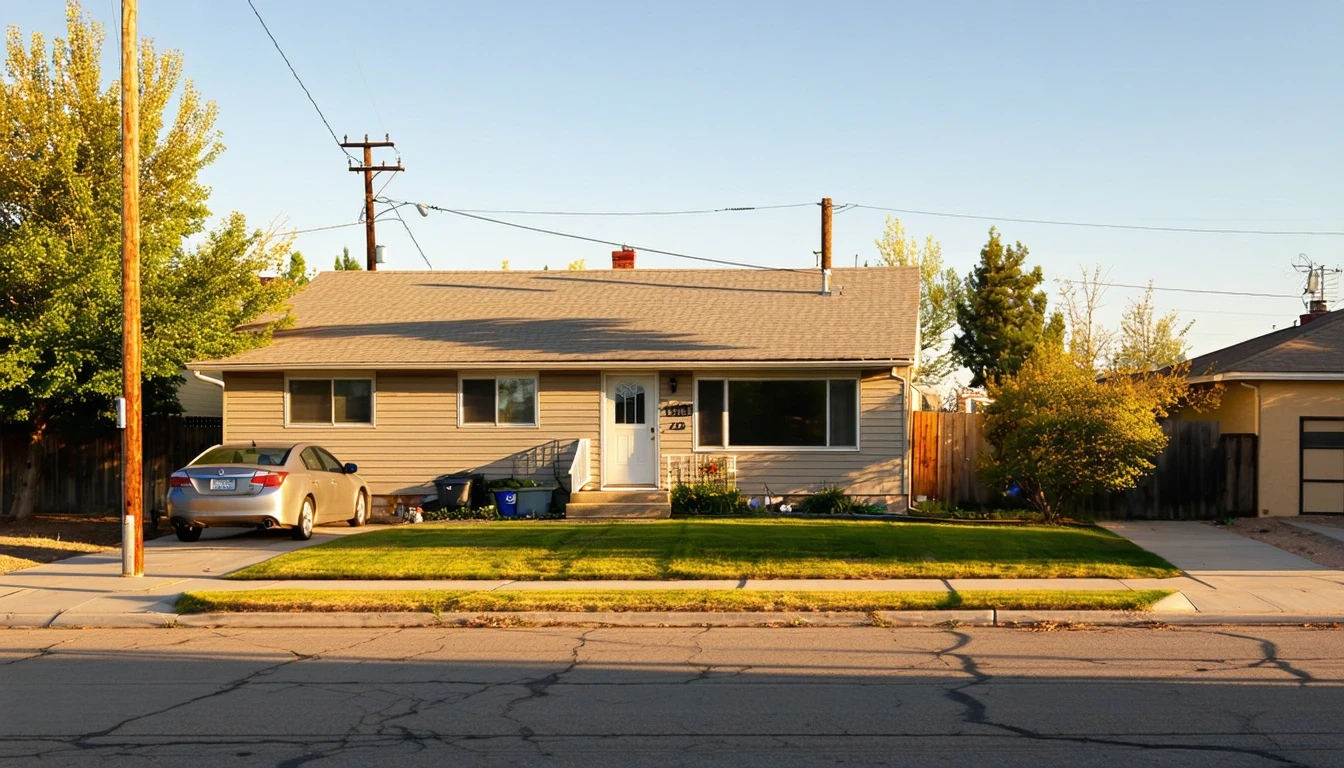
The Housing Market in Denver Today
Denver’s housing market is shaped by sustained population growth, limited geographic expansion due to mountain proximity, and a regional economy that has attracted both young professionals and established families over the past two decades. The result is a market where home values have climbed well above the national baseline and rental inventory remains under steady pressure, particularly in neighborhoods close to transit, parks, or job centers.
The median home value in Denver sits at $540,400, reflecting both the city’s economic momentum and the constraints on new construction in desirable areas. Median gross rent is $1,665 per month, a figure that varies significantly depending on proximity to rail lines, walkable commercial corridors, and access to outdoor space. The regional price parity index of 105 indicates that overall costs in Denver run about 5% above the national baseline, and housing is the primary driver of that difference.
What newcomers often misunderstand is that Denver’s housing market isn’t uniform. The city includes walkable pockets with high pedestrian-to-road ratios, rail-accessible neighborhoods, and car-oriented suburban edges. These structural differences mean that what shapes the cost of living in Denver depends heavily on where you choose to live and how you move through daily life. A household near a rail station with access to grocery stores, parks, and schools within walking distance faces a different cost profile than one in a low-density area where every errand requires a car.
Renting in Denver
Renting in Denver offers flexibility, especially for people still learning which neighborhoods fit their routines or who expect job circumstances to shift. Rental inventory spans high-rise apartments downtown, mid-rise buildings near transit stops, and single-family homes in quieter residential blocks. Rental pressure is real—vacancy rates remain low in neighborhoods with strong transit access or proximity to employment hubs—but the market isn’t monolithic.
The $1,665 median gross rent reflects a citywide figure, but actual rent depends on unit type, location, and building age. Renters who prioritize walkability, rail access, or proximity to parks often pay more per square foot but reduce transportation and errand-related costs. Those willing to live farther from transit or in areas with fewer pedestrian amenities can find lower rents, though the tradeoff usually involves higher car dependency and longer commutes.
Rental increases in Denver tend to track demand for specific neighborhoods rather than following a uniform citywide pattern. Areas with new development, improved transit connections, or rising commercial activity see faster rent growth. Renters should expect lease renewals to reflect local conditions, not just inflation, and plan for variability rather than assuming stable year-over-year costs.
Owning a Home in Denver
Ownership in Denver means navigating a high entry cost—the $540,400 median home value represents a significant upfront commitment—but it also shifts the cost structure from variable rent payments to a mix of predictable mortgage obligations and less predictable property taxes, maintenance, and governance fees. Ownership locks in the largest single cost (the mortgage principal and interest) while exposing households to inflation, policy changes, and the physical aging of the property.
Property taxes in Denver are set at the county level and influenced by state assessment rules, mill levies, and voter-approved measures. While no specific tax rate is provided here, owners should expect annual tax bills to fluctuate based on assessed value changes and local budget decisions. Unlike rent, which resets at lease renewal, property taxes adjust incrementally but persistently, and there’s no opting out.
Homeowners associations are common in newer developments, townhome communities, and condo buildings. HOA fees fund shared infrastructure, landscaping, snow removal, and sometimes utilities, but they also introduce governance complexity and the risk of special assessments. Buyers should verify what HOA fees cover, how often they’ve increased, and whether the reserve fund is adequately funded before committing.
Maintenance and repair costs in Denver are influenced by elevation, temperature swings, and intense sun exposure. Roofs, exterior paint, and HVAC systems experience faster wear than in more temperate climates. Owners should budget for these recurring expenses and understand that deferred maintenance compounds quickly in Denver’s climate.
Apartment vs House in Denver — Cost Behavior Comparison
The cost difference between renting an apartment and renting or owning a house in Denver isn’t just about square footage—it’s about how housing type interacts with Denver’s climate, infrastructure, and neighborhood structure. The table below includes only categories where the distinction is shaped by local conditions, not generic housing differences.
| Expense Category | Apartment | House |
|---|---|---|
| Heating & Cooling | Lower exposure; shared walls reduce heat loss, smaller conditioned space | Higher exposure; standalone structure, larger volume, elevation-driven temperature swings increase seasonal demand |
| Exterior Maintenance | Managed by landlord or HOA; no direct cost or control | Owner responsibility; sun damage, roof wear, and paint degradation accelerate in Denver’s high-altitude climate |
| Parking & Storage | Often limited or fee-based; walkable neighborhoods reduce car dependency | Typically included; necessary in car-oriented areas where transit and errands aren’t accessible on foot |
| Outdoor Space | Minimal or shared; proximity to Denver’s integrated park network compensates | Private yard; useful for families, pets, or gardening, but adds water, landscaping, and maintenance costs in semi-arid climate |
Why these categories? Denver’s dual-season climate (cold winters, hot summers) makes heating and cooling costs behave differently depending on building type and insulation. The city’s elevation and intense sun exposure accelerate exterior wear on standalone homes. Walkable pockets and rail-present transit mean that apartment dwellers in certain neighborhoods can reduce or eliminate car costs, while house renters or owners in less-connected areas face higher transportation exposure. The city’s high park density (integrated green space access) reduces the necessity of private outdoor space for many households, making the apartment-versus-house tradeoff less about recreation and more about maintenance control and storage needs.
Utilities & Upkeep Differences
Utility and maintenance exposure in Denver varies more by housing type and location than in many other cities, primarily due to elevation, climate intensity, and infrastructure age. Apartments, especially those in newer buildings or mid-rise structures with shared walls, experience lower heating and cooling costs because conditioned space is smaller and heat loss is reduced. Houses, particularly older single-family homes, face noticeable seasonal utility swings. Winter heating and summer cooling both drive meaningful cost exposure, and the temperature range between day and night—common at elevation—means HVAC systems cycle more frequently.
Electricity in Denver is priced at 16.12¢/kWh, and natural gas costs $10.41 per thousand cubic feet (MCF). These rates interact with building efficiency, insulation quality, and household behavior. A well-insulated apartment near downtown might see minimal seasonal variation, while an older house in a suburban neighborhood could experience dominant heating costs in winter and noticeable cooling costs during prolonged summer heat.
Maintenance differences are driven by Denver’s climate. Exterior paint fades faster under intense sun. Roofs experience thermal stress from temperature swings. Sprinkler systems and landscaping require careful water management in a semi-arid environment. Apartment renters are insulated from these costs; house owners are not. The distinction isn’t minor—it’s a structural difference in how housing costs behave over time.
Rent vs Buy: Long-Term Exposure in Denver
The decision to rent or buy in Denver isn’t primarily about monthly payment comparison—it’s about which risks and responsibilities you’re willing to take on. Renting keeps the largest cost variable but also keeps it someone else’s problem. Lease renewals reflect market conditions, and rent can rise sharply in high-demand neighborhoods, but renters can relocate without selling an asset or unwinding a mortgage.
Ownership replaces rent volatility with a fixed mortgage payment but introduces exposure to property taxes, insurance, maintenance, and governance fees, all of which can increase over time. Property taxes adjust with assessed values and policy changes. Insurance costs reflect risk pools, claim history, and regional weather patterns. Maintenance expenses are episodic but inevitable, and they compound if deferred. HOA fees, where applicable, tend to rise as buildings age and reserves are drawn down.
Over time, ownership in Denver benefits households who stay long enough to absorb transaction costs and who can manage the financial and logistical complexity of upkeep in a climate that accelerates wear. Renting benefits those who value mobility, predictability of non-housing costs, or who aren’t ready to commit to a specific neighborhood before understanding how transit access, school quality, or park proximity affects daily routines.
Denver’s housing market rewards buyers who understand what a budget has to handle in Denver—not just the mortgage, but the secondary costs that shift with weather, policy, and time. It rewards renters who choose neighborhoods strategically, using transit and walkability to reduce car dependency and stabilize non-housing expenses.
FAQs About Housing Costs in Denver
Is it better to rent or buy in Denver right now?
It depends on how long you plan to stay, whether you’re ready to manage property taxes and maintenance, and whether you value cost predictability or mobility. Buying makes sense for households with stable income, long-term plans, and the capacity to handle upkeep in Denver’s climate. Renting makes sense for those still learning the city, expecting job changes, or prioritizing flexibility over equity.
How much do property taxes add to homeownership costs in Denver?
Property taxes in Denver are set locally and adjust with assessed values and mill levies. While no specific rate is provided here, owners should expect annual bills to increase over time, particularly if home values continue rising or if voters approve new levies. Taxes are a recurring, non-optional cost that doesn’t stabilize the way a fixed mortgage does.
Do most Denver neighborhoods have HOAs?
HOAs are common in newer developments, townhome communities, and condos, but less prevalent in older single-family neighborhoods. Buyers should verify what fees cover, how often they’ve increased, and whether the association is financially healthy. HOA fees add a layer of cost and governance that some buyers overlook until after closing.
How does Denver’s climate affect housing maintenance costs?
Denver’s elevation, intense sun, and temperature swings accelerate wear on roofs, exterior paint, and HVAC systems. Owners face higher maintenance frequency than in more temperate climates, and deferred repairs compound quickly. Renters are insulated from these costs, but owners should budget for them as recurring rather than occasional expenses.
Does living near transit in Denver actually reduce housing costs?
Living near rail or in walkable neighborhoods often increases rent or purchase price per square foot, but it can reduce or eliminate car ownership costs, lower commute time, and simplify errands. For households that can function without a car—or with one instead of two—the tradeoff often improves overall cost structure, even if housing itself costs more.
Making Housing Choices in Denver
Housing costs in Denver are shaped by market pressure, climate exposure, and the structural differences between neighborhoods. Renting offers flexibility and insulation from maintenance risk but exposes households to lease-renewal volatility. Ownership locks in the mortgage but introduces property tax, insurance, HOA, and upkeep costs that shift over time and require active management.
The right choice depends on how long you’re staying, how much cost variability you can tolerate, and whether you’re ready to navigate Denver’s climate-driven maintenance demands. Households that value mobility, are still learning the city, or expect income or job changes to shift in the near term often find renting the better fit. Those with stable plans, long time horizons, and the capacity to manage ongoing property costs often benefit from ownership, particularly if they choose neighborhoods where transit, parks, and errands reduce secondary expenses.
Denver’s housing market isn’t uniform, and neither is the rent-versus-buy calculus. The decision should reflect not just what you can afford today, but how you expect costs to behave as your household, the market, and the city itself continue to evolve.
How this article was built: In addition to public economic data, this article incorporates location-based experiential signals derived from anonymized geographic patterns—such as access density, walkability, and land-use mix—to reflect how day-to-day living actually feels in Denver, CO.