
74 out of 100 residents say they’re happy in Broomfield—but that number doesn’t tell you whether you’d be one of them. Happiness here isn’t about a single verdict; it’s about alignment. Broomfield tends to reward people who want suburban structure, outdoor access, and family-friendly infrastructure without sacrificing proximity to Denver. It tends to frustrate people who need walkable errands, robust transit, or dense urban texture. The city’s vibe reflects a place in transition: part planned suburb, part evolving community, with pockets of walkability surrounded by car-oriented corridors and a strong emphasis on parks, schools, and quiet residential blocks.
What keeps coming up emotionally is the tradeoff between convenience and calm. People who feel “this fits me” in Broomfield often describe a rhythm built around driving to clusters, planning errands in batches, and enjoying green space that’s woven throughout the city. People who feel friction often describe the gap between what the city looks like it should offer—modern, well-kept, accessible—and what it actually requires: a car, a commute, and patience with sprawl.
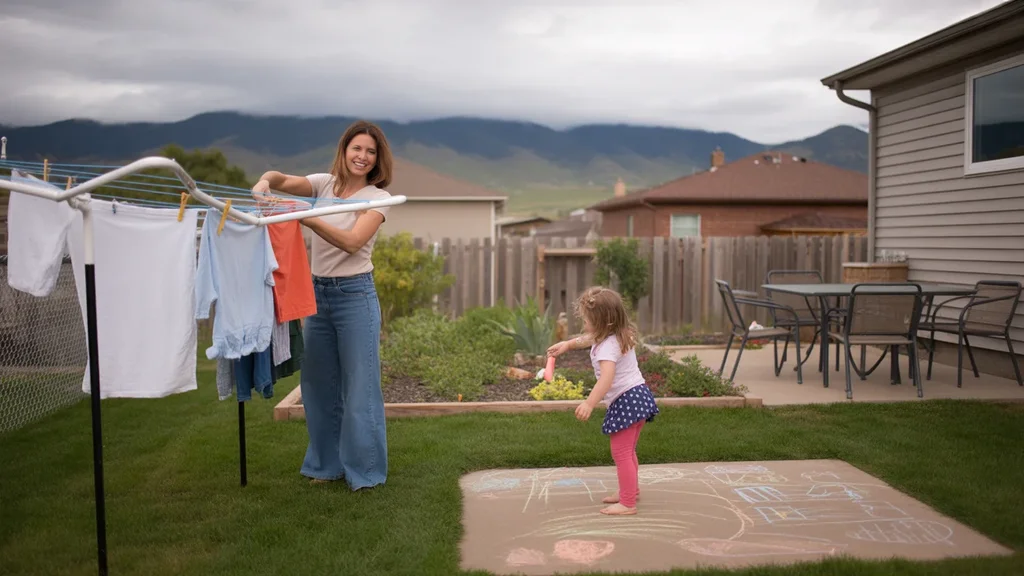
What Broomfield’s Emotional Tone Actually Feels Like
Broomfield’s overall sentiment is shaped by its dual identity: it’s technically a city, but it feels like a suburb with ambitions. The pedestrian infrastructure is strong in certain pockets, which creates moments of walkability that feel intentional and pleasant—tree-lined paths, connected parks, neighborhoods where you can stroll to a playground or trail. But those pockets don’t connect into a continuous network, so daily errands still pull you back into the car. Food and grocery options are clustered along commercial corridors rather than distributed evenly, which means convenience depends on where you live and how far you’re willing to drive.
The city’s park density is genuinely high, and water features add to the sense of outdoor integration. Families with kids feel this immediately: schools and playgrounds are present throughout, and the infrastructure for youth activities is strong. For people who value outdoor life and want their kids to grow up with easy access to trails, open space, and recreational amenities, Broomfield delivers. For people who want to walk to a coffee shop, grab takeout on foot, or skip the car for a quick errand, the city feels more limiting.
The building character is mixed—neither fully low-rise suburban nor notably vertical—which reflects the city’s ongoing evolution. There’s a blend of single-family neighborhoods, townhome clusters, and some denser residential development, but the overall texture still leans suburban. Land use is mixed, meaning residential and commercial zones coexist, but they don’t always integrate in a way that reduces car dependency. You’ll find yourself driving between zones rather than walking through them.
Social Media Buzz in Broomfield
In online spaces where Broomfield residents gather, the tone is protective but pragmatic. People talk about the city with a mix of pride and realism—they know it’s not Denver, and they’re okay with that, but they also notice when the tradeoffs start to feel heavier than expected. Conversations often circle back to growth, traffic, and whether the city is keeping up with its own expansion.
“It’s a great place to raise kids, but you’re going to spend a lot of time in the car. That’s just how it is here.”
“I love the parks and trails, but I wish I could walk to more than just a park. Errands still mean driving to the same few shopping centers.”
“Broomfield feels like it’s trying to be something more than a bedroom community, but it’s not quite there yet. You’re still commuting to Denver for work, nightlife, or anything that feels urban.”
The recurring themes are outdoor access, family fit, and the tension between suburban calm and the desire for more local texture. People who moved here for space and safety tend to feel satisfied. People who moved here expecting walkability or a self-contained downtown tend to feel let down.
Local News Tone
Local coverage in Broomfield tends to frame the city through the lens of growth, infrastructure, and community identity. The tone is rarely alarmist, but it’s also rarely celebratory—it’s more observational, tracking how the city is changing and what residents think about it. Headlines and story themes often reflect the tension between development and preservation, convenience and character.
- “Community Debates What Growth Should Look Like”
- “New Amenities Arrive as Town Identity Evolves”
- “Residents Weigh Convenience vs Quiet”
- “Schools and Parks Remain Top Priority for Families”
- “Commute Times and Traffic Patterns Shift with Expansion”
The framing reflects a city that’s self-aware but still figuring itself out. There’s pride in what Broomfield offers—especially for families—but also acknowledgment that the city’s structure doesn’t work equally well for everyone. The tone is less about conflict and more about negotiation: what are we willing to give up, and what do we expect in return?
Review-Based Public Perception
On platforms like Google, Yelp, and neighborhood forums, Broomfield’s public perception splits along expectation lines. People who wanted suburban safety, good schools, and outdoor access tend to leave positive reviews. People who wanted walkable neighborhoods, diverse dining, or a strong sense of local identity tend to express disappointment—not with what’s bad, but with what’s missing.
Praise often centers on:
- Park quality and trail connectivity
- Family-friendly infrastructure and school options
- Clean, well-maintained neighborhoods
- Proximity to Denver without living in the city
Complaints often focus on:
- Car dependency for nearly all errands
- Limited dining and entertainment options within city limits
- Lack of a cohesive downtown or gathering space
- Traffic congestion during commute hours
- High housing pressure relative to what the city offers
Neighborhood variation exists but isn’t always clearly defined. Newer planned areas tend to feel more polished and amenity-rich, with HOA-managed landscaping and newer builds. Older pockets feel more established, with larger lots and mature trees, but sometimes fewer nearby services. The difference isn’t dramatic—it’s more about age and layout than character or affordability.
Comparison to Nearby Cities
| Aspect | Broomfield | Westminster | Thornton |
|---|---|---|---|
| Overall Vibe | Suburban calm, family-focused, car-dependent | More urban texture, denser, mixed walkability | Sprawling, budget-friendly, less polished |
| Walkability | Pockets of strong pedestrian paths, not continuous | Better connected corridors, more walkable zones | Minimal walkability, car-essential |
| Outdoor Access | High park density, integrated green space | Good park access, less water features | Moderate park access, more spread out |
| Family Fit | Strong schools and playgrounds, family infrastructure | Good family options, more diverse housing types | Family-friendly but fewer amenities |
| Cost Pressure | High income required, expensive for renters | Slightly lower, but still competitive | More affordable, trade-off in polish |
Broomfield sits in the middle of a suburban spectrum. Westminster offers more urban texture and better walkability, which appeals to people who want a bit more density and fewer car trips. Thornton offers more affordability and space, which appeals to people willing to trade polish and proximity for lower costs. Broomfield appeals to people who want the best of suburban infrastructure—parks, schools, safety—without feeling too far from Denver, and who can afford the premium that comes with it.
If you need walkability and don’t want to rely on a car, Westminster is the better fit. If you’re stretching your budget and prioritize space over amenities, Thornton makes more sense. If you want a polished suburban environment with strong family infrastructure and can handle the cost structure, Broomfield aligns.
What Locals Are Saying
“We moved here for the schools and parks, and on that front, Broomfield has been exactly what we needed. But I didn’t realize how much I’d miss being able to walk to things. Everything requires a drive.”
“It’s quiet, safe, and clean. If that’s what you’re looking for, you’ll be happy. If you want nightlife or a downtown scene, you’re going to Denver anyway.”
“The outdoor access is incredible. We’re on trails or at a park almost every weekend. That’s the whole reason we’re here, and it’s worth it.”
“I thought Broomfield would feel more self-contained, but it really functions as a bedroom community. You’re commuting to Denver for work, dining, entertainment—everything that’s not home or errands.”
“The cost is high for what you get. The income level here is real, and if you’re not in that range, you’re going to feel the squeeze, especially as a renter.”
“I like that it’s not too suburban and not too urban, but that also means it’s not great at either. You’re always compromising a little.”
“If you have kids and a car, this place works. If you don’t have both, it’s going to feel limiting pretty quickly.”
How this article was built: In addition to public economic data, this article incorporates location-based experiential signals derived from anonymized geographic patterns—such as access density, walkability, and land-use mix—to reflect how day-to-day living actually feels in Broomfield, CO.
Does Broomfield Feel Like a Good Fit?
Broomfield’s emotional profile is shaped by what it prioritizes: family infrastructure, outdoor access, and suburban structure. It tends to work for people who want a safe, polished environment with strong schools and parks, who are comfortable driving for errands, and who value proximity to Denver without living in the city. It tends to frustrate people who need walkability, robust transit, or a self-contained local scene.
The city’s vibe isn’t about excitement or spontaneity—it’s about predictability and quality of life within a suburban framework. If that framework aligns with your priorities, Broomfield delivers. If it doesn’t, the tradeoffs will feel heavier than the benefits.
For more on how costs break down month to month, explore monthly spending in Broomfield. To understand what income and lifestyle requirements actually look like here, dig into the details that shape day-to-day comfort and long-term fit.
The perspectives shown reflect commonly expressed local sentiment and recurring themes in public discussion, rather than individual accounts.