
Owning a home in Boulder means confronting costs that extend far beyond the mortgage payment. At a median home value of $919,700, the acquisition barrier is severe—but the ongoing expenses that follow are equally consequential. Property taxes, homeowners insurance, maintenance reserves, and utility exposure don’t pause once you close. For households weighing rent against ownership, or trying to understand why Boulder’s housing market feels so unforgiving, the hidden costs are where long-term financial pressure actually lives.
This article breaks down the full cost structure of housing in Boulder: what renters face, what owners carry, and how the city’s infrastructure and climate shape ongoing expenses. If you’re deciding whether Boulder fits your housing budget, the answer depends not just on what you can afford upfront—but on what you’re prepared to manage year after year.
The Housing Market in Boulder Today
Boulder’s housing market operates under constraints that most mid-sized cities don’t face. Hemmed in by open space preservation policies, federal land, and the foothills of the Rockies, the city has limited room to expand. That scarcity drives prices upward and keeps inventory tight. The median home value of $919,700 reflects not just demand, but a structural ceiling on supply that won’t ease quickly.
The city’s dual identity as a college town and a retirement destination adds competing pressures. The University of Colorado Boulder brings a steady stream of students, faculty, and staff who need housing, while retirees are drawn to the area’s outdoor access, walkability, and cultural amenities. Both groups bid for a limited stock of homes and rentals, creating a market where affordability is rare and compromise is common.
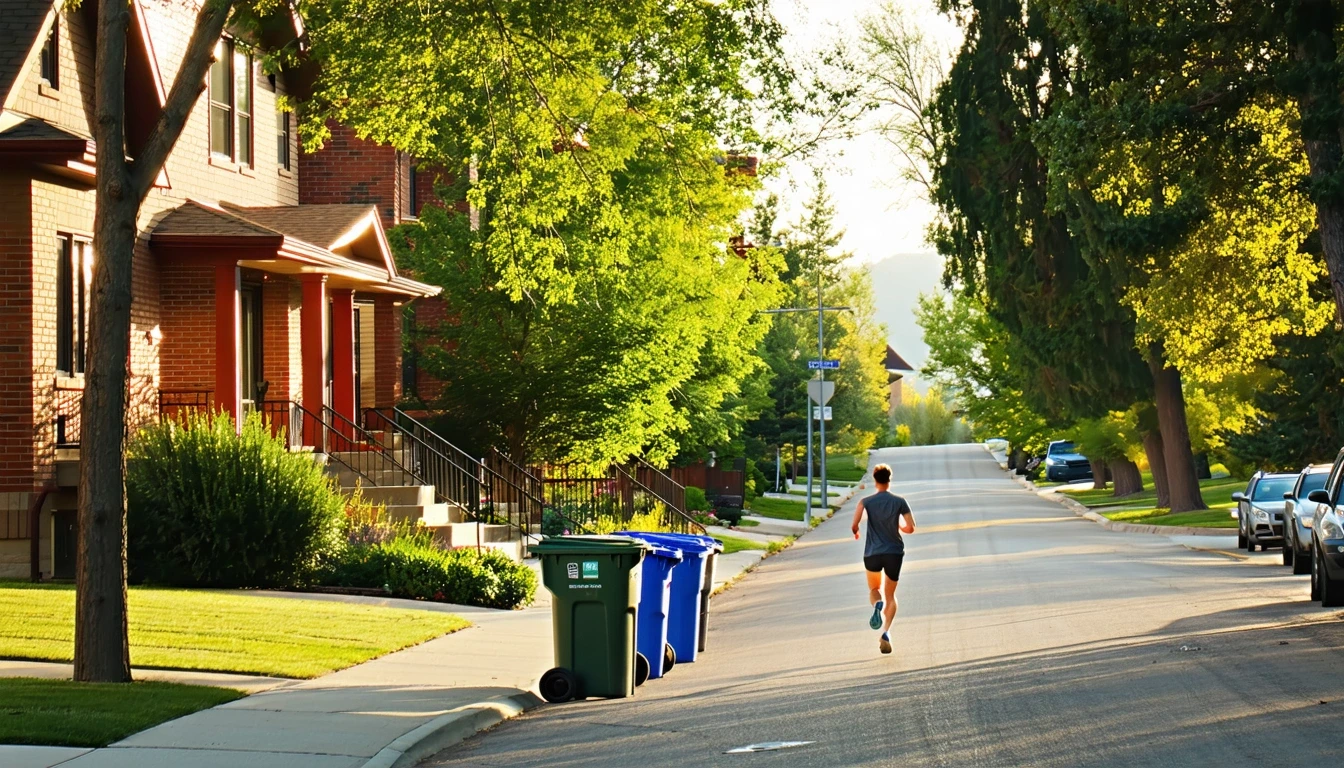
What newcomers often misunderstand is that Boulder’s premium isn’t just about location—it’s about infrastructure. Walkable pockets with pedestrian-friendly streets, integrated parks with high density of green space, and broadly accessible grocery and food options mean that certain neighborhoods internalize convenience into home values. If you’re comparing Boulder to nearby suburbs or cities in the Denver metro, the price gap reflects not just desirability, but the cost of living in a place where daily errands don’t always require a car and outdoor space is woven into the street grid.
Renting in Boulder
At a median gross rent of $1,853 per month, Boulder’s rental market reflects the same scarcity that drives home values. Rental availability is tight, and competition is constant—especially near the university and in neighborhoods with strong access to transit, parks, and errands. Renters in Boulder face volatility: lease renewals can bring sharp increases, and turnover costs (deposits, moving expenses, broker fees in some cases) add friction every time a household relocates.
Location within Boulder matters significantly for renters. Neighborhoods with walkable pockets and notable cycling infrastructure allow some households to reduce or eliminate car dependency, which offsets transportation costs. Renters near bus lines or within walking distance of grocery stores experience a different cost structure than those in car-dependent areas on the city’s edges. The rental premium in these accessible neighborhoods isn’t arbitrary—it reflects real savings in time, fuel, and vehicle wear.
For renters, Boulder’s housing pressure is compounded by the fact that rental stock skews toward smaller units and older buildings. Maintenance quality varies, and utility costs—especially heating during cold months—can surprise tenants who aren’t prepared for Colorado winters. Renters should expect that monthly expenses will extend beyond rent: electricity at 16.35¢/kWh and natural gas at $12.26/MCF mean that winter heating bills add noticeable pressure, particularly in older or poorly insulated units.
Owning a Home in Boulder
Ownership in Boulder begins with the acquisition barrier: a median home value of $919,700 requires substantial down payment reserves, strong credit, and income well above the city’s median household income of $80,243 per year. But the upfront cost is only the beginning. Property taxes, homeowners insurance, and maintenance reserves are ongoing obligations that don’t shrink once the mortgage is signed.
Property tax exposure in Boulder is tied to home values, which means that even modest assessment increases translate into real annual costs. While the exact rate isn’t provided here, owners should anticipate that taxes will rise over time as the city’s housing market appreciates. Homeowners insurance in Colorado has become more volatile in recent years, driven by wildfire risk, hailstorms, and insurer pullbacks from high-exposure markets. Boulder sits near the foothills, and while it’s not a high-fire zone, proximity to wildland areas and the region’s weather patterns mean that insurance premiums reflect elevated risk.
Maintenance is another hidden cost that distinguishes ownership from renting. Boulder’s climate—cold winters with occasional snow, dry summers, and significant temperature swings—stresses roofs, HVAC systems, and exterior materials. Owners should budget for heating system upkeep, roof inspections, and weatherization work. Homes in Boulder’s older neighborhoods may require more frequent maintenance, while newer construction in planned developments may come with HOA fees that bundle some upkeep but add another fixed monthly cost.
What ownership offers in Boulder is predictability and control. Fixed-rate mortgages lock in principal and interest, and owners can invest in efficiency upgrades—better insulation, programmable thermostats, water-efficient landscaping—that reduce long-term utility exposure. Renters can’t make those changes, and they absorb the cost of inefficiency without the ability to fix it.
Apartment vs House in Boulder — Cost Behavior Comparison
| Expense Category | Apartment | House |
|---|---|---|
| Heating & Cooling | Lower square footage and shared walls reduce exposure; winter heating still noticeable given cold season length | Higher square footage and standalone structure increase exposure; heating dominates winter bills, insulation quality varies widely |
| Exterior Maintenance | Typically covered by landlord or HOA; tenant has no control over timing or quality | Owner responsibility; Boulder’s temperature swings and dry summers stress roofs, siding, and landscaping |
| Yard & Landscaping | Not applicable or minimal | Water costs and maintenance time required; Boulder’s semi-arid climate and occasional drought restrictions add complexity |
| Parking & Storage | Often limited or fee-based; street parking in walkable pockets can be competitive | Typically includes garage or driveway; storage space reduces need for offsite rentals |
| Walkability & Errands | Apartments in Boulder’s walkable pockets offer high access to groceries, parks, and transit; reduces car dependency | Houses on city edges or in car-dependent neighborhoods require vehicle for most errands; fuel and time costs rise |
Methodology note: This comparison reflects cost behavior differences driven by Boulder’s climate (cold winters, dry summers), housing stock age and insulation variability, and infrastructure patterns (walkable pockets vs car-dependent edges). Categories like property taxes and insurance are omitted because they vary more by ownership structure and property value than by housing type. The table isolates expenses where apartments and houses diverge meaningfully in Boulder’s context.
Utilities & Upkeep Differences
Utility exposure in Boulder is shaped by the city’s climate and housing stock. Cold winters mean that heating dominates energy bills from November through March. Natural gas at $12.26/MCF is the primary heating fuel for most homes, and older houses with poor insulation or aging furnaces face noticeable winter costs. Apartments with shared walls and smaller square footage reduce heating exposure, but tenants in older buildings still see seasonal spikes.
Electricity at 16.35¢/kWh is above the national average, and while cooling costs are moderate—Boulder’s summers are warm but not extreme—households with central air conditioning or poor window efficiency will see higher bills during July and August. Water and sewer costs are also influenced by Boulder’s semi-arid climate: outdoor watering for lawns and landscaping can drive up bills during dry months, and the city occasionally imposes drought restrictions that limit irrigation.
Maintenance exposure differs sharply between apartments and houses. Apartment dwellers typically have exterior upkeep, HVAC servicing, and structural repairs covered by landlords or HOA fees, though they have no control over timing or quality. Homeowners carry the full burden: roof repairs after hailstorms, furnace replacements, and weatherization work to manage Boulder’s temperature swings. The city’s older housing stock—particularly homes built before modern insulation standards—requires more frequent maintenance and higher utility spending to stay comfortable year-round.
Rent vs Buy: Long-Term Exposure in Boulder
Renting in Boulder means accepting volatility in exchange for flexibility. Lease renewals can bring sharp rent increases, especially in high-demand neighborhoods near the university or in walkable pockets with strong access to parks and errands. Renters have no control over those increases, and they can’t invest in efficiency upgrades to reduce utility costs. Over time, renters absorb the cost of inefficiency—poor insulation, aging appliances, drafty windows—without the ability to fix the underlying problem.
Ownership offers predictability: fixed-rate mortgages lock in principal and interest, and property taxes, while they rise, do so more gradually than rent. Owners can invest in weatherization, insulation, and HVAC upgrades that reduce long-term utility exposure. They also build equity, which renters don’t. But ownership comes with risk: maintenance costs are unpredictable, insurance premiums can spike, and property taxes follow home values upward. In a market where the median home value is $919,700, even small percentage increases in taxes or insurance translate into real annual costs.
The tradeoff isn’t about which option costs less—it’s about which risk profile fits your household. Renters face income volatility and lease uncertainty but avoid the capital risk of ownership. Owners face maintenance and tax exposure but gain control, stability, and the ability to reduce costs over time through strategic investment. In Boulder, where housing scarcity and infrastructure quality drive premiums, the decision depends on how long you plan to stay, how much capital you can deploy upfront, and whether you value flexibility or predictability more.
FAQs About Housing Costs in Boulder
Why are Boulder home prices so high compared to nearby cities?
Boulder’s median home value of $919,700 reflects constrained supply—open space preservation, federal land, and geographic limits prevent outward expansion—and strong demand from university affiliates, retirees, and households drawn to the city’s walkable infrastructure and outdoor access. The premium isn’t just location; it’s scarcity and amenity density.
Is renting in Boulder more affordable than owning?
Renting at $1,853/month avoids the upfront capital barrier and ongoing property tax and maintenance exposure, but it offers no equity and exposes households to lease renewal volatility. Ownership requires substantial down payment and income reserves but provides long-term predictability. Neither is universally “affordable”—the fit depends on capital, income stability, and time horizon.
How much do utilities add to Boulder housing costs?
Heating dominates winter utility bills, driven by cold temperatures and natural gas at $12.26/MCF. Electricity at 16.35¢/kWh adds moderate year-round costs, with summer cooling and winter heating both contributing. Older homes with poor insulation face higher exposure, and water costs rise during dry months if outdoor irrigation is needed.
Does Boulder’s walkability reduce housing costs?
Walkability doesn’t lower housing costs—it raises them. Neighborhoods with pedestrian-friendly streets, integrated parks, and broadly accessible groceries command higher rents and home values because they reduce car dependency and improve daily convenience. Households in these areas save on transportation but pay more for housing.
What hidden costs do Boulder homeowners face beyond the mortgage?
Property taxes tied to high home values, homeowners insurance premiums elevated by wildfire and hail risk, maintenance driven by Boulder’s temperature swings and dry climate, and utility exposure from cold winters all add ongoing costs. HOA fees in planned developments bundle some services but add another fixed monthly obligation.
Making Housing Choices in Boulder
Housing in Boulder is expensive, and the cost structure extends far beyond the price tag on a lease or a mortgage. Renters face volatility and limited control, but they avoid the capital barrier and maintenance exposure that ownership demands. Owners gain predictability and the ability to invest in efficiency, but they carry the full weight of taxes, insurance, and upkeep in a market where home values are extreme and climate stresses are real.
What makes Boulder distinct is that where money goes depends heavily on where you live within the city. Walkable pockets with strong access to parks, groceries, and transit reduce car dependency and improve daily convenience, but those neighborhoods command premiums that reflect the infrastructure underneath. Households on the city’s edges or in car-dependent areas face lower housing costs but higher transportation and time burdens.
The decision isn’t about finding affordability—it’s about understanding which costs you’re willing to carry and which risks you’re prepared to manage. Boulder’s housing market rewards households with capital, income stability, and long time horizons. For everyone else, the tradeoffs are real, and the pressure is constant.
How this article was built: In addition to public economic data, this article incorporates location-based experiential signals derived from anonymized geographic patterns—such as access density, walkability, and land-use mix—to reflect how day-to-day living actually feels in Boulder, CO.