
“I thought I could take the train to work when I moved here. Turns out, only if you live in the right part of Aurora—and I don’t.”
How People Get Around Aurora
Understanding transportation options in Aurora means recognizing a fundamental split: this is a city where rail transit exists and walkable pockets are real, but where most residents still depend on a car for daily life. Aurora’s geography stretches across a large area east of Denver, and while certain corridors offer genuine transit access, much of the city remains structured around driving. Newcomers often assume proximity to Denver means comprehensive transit coverage, but Aurora’s internal layout tells a different story—one where your neighborhood determines your mobility options more than the city name on your address.
The dominant pattern here is car-first living, punctuated by transit-viable zones that require intentional housing choices to access. If you’re comparing Aurora to a dense urban core, you’ll find the infrastructure doesn’t support car-free living citywide. But if you’re comparing it to purely suburban sprawl, you’ll notice Aurora has more transit bones than many similar-sized cities. The reality sits between those extremes: rail service is present, pedestrian infrastructure is substantial in parts of the city, and cycling infrastructure appears throughout—but none of these eliminate the practical need for a car unless you’ve specifically positioned yourself near the right corridors.
What newcomers usually misunderstand is that “Aurora has transit” and “I can rely on transit in Aurora” are two different statements. The first is true. The second depends entirely on where you live, where you work, and how you structure errands. The city’s development pattern favors driving for flexibility, and most households here have accepted that tradeoff.
Public Transit Availability in Aurora
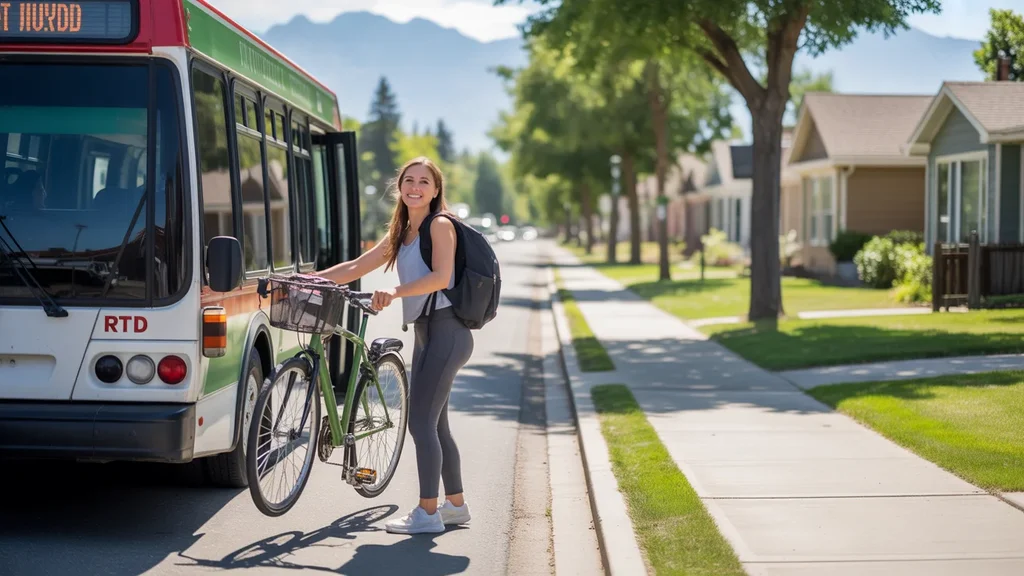
Public transit in Aurora often centers around systems such as RTD (Regional Transportation District), which provides both rail and bus service across the Denver metro area. Rail transit is present in Aurora, and that’s not a trivial detail—it means residents in certain parts of the city have access to a fixed-route, high-capacity option that connects them to downtown Denver and other regional employment centers. This is a structural advantage that shapes daily life for households positioned near stations.
But rail access is geographically concentrated. The corridors where rail runs become the anchor points for transit-oriented living, while neighborhoods farther from those lines face a different mobility reality. Bus service fills some of those gaps, but coverage varies significantly by area. In practice, transit works best for residents living near rail stations or along major bus corridors who commute to destinations also well-served by transit. It works less well for residents in peripheral neighborhoods, for trips that require multiple transfers, or for errands that involve hauling groceries or managing schedules outside peak service hours.
Where transit tends to fall short in Aurora is in the outer residential areas where density thins and destinations scatter. Late-hour service is limited, weekend frequency drops, and cross-town trips without a car become time-prohibitive. For households trying to manage daycare pickups, weekend errands, or evening activities, transit often becomes a supplemental option rather than a primary one—even for residents who live near a station.
Driving & Car Dependence Reality
For most Aurora residents, driving isn’t optional—it’s the baseline assumption around which daily life is organized. The city’s layout, with residential areas spreading across a wide geographic footprint, means that even short errands can involve several miles of travel. Parking is generally abundant and free in most neighborhoods, which removes one of the friction points that discourages driving in denser cities. That ease of parking reinforces car dependence: if you can park everywhere you go without cost or hassle, the calculus tips heavily toward driving.
Commute flexibility is another factor. With 46.6% of workers facing long commutes and only 8.6% working from home, most Aurora households are making daily trips to jobs that may not align neatly with transit routes. Driving offers the ability to chain errands, adjust schedules, and reach destinations that transit simply doesn’t serve efficiently. For families managing multiple stops—school, work, daycare, groceries—the car becomes the tool that makes the day logistically possible.
This isn’t about preference as much as it is about infrastructure. Aurora’s development pattern was built around the car, and even in areas with some walkability or transit access, the distances involved and the dispersed nature of daily destinations mean that going car-free requires significant lifestyle adjustments. For most households, the question isn’t whether to own a car, but whether one car per adult is necessary.
Commuting Patterns & Daily Mobility
Commuting in Aurora typically involves either a trip into Denver or a cross-metro journey to another suburban employment center. The average commute here runs 29 minutes, which sounds moderate but often reflects stop-and-go highway driving or multi-leg transit trips rather than a smooth point-to-point journey. That 29-minute average also masks significant variation: workers commuting downtown via rail may have predictable travel times, while those driving to dispersed job sites face traffic volatility and longer distances.
The high percentage of long commutes—nearly half of all workers—suggests that many Aurora residents have accepted geographic separation between home and work. Some of this reflects housing affordability tradeoffs: living in Aurora may offer more space or lower rent than closer neighborhoods, but it comes with the cost of time and distance. Others are commuting to specialized job centers that simply aren’t located near transit lines.
For households structuring their commutes, proximity to rail becomes a key variable. Living near a station can turn a 45-minute drive into a 35-minute train ride with predictable timing and no parking cost at the destination. But for workers whose jobs aren’t near a transit stop on the other end, that advantage disappears. Daily mobility here rewards those who can align their housing and employment along the same transit corridor, and penalizes those who can’t with longer drives and less schedule flexibility.
Who Transit Works For — and Who It Doesn’t
Transit in Aurora works best for renters and younger professionals who can prioritize proximity to rail stations when choosing housing, and whose jobs sit along the same transit spine. If you’re commuting downtown or to another rail-served district, and you live within walking distance of a station, transit becomes a legitimate primary option. Your commute is predictable, you avoid parking costs, and you’re insulated from traffic variability. This group is small but real, and for them, Aurora offers a viable car-light lifestyle.
Transit works less well for families with school-age children, households managing complex errand chains, or residents in neighborhoods far from rail lines. The logistical demands of family life—pickups, drop-offs, weekend activities—don’t align well with fixed-route transit, especially when service frequency drops outside peak hours. For these households, transit might serve as an occasional option for specific trips, but it won’t replace the car as the primary mobility tool.
Homeowners in peripheral neighborhoods face the starkest car dependence. These areas often have larger lots, quieter streets, and lower costs, but they sit outside the transit network’s practical reach. For these residents, every trip starts with a car, and the question isn’t whether to drive but how to manage fuel, maintenance, and the time cost of distance. Transit isn’t part of the equation—not because it’s bad, but because it simply doesn’t extend to where they live.
Transportation Tradeoffs in Aurora
Choosing between transit and driving in Aurora isn’t a pure either-or decision for most households—it’s a question of which tradeoffs you’re willing to accept. Transit offers predictability and eliminates parking hassles, but it requires living in specific corridors and limits flexibility for non-commute trips. Driving offers control, speed, and the ability to manage complex schedules, but it ties you to traffic, fuel exposure, and the ongoing costs of vehicle ownership.
For households positioned near rail, the tradeoff often comes down to convenience versus coverage. Transit handles the commute well but struggles with errands. Driving handles everything but adds time and variability during peak hours. Many households in these areas end up with a hybrid approach: transit for work, car for weekends and errands.
For households outside transit corridors, the tradeoff is less about mode choice and more about cost structure. You’re driving either way, so the question becomes how to minimize exposure—shorter commutes, fuel-efficient vehicles, or housing closer to work. These aren’t transportation decisions as much as they are housing and employment decisions with transportation consequences.
The broader tradeoff Aurora presents is between space and mobility. You can often find more housing for less money here than in closer neighborhoods, but you’ll pay for that space in commute time and car dependence. Whether that tradeoff makes sense depends on how you value time, predictability, and proximity to work.
FAQs About Transportation in Aurora (2026)
Is public transit usable for daily commuting in Aurora?
Yes, but only if you live near a rail station and your job is also transit-accessible. Rail service is present and connects Aurora to downtown Denver and other regional centers, but coverage is limited to specific corridors. If your housing and employment both align with those corridors, transit becomes a practical daily option. Outside those areas, transit is supplemental at best.
Do most people in Aurora rely on a car?
Yes. The majority of Aurora residents depend on a car for daily mobility. While rail transit exists and walkable pockets are real, the city’s geographic spread and dispersed destinations make driving the default for most households. Even residents near transit often keep a car for errands, weekends, and trips that don’t align with fixed routes.
Which areas of Aurora are easiest to live in without a car?
The areas closest to rail stations offer the most realistic car-light or car-free living. These neighborhoods provide walkable access to transit, higher density of nearby services, and better pedestrian infrastructure. Living without a car in Aurora requires intentional housing choice—you need to position yourself near both transit and daily errands, which limits your options significantly.
How does commuting in Aurora compare to nearby cities?
Aurora’s average commute of 29 minutes sits in the middle range for the Denver metro area, but the high percentage of long commutes—46.6%—suggests more residents here are traveling significant distances than in closer neighborhoods. Compared to downtown Denver, Aurora commutes tend to be longer and more car-dependent. Compared to more distant suburbs, Aurora offers better transit access but still leans heavily on driving.
Can you bike for transportation in Aurora?
Cycling infrastructure is present throughout parts of Aurora, with a notably high bike-to-road ratio in certain areas. This means some neighborhoods support biking as a practical transportation option, particularly for shorter trips or recreational use. However, the city’s size and the distances involved in daily errands mean biking works best as a supplemental option rather than a car replacement for most households.
How Transportation Fits Into the Cost of Living in Aurora
Transportation in Aurora isn’t just a budget line—it’s a structural factor that shapes where you can live, how you spend your time, and what kinds of tradeoffs you’ll face between housing cost and commute burden. The presence of rail transit and walkable pockets means some households can reduce car dependence and gain schedule predictability, but those benefits require living in specific areas that may command higher rents or limit housing options.
For most households, transportation costs show up indirectly: in the need for one or two cars, in fuel and maintenance exposure, and in the time cost of longer commutes. These aren’t always visible in a monthly budget breakdown, but they’re real, and they compound over time. A cheaper apartment farther from work may look like a win on rent, but the added commute time and driving costs can erase that advantage quickly.
The key insight is that transportation decisions in Aurora are really housing decisions. Where you live determines how you move, and how you move determines how much time and money you’ll spend getting through the week. If you’re trying to understand what a budget has to handle in Aurora, transportation is one of the variables you control—but only if you’re willing to make housing location a priority.
Aurora offers more transportation options than many similar-sized cities, but it still requires most residents to own a car and manage the costs that come with it. The households that do best here are the ones who align their housing, employment, and daily patterns in ways that minimize friction—whether that means living near rail, working close to home, or simply accepting the car-dependent reality and planning accordingly.
How this article was built: In addition to public economic data, this article incorporates location-based experiential signals derived from anonymized geographic patterns—such as access density, walkability, and land-use mix—to reflect how day-to-day living actually feels in Aurora, CO.