
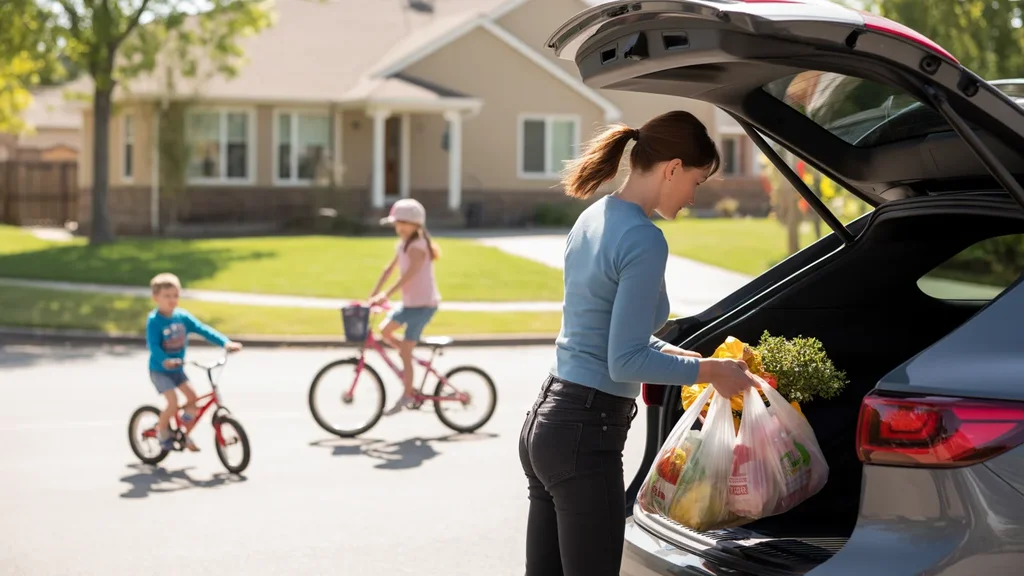
Picture this: You’re standing in a grocery store in Arvada, watching a couple debate whether to buy the $4.96/lb cheese or skip it this week. A few miles west in Lakewood, another shopper is doing the same math with the same price tag. The cheese costs the same. The gas to get there costs the same. Even the electricity rate is identical. So why does the same income feel different in these two Denver metro cities?
The answer isn’t in the price of eggs or the cost per gallon—it’s in how housing entry barriers, transportation infrastructure, and daily logistics pressure stack up differently depending on where you live and what your household actually needs. Arvada and Lakewood sit in the same regional economy, share the same utility providers, and face the same Colorado climate. But the cost structure each city imposes—the timing, predictability, and flexibility of expenses—creates distinct financial experiences for renters, buyers, and families trying to make a household budget work in 2026.
This isn’t about which city is “cheaper overall.” It’s about understanding where cost pressure concentrates, which households feel it most, and why the same gross monthly income can feel stable in one place and stretched in another. Both cities offer tradeoffs. The question is which tradeoffs match your household’s financial shape, commute tolerance, and daily routine.
Housing Costs
Housing is where Arvada and Lakewood diverge most clearly. Arvada’s median home value sits at $553,000, while Lakewood’s comes in at $494,100. That’s not a small gap—it’s a difference in entry barrier that affects down payment requirements, mortgage approval thresholds, and the financial cushion needed to compete in the market. For first-time buyers, that gap can mean the difference between qualifying now or waiting another year to save. For families already stretching to afford a single-family home, Lakewood’s lower entry point offers more immediate access to ownership.
Renters see a smaller but still meaningful difference. Arvada’s median gross rent is $1,706 per month, compared to Lakewood’s $1,665. That’s $41 per month, or about $492 annually—not enough to change a household’s financial picture on its own, but enough to matter when combined with other recurring costs. More importantly, the rental difference signals something structural: Arvada’s housing stock skews toward neighborhoods where walkability, transit access, and proximity to daily amenities command a premium. Lakewood’s rental market reflects a different mix, one where car dependence is assumed and housing costs are less tied to pedestrian infrastructure.
The real question isn’t whether one city is more expensive—it’s what kind of housing pressure each household is most sensitive to. Arvada imposes a higher entry barrier but offers more flexibility in transportation and daily errands once you’re in. Lakewood reduces the upfront cost but assumes you’ll absorb transportation and time costs elsewhere. For young professionals prioritizing walkability and transit access, Arvada’s higher housing cost may reduce car dependence enough to offset the difference. For families prioritizing space and ownership access, Lakewood’s lower entry point may matter more than neighborhood walkability.
Housing takeaway: Arvada’s higher home values and rents reflect a premium for walkable infrastructure and transit access. Lakewood’s lower housing costs appeal to households willing to trade pedestrian convenience for easier ownership entry. First-time buyers face a steeper climb in Arvada; renters see similar monthly obligations in both cities, but the amenities bundled into that rent differ. Households sensitive to car dependence and daily logistics friction may find Arvada’s housing premium worthwhile. Households prioritizing ownership access and space may prefer Lakewood’s lower entry barrier.
Utilities and Energy Costs

Utility costs in Arvada and Lakewood are structurally identical. Both cities face the same electricity rate of 16.26¢/kWh and the same natural gas price of $12.26/MCF. There’s no rate advantage, no regional pricing quirk, and no difference in how the utility provider bills households. What differs is how housing stock, building age, and household size interact with those rates to create different levels of exposure and predictability.
Colorado’s climate drives utility costs in both cities. Winters demand natural gas heating; summers require air conditioning during stretches of heat. The intensity and duration of heating and cooling seasons matter more than the rate itself. Older single-family homes—common in both cities—tend to have less efficient insulation, older HVAC systems, and larger square footage to heat and cool. Apartments and newer townhomes typically offer better efficiency and smaller footprints, which translates to lower baseline usage even at the same rate. Households moving into older single-family homes in either city should expect higher seasonal swings and less predictable monthly bills compared to those in newer, smaller units.
The difference between Arvada and Lakewood isn’t in the cost per kilowatt-hour—it’s in how housing form and urban structure shape energy exposure. Arvada’s mixed building height profile and higher density of apartments mean more households have access to smaller, more efficient units where utility costs stay predictable year-round. Lakewood’s housing stock skews more toward single-family homes, which increases the likelihood of higher seasonal volatility. Families with kids in larger homes will feel that volatility more acutely in both cities, but Lakewood’s housing mix makes it harder to avoid. Single adults and couples in apartments face lower and more stable utility costs regardless of location, though Arvada’s denser housing stock makes it easier to find that type of unit.
Utility takeaway: Rates are identical, but housing form drives exposure. Arvada’s mixed urban form offers more access to smaller, efficient units with predictable utility costs. Lakewood’s single-family-dominant housing stock increases the likelihood of seasonal volatility. Households sensitive to unpredictable bills may find Arvada’s apartment availability advantageous. Families in larger homes should expect similar seasonal swings in both cities, with heating and cooling dominating winter and summer months. The key variable is housing type, not location.
Groceries and Daily Expenses
Grocery prices in Arvada and Lakewood are functionally the same. Both cities share a regional price parity index of 105, meaning staple costs—bread at $1.88/lb, ground beef at $6.87/lb, eggs at $3.00/dozen—don’t vary between them. The difference isn’t what you pay at checkout; it’s how grocery shopping fits into your day, how much time and fuel it takes, and whether your routine pushes you toward convenience spending or planned trips.
Arvada’s high grocery and food establishment density—confirmed by infrastructure patterns showing broadly accessible daily errands—means most households can reach multiple grocery options, discount chains, and specialty stores without long drives. That density reduces the friction cost of comparison shopping, makes it easier to avoid convenience markups, and lowers the likelihood of relying on expensive prepared foods when a quick grocery run isn’t practical. For families managing larger volumes and tighter budgets, that accessibility translates to more control over where and how grocery dollars get spent. For single adults and couples, it means fewer trips where convenience spending creeps in because the nearest option is also the only option.
Lakewood lacks the same infrastructure density data, but the absence of that signal suggests a different pattern: grocery access may be more corridor-based, requiring intentional trips rather than walkable errands. That doesn’t make groceries more expensive, but it does make them less flexible. Households in Lakewood are more likely to consolidate trips, rely on larger weekly hauls, and face fewer opportunities for spontaneous price comparison. The time cost and fuel cost of grocery shopping become more significant, especially for households without flexible schedules or reliable access to a car. Convenience spending—grabbing takeout instead of making a second grocery trip—becomes more tempting when the nearest store isn’t a quick walk.
The real cost difference shows up in how much control households have over their grocery strategy. Arvada’s density allows households to shop more frequently, compare prices more easily, and avoid the convenience premium that comes with limited access. Lakewood’s structure assumes households will plan ahead, drive intentionally, and absorb the time cost of less frequent trips. For budget-conscious families, that difference in friction can add up over time—not in higher prices, but in fewer opportunities to avoid them.
Grocery takeaway: Prices are the same, but access friction differs. Arvada’s high food and grocery density reduces the time and fuel cost of shopping, making it easier to avoid convenience markups and compare prices. Lakewood’s less dense infrastructure increases the likelihood of consolidated trips and convenience spending. Families managing tight budgets benefit from Arvada’s flexibility. Households with predictable schedules and reliable transportation face similar grocery costs in Lakewood, but less room for spontaneous adjustment.
Taxes and Fees
Neither Arvada nor Lakewood provides specific tax rate data in the available information, but both cities operate within Colorado’s broader tax structure, which includes state income tax, local sales tax, and property tax obligations. The absence of city-specific tax data doesn’t mean taxes are identical—it means the differences are more likely to show up in property tax assessments, local sales tax rates, and the prevalence of fees tied to housing type and neighborhood services.
Property taxes in both cities are driven by assessed home values, which means Arvada homeowners face higher annual property tax bills due to higher median home values. That’s not a rate difference—it’s a magnitude difference tied to the cost of entry. A household buying a $553,000 home in Arvada will pay more in property taxes than a household buying a $494,100 home in Lakewood, even if the millage rate is similar. For long-term homeowners, that difference compounds over time, especially as home values appreciate. For recent buyers, it’s a recurring cost that affects monthly mortgage payments and long-term affordability.
Sales taxes and local fees—trash collection, water, sewer, stormwater management—vary by city and neighborhood. Some areas bundle these into HOA fees; others bill separately. Arvada’s mixed urban form and higher density suggest more variation in how these costs are structured. Households in newer developments or townhome communities may see HOA fees that cover landscaping, snow removal, and shared amenities, which increases predictability but reduces flexibility. Lakewood’s more single-family-oriented housing stock likely means fewer bundled fees and more direct billing, which gives households more control but also more variability depending on usage and service provider.
The key difference is predictability versus control. Arvada’s denser, more mixed housing stock tends to bundle more costs into fixed monthly fees, which makes budgeting easier but limits opportunities to reduce expenses by changing behavior. Lakewood’s structure gives households more direct control over individual service costs, but that control comes with more variability and more responsibility to manage each line item separately. Renters in both cities are largely insulated from property taxes and most fees, though some landlords pass through trash or water costs. Homeowners feel the difference more acutely, especially those planning to stay long enough for property tax increases to accumulate.
Tax and fee takeaway: Property taxes are higher in Arvada due to higher home values, not higher rates. Lakewood offers lower property tax exposure for homeowners but similar sales tax obligations. Fee structures vary by housing type: Arvada’s mixed urban form increases the likelihood of bundled HOA fees, while Lakewood’s single-family dominance means more direct billing and more variability. Homeowners planning to stay long-term should account for Arvada’s higher property tax baseline. Households prioritizing control over predictability may prefer Lakewood’s less bundled fee structure.
Transportation & Commute Reality
Commute times in Arvada and Lakewood are identical: both cities average 30 minutes. Gas prices are the same at $2.35/gal. On paper, transportation costs look equivalent. But commute time and fuel cost don’t capture the full transportation picture—what matters is how much flexibility households have to reduce car dependence, how transit access shapes daily logistics, and whether the built environment allows for errands and essentials without driving every time.
Arvada’s infrastructure shows rail transit presence and a high pedestrian-to-road ratio, meaning the city supports meaningful alternatives to driving for at least some trips. That doesn’t eliminate car dependence for most households, but it does create opportunities to reduce it. Households near rail stations can commute to downtown Denver or other metro job centers without driving. Walkable pockets mean some errands—coffee, groceries, pharmacy trips—don’t require a car. For families managing multiple schedules, that flexibility reduces the pressure to own multiple vehicles or coordinate every trip around car availability. For single adults and couples, it means fewer miles driven per week, lower fuel costs over time, and less exposure to parking fees or vehicle wear.
Lakewood lacks the same infrastructure signals. The absence of rail transit data and walkability indicators suggests a more car-dependent structure, where most trips—commuting, errands, social activities—require driving. That doesn’t make commuting longer or more expensive per trip, but it does mean households have fewer opportunities to avoid driving altogether. The flexibility to walk to a grocery store, take transit to work, or run errands without coordinating car access simply isn’t as available. For households with one car, that creates scheduling friction. For households with multiple drivers, it means higher baseline transportation costs even if individual trips cost the same.
The real difference is in optionality. Arvada’s transit and walkability infrastructure gives households more control over when and how they drive, which translates to fewer miles, lower fuel costs, and less time spent managing vehicle logistics. Lakewood assumes car dependence, which means transportation costs are more fixed and less flexible. Households with predictable commutes and reliable vehicles face similar costs in both cities. Households juggling multiple schedules, managing one car, or trying to reduce transportation expenses will find Arvada’s infrastructure more forgiving.
Cost Structure Comparison
Housing dominates the cost experience in both Arvada and Lakewood, but the nature of that pressure differs. Arvada imposes a higher entry barrier—both for buyers and renters—but bundles more infrastructure into that cost. Walkability, transit access, and daily errands density reduce the need for constant driving, which shifts cost pressure away from transportation and toward upfront housing expense. Lakewood lowers the entry barrier but assumes households will absorb transportation and time costs elsewhere. The housing savings are real, but they come with fewer built-in alternatives to car dependence.
Utilities introduce similar exposure in both cities, but housing form determines how much volatility households experience. Arvada’s mixed building stock and higher apartment density make it easier to find smaller, more efficient units where utility costs stay predictable year-round. Lakewood’s single-family-oriented housing stock increases the likelihood of seasonal swings, especially for families in older, larger homes. The rates are identical, but the housing mix shapes how much control households have over their energy bills.
Groceries and daily expenses cost the same at checkout, but access friction differs. Arvada’s high grocery and food establishment density reduces the time and fuel cost of shopping, making it easier to avoid convenience markups and compare prices. Lakewood’s less dense infrastructure increases the likelihood of consolidated trips and convenience spending. For budget-conscious families, that difference in friction can add up over time—not in higher prices, but in fewer opportunities to avoid them.
Transportation patterns matter more in Lakewood, where car dependence is assumed and alternatives are limited. Arvada’s rail transit and walkable pockets give households more flexibility to reduce driving, which lowers fuel costs and vehicle wear over time. Lakewood’s structure requires more intentional trip planning and fewer opportunities to skip the car. For households with one vehicle or tight schedules, that difference in optionality creates real friction.
The decision isn’t about which city costs less—it’s about which cost structure fits the household. Households sensitive to housing entry barriers may prefer Lakewood’s lower home values and rents. Households sensitive to car dependence and daily logistics friction may find Arvada’s higher housing cost worthwhile for the infrastructure it includes. For families managing tight budgets, the difference is less about price and more about predictability: Arvada front-loads cost into housing but reduces ongoing transportation and errands friction. Lakewood spreads cost across housing, transportation, and time, which offers more flexibility but requires more active management.
How the Same Income Feels in Arvada vs Lakewood
Single Adult
For a single adult, housing becomes non-negotiable first, but the choice between Arvada and Lakewood determines what’s left over. In Arvada, rent absorbs more of gross monthly income, but walkability and transit access reduce the need for a car or constant driving. That means fewer fuel costs, less vehicle maintenance, and more flexibility to skip car ownership altogether if work and errands align with transit. In Lakewood, lower rent creates more breathing room upfront, but car dependence is assumed—every trip requires driving, which adds fuel costs, parking exposure, and the ongoing burden of vehicle upkeep. The flexibility to walk to a coffee shop or take transit to work simply isn’t as available, which means transportation costs are more fixed and less negotiable.
Dual-Income Couple
For a dual-income couple, the decision hinges on whether both partners commute and how much coordination their schedules require. In Arvada, higher housing costs are offset by the ability to reduce car dependence—one partner might take rail transit while the other drives, or both might walk to nearby errands instead of coordinating every trip around one vehicle. That flexibility reduces the pressure to own two cars and lowers the time cost of managing household logistics. In Lakewood, lower housing costs create more financial cushion, but both partners likely need reliable car access for work and errands. If schedules don’t align, that means higher baseline transportation costs and more friction managing who drives when. The savings on rent may disappear into fuel, insurance, and the complexity of coordinating two vehicles.
Family with Kids
For families, housing and transportation pressure stack differently depending on the city. In Arvada, higher home values and rents mean a steeper entry barrier, but the built environment reduces the logistical burden of managing multiple schedules. Kids can walk to nearby parks, parents can run errands without driving every time, and transit access offers an alternative for older kids or one parent’s commute. That reduces the time cost of household management, even if the upfront housing expense is higher. In Lakewood, lower housing costs make ownership more accessible, but car dependence becomes non-negotiable. Every school drop-off, grocery run, and extracurricular activity requires driving, which increases fuel costs, vehicle wear, and the time spent coordinating who’s driving where. The housing savings are real, but they come with less flexibility and more ongoing friction managing daily logistics.
Decision Matrix: Which City Fits Which Household?
| Decision factor | If you’re sensitive to this… | Arvada tends to fit when… | Lakewood tends to fit when… |
|---|---|---|---|
| Housing entry + space needs | Down payment size, mortgage approval thresholds, or rental deposit requirements | You prioritize walkability and transit access over lower entry cost | You need immediate ownership access or lower upfront housing expense |
| Transportation dependence + commute friction | Fuel costs, vehicle wear, or the time cost of coordinating car access | You want flexibility to reduce driving or skip car ownership altogether | You already own a reliable vehicle and prefer car-based independence |
| Utility variability + home size exposure | Seasonal bill swings or unpredictable energy costs | You prefer smaller, more efficient units with predictable utility costs | You prioritize single-family space and can absorb seasonal volatility |
| Grocery strategy + convenience spending creep | Time spent shopping, fuel costs for errands, or impulse convenience purchases | You want frequent, flexible grocery access without driving every time | You plan weekly trips and have predictable schedules for consolidated shopping |
| Fees + friction costs (HOA, services, upkeep) | Predictability of monthly obligations versus control over individual line items | You prefer bundled fees and fixed monthly costs for easier budgeting | You want direct control over service costs and more flexibility to reduce expenses |
| Time budget (schedule flexibility, errands, logistics) | Coordination burden, trip planning, or the mental load of managing household logistics | You value reduced friction for daily errands and fewer trips requiring a car | You have flexible schedules and reliable transportation for intentional trip planning |
Lifestyle Fit
Arvada and Lakewood share the same metro region, the same commute times, and the same access to Denver’s broader job market and amenities. But the daily experience of living in each city differs in ways that indirectly affect costs. Arvada’s walkable pockets, rail transit access, and integrated park density create a built environment where errands, recreation, and daily routines don’t always require driving. That infrastructure reduces the time cost of managing a household, lowers fuel expenses over time, and makes it easier to live without multiple vehicles. For families juggling school drop-offs, grocery runs, and extracurriculars, that flexibility translates to fewer coordination headaches and more predictable transportation costs.
Lakewood’s structure assumes car dependence, which shapes how households spend their time and money. Recreation, shopping, and social activities typically require driving, which increases baseline fuel costs and vehicle wear. The absence of rail transit and lower walkability means fewer alternatives when schedules conflict or when one household member needs the car. That doesn’t make Lakewood less livable—it makes it more car-centric, which fits households that already own reliable vehicles and prefer the independence of driving over the constraints of transit schedules. For families prioritizing single-family space and yard access, Lakewood’s housing stock offers more of that at a lower entry cost, even if it comes with higher transportation exposure.
Both cities benefit from Colorado’s outdoor culture and proximity to mountain recreation, but Arvada’s higher park density and water feature presence mean more immediate access to green space without driving. That matters for families with young kids, dog owners, and households that prioritize daily outdoor access over weekend trips. Lakewood offers similar outdoor opportunities, but they’re more likely to require intentional trips rather than walkable errands. The difference isn’t dramatic, but it’s real—especially for households where daily routines and weekend plans blur together.
Arvada’s rail transit presence connects households to downtown Denver and other metro job centers without driving. Lakewood’s lower housing costs appeal to households willing to trade pedestrian infrastructure for easier ownership access.
Frequently Asked Questions
Is Arvada or Lakewood cheaper for renters in 2026?
Lakewood’s median gross rent is $1,665 per month, compared to Arvada’s $1,706—a difference of $41 per month. That’s not a large gap, but it signals different housing structures. Arvada’s rent includes proximity to walkable infrastructure, rail transit, and high grocery density, which reduces car dependence and daily logistics friction. Lakewood’s lower rent assumes car-based access for most errands and commutes. Renters prioritizing transit access and walkability may find Arvada’s slightly higher rent worthwhile. Renters with reliable vehicles and flexible schedules face similar costs in Lakewood with fewer built-in alternatives to driving.
Which city has lower home prices, Arvada or Lakewood?
Lakewood’s median home value is $494,100, compared to Arvada’s $553,000. That’s a meaningful difference in entry barrier—down payment requirements, mortgage approval thresholds, and the financial cushion needed to compete in the market all favor Lakewood. First-time buyers face a steeper climb in Arvada, though the higher cost reflects access to walkable neighborhoods, rail transit, and denser daily amenities. Families prioritizing ownership access and single-family space may prefer Lakewood’s lower entry point. Households valuing reduced car dependence and integrated infrastructure may find Arvada’s premium justified.
Do Arvada and Lakewood have the same utility costs in 2026?
Yes. Both cities face identical electricity rates of 16.26¢/kWh and natural gas prices of $12.26/MCF. The difference isn’t in the rate—it’s in how housing form shapes exposure. Arvada’s mixed building stock and higher apartment density make it easier to find smaller, more efficient units where utility costs stay predictable. Lakewood’s single-family-oriented housing stock increases the likelihood of seasonal volatility, especially for families in older, larger homes. Households sensitive to unpredictable bills may benefit from Arvada’s more varied housing options. Families prioritizing space should expect similar seasonal swings in both cities.
Is it easier to live without a car in Arvada or Lakewood?
Arvada offers more infrastructure to reduce car dependence. Rail transit connects households to downtown Denver and other metro job centers. Walkable pockets and high grocery density mean some errands don’t require driving. That doesn’t eliminate the need for a car for most households, but it creates flexibility to reduce driving frequency, lower fuel costs, and avoid the coordination burden of managing multiple vehicles. Lakewood lacks the same transit and walkability infrastructure, meaning car dependence is assumed for most trips. Households with one vehicle or tight schedules will find Arvada’s infrastructure more forgiving. Households with reliable cars and predictable routines face similar costs in Lakewood.
Which city is better for families trying to manage a tight budget in 2026?
It depends on which costs the family is most sensitive to. Lakewood’s lower housing entry barrier makes ownership more accessible, which matters for families prioritizing space and stability. But car dependence is assumed, which increases fuel costs, vehicle wear, and the time cost of managing daily logistics. Arvada’s higher housing costs front-load expense but reduce ongoing transportation and errands friction through walkability, transit access, and grocery density. Families managing one vehicle or juggling multiple schedules may find Arvada’s infrastructure reduces coordination headaches. Families with reliable transportation and flexible schedules may prefer Lakewood’s lower housing entry point and more direct control over individual costs.
Conclusion
Arvada and Lakewood sit in the same metro, share the same utility rates, and face the same Colorado climate. But the cost structure each city imposes—the timing, predictability, and flexibility of expenses—creates distinct financial experiences depending on what a household prioritizes. Arvada front-loads cost into housing but reduces ongoing transportation and daily logistics friction through walkable infrastructure, rail transit, and high grocery density. Lakewood lowers the housing entry barrier but assumes car dependence, which shifts cost pressure toward fuel, vehicle maintenance, and the time cost of managing trips. Neither city is universally cheaper—each fits different households depending on which costs dominate their financial picture.
For first-time buyers, Lakewood’s lower median home value offers easier ownership access. For renters prioritizing walkability and transit, Arvada’s slightly higher rent includes infrastructure that reduces car dependence. For families managing tight budgets, the decision hinges on whether housing entry or ongoing transportation flexibility matters more. Arvada fits households valuing reduced driving, integrated amenities, and predictable daily logistics. Lakewood fits households prioritizing ownership access, single-family space, and direct control over individual cost categories. Both cities offer tradeoffs—the question is which tradeoffs align with your household’s financial shape, commute tolerance, and daily routine in 2026.
How this article was built: In addition to public economic data, this article incorporates location-based experiential signals derived from anonymized geographic patterns—such as access density, walkability, and land-use mix—to reflect how day-to-day living actually feels in Arvada, CO.