
Norco’s housing market sits at the intersection of Inland Empire affordability pressure and Riverside County’s rural-suburban character. With a median home value of $683,200 and median rent at $1,884 per month, the city reflects Southern California’s broader cost structure—but the experience of living here diverges sharply from denser metro neighbors. Norco’s low-rise, spread-out form and limited grocery density mean that housing decisions aren’t just about monthly payments; they’re about committing to a car-dependent lifestyle where errands require planning and proximity to parks and open space substitutes for walkable commercial districts.
The median household income of $120,636 per year suggests that many residents have adapted to this cost level, but newcomers often underestimate how Norco’s spatial layout amplifies transportation and time costs. Renting offers flexibility, but ownership here is structured around long-term equity in a market where land, space, and low density command premiums. Understanding how these costs behave—and which expenses stay predictable versus which grow over time—is essential for anyone weighing The Real Cost Pressures in Norco.
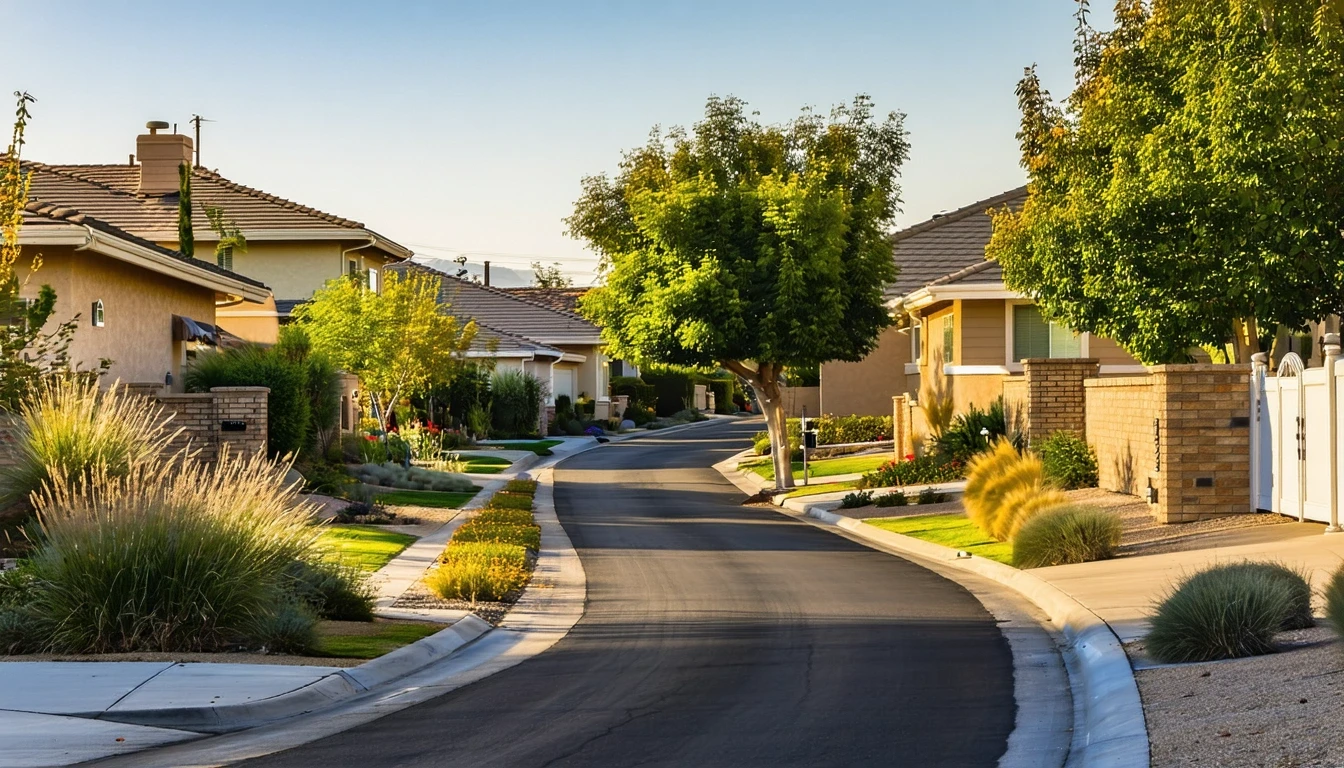
The Housing Market in Norco Today
Norco’s housing market is shaped by its identity as a semi-rural enclave within the Inland Empire, where equestrian zoning, larger lot sizes, and a low-rise building profile preserve a distinct suburban-rural character. The $683,200 median home value reflects not just structure, but land premiums tied to space, privacy, and the ability to keep horses or maintain larger yards. This isn’t a market driven by high-density development or urban infill; it’s a market where buyers pay for separation, quiet, and a lifestyle that requires vehicle access to nearly everything.
The regional price parity index of 103 signals that costs here run slightly above the national baseline, but that figure alone doesn’t capture the full picture. Norco’s housing stock skews toward single-family homes on larger parcels, and the city’s development patterns prioritize preservation of open space and low-density character over commercial or mixed-use growth. For buyers, this means limited inventory, slower turnover, and a market where desirable properties command premiums tied to lot size and location within the city’s park-rich, trail-accessible neighborhoods.
Renters face a different calculus. The $1,884 median gross rent reflects a market where rental housing is less common and often consists of single-family homes or smaller multifamily properties rather than large apartment complexes. This scarcity keeps rents elevated relative to nearby cities with more diverse rental stock, and it means renters often compete for properties that landlords could easily sell into the ownership market. The result is a rental experience that feels transitional rather than stable, with fewer long-term rental communities and more turnover driven by ownership conversions.
Renting in Norco
Renting in Norco means navigating a market where single-family homes dominate the available stock, and purpose-built apartment communities are sparse. The $1,884 median gross rent often reflects detached homes or smaller duplexes rather than the kind of managed complexes common in denser Inland Empire cities. This structure creates advantages—more space, private yards, quieter surroundings—but it also introduces variability. Landlords set terms individually, maintenance timelines depend on owner responsiveness, and lease renewals can shift unpredictably based on the owner’s decision to sell or adjust pricing to match rising property values.
The city’s layout amplifies the importance of location within the rental market. Because grocery density is low and daily errands require driving to commercial corridors outside residential pockets, renters need to prioritize proximity to major routes or accept longer, more frequent trips for basics. Bus service exists, but the system is limited, and most renters rely entirely on personal vehicles. This makes parking availability, garage access, and driveway space non-negotiable features rather than conveniences, and it shifts the rental decision toward properties that support car ownership rather than those optimized for walkability or transit access.
Renters also face exposure to utility costs that vary widely depending on the age and insulation quality of the home. Norco’s hot, dry summers drive cooling demand, and older single-family rentals without updated HVAC or weatherization can see electricity bills spike during peak months. Unlike apartment complexes where some utilities might be bundled or managed centrally, renters in detached homes typically pay separately for electricity, gas, water, and trash—adding another layer of monthly variability that’s harder to predict before move-in.
Owning a Home in Norco
Ownership in Norco is structured around long-term commitment to a low-density, space-oriented lifestyle. The $683,200 median home value reflects not just the structure, but the land, lot size, and zoning flexibility that allows for equestrian use, RV parking, or larger outdoor spaces. Buyers here aren’t paying for proximity to urban amenities or walkable commercial districts; they’re paying for separation, privacy, and the ability to maintain a lifestyle that requires more space than typical suburban subdivisions offer.
Property taxes, insurance, and maintenance costs all scale with home value and lot size, but Norco’s low-rise, spread-out form introduces additional considerations. Larger lots mean more landscaping, irrigation, and perimeter maintenance. Homes with equestrian facilities, workshops, or detached structures add specialized upkeep that doesn’t exist in denser housing markets. And because the city’s development patterns prioritize preservation of rural character, homeowners often shoulder more responsibility for private infrastructure—septic systems in some areas, private wells, or longer driveways that require grading and repair.
Ownership also means navigating Norco’s governance and zoning rules, which are designed to protect the city’s semi-rural identity. This can limit flexibility for renovations, additions, or property use changes, but it also stabilizes the character of neighborhoods and protects long-term property values by preventing incompatible development. For buyers who value predictability and want to avoid the risk of adjacent high-density projects, this regulatory structure is an asset. For those expecting the flexibility to modify or intensify use of their property, it’s a constraint that requires careful review before purchase.
Apartment vs House in Norco — Cost Behavior Comparison
| Expense Category | Apartment | House |
|---|---|---|
| Cooling costs (summer) | Lower per unit due to shared walls and smaller square footage | Higher due to larger conditioned space, detached structure, and exposure on all sides during triple-digit heat |
| Outdoor maintenance | Typically included in rent or HOA; minimal tenant responsibility | Owner-managed; includes landscaping, irrigation, and lot upkeep on larger parcels common in Norco |
| Parking and vehicle storage | Limited to assigned spaces; no room for RVs, trailers, or multiple vehicles | Driveways, garages, and side yards accommodate multiple vehicles, trailers, and recreational equipment typical of Norco households |
| Utility billing structure | Sometimes bundled; less control over provider or usage optimization | Separately metered; full control over efficiency upgrades, but higher baseline usage due to larger space and lot irrigation |
Why these categories? Norco’s low-density, single-family housing stock and hot, dry climate create meaningful differences in cooling exposure, outdoor maintenance, and vehicle accommodation that don’t apply uniformly across all suburban markets. Categories like base rent or property taxes were excluded because they vary more by property value and location than by housing type in this market, and wouldn’t reflect structural cost behavior differences specific to Norco.
Utilities & Upkeep Differences
Utility exposure in Norco is shaped by the city’s climate and housing stock. The electricity rate of 33.22¢/kWh is elevated relative to national averages, and the region’s extended cooling season means that air conditioning dominates summer energy use. Houses, with their larger square footage and detached structure, face higher baseline cooling costs than apartments, where shared walls and smaller conditioned spaces reduce load. Older homes without updated insulation or HVAC systems see the most pronounced spikes, and owners who haven’t invested in efficiency upgrades can face noticeable seasonal volatility.
Natural gas, priced at $22.96 per MCF, plays a smaller role in Norco’s cost structure than in colder climates, but it still powers water heating, cooking, and occasional winter heating. Houses with larger water heaters, pool heating, or gas-powered outdoor equipment will see higher usage, while apartments typically have smaller, more efficient systems. The difference isn’t dramatic, but it compounds over time, especially for households that use gas for multiple purposes.
Outdoor maintenance is where the apartment-versus-house distinction becomes most visible. Norco’s larger lot sizes mean homeowners manage more landscaping, irrigation, and perimeter upkeep than typical suburban subdivisions require. Drought-tolerant landscaping can reduce water use, but initial installation and ongoing care still represent time and cost that apartment renters avoid entirely. For households that value private outdoor space and are prepared to manage it, this is a feature; for those expecting low-maintenance living, it’s a friction point that doesn’t resolve quickly.
Rent vs Buy: Long-Term Exposure in Norco
Renting in Norco offers flexibility and lower upfront costs, but it also means exposure to lease renewals that can shift unpredictably, especially in a market where rental inventory is limited and landlords can easily convert properties to owner-occupied sales. Renters avoid property tax increases, major maintenance costs, and long-term infrastructure risk, but they also miss out on equity accumulation in a market where home values have historically reflected land scarcity and zoning protections that limit new supply.
Ownership locks in a baseline housing cost—principal and interest—but introduces new exposures that grow over time. Property taxes adjust as assessed values rise, and while California’s Proposition 13 limits annual increases for existing owners, the initial tax basis reflects the purchase price, meaning buyers entering at $683,200 face a higher starting point than long-term residents. Insurance costs can shift with wildfire risk assessments, climate exposure, and rebuilding cost inflation, and these changes happen outside the owner’s control. Maintenance and repair needs grow as homes and systems age, and larger lots with specialized features (equestrian facilities, pools, workshops) add categories of upkeep that don’t exist in smaller, simpler properties.
The tradeoff isn’t about which option costs less in year one; it’s about which risk profile fits the household’s timeline and tolerance for variability. Renters face income-driven volatility—if the landlord sells or raises rent sharply, the household must move or absorb the increase. Owners face asset-driven volatility—if taxes, insurance, or major systems fail, the household must pay or defer, but they retain control over timing and scope. In Norco, where the housing market rewards space, land, and low-density character, ownership tends to favor households with stable income, long time horizons, and the capacity to manage both routine and unexpected costs without liquidity pressure.
FAQs About Housing Costs in Norco
Why is the median home value in Norco higher than nearby Inland Empire cities?
Norco’s zoning prioritizes larger lots, equestrian use, and low-density development, which limits housing supply and increases land value. Buyers pay a premium for space, privacy, and the ability to maintain a semi-rural lifestyle that isn’t available in denser neighboring cities.
Is renting in Norco a stable long-term option?
Rental inventory in Norco is limited and skews toward single-family homes rather than large apartment complexes. This makes the rental market more volatile, with higher turnover and less predictability around lease renewals, especially if landlords decide to sell properties into the ownership market.
How do utility costs in Norco compare to other Riverside County cities?
Electricity rates at 33.22¢/kWh are elevated, and Norco’s hot, dry summers drive significant cooling demand. Homes with larger square footage, older HVAC systems, or poor insulation face the highest exposure, and these costs can exceed what similar households pay in denser, more temperate parts of the county.
What drives maintenance costs higher for homeowners in Norco?
Larger lot sizes, equestrian facilities, private wells or septic systems in some areas, and the need to maintain outdoor spaces in a dry climate all add maintenance categories that don’t exist in smaller, denser housing markets. Homeowners here manage more infrastructure and more land than typical suburban subdivisions require.
Does Norco’s housing market favor buyers or renters right now?
The market structurally favors buyers with long time horizons and the income to manage both purchase price and ongoing ownership costs. Renters face limited inventory, higher per-unit costs, and less stability, making renting a more transitional option unless the household prioritizes flexibility over equity accumulation.
Making Housing Choices in Norco
Housing costs in Norco reflect a market built around space, low density, and a semi-rural lifestyle that requires vehicle access and tolerance for car-dependent errands. The $683,200 median home value and $1,884 median rent both signal a cost structure that rewards long-term ownership and penalizes short-term flexibility, especially for households that can’t absorb the transportation, utility, and maintenance expenses that come with larger homes and lots.
Renters gain flexibility but face a market with limited inventory, higher per-unit costs, and less predictability around renewals. Owners gain equity and control but take on exposure to property taxes, insurance volatility, and maintenance that scales with lot size and home complexity. The decision hinges on whether the household values Norco’s space, parks, and low-density character enough to commit to the car-dependent, ownership-oriented cost structure that sustains it.
For households weighing these tradeoffs, understanding A Month of Expenses in Norco: What It Feels Like provides essential context on how housing costs interact with transportation, utilities, and daily logistics. And for those comparing Norco to other Inland Empire options, recognizing how the city’s layout and amenities shape day-to-day routines is just as important as comparing price points.
How this article was built: In addition to public economic data, this article incorporates location-based experiential signals derived from anonymized geographic patterns—such as access density, walkability, and land-use mix—to reflect how day-to-day living actually feels in Norco, CA.