
Round Rock sits in the Austin metro’s northern arc, where suburban growth, commuter access, and regional price pressure converge. The housing market here reflects both the spillover demand from Austin’s tech-driven economy and the appeal of a smaller-scale city with its own infrastructure. For newcomers, the cost structure can feel deceptively straightforward—median home values and rents are visible, but the tradeoffs between renting and owning depend heavily on how long you plan to stay, which neighborhood you choose, and how much exposure to Texas-specific cost volatility you’re willing to accept.
This article explains how housing costs behave in Round Rock, what drives the differences between renting and owning, and how local conditions—climate, commute patterns, and neighborhood structure—shape the financial experience over time.
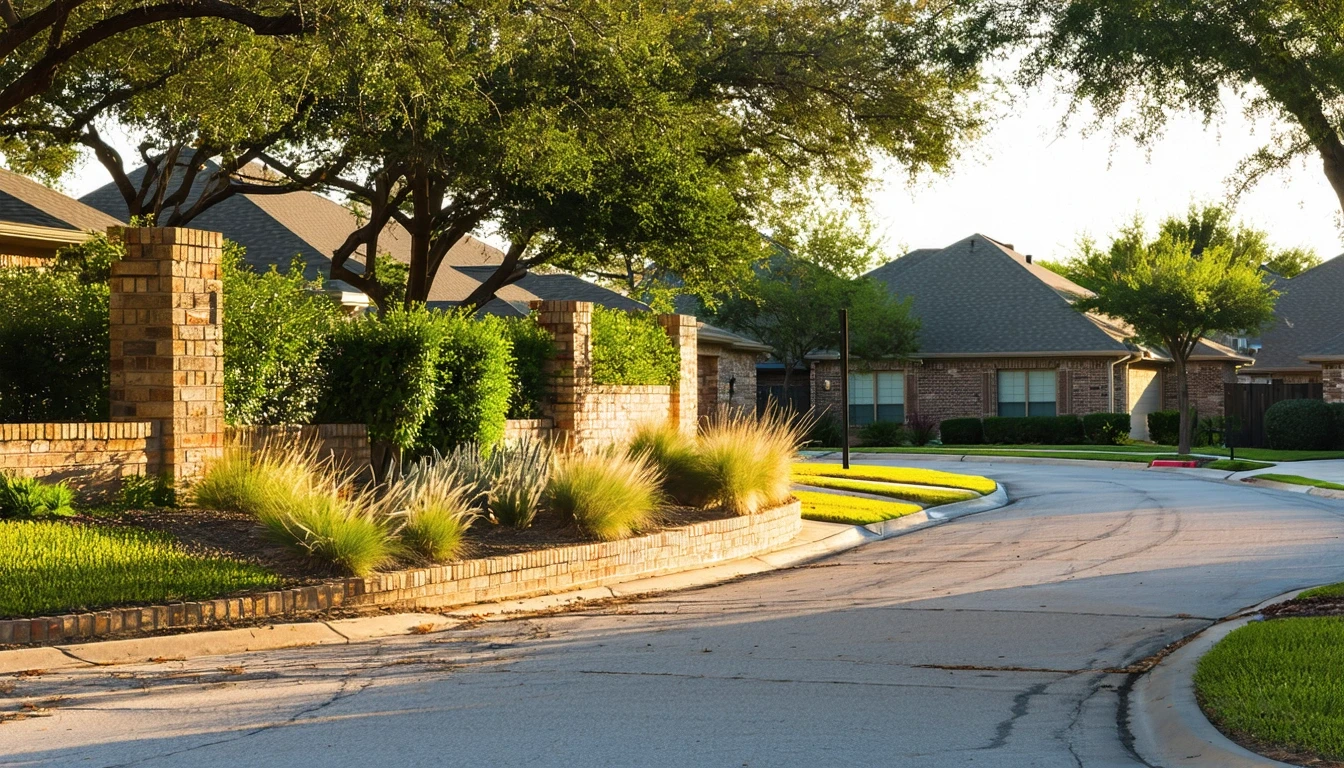
The Housing Market in Round Rock Today
Round Rock’s housing market is shaped by its role as a commuter suburb with independent economic activity. The median home value is $337,500, and the median gross rent is $1,586 per month. These figures reflect a market under steady demand pressure, driven by proximity to Austin, local employers, and families seeking space and schools outside the urban core.
What newcomers often misunderstand is that Round Rock’s housing stock is not uniform. Some neighborhoods feature walkable pockets with higher pedestrian infrastructure density, while others are car-oriented by design. Food and grocery access tends to cluster along commercial corridors, meaning convenience varies significantly depending on where you live. For renters, this creates a hidden cost: choosing a less expensive unit farther from errands can increase both driving time and transportation expenses. For buyers, it means paying attention to neighborhood-level differences in access, not just square footage.
The regional price parity index for Round Rock is 120, meaning the overall cost of goods and services runs about 20% above the national baseline. This affects not just what drives expenses, but also how far a given income stretches. The median household income is $91,888 per year, which provides a reference point for understanding housing pressure: a $337,500 home or $1,586 monthly rent represents a significant share of gross income for many households, even those earning at or above the median.
Renting in Round Rock
Renting in Round Rock offers flexibility and lower upfront costs, but it comes with exposure to a market shaped by Austin metro demand. At $1,586 per month for the median gross rent, renters face a baseline cost that reflects both local housing stock and regional competition. This figure includes rent only; utilities, parking, and renter’s insurance are typically separate.
Because errands and grocery access are corridor-clustered rather than broadly distributed, renters who prioritize walkability or short trips will find their options concentrated in specific areas—often at a premium. Those willing to drive for most errands can access lower rents in more car-oriented neighborhoods, but this shifts the cost burden toward transportation and time. The city’s bus service is present, but most renters rely on personal vehicles for commuting and daily logistics.
Rental volatility in Round Rock is tied to broader Austin metro trends. Lease renewals can reflect regional demand shifts, and renters have limited control over timing or magnitude. For households planning to stay short-term or those prioritizing flexibility, renting remains the logical choice. For those planning to stay several years, the lack of cost predictability becomes a more significant tradeoff.
Owning a Home in Round Rock
Homeownership in Round Rock centers on a $337,500 median home value, which translates to a substantial down payment and mortgage commitment. Beyond the purchase price, owners face Texas-specific cost exposures that differ sharply from renting.
Property taxes in Texas are a primary ownership cost, funded largely by local governments and school districts. While the exact rate varies by jurisdiction within Round Rock, it’s common for annual property taxes to represent a noticeable percentage of home value—often more than owners from other states expect. These taxes are not fixed; they can rise with assessed value or local budget decisions, creating long-term exposure that renters avoid entirely.
Homeowners also absorb maintenance, insurance, and utility costs in full. In Round Rock’s climate—characterized by triple-digit summer heat and an extended cooling season—air conditioning dominates household energy use. The electricity rate is 15.69¢/kWh, and a typical single-family home will use significantly more power than an apartment due to size, insulation age, and exposure. Older homes or those with less efficient HVAC systems face higher seasonal bills, and owners bear the cost of upgrades or repairs.
Many newer subdivisions in Round Rock include homeowners associations (HOAs), which can bundle services like landscaping or amenity access but also impose monthly or annual fees and governance rules. These fees are not optional and can rise over time, adding another layer of cost predictability concern.
Despite these exposures, ownership offers control and stability. Monthly principal and interest payments remain fixed (for fixed-rate mortgages), and owners can choose when and how to invest in efficiency, upgrades, or modifications. For households planning to stay long-term, ownership shifts cost from volatility to commitment.
Apartment vs House in Round Rock — Cost Behavior Comparison
| Expense Category | Apartment | House |
|---|---|---|
| Cooling costs (summer) | Lower due to smaller square footage and shared walls reducing heat exposure | Higher due to larger space, more exterior walls, and roof exposure during triple-digit heat |
| Maintenance responsibility | Managed by landlord or property management; tenant handles only interior damage | Owner responsible for all systems, roof, HVAC, and exterior upkeep; costs can be irregular and large |
| Access to parks and green space | Varies by location; proximity depends on corridor placement and neighborhood design | Often closer to integrated park access due to single-family zoning near green space; Round Rock shows high park density |
| Errands and grocery logistics | Typically requires short drive; corridor-clustered access means location choice matters significantly | Same corridor-clustered pattern; houses in walkable pockets may reduce driving, but most require vehicle for weekly shopping |
| Property tax exposure | None; landlord pays, but cost may be embedded in rent over time | Direct annual expense; rises with assessed value and local budget decisions |
Why these categories? Round Rock’s extended cooling season and triple-digit summer heat make energy exposure a primary differentiator between apartments and houses. Maintenance responsibility reflects Texas homeownership norms, where owners face full system replacement costs. Park access and errands reflect the city’s actual infrastructure: high park density benefits families in houses, while corridor-clustered grocery access affects both renters and owners depending on neighborhood choice. Property tax exposure is a Texas-specific ownership cost that doesn’t apply to renters directly.
Categories like water, trash, or internet were excluded because they don’t vary meaningfully by housing type in Round Rock’s typical lease and ownership structures.
Utilities & Upkeep Differences
Utility and maintenance costs in Round Rock are shaped by climate intensity and housing type. The extended cooling season—often running from late spring through early fall—means air conditioning is not optional. At 15.69¢/kWh, electricity costs accumulate quickly in single-family homes, especially those with older HVAC systems, poor insulation, or west-facing exposure.
Apartments benefit from smaller square footage and shared walls, which reduce cooling load. Many apartment complexes also include water, trash, or even basic cable in the rent, simplifying budgeting. Renters in houses, by contrast, typically pay all utilities separately and face higher usage due to size and exposure.
Homeowners face the full cost of system failures and efficiency upgrades. HVAC replacement, roof repair, and water heater failure are irregular but significant expenses. In Round Rock’s heat, an aging air conditioning system doesn’t just reduce comfort—it drives up electricity bills noticeably until replaced. Owners also handle landscaping, pest control, and exterior maintenance, all of which require either time or contractor expense.
The distinction is not just about dollars—it’s about predictability. Renters can budget around a stable monthly rent (until renewal), while owners face lumpy, irregular costs that require cash reserves or financing.
Rent vs Buy: Long-Term Exposure in Round Rock
The decision between renting and buying in Round Rock is not primarily about monthly payment comparison—it’s about control, volatility, and time horizon.
Renters face lease renewal exposure tied to Austin metro demand. Because Round Rock functions as a commuter suburb, rental markets here respond to regional employment and migration trends. A renter’s cost can shift significantly at renewal, and there’s limited ability to lock in predictability beyond the current lease term. However, renters avoid property tax increases, maintenance surprises, and the transaction costs of selling if they need to move.
Owners, by contrast, lock in their principal and interest payment (assuming a fixed-rate mortgage) but accept exposure to property tax changes, insurance adjustments, and maintenance needs. Over time, these costs can rise, but they do so more gradually and predictably than rent renewals in a tight market. Ownership also builds equity, which functions as forced savings, though it comes with the risk of market downturns and the cost of selling.
In Round Rock specifically, ownership makes the most sense for households planning to stay at least several years and who value control over their housing cost structure. Renting fits better for those prioritizing flexibility, avoiding large upfront costs, or uncertain about long-term plans. Neither choice is universally better—it depends on how much volatility you’re willing to accept and where you want that volatility to sit.
FAQs About Housing Costs in Round Rock
How much does it cost to rent an apartment in Round Rock, TX?
The median gross rent in Round Rock is $1,586 per month. This figure reflects a range of unit types and locations; actual rent depends on size, neighborhood, and proximity to amenities. Utilities are typically not included.
What is the median home price in Round Rock, TX?
The median home value in Round Rock is $337,500. This reflects single-family homes across the city; prices vary by neighborhood, age, and access to schools or parks.
Are property taxes high in Round Rock compared to other states?
Texas funds local services primarily through property taxes rather than state income tax, so annual property tax bills are typically higher than in states with income tax. The exact rate depends on your location within Round Rock and the taxing districts that apply, but it’s a significant ongoing cost for homeowners.
Is it cheaper to rent or buy in Round Rock, TX?
The answer depends on your time horizon and risk tolerance. Renting avoids upfront costs and maintenance exposure but leaves you vulnerable to lease renewal increases. Buying locks in your mortgage payment but exposes you to property taxes, maintenance, and transaction costs. For stays shorter than a few years, renting is usually less expensive. For longer stays, ownership often provides more control and equity building, though not always lower monthly outlays.
How do utilities differ between renting and owning in Round Rock?
Renters in apartments often benefit from lower cooling costs due to smaller size and shared walls, and some complexes include water or trash in rent. Homeowners pay all utilities separately and face higher electricity bills due to larger square footage and exposure during Round Rock’s extended cooling season. At 15.69¢/kWh, air conditioning costs can be noticeable in single-family homes, especially older ones.
Making Housing Choices in Round Rock
Housing costs in Round Rock are shaped by the city’s role as a commuter suburb, its climate, and the structure of its neighborhoods. Renters face steady baseline costs with renewal volatility tied to regional demand. Owners face higher upfront costs and ongoing exposure to taxes, maintenance, and utilities, but gain control and equity over time.
The choice between renting and buying is not about finding the cheapest option—it’s about matching your cost exposure to your time horizon, risk tolerance, and priorities. Households planning to stay long-term and who value predictability and control will find ownership compelling, despite the upfront and ongoing costs. Those prioritizing flexibility, avoiding maintenance risk, or uncertain about their plans will find renting a better fit, even with renewal uncertainty.
Round Rock’s housing market rewards attention to neighborhood-level differences. Walkable pockets, park access, and proximity to grocery corridors all affect both cost and convenience. Whether renting or buying, understanding where money goes in your specific situation—and how local conditions shape that—makes the decision clearer.
How this article was built: In addition to public economic data, this article incorporates location-based experiential signals derived from anonymized geographic patterns—such as access density, walkability, and land-use mix—to reflect how day-to-day living actually feels in Round Rock, TX.