
Deciding whether to rent or buy in Aurora means understanding not just the price tags, but how housing costs behave over time in a city where proximity to Denver, rail access, and a long heating season all shape what you’ll actually spend. Aurora’s housing market reflects its role as a suburban anchor in the metro area—home values and rents are influenced by commuter demand, infrastructure quality, and the practical realities of maintaining a home through cold winters and dry summers.
This article breaks down Aurora Cost Reality: The Big Pressure Points, explains how renting and owning differ in exposure and predictability, and helps you assess which path fits your household’s priorities and risk tolerance.
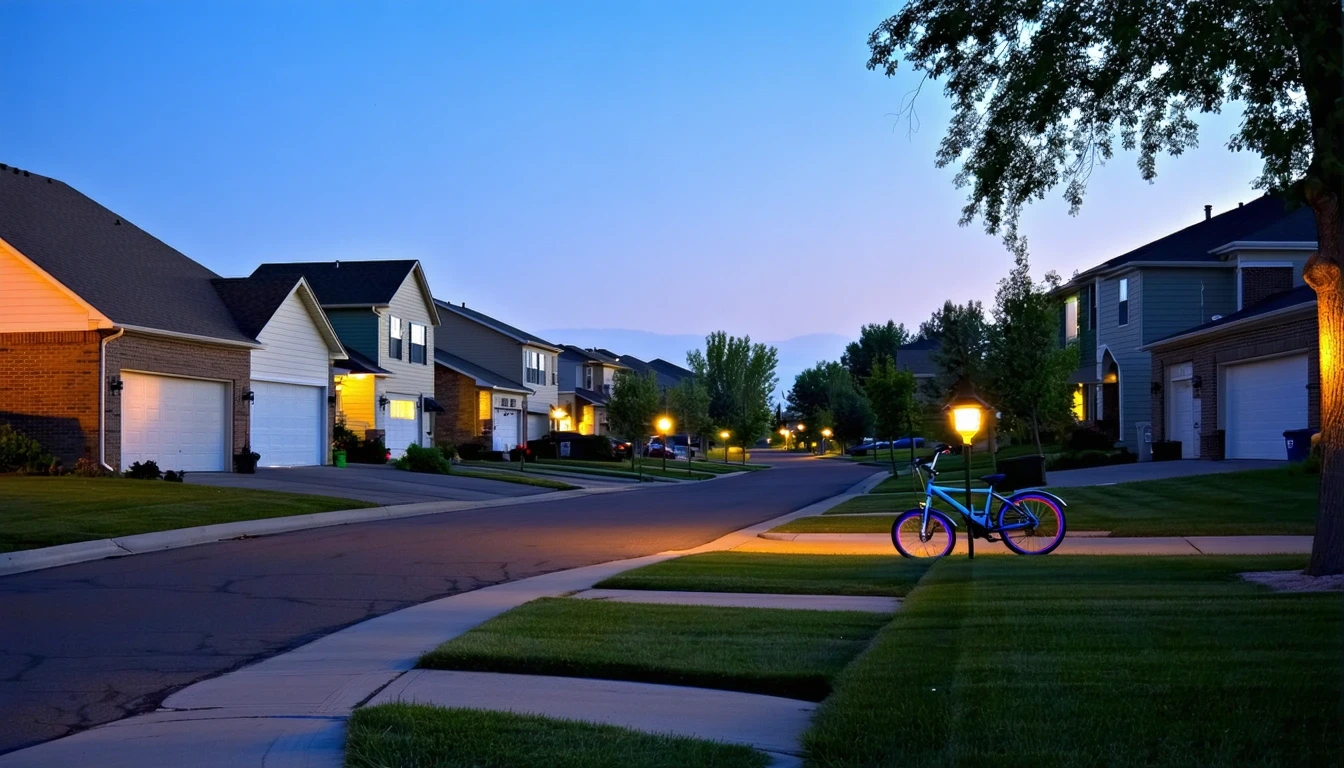
The Housing Market in Aurora Today
Aurora’s housing market is shaped by its position within the Denver metro area—close enough to the city center to attract commuters, but large and developed enough to function as a destination in its own right. The median home value sits at $409,700, reflecting demand driven by families, first-time buyers, and households seeking more space than Denver proper offers at comparable prices. Median gross rent is $1,651 per month, a figure that includes a wide range of apartment types, from older garden-style complexes to newer mid-rise buildings near transit corridors.
What newcomers often misunderstand is that Aurora’s housing stock is not uniform. The city spans a large geographic area with distinct neighborhoods—some built decades ago with single-family homes on larger lots, others developed more recently with mixed-use buildings and higher-density housing near rail stations. This variation means that housing cost experience depends heavily on where you land within the city, not just whether you rent or buy.
The presence of rail transit and the high density of food and grocery options in certain areas create pockets where car-light living is viable, which can reduce total household transportation costs and make slightly higher rent or mortgage payments more manageable. Conversely, areas farther from transit nodes may offer lower housing costs but require car ownership and longer commutes, shifting expense from housing to transportation.
Renting in Aurora
Renting in Aurora offers flexibility and predictability in the short term, but the rental market reflects the same demand pressures that drive home prices. At $1,651 per month for the median gross rent, renters face a market where location, building age, and proximity to transit significantly affect both cost and convenience.
Rental pressure is influenced by Aurora’s role as a commuter suburb. Households seeking access to Denver’s job market without downtown rent levels often land here, which keeps demand steady even as new apartment construction adds supply. Renters in neighborhoods with rail access and walkable errands infrastructure—where pedestrian-to-road ratios exceed high thresholds and grocery density is strong—gain the ability to reduce transportation costs, making rent more affordable in practice even if the nominal figure is higher.
For renters, the primary exposure is lease renewal volatility. While monthly rent is fixed during a lease term, renewals can shift based on metro-wide demand, local development, and landlord strategy. Renters in Aurora should expect that their housing cost is stable month-to-month but subject to adjustment annually, with limited control over the timing or magnitude of increases.
Utility costs are typically billed separately in Aurora rentals, meaning renters bear the direct cost of heating during the city’s long cold season. With winter temperatures regularly dropping into the teens and twenties, natural gas heating exposure is a meaningful part of the rental cost structure, even if it doesn’t appear in the advertised rent figure.
Owning a Home in Aurora
Owning a home in Aurora shifts the cost structure from predictable monthly rent to a mix of fixed mortgage payments and variable ownership expenses. At a median home value of $409,700, buyers face a significant upfront capital requirement and long-term exposure to property taxes, insurance, maintenance, and utility costs that vary with the home’s size, age, and condition.
Ownership in Aurora means taking on the full cost of heating and cooling a detached structure through cold winters and warm summers. Houses with older insulation, larger square footage, or less efficient HVAC systems will see higher natural gas and electricity bills than newer or smaller homes. Unlike renting, where maintenance and repair costs are the landlord’s responsibility, homeowners absorb the full cost of roof repairs, HVAC replacement, and exterior upkeep—expenses that are both unpredictable in timing and significant in magnitude.
Property taxes and insurance are ongoing costs that rise over time, though the rate and trigger vary. While specific tax rates are not available in the current data, homeowners should expect that assessed values and tax bills will adjust periodically, and that insurance costs may increase due to regional risk factors or individual claims history. These costs are not optional and cannot be deferred without consequence.
Homeownership in Aurora also means navigating local governance structures. Some neighborhoods have homeowners associations that impose monthly or annual fees in exchange for shared amenities, landscaping, or exterior maintenance. These fees add to the total cost of ownership and can increase over time as the association’s budget needs grow.
The benefit of ownership is control and stability. Mortgage principal and interest payments remain fixed for the loan term (assuming a fixed-rate mortgage), insulating owners from the rent volatility that affects tenants. Owners also gain the ability to modify their property, build equity over time, and benefit from any appreciation in home values—though appreciation is not guaranteed and should not be assumed when evaluating the rent-versus-buy decision.
Apartment vs House in Aurora — Cost Behavior Comparison
The table below highlights cost categories where apartments and houses differ meaningfully in Aurora, based on the city’s climate, housing stock, and infrastructure. Rows are included only where the distinction is locally relevant; generic or negligible differences are omitted.
| Expense Category | Apartment | House |
|---|---|---|
| Heating (Winter) | Lower total usage due to smaller square footage and shared walls; natural gas or electric heat billed separately | Higher total usage due to larger square footage and detached structure; natural gas heating dominates cost during long cold season |
| Cooling (Summer) | Moderate; smaller space and shared walls reduce load | Higher; larger space and full sun exposure increase electricity usage |
| Exterior Maintenance | Included in rent or covered by property management | Owner responsibility; includes roof, siding, landscaping, snow removal, and seasonal upkeep |
| Water/Sewer | Often included in rent or billed as flat fee | Billed directly based on usage; irrigation and outdoor water use increase costs in dry climate |
| Parking | May require separate fee in newer or transit-adjacent buildings | Typically included; garage or driveway on-site |
| Mobility Flexibility | Higher in transit-accessible areas; rail presence and walkable errands reduce car dependency | Lower; most single-family neighborhoods require car ownership for daily errands and commuting |
Methodology note: This comparison reflects differences driven by Aurora’s climate (long heating season, dry summers), housing stock (mix of older single-family homes and newer apartments), and infrastructure (rail transit and high grocery density in certain areas). Categories where apartments and houses behave similarly—such as internet, trash collection, or renters insurance—are excluded because they do not vary meaningfully by housing type in this city.
Utilities & Upkeep Differences
Utility and maintenance exposure in Aurora is shaped by the city’s climate and housing characteristics. The long cold season—with winter temperatures regularly in the twenties and teens—makes heating the dominant utility cost for most households. Natural gas heating is common in both apartments and houses, but houses face significantly higher total usage due to larger square footage, detached construction, and greater surface area exposed to cold air.
Electricity costs are driven by cooling in summer and baseline usage year-round. Aurora’s summers are warm but not extreme, so cooling costs are noticeable but not the primary driver of annual utility bills. Houses with older HVAC systems, poor insulation, or large window areas will see higher electricity usage than newer or more efficient homes.
Maintenance exposure differs sharply between renting and owning. Renters are insulated from the cost of major repairs—roof replacement, HVAC failure, water heater breakdown—while homeowners bear the full cost and must plan for these expenses even when timing is uncertain. In Aurora’s climate, exterior maintenance includes snow removal, gutter cleaning, and managing the effects of freeze-thaw cycles on driveways, walkways, and foundations. These are not optional tasks; deferred maintenance leads to larger, more expensive problems over time.
Water and sewer costs are higher for homeowners with landscaping or irrigation needs. Aurora’s dry climate means that maintaining a lawn or garden requires consistent watering during the growing season, which adds to utility bills. Apartments typically include water in rent or charge a flat fee, reducing variability and shifting the cost burden to the property owner.
Rent vs Buy: Long-Term Exposure in Aurora
The rent-versus-buy decision in Aurora is not primarily about which option costs less in the short term, but about which cost structure aligns with your household’s risk tolerance, mobility needs, and long-term priorities.
Renting offers predictability within each lease term and flexibility to move without the transaction costs of selling a home. Renters avoid exposure to property tax increases, insurance volatility, and major maintenance expenses. However, renters face lease renewal risk—the possibility that rent will increase at renewal, sometimes significantly, with limited ability to control or predict the change. Over time, cumulative rent increases can erode the affordability advantage that renting offers in the early years.
Owning a home in Aurora locks in the largest component of housing cost—the mortgage payment—for the duration of the loan, assuming a fixed-rate mortgage. This stability is valuable in a market where rents can rise unpredictably. However, ownership introduces exposure to costs that renters do not face: property taxes, insurance, maintenance, and repairs. These costs are not fixed and will increase over time, though the rate and trigger vary. Homeowners also face the risk that home values may not appreciate as expected, or that selling the home may require months of carrying costs if the market softens.
In Aurora, the decision is further shaped by infrastructure and location. Households that prioritize walkability, transit access, and proximity to parks and schools may find that certain neighborhoods—where rail stations, grocery density, and family infrastructure are strong—command higher prices for both rent and ownership. These areas offer lower transportation costs and greater convenience, which can offset higher nominal housing costs. Conversely, households willing to rely on cars and accept longer commutes may find more affordable housing options in areas farther from transit nodes, though total household costs may not differ as much as the housing price alone suggests.
The long-term tradeoff is between control and flexibility. Ownership provides control over the property, stability in the largest monthly expense, and the potential to build equity. Renting provides flexibility to move, insulation from maintenance and tax risk, and lower upfront capital requirements. Neither is universally better; the right choice depends on how long you plan to stay, how much volatility you can absorb, and whether you value control or flexibility more highly.
FAQs About Housing Costs in Aurora
What drives housing costs in Aurora, CO?
Housing costs in Aurora are driven by proximity to Denver, access to rail transit, the quality of local infrastructure (schools, parks, grocery density), and the size and condition of the housing stock. Demand from commuters and families seeking space outside Denver proper keeps both home values and rents elevated, particularly in neighborhoods with strong walkability and transit access.
Is it cheaper to rent or buy in Aurora, CO?
Renting is typically cheaper in the short term due to lower upfront costs and no exposure to property taxes, insurance, or maintenance. Buying becomes more cost-competitive over time if home values appreciate and mortgage payments remain fixed while rents rise. The decision depends on how long you plan to stay and how much financial volatility you can manage.
How does Aurora’s climate affect housing costs?
Aurora’s long cold season increases heating costs, particularly for homeowners with larger, detached houses. Natural gas heating dominates winter utility bills, and homes with poor insulation or older HVAC systems face higher costs. Dry summers require irrigation for landscaping, adding to water bills for homeowners. Renters in apartments face lower utility exposure due to smaller square footage and shared walls.
Are there neighborhoods in Aurora where you can live without a car?
Yes. Neighborhoods near rail stations with high pedestrian infrastructure density and strong grocery access make car-light living viable. These areas allow households to reduce transportation costs, though housing costs (rent or mortgage) may be higher due to the convenience premium. Most of Aurora still requires car ownership for daily errands and commuting.
What should first-time buyers know about owning a home in Aurora, CO?
First-time buyers should expect that the purchase price is only the starting point. Ongoing costs include property taxes, insurance, utilities (especially heating), and maintenance. Aurora’s climate means budgeting for heating system upkeep, exterior maintenance, and snow removal. Buyers should also consider location carefully—proximity to transit, schools, and parks affects both daily convenience and long-term resale value.
Making Housing Choices in Aurora
Housing costs in Aurora reflect the city’s role as a suburban anchor with strong infrastructure, rail transit access, and a climate that demands attention to heating and maintenance. Whether you rent or buy, what a budget has to handle in Aurora depends on where you live within the city, how long you plan to stay, and how much cost volatility you’re prepared to manage.
Renters gain flexibility and short-term predictability but face renewal risk and limited control over cost increases. Owners gain stability in their largest monthly expense and the ability to build equity, but absorb the full cost of taxes, insurance, maintenance, and utilities. Neither path is universally better; the right choice depends on your household’s priorities, risk tolerance, and long-term plans.
For families prioritizing schools, parks, and stability, ownership in neighborhoods with strong family infrastructure and green space access offers long-term value. For households seeking flexibility, transit access, and lower upfront costs, renting in walkable, transit-adjacent areas provides convenience and mobility. For first-time buyers weighing the tradeoff, the decision hinges on whether the stability and control of ownership outweigh the flexibility and lower risk of renting—a calculation that depends as much on your timeline and financial cushion as on the nominal cost difference.
Understanding how housing costs behave in Aurora—not just what they cost today—gives you the foundation to make a choice that fits your household’s needs and reduces uncertainty over time. If you’re planning a move, consider reviewing compare moving company costs and options to manage the logistics of relocating to Aurora.
How this article was built: In addition to public economic data, this article incorporates location-based experiential signals derived from anonymized geographic patterns—such as access density, walkability, and land-use mix—to reflect how day-to-day living actually feels in Aurora, CO.