
Understanding transportation options in Boulder means recognizing a city built around strong active infrastructure—walkable pockets, extensive bike networks, and accessible errands—but one where most households still depend on a car for daily life. The pedestrian and cycling infrastructure here exceeds what you’d find in many comparable cities, and bus service covers key corridors, but the reach and flexibility of transit remain limited. For newcomers, the surprise isn’t that Boulder lacks transportation options; it’s that even with better-than-average walkability and bike access, driving remains the default for most people most of the time.
This article explains how people actually get around Boulder: what transit covers, where car dependence kicks in, and which household types benefit from the city’s active transportation infrastructure versus those who absorb commute friction regardless. It’s not about calculating costs—it’s about understanding how mobility shapes your day-to-day routine, your housing choices, and your time.
How People Get Around Boulder
Boulder’s transportation reality reflects its geography and development pattern: a city with identifiable cores where walking and biking work well, surrounded by areas where they don’t. The pedestrian-to-road ratio here is high, meaning sidewalks, paths, and crossings are woven densely into the street network in certain neighborhoods. Bike infrastructure is similarly robust, with dedicated lanes and paths that support year-round cycling for those committed to it. Food and grocery density is broadly accessible, which reduces the number of trips households need to make—but it doesn’t eliminate the need for a car to make those trips efficiently.
The dominant pattern is mixed: people walk or bike for some errands, especially in the walkable pockets near downtown or the university, but they drive for work, for family logistics, for anything outside their immediate zone. Bus service exists and serves fixed routes reliably, but it doesn’t cover the full city, and it doesn’t run frequently enough to replace a car for most households. The result is that even residents who value active transportation often own a vehicle, using it selectively rather than constantly—but still depending on it.
Public Transit Availability in Boulder
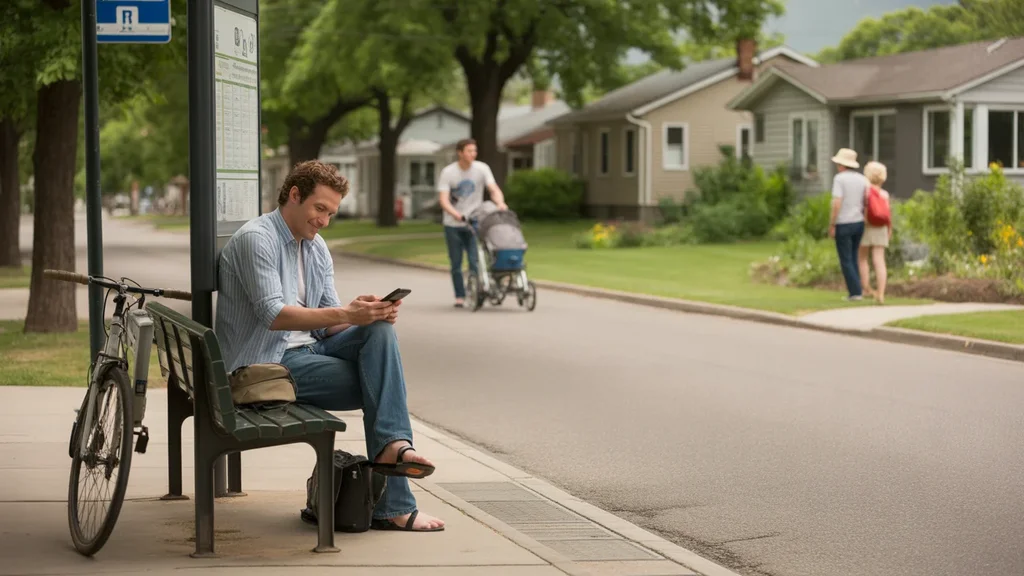
Public transit in Boulder often centers around systems such as RTD (Regional Transportation District), which provides bus service throughout the city and connects to the broader Denver metro area. The role transit plays here is supplemental rather than foundational: it works well for commuters traveling to fixed destinations along established corridors, for students moving between campus and nearby neighborhoods, and for residents whose daily routines align with bus routes and schedules. Where transit tends to work best is in the denser cores and along main arterials where stops are frequent and destinations cluster.
Where it falls short is in coverage and flexibility. Bus-only service means no rail backbone to anchor the system, which limits speed and reach. Peripheral neighborhoods see less frequent service, and late-hour or weekend coverage thins out. For households managing school runs, childcare pickups, or multi-stop errands, the time cost of waiting, transferring, and backtracking makes transit impractical even when routes technically exist. The system supports certain lifestyles—single commuters, students, carless by choice—but it doesn’t eliminate car dependence for families or for anyone whose daily routine involves multiple, dispersed stops.
Driving & Car Dependence Reality
Driving in Boulder is necessary for most households, not because the city lacks alternatives, but because those alternatives don’t scale to the complexity of daily life outside the walkable cores. Parking is generally available, though it tightens in downtown and university-adjacent areas. Sprawl is moderate compared to larger metros, but it’s enough that living in one neighborhood and working, shopping, or managing family logistics in another usually means driving. The flexibility a car provides—leaving when you want, stopping where you need, adjusting on the fly—outweighs the cost and hassle for most residents.
Car reliance here is tied to infrastructure and geography, not preference. Even in neighborhoods with strong bike lanes and sidewalks, the distances between home, work, school, and services are often too great to walk or bike efficiently, especially in winter or when carrying cargo. Families with kids face the sharpest tradeoff: the city’s strong family infrastructure (schools and playgrounds are plentiful) doesn’t cluster tightly enough to eliminate driving. The result is that car ownership remains the default, even for households who use it less than they would in a purely car-oriented suburb.
Commuting Patterns & Daily Mobility
Commuting in Boulder tends to follow one of two patterns: single-destination commuters who can use transit or bike infrastructure effectively, and multi-stop commuters who can’t. The former group—often younger, often renters, often without kids—benefits from the city’s active transportation options and can structure routines around bus schedules or bike routes. The latter group—families, homeowners in peripheral areas, anyone managing childcare or household logistics—absorbs the friction of car dependence because no other option covers the ground they need to cover.
Daily mobility here isn’t just about getting to work. It’s about how you chain trips: dropping kids at school, stopping for groceries, picking up dry cleaning, meeting friends. The city’s high errands accessibility means those stops are nearby, but “nearby” still often means a five- or ten-minute drive rather than a five-minute walk. Proximity reduces trip length but doesn’t eliminate the car. For households whose routines involve multiple daily stops, driving remains the only practical option, even in a city with better-than-average infrastructure for alternatives.
Who Transit Works For—and Who It Doesn’t
Transit in Boulder works well for a specific slice of residents: those living in walkable cores, commuting to fixed locations along bus routes, and whose daily routines don’t require multi-stop flexibility. Students fit this profile, as do young professionals renting near downtown or the university. For these households, bus service is reliable enough, bike infrastructure is strong enough, and errands are accessible enough that car ownership becomes optional rather than mandatory.
Transit doesn’t work well for families, for residents in peripheral neighborhoods, or for anyone whose daily routine involves dispersed stops. School runs, childcare pickups, grocery hauls, and weekend activities all push households toward car dependence. Homeowners, especially those in lower-density areas farther from the cores, face the steepest mobility costs: they benefit least from the city’s walkable pockets and bike infrastructure, and they absorb the most friction from limited transit coverage. The fit isn’t about effort or values—it’s about whether your household structure and location align with what the system can actually deliver.
Transportation Tradeoffs in Boulder
The tradeoff between transit and driving in Boulder isn’t about cost—it’s about predictability, control, and time. Transit offers lower direct expenses but requires schedule adherence, limits spontaneity, and adds time to most trips. Driving offers flexibility and speed but comes with the ongoing exposure of gas, insurance, maintenance, and parking. For households whose routines are predictable and align with bus routes, transit can work. For everyone else, the time cost and logistical friction of transit outweigh the financial cost of driving.
Bike commuting occupies a middle ground: it’s faster than transit for short trips, cheaper than driving, and benefits from Boulder’s strong infrastructure. But it’s weather-dependent, cargo-limited, and impractical for longer commutes or for households managing kids. The city’s high bike-to-road ratio means the infrastructure is there, but whether it works for you depends on your distance, your cargo, and your tolerance for winter riding. For some households, biking replaces driving for half their trips. For others, it’s recreational rather than functional.
The broader tradeoff is between location and mobility. Living in a walkable core reduces car dependence but increases housing pressure. Living farther out reduces rent or mortgage costs but increases driving dependence and commute time. Neither option eliminates transportation costs—they just shift where those costs land. Understanding which tradeoff fits your household means evaluating not just where you work, but how you structure your day, how many stops you make, and how much flexibility you need.
FAQs About Transportation in Boulder (2026)
Is public transit usable for daily commuting in Boulder?
Public transit in Boulder is usable for daily commuting if your routine aligns with bus routes and schedules. It works best for single-destination commuters traveling along main corridors, especially those living in denser neighborhoods near downtown or the university. For households managing multi-stop routines, school runs, or errands outside core areas, transit becomes impractical due to limited coverage and frequency. The system supports certain lifestyles effectively but doesn’t replace car dependence for most households.
Do most people in Boulder rely on a car?
Yes, most people in Boulder rely on a car for daily life, even though the city has strong bike infrastructure and walkable pockets. The pedestrian and cycling networks support active transportation for some trips, but the distances between home, work, school, and services are often too great to cover without driving. Families, homeowners in peripheral areas, and anyone managing complex daily logistics depend on cars regardless of the city’s infrastructure. Car ownership remains the default, though many residents use their vehicles less frequently than they would in more car-oriented cities.
Which areas of Boulder are easiest to live in without a car?
The easiest areas to live in without a car are the walkable cores near downtown and the university, where pedestrian infrastructure is densest, bus service is most frequent, and errands are within walking or biking distance. These neighborhoods benefit from high food and grocery accessibility, strong bike lanes, and proximity to transit routes. Renters and younger households fit this profile best. Peripheral neighborhoods and lower-density residential areas require car ownership for practical daily mobility, as transit coverage thins and distances grow.
How does commuting in Boulder compare to nearby cities?
Commuting in Boulder offers stronger bike and pedestrian infrastructure than most nearby cities, with a high pedestrian-to-road ratio and notable cycling networks. However, transit remains bus-only, which limits reach and speed compared to cities with rail service. Car dependence is lower than in purely suburban areas but higher than in denser urban centers with more robust transit. The city’s layout supports active transportation for some households but doesn’t eliminate driving for most. Compared to nearby cities, Boulder offers more options but not necessarily less car reliance.
How Transportation Fits Into the Cost of Living in Boulder
Transportation in Boulder isn’t just a line item—it’s a structural factor that shapes where you live, how you spend your time, and what tradeoffs you accept. The city’s strong active infrastructure reduces driving frequency for some households, but it doesn’t eliminate the need for car ownership for most. The cost of getting around here isn’t just gas and insurance; it’s the time you spend commuting, the flexibility you gain or lose, and the housing premium you pay to live in areas where walking or biking actually works.
For a fuller picture of how transportation costs interact with housing, utilities, and daily expenses, see the article on monthly spending in Boulder. That piece breaks down where money goes and how different household types experience financial pressure. Here, the takeaway is simpler: Boulder offers more transportation options than many cities its size, but those options don’t eliminate car dependence—they just give you more control over when and how you drive. Understanding that distinction helps you choose where to live and how to structure your routine in a way that fits your household’s actual needs, not just its aspirations.
How this article was built: In addition to public economic data, this article incorporates location-based experiential signals derived from anonymized geographic patterns—such as access density, walkability, and land-use mix—to reflect how day-to-day living actually feels in Boulder, CO.