
Moving from New York to Atlanta: Your 2025 Relocation Guide
Every year, thousands of households pack up their lives in the Northeast and head south, drawn by warmer weather, lower costs, and new opportunities. The New York to Atlanta corridor represents one of America’s most traveled relocation paths, connecting the nation’s largest city with the Southeast’s economic powerhouse. Whether you’re seeking career advancement, a more affordable lifestyle, or simply a change of pace, understanding what awaits you in Atlanta can help make your transition smoother.
Cost of Living: What Your Budget Gains in Atlanta
The financial relief of moving from New York to Atlanta often surprises even those who expect savings. Housing costs tell the most dramatic story: Atlanta’s median home price of $395,600 sits at roughly 54% of New York’s $732,100 median. This difference means a typical homebuyer could afford significantly more space or pocket substantial savings each month.
Beyond housing, your daily expenses shift favorably:
| Expense Category | New York | Atlanta | Your Savings |
|---|---|---|---|
| Electricity (per kWh) | 26.65¢ | 15.54¢ | 42% lower |
| Gas Price (per gallon) | $3.13 | $2.82 | 10% lower |
| Natural Gas (per MCF) | $29.41 | $41.53 | 41% higher |
While grocery costs remain surprisingly similar between the two cities (both index at 100% of national average), the overall financial picture favors Atlanta residents. The median household income in Atlanta ($77,655) actually edges slightly higher than New York’s ($76,607), while unemployment sits lower at 3.6% versus 4.8%.
From Subway Lines to Highway Life
Perhaps no lifestyle change hits harder than the shift from New York’s extensive public transit to Atlanta’s car-dependent culture. While both cities report similar average commute times of 30 minutes, the experience differs dramatically. In Atlanta, that half-hour typically means sitting in your own vehicle on I-285 or I-75, rather than standing on a crowded subway platform.
The pace of life noticeably relaxes once you cross the Mason-Dixon line. Atlanta maintains its status as a major business hub—home to Fortune 500 companies and a thriving film industry—but operates with distinctly Southern rhythms. Meetings might start with longer pleasantries, restaurants serve sweet tea by default, and neighbors are more likely to wave from their porches.
Weather provides year-round relief from northeastern winters. While New York shivers through 37-degree days, Atlanta enjoys milder 48-degree temperatures even in late fall. Summer brings its own intensity with humid 90-degree days, but most Atlantans agree that trading snow boots for air conditioning represents a fair exchange.
Housing Markets: More Space, Different Styles
New York transplants often experience housing shock—the pleasant kind—when shopping in Atlanta. That cramped one-bedroom apartment budget in Manhattan might secure a three-bedroom house with a yard in Atlanta neighborhoods like Decatur or East Point. The city offers diverse housing stock, from historic Craftsman bungalows in Grant Park to modern townhomes in Midtown.
Atlanta’s neighborhoods spread horizontally rather than vertically, creating distinct community pockets throughout the metro area. Buckhead delivers upscale shopping and dining, while Virginia-Highland attracts young professionals with its walkable streets and local businesses. Former New Yorkers often gravitate toward intown neighborhoods like Old Fourth Ward or Reynoldstown, which offer some pedestrian-friendly amenities reminiscent of city living.
The housing market moves differently too. While New York’s market operates year-round with fierce competition, Atlanta follows more traditional seasonal patterns. Spring and summer see the most inventory, and buyers typically have more time to consider options without the instant-offer pressure common in New York.
Planning Your Move: Timing and Logistics
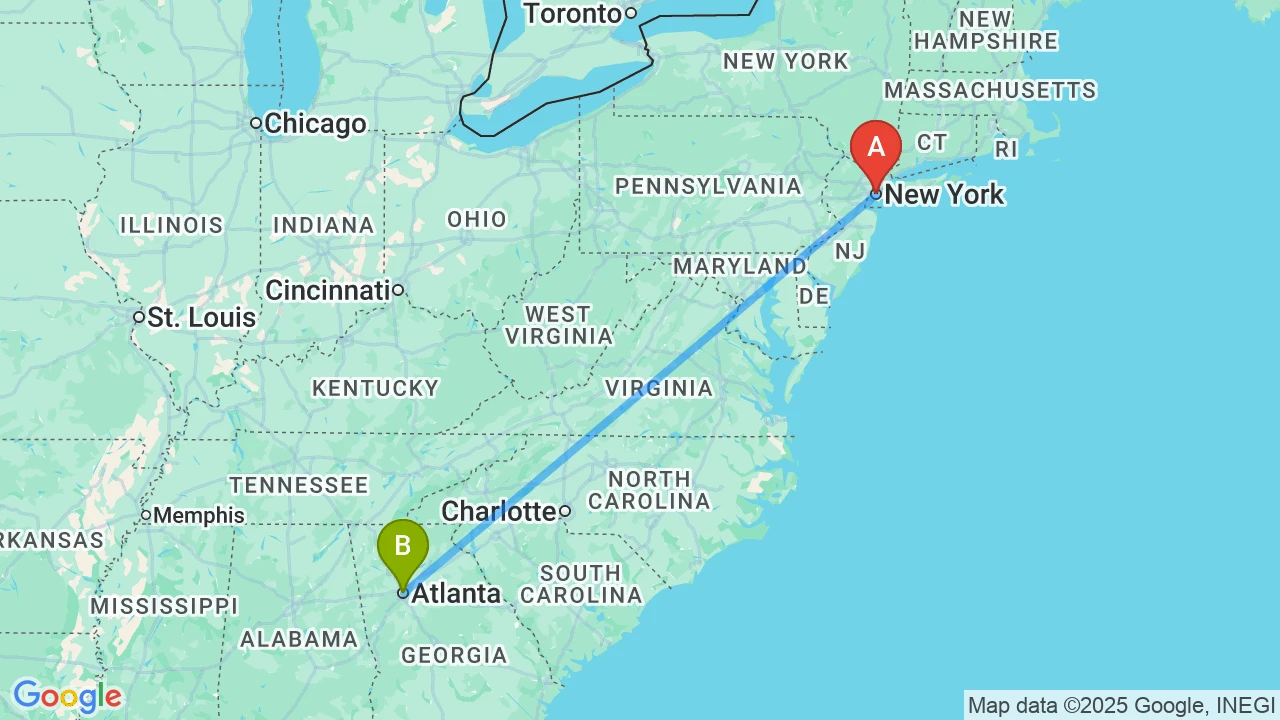
The 870-mile journey from New York to Atlanta requires strategic planning. Most moving companies quote between $2,500 and $5,000 for a full-service move, depending on your household size and timing. Summer moves cost more due to high demand, while winter relocations offer better rates but require navigating potential weather delays through the mid-Atlantic states.
Consider these practical steps for your relocation:
- Visit Atlanta during different seasons before committing—summer humidity hits differently than northeastern heat
- Research neighborhoods based on your priorities: walkability, schools, commute routes, or community vibe
- Factor in car ownership costs if you’re currently car-free in New York
- Update your driver’s license within 60 days and register your vehicle within 30 days of establishing Georgia residency
- Budget for differences in state income tax structures—Georgia’s rates may affect your take-home pay differently
Frequently Asked Questions
- How does the cost of housing compare between New York, NY and Atlanta, GA?
- Atlanta’s median home price of $395,600 is approximately 46% lower than New York’s $732,100. This dramatic difference means your housing budget stretches much further in Atlanta, whether renting or buying.
- What surprises people most when moving from New York, NY to Atlanta, GA?
- Many newcomers are surprised by the necessity of owning a car and the genuinely friendly interactions with strangers. The pace of business and social interactions also tends to be more relaxed, which can feel jarring initially but often becomes appreciated.
- When is the best time to relocate to Atlanta, GA?
- Fall (September through November) offers ideal moving conditions with mild weather and lower moving costs than summer. Spring is also popular but comes with higher demand and prices. Avoid July and August if possible due to extreme heat and humidity.
- What are the biggest lifestyle differences between New York, NY and Atlanta, GA?
- The shift from walkable, transit-oriented living to car-dependent suburbs represents the biggest adjustment. Social culture is warmer but moves slower, and you’ll trade cultural density for more personal space and a stronger connection to nature.
- How much does car insurance typically cost for New York transplants in Atlanta, GA?
- New York residents moving to Atlanta often see their car insurance rates drop by 20-40%, though exact savings depend on your driving record and coverage levels. Georgia’s average annual premium runs about $1,500 compared to New York’s $2,000+ average.
Making Atlanta Your New Home
Moving from New York to Atlanta represents more than a geographic shift—it’s a lifestyle transformation that trades density for space, intensity for balance, and winter coats for summer sundresses. The financial advantages are clear, with significantly lower housing costs and favorable utility rates offsetting the need for car ownership. While you’ll miss the subway and 24-hour bodegas, Atlanta offers its own rewards: actual backyards, friendly neighbors, mild winters, and a thriving economy that rivals any major metro.
Success in this transition comes from embracing what Atlanta offers rather than seeking New York substitutes. Take time to explore the city’s diverse neighborhoods, connect with its welcoming communities, and discover the unique blend of Southern tradition and modern innovation that makes Atlanta one of America’s most dynamic cities. For deeper insights into specific Atlanta neighborhoods and detailed cost breakdowns, explore IndexYard’s comprehensive Atlanta metro guides to continue your relocation research.