
Introduction: Why People Consider Moving from New York to Huntersville
The move from New York, NY to Huntersville, NC represents one of the most dramatic lifestyle and cost structure shifts in American relocation patterns. People typically consider this move when seeking lower housing entry barriers, shorter commutes, and relief from the intensity of dense urban living. What changes isn’t just the price tags—it’s where costs concentrate, how daily routines unfold, and what kinds of household pressure feel most acute.
This guide explains how cost behavior, lifestyle rhythms, and daily logistics shift between these two places. It does not calculate total savings or declare a financial winner. Instead, it helps you understand where pressure moves, what new costs emerge, and which household types tend to feel the transition most acutely. The goal is to support better decisions, not to promise outcomes.
Cost Pressure Shifts: Where Expenses Concentrate Differently
In New York, cost pressure concentrates overwhelmingly in housing. The median home value of $732,100 and median gross rent of $1,714 per month dominate household budgets, often forcing tradeoffs in every other category. The city’s Regional Price Parity index of 112 reflects costs running 12% above the national baseline, with housing driving most of that premium.
Huntersville redistributes that pressure. The median home value of $393,200 and median gross rent of $1,624 per month represent meaningful reductions in housing entry barriers, though rent remains substantial. The Regional Price Parity index of 97 indicates costs running slightly below the national baseline. However, the relief in housing costs often gets partially offset by increased transportation dependence and different utility exposure patterns.
The most significant behavioral shift involves transportation. In New York, the average commute of 41 minutes often occurs via transit, walking, or cycling, with 26.5% of workers operating from home. In Huntersville, the average commute drops to 28 minutes, but only 6.9% work from home, and the suburban form makes car ownership functionally necessary for most households. Gas prices of $2.67/gal in Huntersville versus $2.98/gal in New York matter less than the fact that you’ll be driving far more frequently for groceries, errands, healthcare, and social activities.
Utility costs shift in both direction and predictability. Electricity rates in Huntersville run 15.05¢/kWh compared to New York’s 26.95¢/kWh—a substantial reduction in per-unit cost. However, Huntersville’s hot, humid summers create extended cooling seasons that drive higher consumption. Natural gas prices show the opposite pattern: $25.54/MCF in Huntersville versus $23.93/MCF in New York, though heating demand remains milder in North Carolina’s climate.
How this article was built: In addition to public economic data, this article incorporates location-based experiential signals derived from anonymized geographic patterns—such as access density, walkability, and land-use mix—to reflect how day-to-day living actually feels in Huntersville, NC.
Housing & Neighborhood Patterns: Entry Barriers vs Ongoing Obligations
New York’s housing market imposes extreme entry barriers but offers rental flexibility and minimal car dependence. The median home value of $732,100 places ownership out of reach for many households, while rent of $1,714 per month consumes a large share of the median household income of $76,607 per year. However, renters gain access to walkable neighborhoods, transit networks, and dense service infrastructure that reduces the need for vehicle ownership and the ongoing costs that come with it.
Huntersville lowers the entry barrier significantly. The median home value of $393,200 makes ownership accessible to households with moderate savings and stable income, particularly given the area’s median household income of $112,893 per year. Rent at $1,624 per month remains high in absolute terms but represents a smaller share of typical household earnings. The tradeoff comes in the form of ongoing obligations: property taxes, homeowners association fees, vehicle ownership, maintenance, and the need to drive for nearly every errand.
Neighborhood form fundamentally shapes daily cost exposure. In New York, density concentrates services within walking distance or short transit trips, reducing the need for multiple vehicles, parking expenses, and the time costs of driving. In Huntersville, suburban land-use patterns spread services across wider distances, making car dependence the default. Households that previously relied on transit or walking will face new costs for vehicle purchase, insurance, fuel, and maintenance—expenses that don’t appear in rent or mortgage comparisons but accumulate steadily.
The ownership vs rental decision carries different weight in each place. In New York, renting often makes practical sense given high purchase prices, transaction costs, and the flexibility to relocate without selling. In Huntersville, ownership becomes more accessible and offers stability against rent increases, but it also locks households into property tax exposure, HOA obligations, and maintenance costs that renters avoid.
Lifestyle & Daily Rhythms: How Place Structure Shapes Behavior
Daily life in New York revolves around density, transit, and walkability. Errands often happen on foot or via short subway trips. Grocery shopping occurs in smaller, more frequent trips because carrying large loads without a car proves impractical. Social activities, healthcare appointments, and entertainment cluster within neighborhoods or along transit lines. The pace feels fast, but the friction of distance remains low for those living near services.
Huntersville operates on a fundamentally different rhythm. The suburban form spreads services across wider areas, making nearly every errand a driving trip. Grocery shopping shifts toward larger, less frequent hauls because driving allows for bulk purchases. Healthcare, dining, and social activities require planning around drive times and parking. The pace feels slower in terms of density and intensity, but the logistics of daily life become more car-dependent and time-structured around vehicle access.
Commute patterns reflect this structural difference. In New York, 69.6% of workers face commutes longer than 30 minutes, but many of those trips occur on transit, allowing for reading, work, or rest. In Huntersville, 44.0% face long commutes, and nearly all of those trips happen behind the wheel, turning commute time into active driving rather than passive transit use. The average commute of 28 minutes in Huntersville feels shorter on paper but demands more attention and energy than a subway ride of similar duration.
Climate exposure shifts in ways that affect both comfort and cost. New York experiences cold winters with occasional snow, requiring heating but rarely extreme or prolonged cold snaps. Huntersville’s winters remain mild, with rare freezing nights and minimal heating demand. However, summers bring hot, humid conditions with extended cooling seasons that drive air conditioning use for months at a time. Households accustomed to New York’s milder summers may find Huntersville’s heat more oppressive and costlier to manage indoors.
Outdoor access and recreation patterns also change. New York offers dense parks, waterfronts, and public spaces within walking distance for many residents, but private outdoor space remains rare and expensive. Huntersville provides more private yards, nearby lakes, and suburban greenways, but accessing them often requires driving. The tradeoff involves convenience versus space: immediate access to small public areas versus larger private or semi-private outdoor environments that require vehicle trips.
Relocation Logistics & Practical Friction
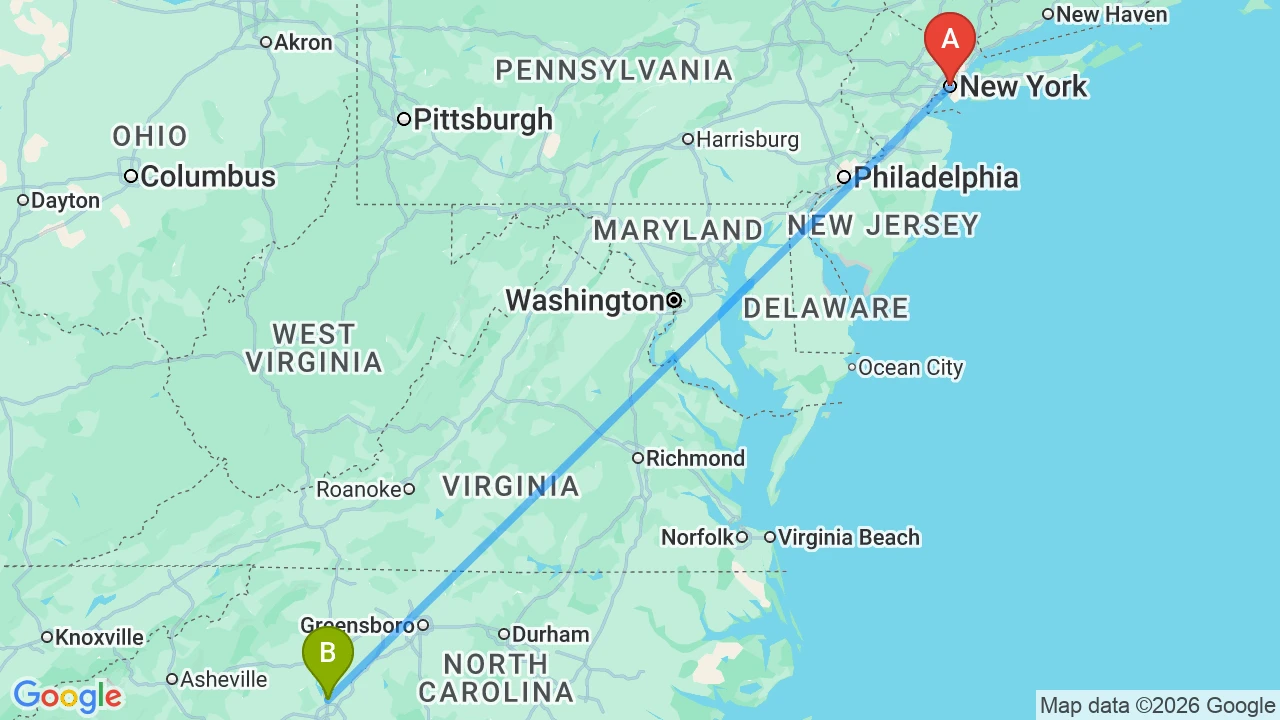
The physical move from New York to Huntersville involves moderate distance and straightforward routing, but the logistical complexity comes from the lifestyle transition rather than the miles traveled. Households moving from dense urban apartments to suburban single-family homes often need to acquire furniture, vehicles, and household goods that weren’t necessary in a walkable city. The cost of the move itself extends beyond hiring movers—it includes equipping a car-dependent lifestyle.
Vehicle acquisition represents one of the most immediate and substantial post-move expenses. Households that relied on transit in New York will need at least one car in Huntersville, and many two-adult households will find two vehicles necessary for work commutes, errands, and daily logistics. This means upfront costs for purchase or lease, plus ongoing insurance, registration, fuel, and maintenance expenses that didn’t exist in a transit-rich environment.
Timing the move around work and school schedules matters more in Huntersville than in New York. The suburban form means children often attend schools farther from home, requiring bus routes or parent drop-offs. Starting mid-school-year can disrupt those routines more than in dense urban districts where schools cluster closer to residential areas. Similarly, job transitions require more attention to commute logistics, as public transit options remain limited and drive times vary significantly by route and time of day.
What surprises movers most often involves the hidden costs of car dependence. Households accustomed to walking or taking the subway for groceries, doctor visits, and social activities underestimate how much time and money driving adds to weekly routines. Parking remains free and abundant in Huntersville, which helps, but the cumulative cost of fuel, insurance, and vehicle depreciation often exceeds what families saved by leaving New York’s transit system behind.
Another common adjustment involves the loss of spontaneous access. In New York, last-minute errands, social meetups, and entertainment happen easily because services sit within walking distance or a short subway ride. In Huntersville, nearly every activity requires planning around drive times, parking, and vehicle availability. This doesn’t make life worse, but it does make it more structured and less fluid, which some households find liberating and others find constraining.
Economic Context & Employment Landscape
The employment landscape shifts significantly between these two places. New York’s economy operates at global scale, with deep labor markets across finance, media, technology, healthcare, and professional services. The unemployment rate of 4.8% reflects a large, complex economy with constant churn. Job density remains extraordinarily high, and many workers can change employers without changing neighborhoods.
Huntersville sits within the Charlotte metro economy, which offers strong job growth in banking, healthcare, and logistics, but at a smaller scale than New York. The unemployment rate of 3.7% suggests a tighter labor market with fewer total opportunities but also less competition for available roles. Many Huntersville residents commute into Charlotte for work, making the suburban location a bedroom community rather than an employment center itself.
Income patterns reflect these structural differences. New York’s median household income of $76,607 per year appears modest given the city’s cost structure, but it includes a wide range of earners from entry-level service workers to high-income professionals. Huntersville’s median household income of $112,893 per year reflects a more affluent, car-dependent suburban population with fewer low-wage workers and more dual-income professional households.
The income-to-housing ratio tells an important story. In New York, housing costs consume a much larger share of typical earnings, leaving less room for discretionary spending, savings, or unexpected expenses. In Huntersville, the higher median income combined with lower housing entry costs creates more breathing room for most households, though the need for vehicle ownership and the costs of car-dependent living claim some of that advantage.
FAQ: Moving from New York to Huntersville
- Does Huntersville feel more or less expensive than New York?
- Huntersville concentrates costs differently rather than simply feeling cheaper. Housing entry barriers drop significantly, and per-unit utility rates run lower, but car dependence introduces new ongoing expenses for vehicles, fuel, insurance, and maintenance. Households that previously relied on transit will feel the shift most acutely, while those who already owned cars in New York may experience more straightforward relief. The overall cost pressure typically decreases for middle- and upper-income households, but the composition of expenses changes in ways that require adjustment.
- How do housing markets differ between New York and Huntersville?
- New York’s housing market imposes extreme entry barriers, with a median home value of $732,100 and rent of $1,714 per month, but offers walkable density and transit access that reduces car dependence. Huntersville’s median home value of $393,200 and rent of $1,624 per month make ownership more accessible, but the suburban form requires vehicle ownership and spreads services across wider distances. Renters in New York gain flexibility and density; buyers in Huntersville gain space and stability but take on property taxes, HOA fees, and maintenance obligations.
- What does daily life feel like after moving from New York to Huntersville?
- Daily life shifts from dense, transit-oriented routines to car-dependent suburban rhythms. Errands that once happened on foot or via subway now require driving, and spontaneous access to services decreases. Commutes often shorten in duration but demand more active attention behind the wheel. The pace feels slower and less intense, with more private space and quieter surroundings, but also more logistical planning around vehicle access and drive times. Households accustomed to walking everywhere will feel the transition most strongly.
- When does the move from New York to Huntersville tend to feel easiest?
- The move tends to feel smoothest when timed around job transitions that allow for remote work or flexible schedules during the adjustment period. Families with school-age children often prefer summer moves to avoid mid-year school disruptions, though Huntersville’s suburban school districts require more attention to bus routes and transportation logistics than dense urban schools. Avoiding peak summer heat during the physical move helps with comfort, and securing housing before arrival reduces the stress of navigating an unfamiliar suburban market from a distance.
- What challenges do people face when relocating from New York to Huntersville?
- The most common challenge involves adapting to car dependence after years of relying on transit and walkability. Households underestimate the time and cost of driving for every errand, and the loss of spontaneous access to services requires more planning and structure. Another frequent adjustment involves the shift from dense social environments to suburban isolation, where meeting people and building community requires more intentional effort. Finally, the extended cooling season and humid summers surprise those accustomed to New York’s milder warm months, driving higher air conditioning costs than expected.
- Who does this move work best for, and who might struggle?
- This move tends to work best for middle- and upper-income households seeking lower housing costs, more space, and relief from urban intensity, especially those who already own cars or don’t mind driving. Families with children often benefit from larger homes, yards, and lower-density schools, provided they can manage suburban transportation logistics. The move proves more challenging for single-car households, those who rely on transit or walking, and people who thrive on dense urban energy and spontaneous access to services. Lower-income households may find that savings on housing get offset by the costs of car ownership and the need to drive everywhere.
Conclusion: Understanding Where Pressure Moves
Moving from New York to Huntersville shifts cost pressure from housing dominance to a more distributed pattern across housing, transportation, and utilities. The entry barrier to homeownership drops significantly, and per-unit costs for electricity and gas run lower, but car dependence introduces ongoing expenses that don’t exist in transit-rich environments. Daily rhythms slow down in terms of density and intensity but require more logistical planning around vehicle access and drive times.
This move works best for households seeking space, lower housing entry costs, and relief from urban intensity, particularly those with moderate to high incomes who can absorb the costs of car ownership without strain. It proves more challenging for those who rely on transit, thrive on walkability, or operate on tight budgets where vehicle expenses claim a significant share of income. The transition isn’t simply about spending less—it’s about spending differently, and understanding where those differences concentrate helps households prepare for the adjustment.
For deeper exploration of housing costs, utility patterns, and lifestyle fit in Huntersville, visit the Huntersville cost of living hub on IndexYard. For broader context on the Charlotte metro area, see the Charlotte regional overview.