
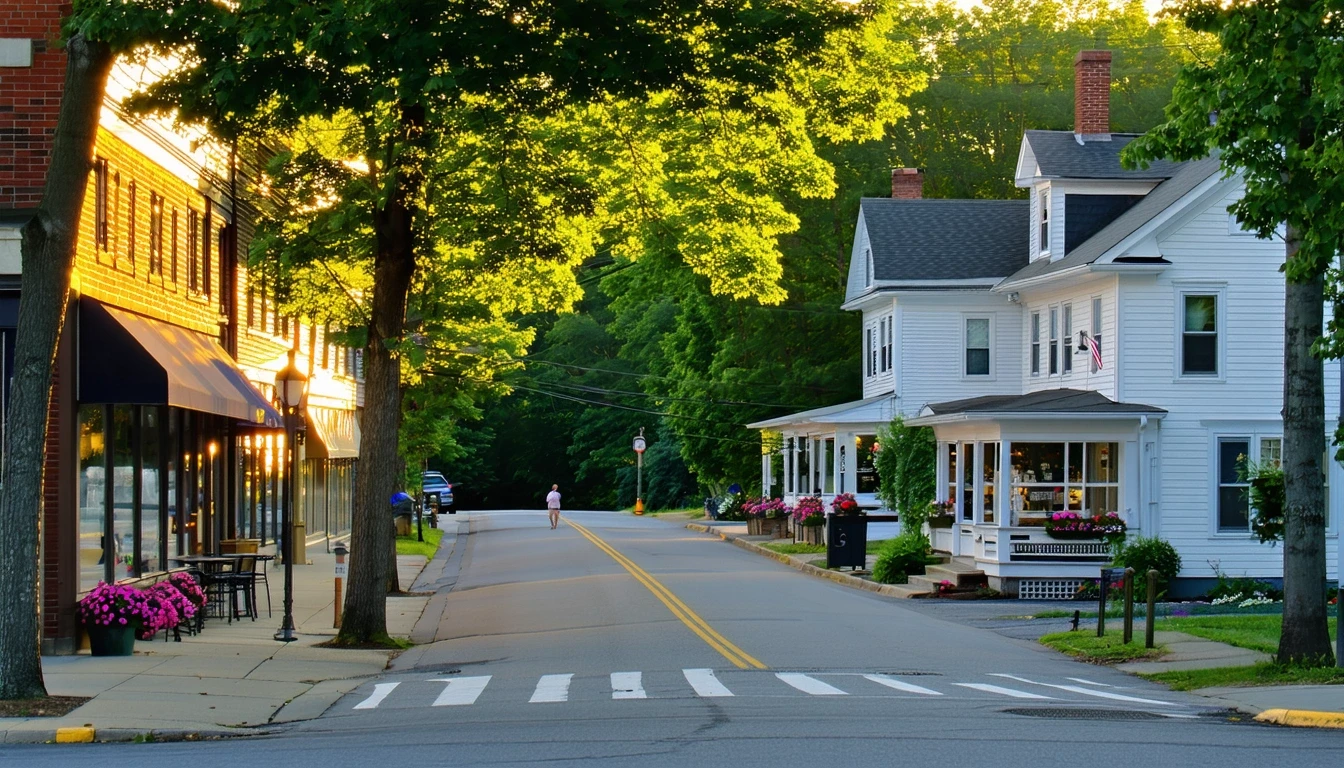
The Martinez family has been debating for months: Simsbury or Farmington? Both towns sit in the Hartford metro, both offer access to good schools and green space, and both feel like classic Connecticut suburbs. But as they’ve dug into the details—rent vs. buy, commute logistics, where to shop for groceries—they’ve realized the choice isn’t about which town costs less overall. It’s about which cost pressures show up first, which household expenses dominate daily life, and which tradeoffs align with their priorities in 2026.
Simsbury and Farmington share a regional identity, similar weather patterns, and overlapping infrastructure. Yet the way costs land on different households varies in subtle but meaningful ways. For renters, the entry barrier differs. For homeowners, property exposure shifts. For families managing errands and healthcare access, the friction points aren’t the same. This comparison explains where those differences emerge and which households feel them most acutely.
The better choice depends less on total affordability and more on how your household navigates housing tenure, transportation dependence, and the logistics of daily life. Here’s how the cost structure breaks down between Simsbury and Farmington—and what it means for single adults, couples, and families trying to make the decision in 2026.
Housing Costs
Housing represents the most visible divergence between Simsbury and Farmington, but the direction of pressure flips depending on whether you’re renting or buying. Simsbury’s median gross rent sits at $1,904 per month, while Farmington’s median rent comes in at $1,654 per month. For renters, that gap translates to lower monthly obligation in Farmington—but it doesn’t necessarily mean lower total housing exposure, because rent is only one piece of the housing equation.
On the ownership side, the dynamic reverses. Farmington’s median home value reaches $375,700, compared to Simsbury’s $350,000. That difference matters most at the point of entry: down payments, closing costs, and the initial cash required to secure a mortgage all scale with purchase price. For first-time buyers or households stretching to enter the market, Simsbury’s lower median home value reduces the front-loaded financial barrier, even if ongoing costs (property taxes, insurance, maintenance) remain substantial in both towns.
The rental market in both towns skews toward single-family homes and smaller apartment complexes rather than large multifamily buildings. This means renters often face landlord-specific lease terms, variable utility responsibility, and less predictability in annual rent adjustments compared to professionally managed apartment communities. In Simsbury, higher median rent may reflect tighter inventory or newer rental stock; in Farmington, lower rent may signal older housing stock or greater availability. Either way, renters in both towns should expect housing to dominate their monthly obligations, with limited flexibility to trade down without changing towns entirely.
| Housing Type | Simsbury | Farmington |
|---|---|---|
| Median Gross Rent | $1,904/month | $1,654/month |
| Median Home Value | $350,000 | $375,700 |
For renters, Farmington offers lower monthly housing obligation, which can free up cash flow for other expenses or savings. For prospective buyers, Simsbury presents a lower entry threshold, reducing the upfront capital required to transition from renting to owning. Families planning to stay long-term may prioritize ownership entry costs; young professionals or those with uncertain timelines may prioritize lower rent. Neither town offers a clear advantage across all household types—the better fit depends on tenure strategy and timeline.
Housing takeaway: Renters experience lower monthly obligation in Farmington; buyers face lower entry barriers in Simsbury. The dominant housing pressure in Simsbury is ongoing rent exposure for renters; in Farmington, it’s the upfront cost of ownership. Households sensitive to monthly cash flow may lean toward Farmington for renting; those prioritizing homeownership entry may find Simsbury more accessible.
Utilities and Energy Costs
Utility cost structures in Simsbury and Farmington are identical at the rate level: both towns face the same electricity rate of 30.77¢/kWh and natural gas price of $16.18/MCF. This means differences in utility exposure don’t stem from pricing—they emerge from how housing stock, home size, and household behavior interact with Connecticut’s cold winters and warm summers.
Both towns experience long heating seasons, with natural gas or oil furnaces running from October through April in most homes. Older single-family homes—common in both Simsbury and Farmington—tend to have less insulation, older windows, and less efficient HVAC systems than newer construction. For households in older homes, heating costs can dominate winter utility bills, with natural gas usage spiking during prolonged cold snaps. Apartment renters, particularly those in smaller units or buildings with shared heating systems, may see more predictable utility costs, though this depends heavily on lease terms and whether utilities are included.
Summer cooling exposure is less extreme than in southern climates, but air conditioning still runs regularly from June through August. Households in larger homes or those with central air systems will see higher electricity usage during summer months. Renters in smaller apartments or units without central air may rely on window units, which can reduce total cooling costs but introduce less comfort and control. In both towns, utility costs are less about the rates themselves and more about the age, size, and efficiency of the housing unit.
Households in single-family homes should expect more volatility in utility bills compared to apartment renters, particularly during winter. Families with young children or elderly members who require consistent indoor temperatures year-round will feel this exposure more acutely. Dual-income couples or single adults who spend less time at home may see lower baseline usage, though seasonal spikes remain unavoidable. Neither town offers structural advantages in utility cost predictability—the primary driver is housing type and household occupancy patterns.
Utility takeaway: Simsbury and Farmington share identical utility rate structures, so cost differences depend entirely on housing stock and household behavior. Older single-family homes introduce more volatility, particularly in winter heating costs. Apartment renters experience more predictable utility exposure, though this varies by lease terms. Households sensitive to seasonal cost swings may prioritize newer construction or smaller units; those in larger or older homes should budget for heating-driven winter spikes.
Groceries and Daily Expenses
Both Simsbury and Farmington show sparse food and grocery establishment density, meaning residents in both towns often rely on a smaller number of larger stores rather than a dense network of neighborhood markets or corner shops. This structural similarity means grocery cost pressure in both towns is driven less by price differences and more by access friction: how far you drive, how often you shop, and whether you can consolidate errands into fewer trips.
In practice, this means households in both towns typically plan larger, less frequent grocery runs to big-box stores or regional supermarket chains. Families managing weekly meal planning for multiple people may find this approach efficient, but it requires upfront planning and storage capacity. Single adults or couples who prefer smaller, more frequent shopping trips may face higher per-trip costs or more reliance on convenience stores and prepared foods, which carry price premiums.
Dining out and convenience spending patterns also matter. Both towns have limited walkable restaurant clusters, so eating out typically requires driving to specific commercial corridors. This can reduce spontaneous dining spending for some households, but it can also increase reliance on takeout or delivery services, which introduce their own cost creep through fees and tips. Households with young children may find cooking at home more practical; dual-income professionals with limited evening time may lean more heavily on prepared meals or restaurant options.
The regional price parity index for both towns sits at 110, indicating costs run moderately above the national baseline. This affects grocery staples, household goods, and personal care items equally in both Simsbury and Farmington. The real differentiation comes from shopping habits: households that can batch errands, plan meals in advance, and limit convenience purchases will experience lower grocery pressure. Those with less predictable schedules, smaller storage capacity, or greater reliance on prepared foods will feel more cost friction, regardless of which town they choose.
Grocery takeaway: Simsbury and Farmington both show sparse grocery density, meaning cost pressure is driven by access friction and shopping habits rather than price differences. Families who can plan larger, less frequent trips experience lower grocery pressure; single adults and couples with less storage or more spontaneous shopping patterns may face higher costs. Convenience spending—takeout, delivery, prepared foods—introduces the most variability in both towns.
Taxes and Fees
Property taxes represent the largest recurring tax burden for homeowners in both Simsbury and Farmington, and while specific mill rates aren’t provided in the data, both towns operate under Connecticut’s property tax system, which relies heavily on local assessments to fund schools, infrastructure, and municipal services. Homeowners should expect property taxes to scale with home value, meaning Farmington’s higher median home value likely translates to higher annual property tax bills for comparable housing types.
Renters don’t pay property taxes directly, but landlords typically pass through a portion of that cost in the form of higher rent. This means the property tax burden is embedded in rental pricing, though it’s less visible and less volatile than for homeowners. Renters in both towns should expect rent to reflect local tax structures, but they avoid the direct exposure to reassessments, special levies, or tax rate changes that homeowners face.
Beyond property taxes, both towns may impose fees for trash collection, water and sewer services, and other municipal utilities. These fees vary by housing type: single-family homeowners often pay separately for trash and water, while apartment renters may have these costs bundled into rent. Homeowners should also account for potential HOA fees in certain neighborhoods, particularly in newer developments or planned communities. These fees can range from minimal (covering only shared landscaping) to substantial (including snow removal, exterior maintenance, and amenity access).
Sales taxes in Connecticut apply uniformly across both towns, so there’s no differentiation in consumption tax burden. However, the structure of property taxes and local fees means long-term homeowners face more exposure to cost increases over time, particularly if property values rise or municipal budgets expand. Renters experience more insulation from these changes in the short term, though rent adjustments at lease renewal can reflect shifting tax burdens indirectly.
Tax and fee takeaway: Homeowners in Farmington face higher property tax exposure due to higher median home values; Simsbury homeowners see lower entry-level tax obligations. Renters in both towns avoid direct property tax volatility but pay embedded costs through rent. Long-term homeowners are more exposed to tax increases; renters experience more predictability in the short term but less control over rent adjustments.
Transportation & Commute Reality
Both Simsbury and Farmington rely primarily on personal vehicles for daily transportation, with bus service present in both towns but limited rail access. The experiential signals confirm that both towns show walkable pockets—areas with higher pedestrian infrastructure relative to road networks—but these pockets don’t eliminate car dependence for most households. Grocery stores, healthcare facilities, and employment centers typically require driving, and public transit serves as a supplemental option rather than a primary mode for most residents.
Gas prices sit at $4.28/gal in both towns, so fuel cost differences depend entirely on commute distance and frequency. Households commuting to Hartford or other regional employment hubs will face similar per-mile fuel costs, but the time burden and wear-and-tear on vehicles can vary depending on specific routes and traffic patterns. Families with two working adults may need two vehicles, doubling insurance, maintenance, and registration costs. Single adults or couples who can share a vehicle or work from home part-time reduce transportation exposure significantly.
Cycling infrastructure exists in limited pockets in both towns, with bike-to-road ratios in the medium band. This means some residents can bike for errands or recreation, but cycling as a primary commute mode remains impractical for most households, particularly during winter months. Walkability within certain neighborhoods allows for short trips on foot, but the sparse density of food and grocery establishments means most errands still require a car.
Transportation takeaway: Both towns require car ownership for most households, with similar fuel costs and limited transit alternatives. Commute distance and household vehicle needs drive transportation exposure more than town-specific infrastructure. Households with flexible work arrangements or shorter commutes experience lower transportation pressure; those commuting long distances or managing multiple vehicles face higher ongoing costs.
Cost Structure Comparison
Housing dominates the cost experience in both Simsbury and Farmington, but the nature of that dominance shifts depending on whether you’re renting or buying. Renters face lower monthly obligation in Farmington, which can ease cash flow pressure and create more flexibility for other expenses. Buyers encounter a lower entry threshold in Simsbury, reducing the upfront capital required to transition into homeownership. For families planning to stay long-term, Simsbury’s lower median home value may make ownership more accessible; for young professionals or those with uncertain timelines, Farmington’s lower rent offers more short-term predictability.
Utilities introduce similar exposure in both towns, with identical rate structures meaning the real driver is housing stock and household behavior. Older single-family homes—common in both Simsbury and Farmington—create more volatility, particularly during winter heating months. Apartment renters experience more predictable utility costs, though this depends on lease terms and whether utilities are bundled. Households sensitive to seasonal cost swings should prioritize newer construction or smaller units; those in larger or older homes need to budget for heating-driven winter spikes.
Daily living costs—groceries, dining, convenience spending—show minimal structural difference between the two towns. Both have sparse food and grocery density, meaning cost pressure comes from access friction and shopping habits rather than price differences. Families who can plan larger, less frequent trips experience lower grocery pressure; single adults and couples with less storage or more spontaneous shopping patterns may face higher costs. Convenience spending on takeout, delivery, and prepared foods introduces the most variability in both towns.
Transportation patterns matter more than infrastructure differences. Both towns require car ownership for most households, with similar fuel costs and limited transit alternatives. Commute distance, household vehicle needs, and work-from-home flexibility drive transportation exposure more than town-specific factors. Households with shorter commutes or flexible schedules experience lower transportation pressure; those commuting long distances or managing multiple vehicles face higher ongoing costs.
The decision between Simsbury and Farmington isn’t about which town costs less—it’s about which cost pressures align with your household’s priorities and constraints. Households sensitive to monthly cash flow may prefer Farmington for renting; those prioritizing homeownership entry may find Simsbury more accessible. For families managing healthcare needs, Farmington’s hospital presence offers more immediate access; for families prioritizing playground and recreational infrastructure, Simsbury shows stronger density. The better choice depends on which costs dominate your household and which tradeoffs you’re willing to make.
How the Same Income Feels in Simsbury vs Farmington
Single Adult
For a single adult, housing becomes the first non-negotiable cost, and the choice between renting in Farmington or Simsbury sets the baseline for everything else. Lower rent in Farmington creates more breathing room for discretionary spending, but it doesn’t eliminate the need for a car, which introduces ongoing fuel, insurance, and maintenance obligations. Flexibility exists in grocery spending—cooking at home versus relying on takeout—but sparse food density in both towns means most errands require driving, which adds time cost even when cash cost is manageable. Commute friction matters more than commute distance: a single adult working from home part-time experiences far less transportation pressure than one commuting daily to Hartford.
Dual-Income Couple
For a dual-income couple, the decision between renting and buying becomes the primary lever for financial flexibility. Renting in Farmington keeps monthly housing costs lower, but it also means less equity accumulation and more exposure to rent increases at lease renewal. Buying in Simsbury requires more upfront capital but locks in predictable housing costs over time, assuming property taxes remain stable. Non-negotiable costs expand to include two vehicles if both partners commute, doubling transportation exposure. Flexibility exists in dining and convenience spending, but the sparse grocery density in both towns means meal planning and batch shopping become more important for controlling food costs.
Family with Kids
For a family with kids, housing size and school access become non-negotiable, which typically means buying rather than renting and prioritizing single-family homes over apartments. Simsbury’s lower median home value reduces the entry barrier, but ongoing costs—utilities, maintenance, property taxes—scale with home size and age. Farmington’s hospital presence matters more for families with young children or ongoing healthcare needs, reducing the time and friction cost of accessing care. Flexibility disappears quickly: childcare, groceries for multiple people, and transportation for school and activities all become fixed obligations. The role of commute friction intensifies—families with one stay-at-home parent or flexible work arrangements experience less time pressure, while dual-income families managing school drop-offs and pickups face compounding logistics costs.
Decision Matrix: Which City Fits Which Household?
| Decision factor | If you’re sensitive to this… | Simsbury tends to fit when… | Farmington tends to fit when… |
|---|---|---|---|
| Housing entry + space needs | Upfront capital, down payment size, or long-term ownership plans | You’re prioritizing homeownership entry and need a lower purchase price threshold | You’re renting and want lower monthly housing obligation with more cash flow flexibility |
| Transportation dependence + commute friction | Commute distance, vehicle count, or work-from-home flexibility | Your commute is shorter or you work from home frequently, reducing daily transportation exposure | Your commute is similar in both towns, so transportation costs remain equivalent regardless of location |
| Utility variability + home size exposure | Seasonal cost swings, heating bills, or older housing stock | You’re in a smaller or newer home with lower baseline utility usage and less winter volatility | You’re in a similar housing type, so utility exposure remains driven by home age and size rather than location |
| Grocery strategy + convenience spending creep | Shopping frequency, meal planning habits, or reliance on prepared foods | You can batch errands and plan larger shopping trips, reducing per-trip costs and time friction | You face the same sparse grocery density, so cost pressure depends on shopping habits rather than town choice |
| Fees + friction costs (HOA, services, upkeep) | Property taxes, HOA fees, or long-term cost predictability | You’re buying at a lower home value, which reduces baseline property tax exposure over time | You’re renting and avoiding direct property tax volatility, though embedded costs remain in rent |
| Time budget (schedule flexibility, errands, logistics) | Healthcare access, family infrastructure, or daily logistics complexity | You prioritize playground density and recreational infrastructure for family activities | You need hospital access for ongoing healthcare needs, reducing travel time and friction for medical care |
Lifestyle Fit
Both Simsbury and Farmington offer classic Connecticut suburban living, with tree-lined streets, moderate park access, and a mix of residential and commercial land use. The experiential signals confirm that both towns have walkable pockets—areas where pedestrian infrastructure supports local errands or recreation—but neither town eliminates the need for a car in daily life. Families prioritizing outdoor access will find moderate park density in both towns, with water features present that support seasonal recreation like kayaking or fishing. Both towns show similar mobility texture, with pedestrian-to-road ratios exceeding high thresholds in certain neighborhoods.
Commute times to Hartford or other regional employment hubs remain comparable from both towns, though specific routes and traffic patterns can vary. Households working from home part-time or with flexible schedules experience less commute friction, while those commuting daily should expect similar time costs regardless of town choice. Bus service exists in both Simsbury and Farmington, but transit remains a supplemental option rather than a primary mode for most residents. Cycling infrastructure exists in limited pockets, with bike-to-road ratios in the medium band, meaning some residents can bike for errands or recreation but not as a primary commute mode.
Cultural and recreational amenities differ subtly. Farmington’s hospital presence offers more immediate healthcare access, which matters most for families with young children or ongoing medical needs. Simsbury shows stronger playground density, which can reduce travel time for families with young kids seeking local recreational options. Both towns have mixed building height profiles, with a blend of single-family homes, smaller apartment complexes, and some low-rise commercial buildings. Neither town feels densely urban, but both offer enough land-use mix to support local errands and services within certain neighborhoods. Farmington’s hospital presence reduces healthcare friction for families managing routine and urgent care needs.
Lifestyle factors indirectly affect costs in both towns. Walkable pockets can reduce short-trip driving, lowering fuel and vehicle wear-and-tear costs. Newer housing stock—more common in certain neighborhoods in both towns—can reduce utility bills through better insulation and more efficient HVAC systems. Access to parks and outdoor space can lower recreational spending by providing free or low-cost alternatives to paid entertainment. For families, proximity to playgrounds and schools reduces daily logistics friction, which translates to time savings even if it doesn’t show up as a direct cost reduction.
Frequently Asked Questions
Is Simsbury or Farmington cheaper for renters in 2026?
Farmington shows lower median gross rent, which reduces monthly housing obligation for renters. Simsbury’s median rent sits higher, meaning renters face more upfront monthly cost pressure. However, rental cost differences don’t account for other factors like proximity to work, lease terms, or utility responsibility, so the better choice depends on total household cash flow and priorities.
Which town has lower home prices, Simsbury or Farmington?
Simsbury’s median home value is lower, which reduces the entry barrier for first-time buyers or households prioritizing homeownership. Farmington’s higher median home value means buyers need more upfront capital for down payments and closing costs. For long-term ownership, Simsbury offers a lower initial threshold, though ongoing costs like property taxes and maintenance remain substantial in both towns.
Do Simsbury and Farmington have different utility costs in 2026?
Both towns face identical electricity and natural gas rates, so utility cost differences depend entirely on housing stock, home size, and household behavior. Older single-family homes in both towns introduce more volatility, particularly during winter heating months. Apartment renters experience more predictable utility costs, though this varies by lease terms and whether utilities are bundled.
How does commuting compare between Simsbury and Farmington?
Both towns require car ownership for most households, with similar fuel costs and limited transit alternatives. Commute distance and household vehicle needs drive transportation exposure more than town-specific infrastructure. Households with flexible work arrangements or shorter commutes experience lower transportation pressure; those commuting long distances or managing multiple vehicles face higher ongoing costs in both towns.
Which town is better for families with kids, Simsbury or Farmington, in 2026?
Simsbury shows stronger playground density, which can reduce travel time for families seeking local recreational options. Farmington offers hospital presence, which matters more for families managing routine or urgent healthcare needs. Both towns have moderate park access and mixed land use, so the better fit depends on whether healthcare access or recreational infrastructure matters more to your household.
Conclusion
The Martinez family eventually chose Farmington—not because it was cheaper overall, but because lower rent freed up cash flow for childcare and allowed them to save for a down payment without stretching their monthly budget. For them, the tradeoff made sense: they valued short-term flexibility over locking in homeownership immediately, and Farmington’s hospital presence mattered more than Simsbury’s playground density given their youngest child’s ongoing medical appointments.
But another family might make the opposite choice. A dual-income couple prioritizing homeownership entry could find Simsbury’s lower median home value more accessible, particularly if they plan to stay long-term and want to build equity sooner. A single adult working from home might prioritize Farmington’s lower rent to maximize discretionary spending, while a family with older kids might lean toward Simsbury for stronger recreational infrastructure. The better choice depends on which costs dominate your household, which tradeoffs align with your priorities, and which timeline—short-term cash flow versus long-term equity—matters more in 2026.
How this article was built: In addition to public economic data, this article incorporates location-based experiential signals derived from anonymized geographic patterns—such as access density, walkability, and land-use mix—to reflect how day-to-day living actually feels in Simsbury and Farmington.