
“Simsbury feels like the kind of place where you can walk your dog on a quiet street and actually hear birds… but you’re still driving 15 minutes to get groceries. It’s peaceful, just not always convenient.”
That tension—between suburban tranquility and everyday logistics—captures much of what people feel about living in Simsbury. This Hartford-area town draws families and professionals who value green space, safety, and a well-kept environment. But it also frustrates those who expected more walkable errands, spontaneous dining options, or the texture of a denser downtown.
Understanding whether Simsbury feels like home depends less on whether it’s “good” and more on whether its tradeoffs match what you actually need day to day.
What Defines the Simsbury Vibe
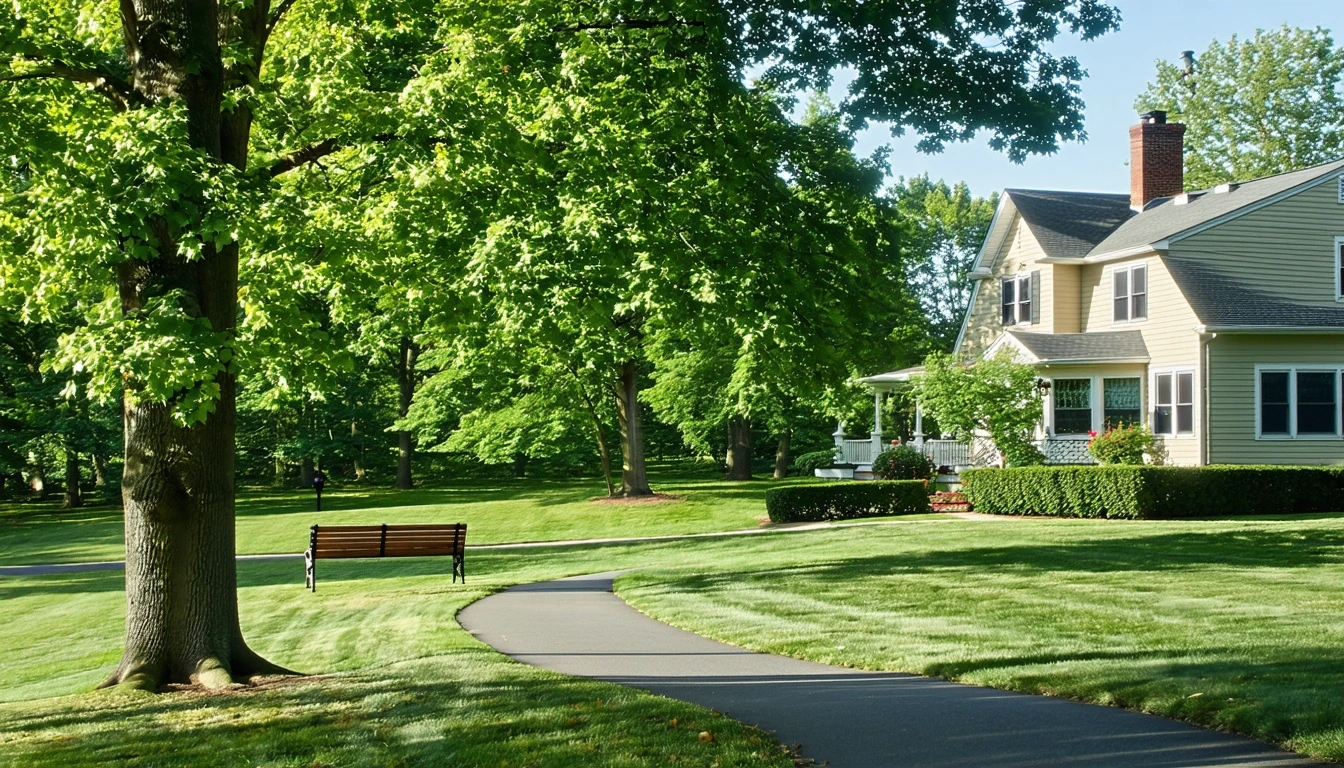
Simsbury tends to reward people who want predictability, natural beauty, and a strong sense of established community. The town offers pockets of walkable charm—tree-lined streets, parks, and water features that make certain neighborhoods feel connected and inviting. But the infrastructure for daily errands remains sparse. Food and grocery options sit below density thresholds, meaning most households rely heavily on cars to manage weekly routines.
This creates an identity split. Some residents love the balance: enough green space and quiet to feel removed from urban stress, but close enough to Hartford for work or occasional outings. Others feel the friction of needing to plan every errand, every meal out, every spontaneous coffee run.
The town’s building character reflects this duality. You’ll find a mix of low-rise and mid-height structures, with both residential and commercial land use woven throughout. It’s not a cookie-cutter suburb, but it’s also not a walkable downtown. Bus service exists, and there are pockets with decent bike infrastructure, but transit remains a supplement, not a substitute, for car ownership.
Families with school-age children often feel at home here. Playgrounds are present and accessible, and the overall environment feels safe and stable. But the town lacks a hospital, which can be a concern for aging residents or anyone managing chronic health conditions. Clinics and pharmacies handle routine care, but more serious needs require a drive.
Social Media Buzz in Simsbury
Online discussions about Simsbury tend to circle around a few recurring themes: pride in the town’s natural beauty, frustration with limited dining and shopping variety, and ongoing debates about growth and change.
Residents frequently express affection for the town’s parks, trails, and seasonal charm. There’s a protective tone when outsiders criticize the lack of nightlife or urban amenities—longtime locals often frame those absences as features, not bugs. But newer arrivals, especially younger professionals or transplants from denser areas, sometimes voice disappointment that walkability doesn’t extend to errands or social life.
“I love the trails and the quiet, but I do miss being able to just walk to a coffee shop or grab takeout without getting in the car every single time.”
“It’s a great place to raise kids. Safe, green, good schools. But if you’re looking for things to do on a Friday night, you’re going to be driving somewhere else.”
“People complain about the lack of restaurants, but honestly, that’s part of why it stays peaceful. You can’t have it both ways.”
Conversations about development tend to be cautious. There’s interest in seeing more local businesses and walkable amenities, but also concern about losing the town’s established character. Growth is welcomed selectively—residents want convenience, but not at the cost of density or traffic.
Local News Tone
Coverage of Simsbury tends to focus on community identity, infrastructure improvements, and the ongoing negotiation between preservation and progress. Headlines and story themes often reflect these tensions:
- “Town Weighs New Development Proposals Amid Resident Concerns”
- “Simsbury’s Parks and Trails Draw Families, Outdoor Enthusiasts”
- “Residents Debate What Growth Should Look Like”
- “Local Businesses Seek More Foot Traffic, Face Zoning Challenges”
- “Community Celebrates Seasonal Events, Small-Town Traditions”
The tone is generally positive but measured. There’s pride in what the town offers—natural beauty, safety, strong schools—but also acknowledgment that certain conveniences remain out of reach. Stories about new amenities or businesses are met with cautious optimism, while discussions about zoning or density often reveal deeper disagreements about the town’s future direction.
Review-Based Public Perception
Public reviews of Simsbury—whether on Google, Yelp, or community platforms—tend to praise the town’s environment and criticize its lack of variety.
Families and retirees who wanted a quiet, green, safe place often feel their expectations were met or exceeded. They appreciate the parks, the low crime, the sense of stability. Complaints from this group are usually minor: wish there were more local dining options, or that certain services didn’t require a drive.
Younger professionals and renters, on the other hand, often express frustration. The town feels too car-dependent for their lifestyle. They wanted walkable errands, spontaneous social options, and a sense of urban texture. Instead, they found themselves planning every outing and driving to neighboring towns for variety.
“Beautiful area, very safe, but you need a car for everything. If you’re okay with that, it’s great. If you’re not, it gets old fast.”
“The parks are lovely, and the neighborhoods are well-kept. But there’s not much to do unless you’re into hiking or driving elsewhere.”
“It’s exactly what we wanted—quiet, green, family-friendly. We don’t mind the drive for groceries or dinner out.”
Newer planned areas tend to feel more uniform and car-oriented, while older pockets near the town center offer more walkable moments and a bit more character. But even in those areas, daily errands still require a car more often than not.
Comparison to Nearby Cities
| Aspect | Simsbury | West Hartford | Avon |
|---|---|---|---|
| Overall Vibe | Quiet, green, car-dependent with walkable pockets | Urban-suburban mix, walkable center, more dining and nightlife | Affluent, polished, very car-oriented |
| Errands & Dining | Sparse; requires planning and driving | Broadly accessible; walkable options in center | Corridor-clustered; upscale but spread out |
| Walkability | Pockets of pedestrian-friendly streets, but limited | Strong in town center, mixed elsewhere | Minimal; designed for cars |
| Family Appeal | High; safe, green, playgrounds present | High; more variety in schools and activities | Very high; polished, family-focused |
| Social Scene | Limited; quiet, community-focused | Active; restaurants, bars, events | Low-key; country clubs and private gatherings |
If you’re drawn to Simsbury’s natural beauty and quiet but wish it had more walkable variety, West Hartford might offer a better balance. It has a more active town center, denser dining and shopping options, and a stronger social scene—though it also comes with more traffic and higher density.
If you’re comfortable with car dependency and want an even more polished, affluent environment, Avon leans further in that direction. It’s quieter and more exclusive than Simsbury, but also more isolated in terms of spontaneous errands or social options.
Simsbury sits in the middle: greener and quieter than West Hartford, but more accessible and less insular than Avon. Your fit depends on how much you value convenience versus calm.
What Locals Are Saying
“We moved here for the schools and the parks, and we got exactly that. It’s safe, it’s beautiful, and our kids love it. We don’t mind driving for groceries or date night—it’s worth it for the peace.”
“I work remotely, and Simsbury is perfect for that. Quiet, good internet, nice walking trails. But if I had to commute or run errands multiple times a day, I’d probably feel differently.”
“It’s a little too quiet for me. I thought I wanted suburban life, but I miss being able to walk to a coffee shop or meet friends for dinner without planning it like an event.”
“The town has a lot of charm, especially in the older neighborhoods. But the lack of a hospital is a real concern for us as we get older. We’re starting to think about what happens if one of us has a serious health issue.”
“Simsbury feels like it’s stuck between being a small town and a suburb. It has some walkable streets, but not enough to make a difference. You still need a car for everything that matters.”
“I love the trails and the river. It’s one of the prettiest places I’ve lived. But yeah, you’re driving to Target, driving to the grocery store, driving to dinner. If that bothers you, this isn’t the place.”
“It’s a great town if you already know what you want and you’re okay with a slower pace. If you’re looking for spontaneity or variety, you’ll probably feel restless.”
Does Simsbury Feel Like a Good Fit?
Simsbury tends to work for people who prioritize natural beauty, safety, and a strong sense of community over convenience and variety. It rewards those who are comfortable with car-dependent logistics and who value quiet, green space, and stability. Families with young children, remote workers, and professionals who don’t mind commuting often find the tradeoffs worthwhile.
But the town can frustrate those who expected more walkable errands, a denser social scene, or the texture of a true downtown. Renters facing housing pressure, carless households, and anyone seeking spontaneous options or hospital-level healthcare nearby may feel the friction more acutely.
The question isn’t whether Simsbury is happy—it’s whether its particular balance of peace and planning matches the rhythm of your daily life. If you’re drawn to trails and quiet streets but also want to grab coffee without a 10-minute drive, the tension will be real. If you’re ready to trade convenience for calm, Simsbury offers exactly that.
For a clearer sense of where money goes each month or what it takes to live comfortably here, exploring the town’s cost structure and lifestyle requirements can help you decide whether the tradeoffs align with your priorities.
How this article was built: In addition to public economic data, this article incorporates location-based experiential signals derived from anonymized geographic patterns—such as access density, walkability, and land-use mix—to reflect how day-to-day living actually feels in Simsbury, CT.
The perspectives shown reflect commonly expressed local sentiment and recurring themes in public discussion, rather than individual accounts.