
Is Simsbury expensive to live in? Simsbury is considered expensive in 2026, with a median home value of $350,000 and median rent of $1,904 per month. The value proposition depends on housing entry cost versus car dependence, as sparse grocery and errands infrastructure creates recurring transportation exposure even in walkable pockets.
When Sarah moved to Simsbury last spring, she expected the housing pressure—she’d done the research. What caught her off guard was the weekly rhythm: a 15-minute drive to the grocery store, another trip for the pharmacy, and a third for her son’s soccer gear. The town had sidewalks and a pleasant main street, but the day-to-day errands required a car, a tank of gas, and a mental map of where everything actually was. By summer, she realized the cost structure wasn’t just about the mortgage—it was about how the place was built.
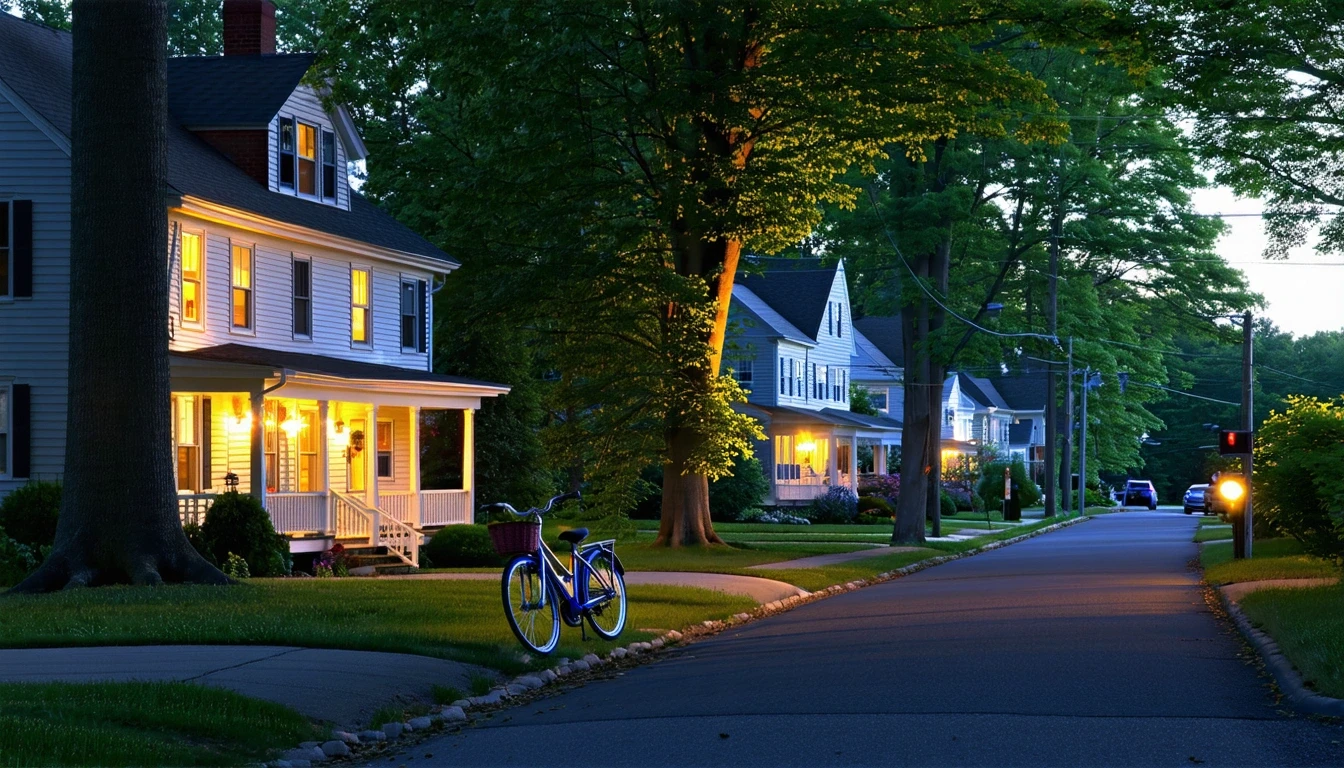
Overall Cost of Living Snapshot
Simsbury’s cost profile is shaped by three forces: high housing entry costs, car-dependent infrastructure for daily errands, and moderate seasonal utility exposure. The regional price parity index of 110 signals that goods and services cost roughly 10% more than the national baseline, but that figure understates the real pressure points. Housing dominates the financial landscape, both as an upfront barrier and a long-term anchor. Transportation follows closely, not because gas is uniquely expensive here, but because the physical layout of the town makes vehicle ownership non-negotiable for most households. Utilities add seasonal swing, particularly in winter, but rarely define whether someone can make the city work.
Compared to Hartford, Simsbury offers more space and quieter streets, but at a steep premium in both purchase price and logistical complexity. Compared to smaller towns further from the metro, Simsbury provides better access to employment corridors and services, but without the walkability or transit depth of urban cores. The unemployment rate of 3.8% reflects a stable local economy, but income alone doesn’t resolve the structural trade-offs embedded in the town’s design.
Driver verdict: Housing costs dominate initial decision-making, but transportation exposure—driven by sparse errands accessibility and car dependence—creates the ongoing financial and logistical friction that defines daily life here.
Housing Costs (Primary Driver)
At $350,000, the median home value in Simsbury represents the single largest cost commitment for most households. This figure reflects well-maintained single-family homes in a suburban setting with good schools and low crime, but it also prices out buyers who lack substantial savings or dual incomes. Property taxes, homeowners insurance, and maintenance add recurring layers that extend well beyond the mortgage payment itself. Ownership here is a long-term play: buyers trade upfront capital and ongoing carrying costs for stability, space, and control over their housing situation.
Renting offers an alternative, but not necessarily relief. At $1,904 per month, the median gross rent approaches what many ownership scenarios cost on a monthly basis once you account for mortgage, taxes, and insurance. Renters avoid the down payment and maintenance risk, but they also face lease renewals, landlord discretion, and less control over long-term housing stability. The rental market in Simsbury tends to serve transitional households—people testing the area, waiting to buy, or temporarily assigned to the region—rather than long-term renters building a life without ownership.
The housing conclusion is clear: Simsbury is structured for ownership. Renting works as a bridge, but the cost and market dynamics favor those who can buy and stay.
| Housing Type | Cost Anchor | What That Buys You |
|---|---|---|
| Median Home | $350,000 | Single-family home, suburban lot, stable school access, long-term equity |
| Median Rental | $1,904/month | Flexibility, no maintenance burden, shorter commitment, less control |
Utilities & Energy Risk
Electricity in Simsbury runs 30.77¢ per kilowatt-hour, a rate that sits well above national averages and reflects Connecticut’s broader energy cost structure. For a household using around 1,000 kWh per month—a typical baseline for moderate consumption—that translates to roughly $308 per month in electricity costs alone, before fees or seasonal spikes. Air conditioning in summer and electric appliances year-round drive the meter, but the rate itself is the structural constraint. Efficiency upgrades and behavioral changes can reduce usage, but they don’t eliminate the underlying price pressure.
Natural gas, priced at $16.18 per thousand cubic feet (MCF), plays a smaller but still meaningful role, particularly during Connecticut’s cold winters. Heating a home through December, January, and February can add noticeable monthly swings, though the exposure is less severe than in regions with longer or more extreme heating seasons. Households with gas heat face predictable winter peaks; those relying on electric heat see compounded pressure from the high electricity rate.
Risk classification: moderate. Utilities here create seasonal volatility and ongoing baseline costs, but they rarely become the primary reason someone can or cannot afford Simsbury. The bigger risk is underestimating how quickly heating and cooling expenses accumulate when combined with elevated rates.
Groceries & Daily Costs
Simsbury’s regional price parity index of 110 suggests that groceries and household goods cost roughly 10% more than the national baseline, a modest but persistent markup that shows up in weekly shopping trips and routine purchases. The pressure isn’t dramatic—this isn’t a high-cost urban core—but it’s steady. Families buying fresh produce, dairy, and protein will notice the difference over time, particularly when comparing receipts to what they paid in lower-cost regions.
The bigger challenge isn’t price alone—it’s access. With food and grocery establishment density both below typical thresholds, households often drive farther and plan more deliberately to stock up. That adds time, fuel, and mental overhead to the weekly routine, turning a quick errand into a scheduled trip. The cost of groceries includes not just what you pay at checkout, but the logistical friction required to get there in the first place.
Transportation Reality
Simsbury’s physical layout creates a transportation reality that most newcomers underestimate. The town has walkable pockets—areas where pedestrian infrastructure is dense and sidewalks connect homes to local streets—but food and grocery establishments are sparse, and daily errands accessibility falls below typical density thresholds. That means even households in walkable neighborhoods still need a car for routine tasks: buying groceries, picking up prescriptions, getting to appointments, or running kids to activities. Bus service exists, but it doesn’t replace the flexibility and reach of personal vehicle ownership.
Gas prices at $4.28 per gallon add recurring cost to every trip. A household driving 25 miles round-trip for work, errands, and activities—common in a car-dependent suburb—will burn roughly one gallon per day at typical fuel efficiency, or about $128 per month in gas alone. That figure excludes insurance, maintenance, registration, and depreciation, all of which stack on top. Multi-car households face compounded exposure, particularly when both adults commute or when teenage drivers enter the picture.
The transportation conclusion is unambiguous: Simsburg requires car ownership for nearly all household types, and the recurring cost of fuel, maintenance, and insurance becomes a permanent line item that rivals or exceeds many other monthly expenses.
Cost Exposure Profiles
Cost exposure in Simsbury varies less by income level and more by household structure and timing. Renters face lower entry costs but higher monthly obligations and less control; they’re exposed to lease renewals and landlord decisions, with limited ability to stabilize housing expenses over time. Owners face the opposite profile: high upfront capital requirements and ongoing property tax and maintenance risk, but greater long-term predictability and the ability to lock in a fixed mortgage payment.
Transportation exposure scales with household size and commute patterns. A single-car household with one short commute faces moderate fuel and maintenance costs; a two-car household with long commutes or multiple daily trips faces compounded pressure that can rival housing costs in intensity. Families with school-age children often find themselves driving more frequently, not because they want to, but because the town’s layout and activity dispersion require it.
Utility exposure depends on housing type and heating source. A well-insulated home with gas heat faces predictable winter peaks; an older home relying on electric heat during cold months can see sharp seasonal spikes that strain monthly cash flow. The difference isn’t always visible upfront, but it becomes clear by the first winter.
Low-exposure situations tend to involve: ownership with a manageable mortgage, a single short commute, and a newer or well-maintained home with efficient systems. High-exposure situations involve: renting near the median, two long commutes, older housing stock, and multiple seasonal cost swings hitting simultaneously. The city doesn’t exclude anyone outright, but it rewards those who can absorb upfront costs and manage logistical complexity without financial strain.
Frequently Asked Questions
Is Simsbury more affordable than Hartford in 2026? No—Simsbury’s median home value of $350,000 and median rent of $1,904 both exceed Hartford’s typical housing costs. You’re paying a premium for space, schools, and a suburban setting, but giving up urban walkability and transit access.
What does a typical cost profile look like in Simsbury? Most households face high housing entry costs (either $350,000 to buy or $1,904/month to rent), recurring transportation expenses driven by car dependency, and moderate seasonal utility swings. Groceries and daily goods cost roughly 10% above the national baseline, adding steady but manageable pressure.
Do utilities cost more in Simsbury than in nearby towns? Electricity at 30.77¢/kWh is high across Connecticut, not unique to Simsbury. Natural gas at $16.18/MCF is moderate. The bigger variable is housing efficiency and heating source, which determine how much seasonal exposure you actually face.
What costs tend to surprise newcomers in Simsbury? Transportation is the sleeper expense. The town looks walkable in parts, but sparse grocery and errands infrastructure means most households drive constantly—for food, appointments, activities, and errands—turning fuel and vehicle costs into a recurring burden that rivals rent or mortgage payments.
Are property taxes higher in Simsbury than in neighboring towns? Property tax rates vary across Connecticut towns and are not included in this dataset, but Simsbury’s $350,000 median home value means the tax bill will reflect that higher assessment. It’s a cost layer that extends well beyond the mortgage itself.
Is Simsbury a good value for families in 2026? It depends on what you’re optimizing for. Families who value space, good schools, and a stable suburban environment may find the trade-offs worthwhile. Those who prioritize walkability, transit access, or lower transportation costs will find the structure harder to justify.
Can you live in Simsbury without a car? Practically, no. Bus service exists, but food and grocery density is too low to support car-free living for most households. Even in walkable pockets, daily errands require driving, and the town’s layout assumes vehicle ownership.
How does Simsbury compare to other Hartford suburbs for cost of living? Simsbury tends to sit on the higher end of the suburban spectrum in the Hartford metro, trading affordability for space, school quality, and a quieter setting. Towns closer to the urban core may offer lower housing costs but less land; towns farther out may offer cheaper entry but longer commutes and sparser services.
How this article was built: In addition to public economic data, this article incorporates location-based experiential signals derived from anonymized geographic patterns—such as access density, walkability, and land-use mix—to reflect how day-to-day living actually feels in Simsbury, CT.
—